
Why Your Bedroom Environment Matters as a System
Most sleep advice treats the bedroom as a passive container — a place where sleep happens if you follow the right routine. But your bedroom is not a neutral backdrop. It is an active sensory environment that either supports or undermines every biological process involved in falling and staying asleep.
Temperature, light, noise, and bedding do not operate in isolation. A cool room cannot compensate for a bright screen. A high-quality mattress will not fix a bedroom that sounds like a construction site. These four factors interact as a system, and optimizing them together is one of the most immediately impactful levers available to anyone trying to improve their sleep.
This guide is designed for readers who have already tried basic sleep hygiene — cutting caffeine, setting a consistent bedtime — and want precision-level control over their environment. It covers exact temperature ranges, the specific light strategies recommended by sleep specialists, the science of noise disruption, and the material properties of bedding that actually matter. If you are a perimenopausal woman managing hot flashes, a shift worker trying to sleep during daylight, or an urban dweller contending with street noise, the strategies here are tailored to your constraints.
Before diving into the specifics, it helps to understand the underlying mechanics. The sleep-wake transition is governed by two interacting systems: the circadian clock and the sleep homeostat. Your bedroom environment directly influences both. For a deeper look at how these systems work, see our mechanistic guide to the two-system sleep problem. And if you want a clear definition of what we mean by "good sleep" in the first place, our five-dimensional definition of a good night's sleep provides the baseline.
Temperature: The Thermoregulatory Sleep Connection
Sleep onset is not just a neurological event — it is a thermoregulatory one. Your core body temperature naturally begins to drop in the hours leading up to sleep, and this decline is a necessary signal for the brain to initiate the sleep-wake transition. A bedroom that is too warm interferes with this process, keeping your core temperature elevated and delaying sleep onset.
The ideal room temperature for sleep varies slightly between sources, but the overlap zone is clear. Johns Hopkins Medicine sleep specialist Dr. Charlene Gamaldo recommends keeping the thermostat between 65 and 72 degrees Fahrenheit. Harvard Health advises a range of 65 to 68 degrees. The National Sleep Foundation and Stanford research suggest a slightly cooler range of 60 to 67 degrees. For most adults, the sweet spot falls between 65 and 68 degrees — cool enough to facilitate the core temperature drop, but not so cold that it causes shivering or discomfort.
| Source | Recommended Range | Notes |
|---|---|---|
| Johns Hopkins Medicine | 65–72°F (18–22°C) | Dr. Charlene Gamaldo; includes upper bound for comfort |
| Harvard Health | 65–68°F (18–20°C) | Narrower range; emphasizes consistency |
| National Sleep Foundation / Stanford | 60–67°F (15–19°C) | Cooler end; preferred by sleep researchers |
For perimenopausal women experiencing hot flashes and night sweats, temperature management becomes even more critical. Dr. Gamaldo specifically advises keeping the room as cool as possible and wearing cotton or breathable fabrics to bed. Layering bedding — using a lightweight top sheet and a thin blanket that can be kicked off mid-night — gives you active temperature control without needing to adjust the thermostat. For a deeper look at how hormonal changes affect sleep, see our guide on perimenopause and sleep disruption.
Light: Melatonin Suppression and the Power of Darkness
Light is the single most powerful external signal for your circadian clock. Exposure to light — especially the blue wavelengths emitted by screens, LED bulbs, and even standard household lighting — suppresses melatonin production, the hormone that signals your body it is time to sleep. The effect is not subtle: even brief exposure to bright light during the night can shift your circadian phase and fragment sleep architecture.
The most effective light-management strategies are straightforward but require deliberate habit changes:
- Stop using screens at least two hours before bed. Blue light from phones, tablets, and laptops is particularly effective at suppressing melatonin. If you must use a device, enable night mode or use blue-light-blocking glasses, but know that these are partial fixes, not complete solutions.
- Dim household lights 30 to 60 minutes before your target bedtime. Use low-wattage, warm-toned lamps instead of overhead lights. This gradual dimming mimics the natural progression of dusk and primes your circadian system for sleep.
- Make your bedroom as dark as possible. Use blackout curtains or shades to block streetlights and early morning sun. Cover or tape over small LED indicators on electronics. Even a sliver of light from a clock radio can disrupt sleep for sensitive individuals.
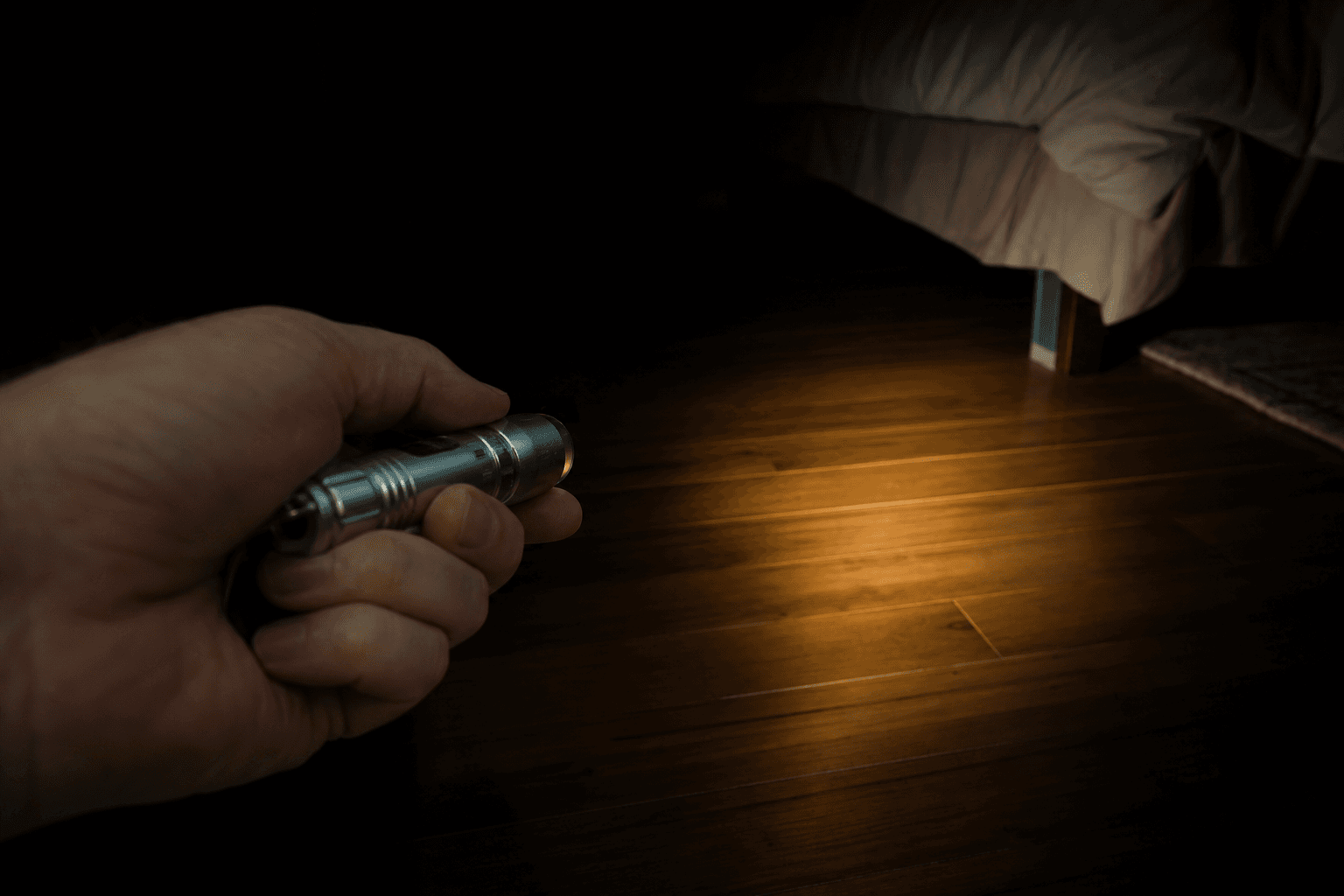
- Use a flashlight for middle-of-night bathroom trips. Johns Hopkins Medicine specifically recommends this strategy: instead of flipping on the bathroom light — which can suppress melatonin and make it difficult to fall back asleep — keep a small flashlight by your bed and use it to navigate. The dim, narrow beam provides enough light to see without triggering a full melatonin suppression response.
Noise: Why Intermittent Sounds Disrupt Sleep More Than Continuous Noise
Not all noise is created equal when it comes to sleep disruption. Continuous, predictable background noise — like the hum of a fan or the drone of an air conditioner — is far less disruptive than intermittent, unpredictable sounds like a car horn, a dog barking, or a partner's sudden snore. This is because your brain remains partially alert during sleep, processing novel sounds and preparing to respond to potential threats. Each unexpected noise can trigger a micro-arousal — a brief shift to a lighter sleep stage or a full awakening — even if you do not remember it the next morning.
The goal of noise management is not total silence — which is often impractical and can actually make intermittent sounds more noticeable — but rather masking those disruptive peaks with a consistent, low-level sound. Effective strategies include:
- White noise machines or apps that produce a steady, broadband sound. These work by raising the ambient noise floor so that sudden sounds are less likely to exceed the threshold that triggers an arousal.
- Fans, which provide both white noise and air circulation. For a detailed breakdown of the respiratory and environmental effects of sleeping with a fan on, see our article on what actually happens to your respiratory system when you sleep with a fan on.
- Earplugs, which are particularly useful for urban dwellers or those with loud neighbors. Foam earplugs are inexpensive and effective, though they may take a few nights to get used to.
- Heavy curtains or rugs, which absorb sound and reduce echo in a room. This is especially helpful in apartments with hard floors and minimal furniture.
Bedding: Mattress Firmness and Sheet Materials That Affect Sleep Quality
Your bed is the physical interface between your body and the sleep environment. The wrong mattress or sheets can undermine even the best temperature and light management. Fortunately, the research on bedding is becoming more specific, and the findings are actionable.
A 2021 research review found that medium-firm mattresses are associated with reduced lower back pain and improved sleep quality compared to overly soft or excessively hard surfaces. The mechanism is straightforward: a medium-firm mattress provides enough support to maintain spinal alignment while offering enough give to relieve pressure points. This is not a universal recommendation — individual comfort and body type matter — but it is a strong starting point for anyone replacing a mattress.
Beyond the mattress itself, the materials you sleep on and under measurably affect sleep quality. A 2024 review of nine studies examined how different bedding and sleepwear materials — cotton, polyester, wool, duck down, goose down, linen, and cotton-polyester blends — influence sleep outcomes. The review found that material differences affect thermoregulation, moisture wicking, and tactile comfort, all of which contribute to sleep quality.
| Material | Key Properties | Best For |
|---|---|---|
| Cotton | Breathable, moisture-wicking, soft | General use; hot sleepers; perimenopausal women |
| Wool | Temperature-regulating, moisture-wicking | Cooler climates; year-round temperature stability |
| Linen | Highly breathable, moisture-wicking | Hot sleepers; humid environments |
| Polyester | Less breathable, can trap heat | Budget options; not ideal for temperature-sensitive sleepers |
| Duck down / Goose down | Lightweight, insulating | Cold sleepers; duvets and comforters |
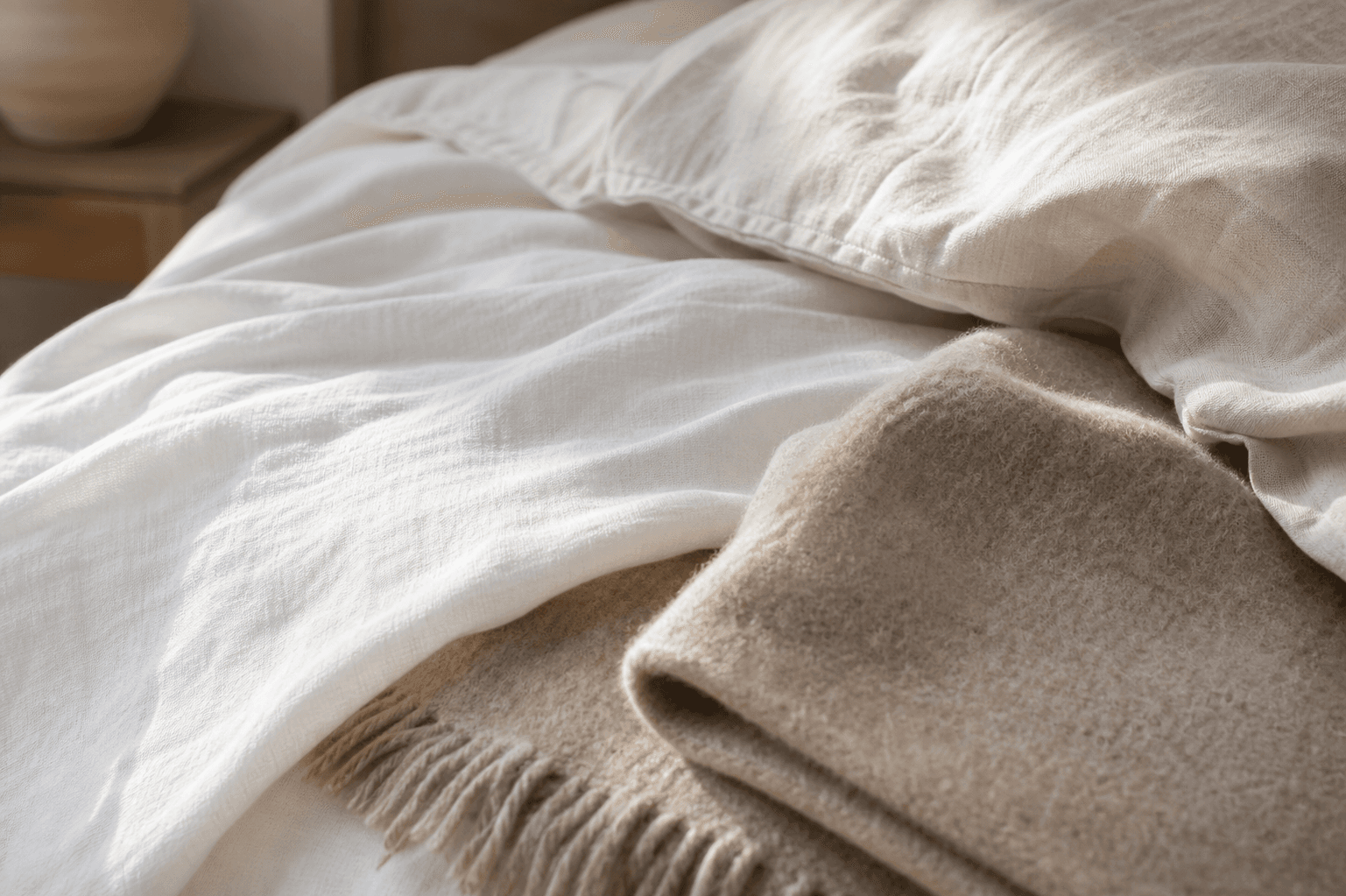
For most people, 100% cotton sheets with a high thread count offer the best balance of breathability, softness, and durability. If you tend to sleep hot, linen is an even more breathable alternative. Wool bedding is an excellent choice for year-round temperature regulation, as it naturally wicks moisture and insulates without overheating.
Putting It Together: Your Sleep Sanctuary Checklist
The four environmental factors covered in this guide work as a system. A single change — lowering the thermostat by two degrees — can help, but the real gains come when you address all four together. Use the checklist below as a starting point. Not every item will apply to every situation, but the goal is to create an environment that actively supports sleep rather than working against it.
- Set your thermostat to 65–68°F (18–20°C) at night. Adjust based on personal comfort and seasonal changes.
- Use blackout curtains or shades to block all external light. Cover LED indicators on electronics.
- Stop using screens two hours before bed. Dim household lights 30–60 minutes before your target bedtime.
- Keep a small flashlight by your bed for nighttime bathroom trips. Do not turn on overhead or bathroom lights.
- Use a white noise machine, fan, or earplugs to mask intermittent noise. Combine strategies for noisy environments.
- Choose a medium-firm mattress if you experience back pain or general discomfort.
- Use breathable, natural-fiber sheets (cotton, linen, or wool). Avoid synthetic blends for temperature-sensitive sleepers.
- Layer your bedding so you can adjust warmth without changing the thermostat.
For a broader foundation on sleep hygiene beyond the environment — including bedtime routines, caffeine management, and exercise timing — see our sleep hygiene fundamentals and evidence-based bedtime routine guide.
Caveats for Special Populations and Situations
The ideal sleep environment described above assumes a single adult with full control over their bedroom. Real life is more complicated. Here are practical strategies for common situations that deviate from the ideal.
Children in the Household
If you have young children who wake during the night, total darkness and silence may not be realistic. A dim nightlight in the hallway (not the bedroom) can help you navigate without fully disrupting your own sleep. White noise in your bedroom can mask the sound of a child stirring in another room, reducing the likelihood of micro-arousals from intermittent noise.
Pets in Bed
Pets introduce heat, movement, and noise into the bed. A 30-pound dog generates body heat that can raise your local microclimate by several degrees, and their movements can trigger arousals. If you sleep with a pet, consider using a lighter blanket to compensate for the added warmth, and be aware that your sleep quality may improve if you transition the pet to their own bed nearby.
Partners with Different Preferences
Temperature and noise preferences vary widely between individuals. The most workable solution is usually separate bedding layers (different blanket weights) combined with a compromise on the thermostat. For noise, a white noise machine placed between the two sides of the bed can mask both external sounds and a partner's snoring. Earplugs for the more sensitive sleeper are another low-cost option.
Shift Workers Sleeping During Daylight
For shift workers, the light-management challenge is reversed: you need to create darkness during the day. High-quality blackout curtains are essential. A sleep mask can help, though it is less effective than room-darkening shades. White noise is particularly valuable for masking daytime household and street sounds. For a comprehensive guide, see our article on shift work disorder: symptoms, causes, and treatment.
Comments
Join the discussion with an anonymous comment.