
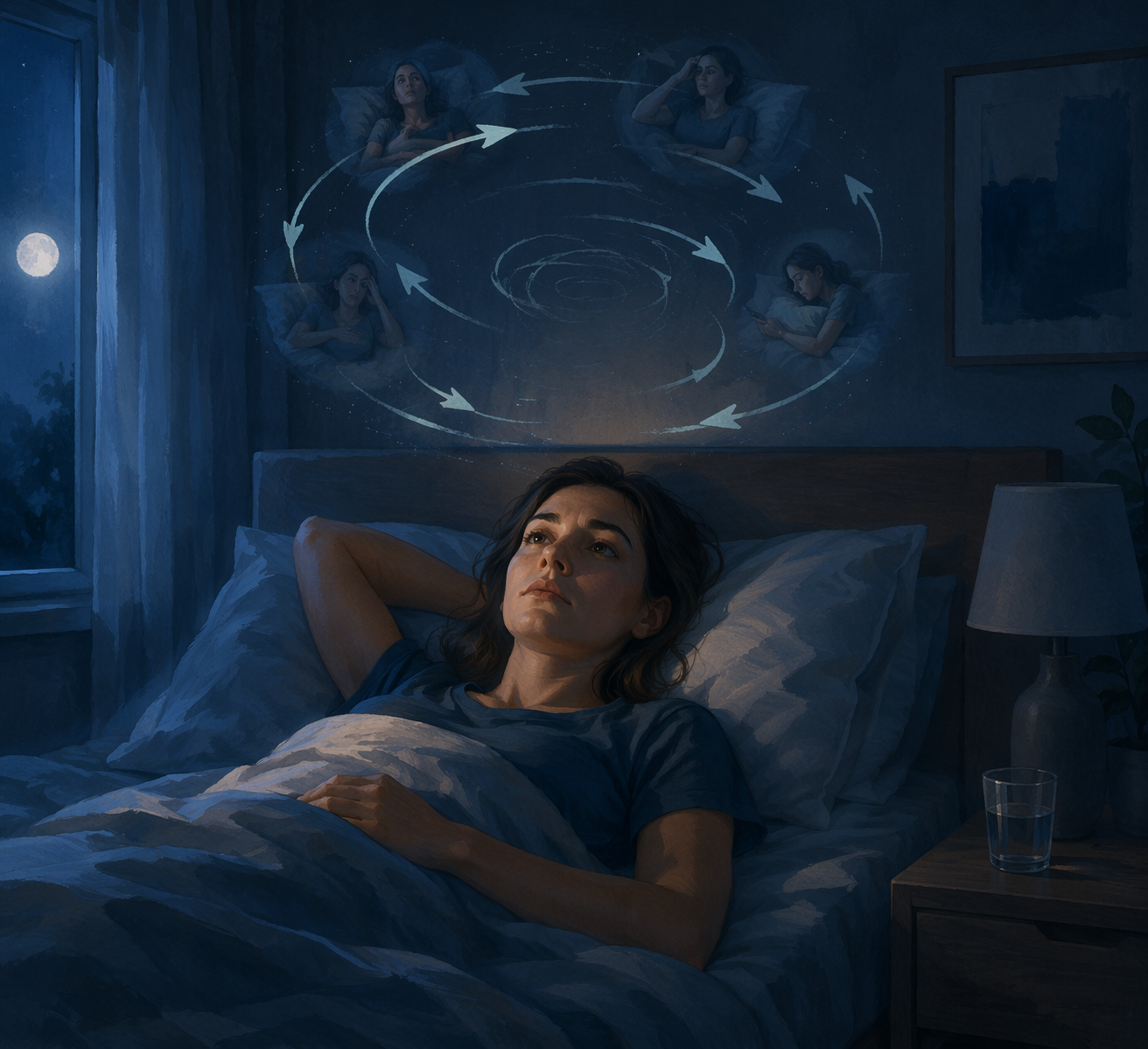
When trying to sleep becomes the thing keeping you awake
The trap is familiar: the more closely you watch sleep arrive, the further away it seems to move. The brain starts checking, the checking turns into effort, and effort keeps the nervous system too alert for sleep to take over. That is why some of the most persistent ways to get to sleep fail when the real problem is not the bedroom setup but the performance pressure inside the bedroom.
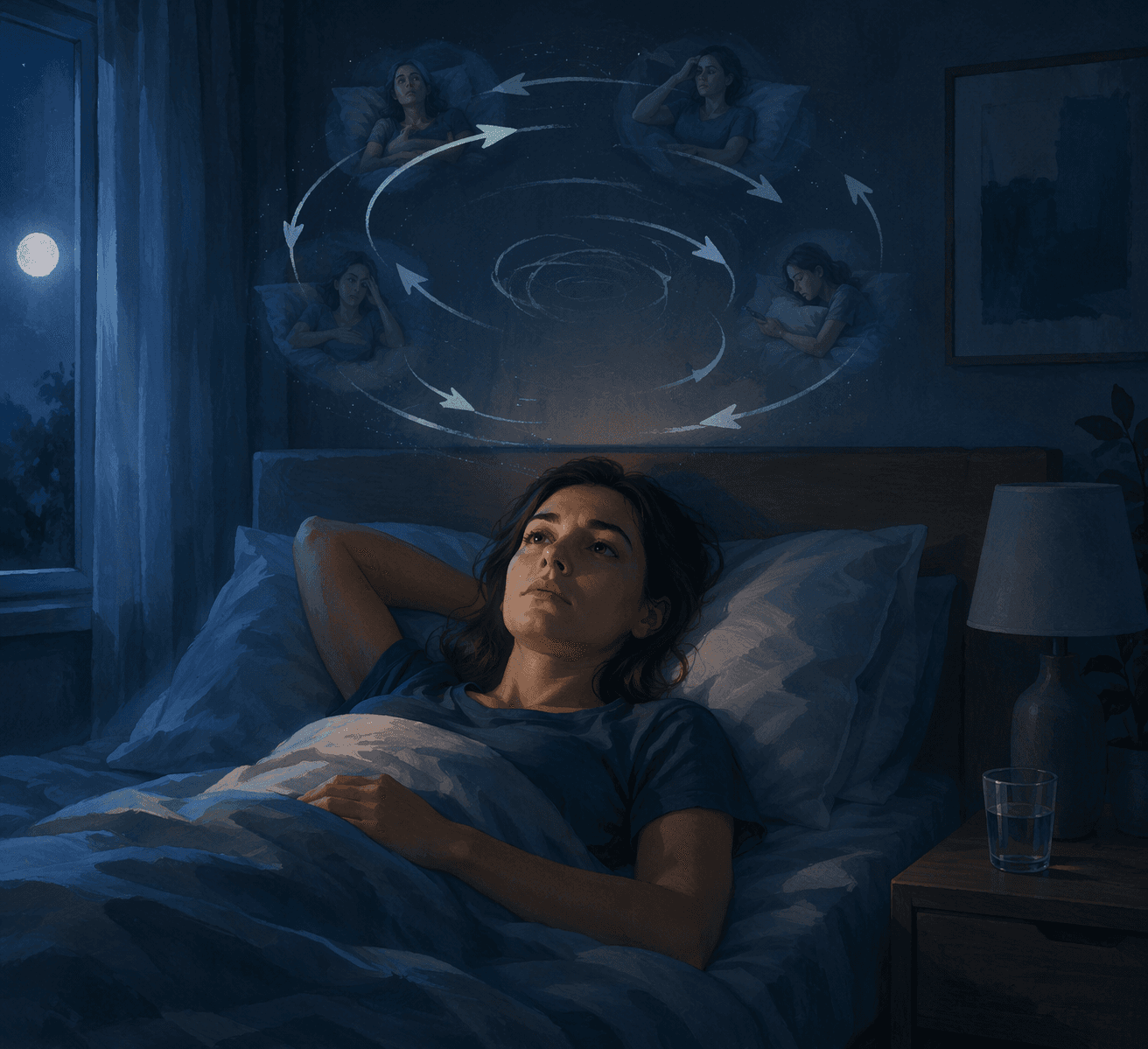
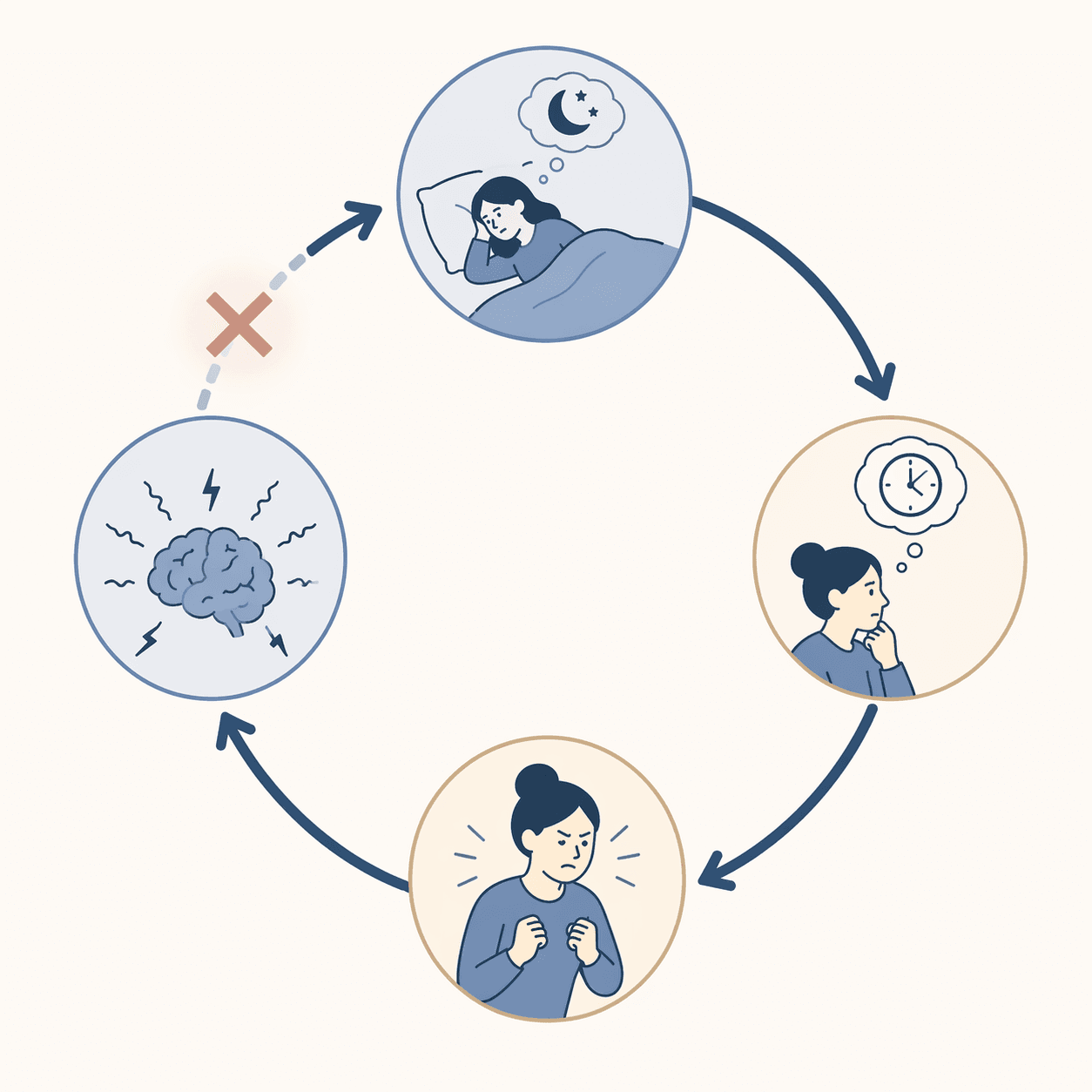
That loop has a plain mechanism behind it: attention turns into monitoring, monitoring turns into intention, intention turns into effort, and effort keeps cortical arousal high enough to block the dearousal sleep needs to begin. A 2022 systematic review and meta-analysis of 10 trials found that paradoxical intention improved sleep onset latency, difficulty falling asleep, number of awakenings, and subjective restedness compared with control conditions [1].
Paradoxical intention works because it removes the job of falling asleep
Paradoxical intention is not defeat and it is not a shrug. It is a therapist-framed instruction to stop trying to sleep and, instead, to lie in bed with eyes open and gently stay awake as long as possible. The point is to take away the sense that sleep is a task you can pass or fail. Once that pressure loosens, the body is free to do the part that was getting interrupted.
The American Academy of Sleep Medicine classifies paradoxical intention as a well-established treatment for insomnia. Used well, the instruction is narrow. It changes the stance toward wakefulness; it does not pretend that a stubborn insomnia pattern has suddenly been cured. The distinction matters because people often hear "stay awake" as permission to give up on treatment altogether. That is the wrong reading. The technique is meant to interrupt the attention-intention-effort loop, not to celebrate sleeplessness.
- Lie down in the usual sleep setting.
- Keep your eyes open and remove the goal of falling asleep.
- Let wakefulness be allowed, not fought.
That instruction is meant to reduce the self-observation that keeps the mind active at 1:00 a.m. It is one reason paradoxical intention belongs in CBT-I rather than in the long list of bedtime tips that sound helpful but leave the core problem untouched [1].
Stimulus control gives the bed its job back
Stimulus control uses a simpler rule: if sleep does not come within about 20 minutes, get out of bed, keep the light dim, do something quiet and low-stimulation, and return only when you feel sleepy again [2]. The number is approximate; the principle is what matters. The bed should not be the place where wakefulness is rehearsed over and over.
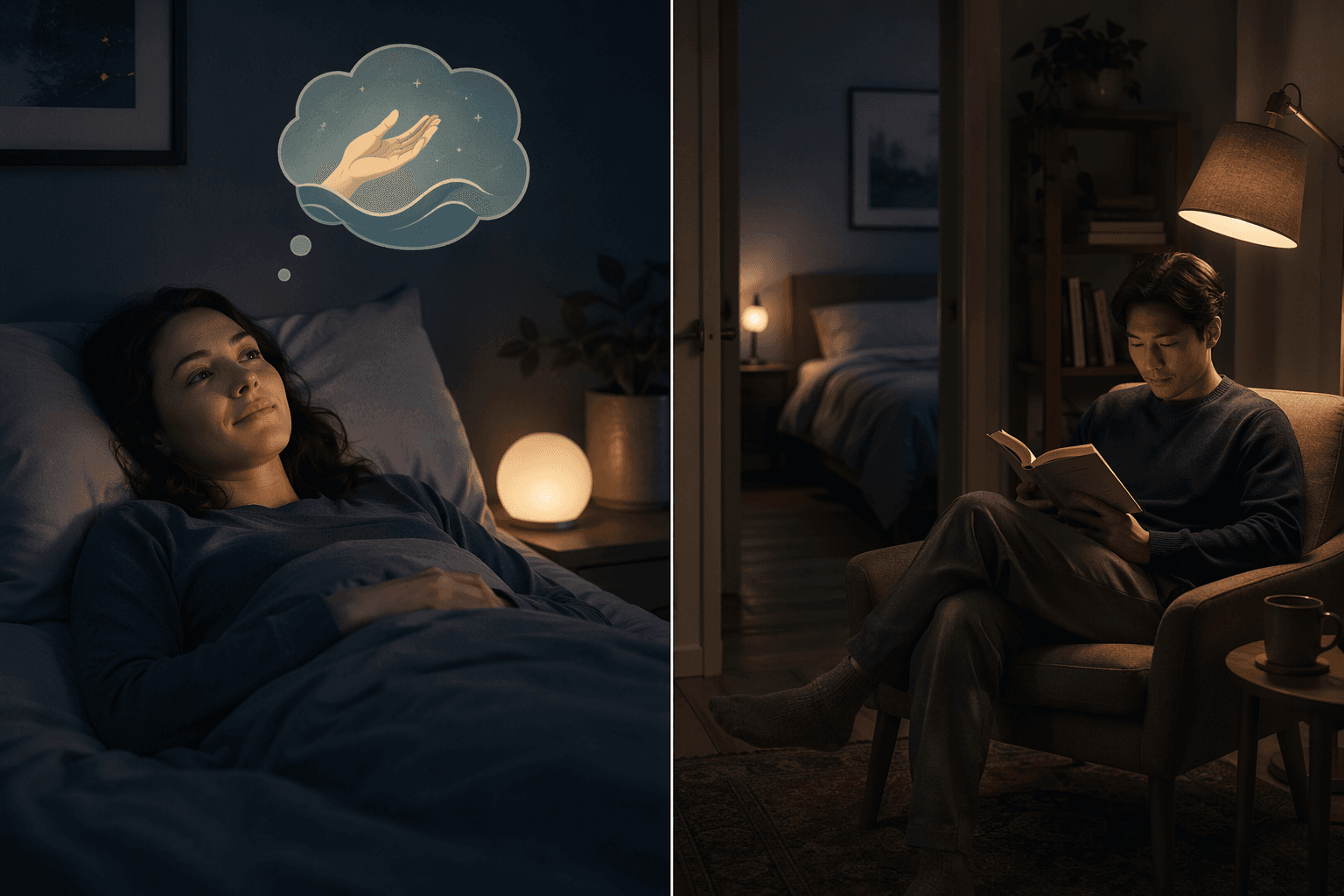
That break in the pattern matters because the brain is very good at learning associations. If bed repeatedly becomes the place where you worry, check the clock, and strain to fall asleep, the bed itself starts to trigger arousal. Getting up interrupts that conditioned link. It also makes the next return to bed more likely to be paired with sleep instead of another round of monitoring.
This is the part that can feel inconvenient in exactly the ways insomnia is already inconvenient. Shared sleeping spaces make the routine awkward. Mobility issues can make repeated getting up difficult. Cold rooms make it less appealing. Those are real constraints, so the right move is not to pretend the protocol is effortless; it is to adapt it carefully enough that the bed stops being a wakefulness cue.
- Keep the activity quiet and boring.
- Use dim light rather than bright light.
- Return to bed only when sleepiness is back, not when the clock says you should.
For a real-time version of this protocol, see Can't Sleep at Night? A Real-Time Action Plan for Sleepless Moments.
Where these techniques fit, and where they do not
Paradoxical intention and stimulus control are best understood as parts of CBT-I, not as standalone cures that replace the rest of treatment. They fit best when the main barrier is sleep effort, performance anxiety, or the habit of turning wakefulness into a nightly test. They are less likely to solve a problem driven by circadian misalignment, untreated sleep apnea, restless legs, medication effects, or another medical issue.
If the pattern keeps showing up across weeks or months and is starting to affect daytime functioning, that is the point where a fuller CBT-I plan matters more than more self-optimization. A clinician can help sort out whether these tools are the right fit, how to adapt them, and whether something else needs to be checked too. For that threshold, see When Trouble Sleeping at Night Warrants a Doctor's Visit.
The useful shift is not more discipline. It is less auditioning. Once sleep stops being treated like a test you must pass on demand, the pressure drops enough for sleep to take over again.
References
- Paradoxical intention for insomnia: A systematic review and meta-analysis. Journal of Sleep Research, 2022. https://onlinelibrary.wiley.com/doi/full/10.1111/jsr.13464
- How to Fall Asleep Fast: Science-Backed Tips. Sleep Foundation. https://www.sleepfoundation.org/sleep-hygiene/how-to-fall-asleep-fast
Comments
Join the discussion with an anonymous comment.