
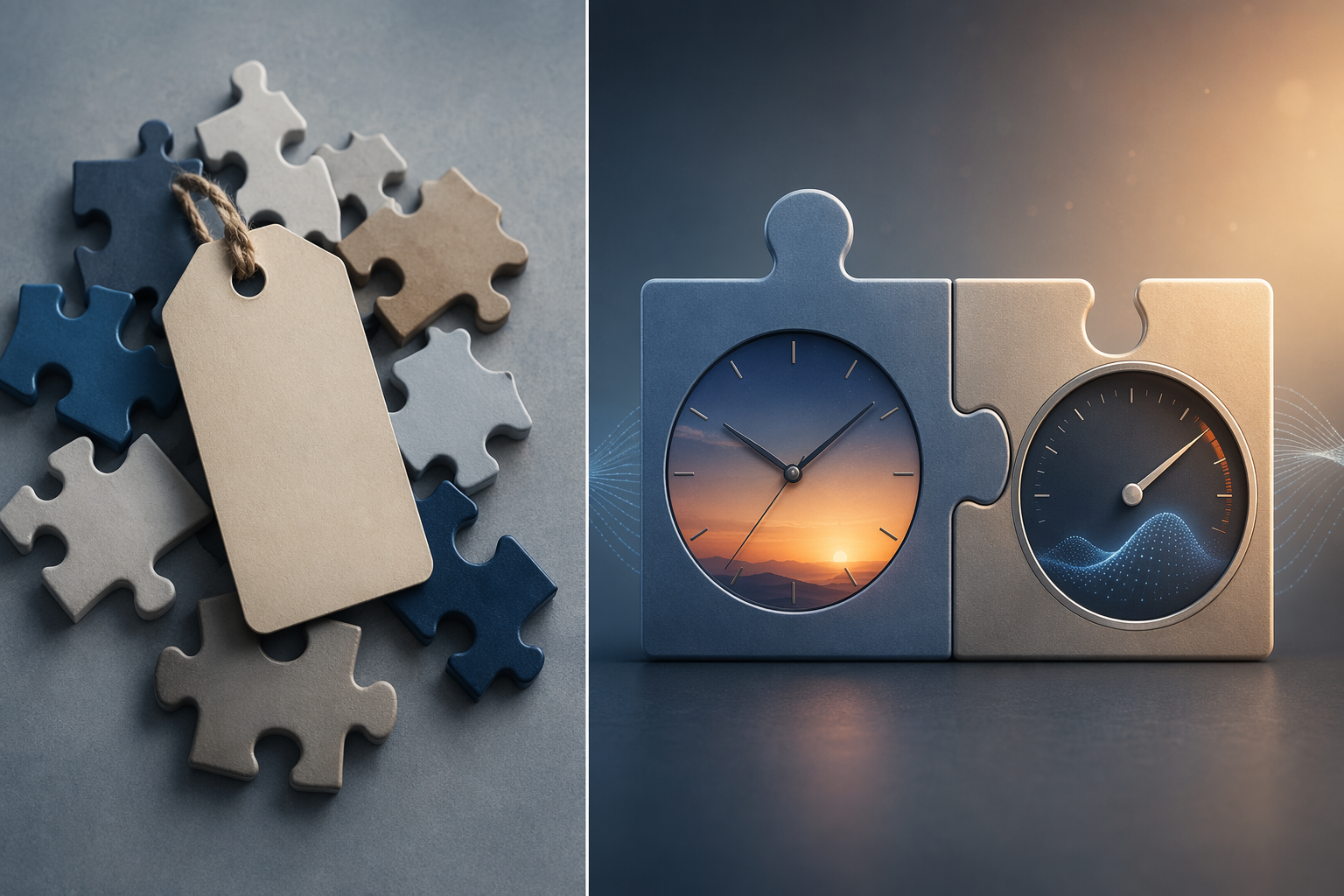
Most lists of “ways to sleep better” behave as if there is one broken switch somewhere in the bedroom. Make the room darker. Stop checking your phone. Keep the same bedtime. Avoid coffee late in the day. None of that is absurd, but it becomes uselessly blunt when the real problem is more specific: your body may not be ready for sleep, your clock may be pointing at the wrong part of the day, or your nervous system may be treating bedtime like a threat assessment.
That is why the same tip can help one person and do nothing for another. “Be consistent” means something different if your circadian rhythm is delayed than it does if you are waking at 3 a.m. with a racing mind. Cutting caffeine is sensible if adenosine signaling is being blocked; it is not a complete plan for someone whose bed has become a cue for frustration. The useful question is not “What is the best sleep habit?” It is “Which part of the sleep system is failing to cooperate?”
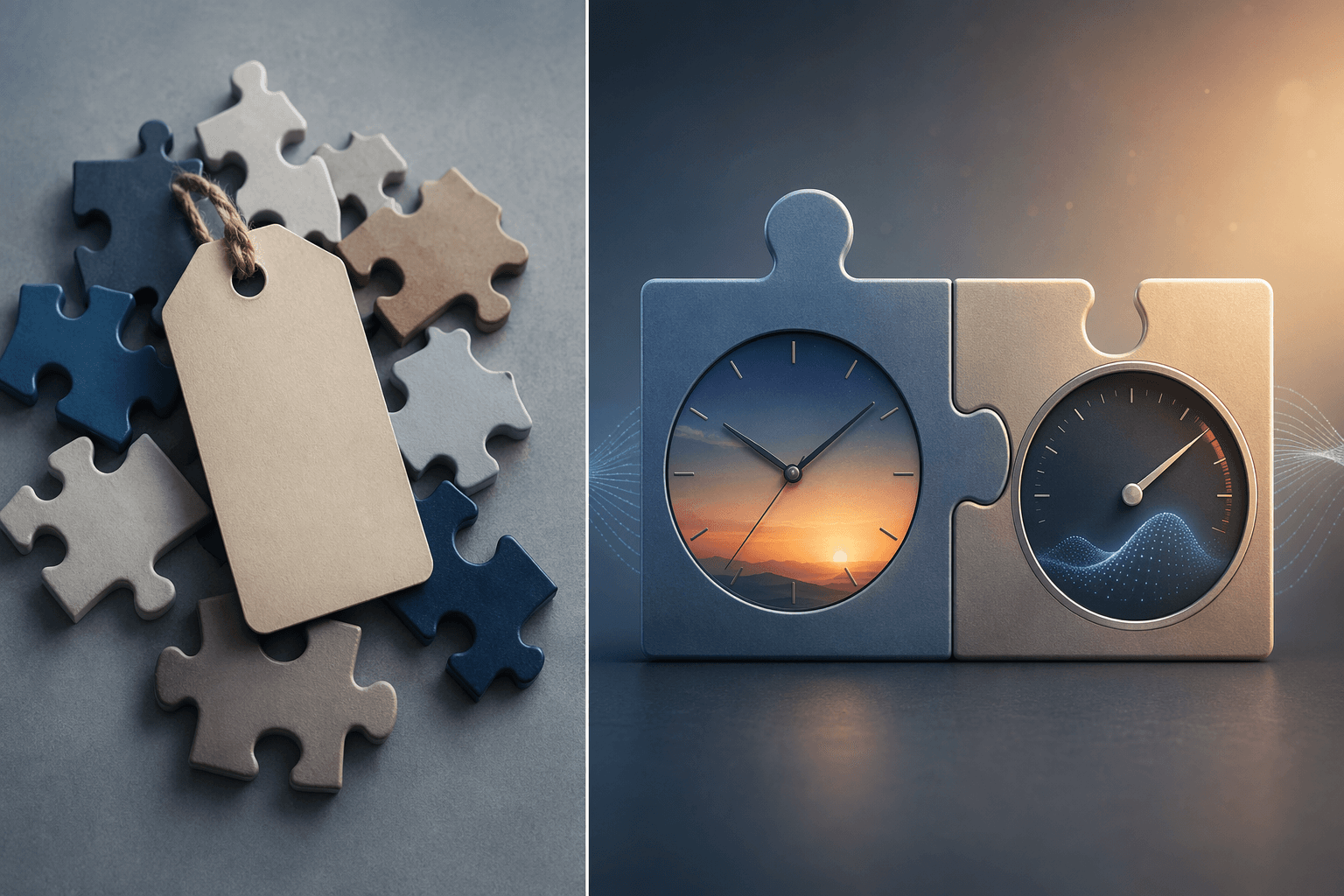
The two sleep systems generic advice keeps flattening
The cleanest starting map is the two-process model of sleep regulation. In Borbély’s 1982 model, sleep is shaped by two interacting forces: a homeostatic sleep drive that builds during wakefulness and a circadian timing system that organizes when the body is biologically prepared for sleep and wakefulness.[1]
The homeostatic side is the pressure side. The longer you stay awake, the more pressure for sleep accumulates. Adenosine is central here: it rises with time awake and helps make sleep feel increasingly necessary. Caffeine complicates sleep largely because it blocks adenosine receptors, making the sleep-pressure signal harder to feel even when the body has been awake long enough.
The circadian side is the timing side. It is coordinated by the suprachiasmatic nucleus, the brain’s master clock, and it responds strongly to light. This system does not simply ask whether you are tired. It asks what biological time it is. That is why a person can feel exhausted at 6 p.m., wired at 11 p.m., and cheated by their own body at 2 a.m.
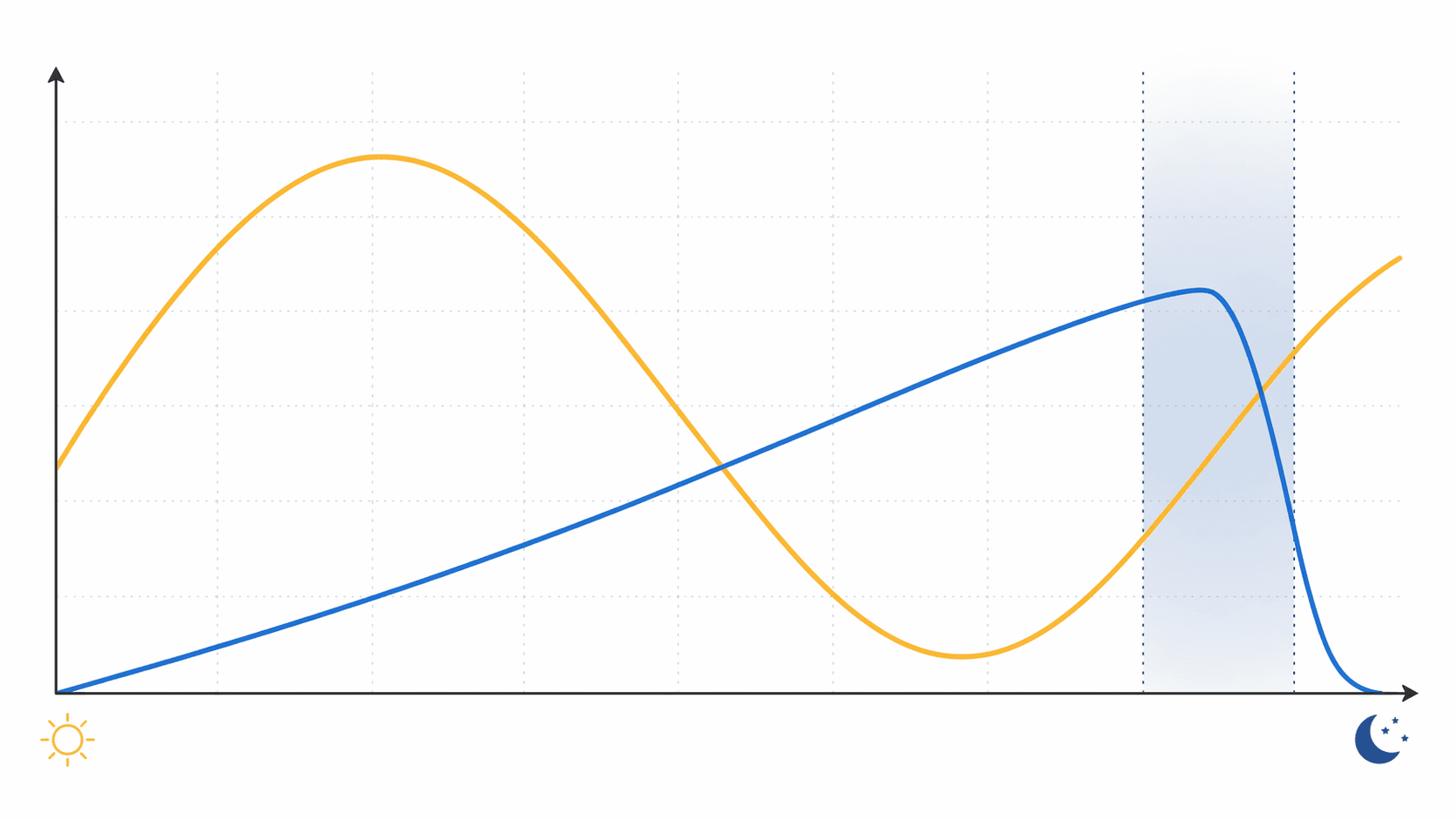
Better sleep usually requires those two processes to meet at the right time: enough sleep pressure, and a circadian signal that is no longer pushing wakefulness. Many generic sleep tips fail because they tug on one process while the actual bottleneck sits somewhere else.
Start with the symptom, not the tip
A more useful way to choose interventions is to translate the sleep complaint into a likely mechanism. This is still not a diagnosis, and persistent insomnia, loud snoring, breathing pauses, restless legs, severe mood symptoms, medication effects, or sudden changes in sleep deserve clinical attention. But for the common “I’ve tried the checklist and still sleep badly” problem, symptom-matching prevents a lot of wasted effort.
| What you notice | Mechanism to suspect first | Interventions that actually match |
|---|---|---|
| You are not sleepy at bedtime, even when you want to be | Circadian timing may be delayed, or sleep pressure may be too low | Morning light, consistent wake time, earlier caffeine cutoff, more daytime activity |
| You feel tired but become alert in bed | Hyperarousal and conditioned wakefulness may be overriding sleep drive | Stimulus control, wind-down that lowers arousal, CBT-I strategies |
| You fall asleep but wake during the night and cannot resettle | Hyperarousal, time-in-bed mismatch, or conditioned frustration may be maintaining wakefulness | Stimulus control, sleep restriction under appropriate guidance, targeted evaluation if symptoms suggest another disorder |
| You sleep better on weekends or vacations | Schedule timing, light exposure, work stress, or accumulated sleep debt may be involved | Compare wake time, morning light, caffeine timing, and arousal load across days |
For a deeper symptom split, the distinction between trouble falling asleep versus staying asleep is often the most practical first fork. It stops the usual mistake of treating sleep onset insomnia, middle-of-the-night awakenings, and stress-conditioned wakefulness as the same problem wearing different pajamas.
If bedtime arrives before your body’s night has started
Trouble falling asleep is often treated as an evening problem because that is when the annoyance happens. Mechanistically, it may be a morning problem. If the circadian clock is drifting late, the body may still be sending an alerting signal when you are lying in the dark doing everything “right.”
Light is the intervention that belongs here because light is one of the main signals that sets circadian timing. In a 2017 study of office workers, morning bright light exposure was associated with shorter sleep onset time and improved circadian synchronization.[2] The important part is not that “light is good.” Timing is the whole point. Morning light can help anchor the clock earlier; bright evening light can push against the sleep window you are trying to create.
This is also where the usual screen advice becomes less mystical. The issue is not that phones contain a unique moral toxin. Evening light can suppress melatonin and tell the circadian system that night has not fully arrived. Dimming the environment before bed makes sense when the problem is mistimed alertness. It is less likely to solve insomnia maintained by dread, rumination, or spending nine frustrated hours in bed.
If sleep pressure is being muted
Caffeine advice is usually delivered as a fake universal rule: no coffee after 2 p.m., or noon, or whatever time looks stern enough on an infographic. The mechanism is better than the slogan. Caffeine blocks adenosine receptors, so the brain receives a weaker version of the “you have been awake long enough” signal.
A 2023 review reported that caffeine consumed within 6 hours of bedtime reduced total sleep time by about 45 minutes and sleep efficiency by about 7%.[3] The practical cutoff is not identical for everyone. The literature includes timing windows closer to 6 hours and advice extending toward 8 to 10 hours, which is exactly the kind of nuance that matters if you metabolize caffeine slowly or already have fragile sleep.[3]
A useful experiment is not “quit caffeine forever and become a better person.” It is to move the last dose earlier for long enough to see whether sleep onset, nighttime awakenings, or sleep depth changes. If nothing changes, caffeine may not be the main lever. If sleep improves, you have learned something about adenosine pressure in your own system.
If your body is inactive all day and alert at night
Exercise helps sleep through more than one route, which is why it can look annoyingly broad in advice lists. Mechanistically, two routes matter here: body temperature and arousal. Physical activity raises core body temperature; the later cooling phase can support sleep onset. Exercise can also reduce anxiety, which matters when the obstacle is not tiredness but physiological activation.
Research summarized by Markwald and colleagues links moderate aerobic exercise at about 150 minutes per week with better sleep and reduced insomnia risk, with thermogenic effects and anxiety reduction among the proposed pathways.[4] That does not mean a hard workout right before bed is a universal sedative. For some people—especially those who are already hyperaroused—late intense exercise may be too activating. Earlier exercise is the safer first test.
This is the difference between using exercise as a biological lever and using it as a scolding device. The question is not whether you have earned sleep by moving enough. The question is whether daytime activity is helping build sleep pressure, regulate temperature, and discharge stress before bedtime arrives.
If the bed has become a place to stay awake
Some sleep problems survive perfect hygiene because the bed itself has become paired with wakefulness. You get in, notice you are still awake, calculate tomorrow’s damage, become more alert, and teach the brain one more time that bed is where vigilance happens. A darker room does not necessarily unlearn that association.
This is where stimulus control starts to make sense. Its core move is behavioral, but the mechanism is associative learning: rebuild the bed as a cue for sleep rather than effort, monitoring, and frustration. Sleep restriction works from a different but related angle. By limiting time in bed to better match actual sleep ability, it increases sleep pressure and reduces long stretches of conditioned wakefulness. These are core components of cognitive behavioral therapy for insomnia, and the American Academy of Sleep Medicine recommends CBT-I as a first-line treatment for chronic insomnia in adults.[5]
This is also the point where “sleep hygiene” reaches its ceiling. Hygiene can remove obvious obstacles. It cannot always retrain a conditioned arousal loop. If insomnia is chronic, the more serious next step is not collecting another dozen tips; it is understanding the CBT-I framework for chronic insomnia, especially stimulus control and sleep restriction.
How to choose the next intervention without turning sleep into a second job
The temptation, after learning the mechanisms, is to run every intervention at once: morning sunlight, earlier coffee, stricter bedtime, new exercise schedule, colder room, longer wind-down, no screens, meditation, supplements, and a spreadsheet. That can create a new problem: you will not know what helped, and bedtime becomes another performance review.
A cleaner approach is to pick the lever that best matches the symptom pattern:
- If you are not sleepy at bedtime, test circadian timing and sleep pressure first: morning light, a stable wake time, earlier caffeine cutoff, and enough daytime activity.
- If you are sleepy before bed but alert once you get into bed, treat arousal and conditioning as the main suspects: stimulus control, a less effortful wind-down, and fewer wakeful hours spent in bed.
- If you wake during the night and cannot return to sleep, look for hyperarousal, too much time in bed, alcohol or caffeine effects, and medical symptoms that need evaluation.
- If sleep varies sharply by workday, weekend, or stress level, compare light timing, wake time, caffeine timing, and arousal load before blaming willpower.
For readers who want a separate evidence-strength ranking after the mechanism is clear, an evidence-ranked guide to sleep tips can be useful. But ranking is a different task from matching. A well-supported intervention still needs to fit the biology of the problem in front of you.
That is the better diagnostic habit: do not start by asking which sleep rule you have failed to obey. Ask whether the main bottleneck is timing, sleep drive, temperature and activity, or arousal. Then choose the intervention that speaks to that system. Sleep does not become simple, but it becomes less random.
References
- A two process model of sleep regulation, Human Neurobiology, 1982.
- Morning bright light treatment improved sleep quality and circadian rhythm synchronization, NCBI/PMC, 2017.
- The effect of caffeine on subsequent sleep: A systematic review and meta-analysis, ScienceDirect, 2023.
- Exercise and sleep, NCBI/PMC.
- Behavioral and psychological treatments for chronic insomnia disorder in adults: an American Academy of Sleep Medicine clinical practice guideline, American Academy of Sleep Medicine.
Comments
Join the discussion with an anonymous comment.