
Mechanism explainer
Why early school bells amplify daylight saving sleep loss
Daylight saving time doesn't cost your teen one hour — puberty already delays the adolescent clock, and an early school bell can stretch that loss into a week of shorter sleep, slower reactions, and more attention lapses. This explainer shows why school start time decides how hard the spring change hits, and which morning-light and pre-shift steps parents can use to shorten the adjustment.
The parent version of daylight saving time usually starts at the bus stop. It is dark, it is early March, and a teenager is standing there with a backpack half-zipped, looking less like they lost one hour than like somebody moved the whole week out from under them.
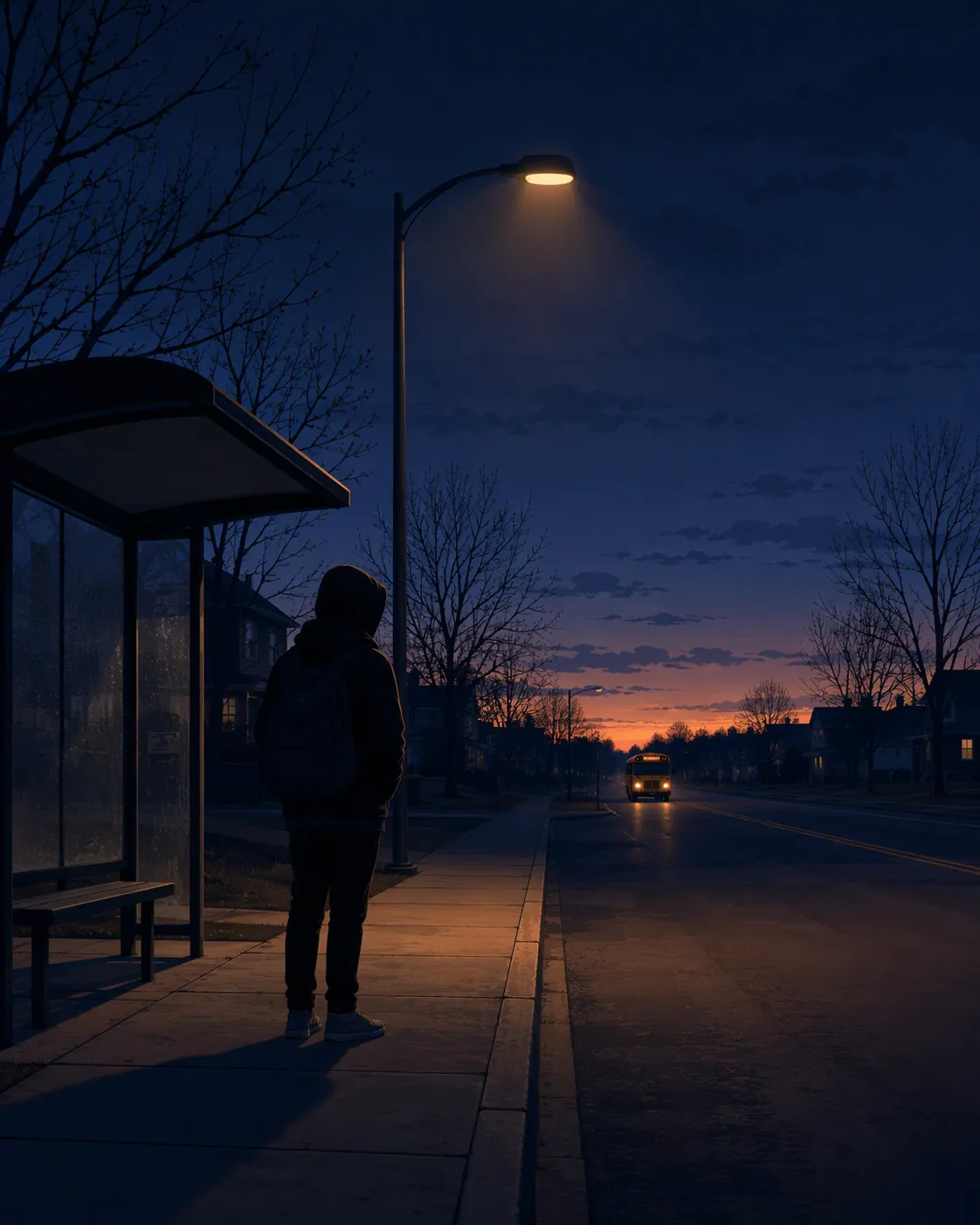
That distinction matters. The sleep impact of daylight saving time and school start times is not just a clock trick. In adolescents, the spring change lands on a body clock that has already shifted later, then meets a morning schedule that usually does not move at all. The teen may be blamed for staying up late, but the wake time is often set by adults, buses, attendance rules, sports practices, and a bell that does not care what the circadian system is doing.
Why “just one hour” is the wrong measurement
Puberty pushes the adolescent sleep-wake rhythm later. The American Academy of Pediatrics describes a phase delay of up to about 2 hours during adolescence, which means many teens are biologically more alert later in the evening and less ready to wake early in the morning. The same policy statement says adolescents generally need 8.5 to 9.5 hours of sleep and recommends that middle and high schools start no earlier than 8:30 a.m. [1]
That is the first place a lot of household advice goes wrong. Bedtime is treated as if it were a free lever: move it earlier, problem solved. But if a teen’s internal night has drifted later, sending them to bed earlier may simply create a longer stretch of lying awake. The alarm, meanwhile, still rings at the same adult-approved hour.
The school schedule leaves little cushion for many families. A CDC analysis of U.S. public middle and high schools found an average start time of 8:03 a.m., and only 17.7% started at 8:30 a.m. or later [2]. That baseline matters before daylight saving time even enters the room. If a teen is already waking too early for their biology, the March clock change does not create the problem from nothing. It removes what little slack was left.
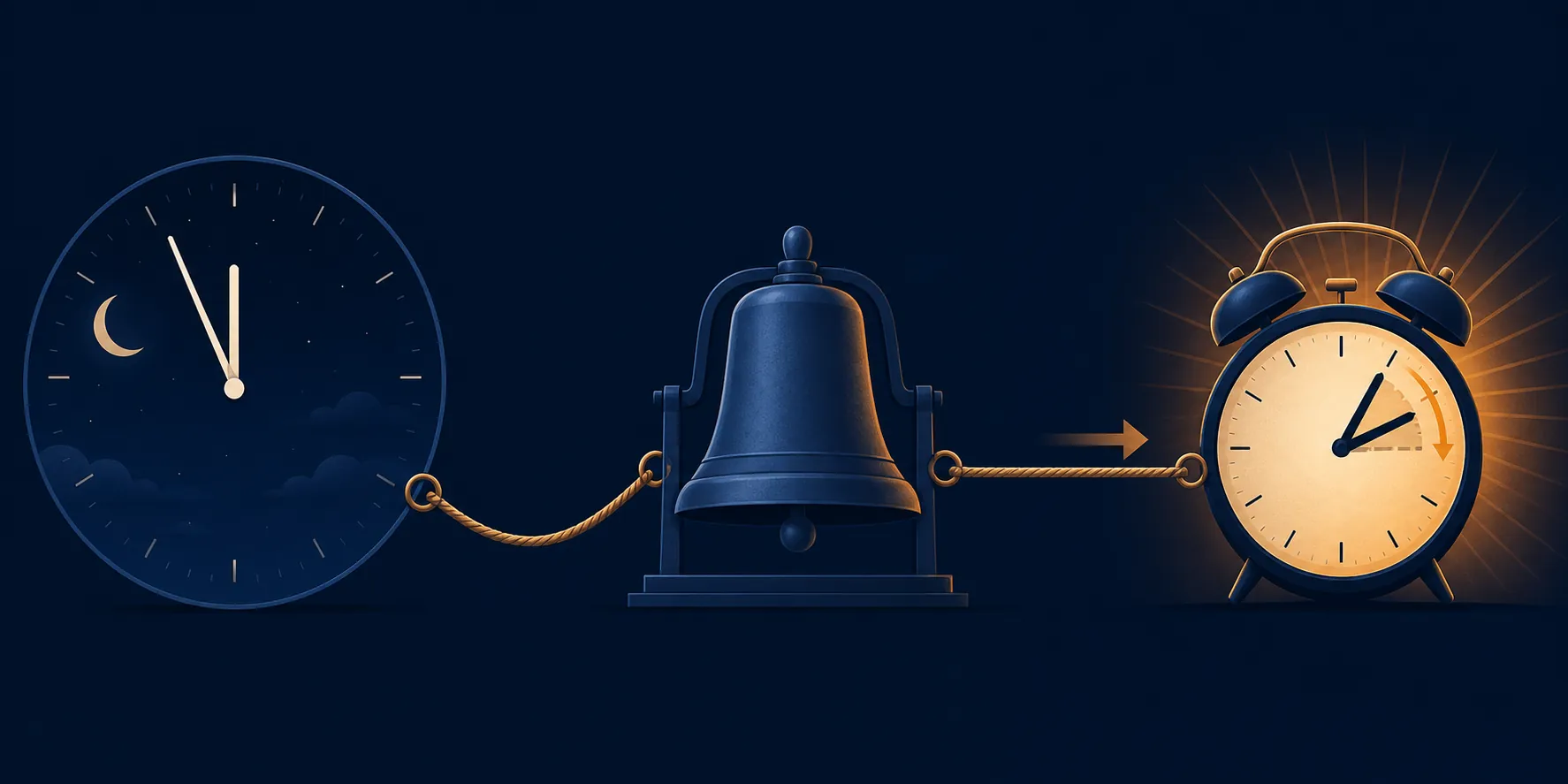
| Part of the chain | What it does to a teen’s week |
|---|---|
| Puberty-delayed body clock | Sleep pressure and circadian readiness shift later, so an earlier bedtime may not translate into earlier sleep [1]. |
| Fixed school bell | Wake time is held in place by school policy, transportation, and attendance expectations. |
| Spring clock change | The external clock jumps forward, tightening the gap between when the teen can fall asleep and when they must wake. |
| Daytime vigilance | Attention and reaction speed can pay the cost when sleep is shortened across the school week. |
For a broader overview of the adult and circadian side of the same clock shift, see The Science of Daylight Saving Time Sleep Disruption. The adolescent version is sharper because the biology and the bell are pulling against each other at the same time.
The clearest teen-specific measurement came from an early-start school
The most useful study here is small, which is exactly why it should be read carefully rather than inflated. In a 2015 Journal of Clinical Sleep Medicine study, Medina and colleagues followed 35 high school students in a district where school began at 7:40 a.m. The students wore actigraphs, allowing researchers to estimate sleep from movement rather than relying only on memory or parent report [3].
After the March daylight saving time transition, the students slept 32 minutes less per night on average. Across the school week, that added up to 2 hours and 42 minutes of lost sleep [3]. This is not a national average, and it should not be repeated as if every teenager loses exactly that amount. It is a single-district sample of 35 students. But it is a clean picture of what can happen when a spring-forward week collides with a 7:40 a.m. start.
The study did not stop at sleep duration. The researchers also measured vigilance and found slower reaction times and more lapses after the transition [3]. That is the part parents recognize in the kitchen: not just a sleepy teenager, but a teenager who is slower, foggier, and easier to derail. The visible problem is not moral weakness. It is the daytime expression of a shortened sleep opportunity.
The week pattern also matters. The American Academy of Sleep Medicine’s summary of the Medina study noted that the body may take 5 to 7 days to readjust after the shift to daylight saving time [4]. That tracks with what families often see: Monday is rough, but the teen may still look off on Wednesday or Thursday because the schedule keeps demanding early wakefulness before the circadian system has fully settled.
A one-hour clock change sounds small when it is described as a single missing hour on Sunday. It looks different when the week is measured by school-night sleep and attention. Losing a little sleep repeatedly, while still reporting to an early classroom, is the part that turns a calendar adjustment into a vigilance problem.
Start time decides how much of the clock change becomes impairment
The Medina study’s 7:40 a.m. setting is not a side detail. It is the mechanism in miniature. If the school day starts early, the teen cannot simply sleep later while their body adjusts. The morning end of sleep is cut off by the bell.
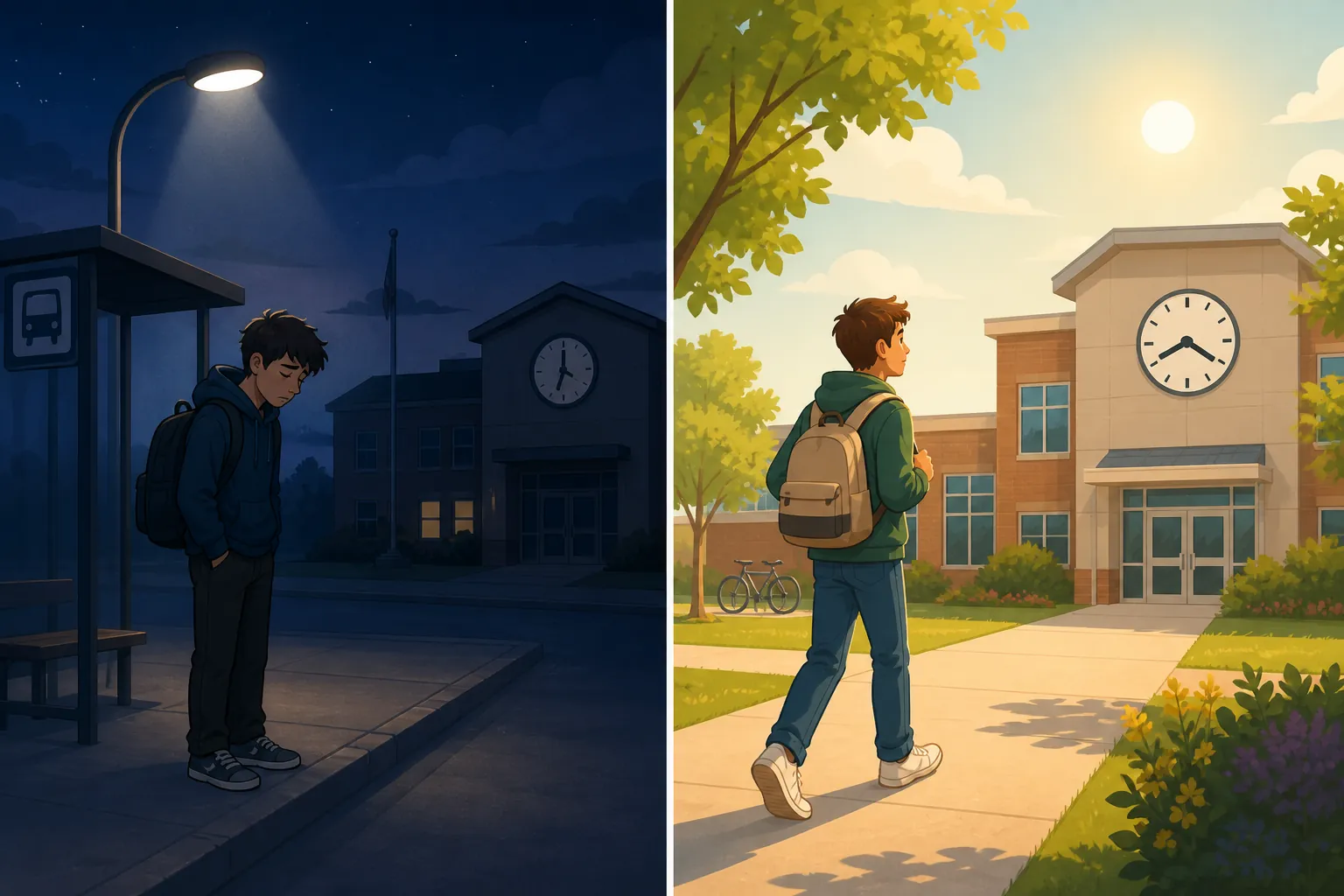
That is why the AAP’s 8:30 a.m. recommendation belongs in a sleep-science article, not only in a school-policy debate. A later start does not make the spring clock change disappear. It gives the adolescent body more room to absorb it. An early start removes that buffer and makes the wake-up demand land closer to the teen’s biological night [1].
The CDC baseline shows why this matters at scale: most public middle and high schools in that analysis were not starting at or after the AAP’s recommended time [2]. For many students, daylight saving time arrives on top of an already compressed schedule. Parents can adjust lamps and bedtime routines, but they usually cannot move the bus route.
A 2025 systematic review posted as a medRxiv preprint points in the same direction, with an important caveat: because it is a preprint, it should not be treated as settled, peer-reviewed consensus. Its review of daylight saving time and health studies found that spring-transition sleep loss was mainly detectable in people with early school or work start times [5]. That is a narrower and more useful conclusion than saying daylight saving time harms everyone in the same way.
This is also where some popular DST claims get too loose. Broad crash statistics and viral sleep-loss averages often travel faster than their evidence. For teens, the strongest point is not that every bad outcome after the clock change can be pinned on daylight saving time. It is that early fixed wake times make it more likely that a biological delay becomes real daytime impairment.
Families interested in the policy fight over permanent daylight saving time can read What the Sunshine Protection Act means for children’s sleep. The practical teen question in March is narrower: how do you reduce the damage when the clock jumps but school does not?
What parents can do during the spring-forward week
Home routines cannot fully solve a structural schedule problem. Still, they can keep the week from being worse than it has to be. Mass General Brigham clinician guidance recommends shifting sleep and wake times earlier by about 15 to 20 minutes per day before the transition, using morning light soon after waking, and limiting evening light that pushes the body clock later [6].
- Start before the weekend if possible. Move wake time, meals, and bedtime earlier in small 15- to 20-minute steps rather than trying to force a full hour all at once [6].
- Get bright morning light soon after waking. Outdoor light is usually more powerful than indoor light and helps signal that the biological day has begun [6].
- Treat evening light as a timing signal, not just a distraction. Bright rooms, phones, tablets, and late gaming can all tell the circadian system to stay later. For more on that mechanism, see How screen time disrupts children’s sleep through three mechanisms.
- Protect the riskiest mornings. If a teen drives, has an early athletic practice, or operates on too little sleep, build in extra caution. A verified analysis found about a 6% increase in fatal crashes over the week after the spring transition [7]. That statistic is not teen-specific, but it belongs in the safety conversation when adolescents are sleep-short and inexperienced behind the wheel.
- Do not schedule the week as if attention will be normal. If there is any flexibility, avoid loading the first few post-transition mornings with optional early commitments.
For a more general step-by-step plan, see How to Adjust to Daylight Saving Time Sleep Disruption. The teen version needs one extra rule: do not judge the plan only by whether bedtime moved earlier. Judge it by whether the whole circadian environment moved earlier — light, meals, activity, screens, and wake time.
When the problem looks bigger than daylight saving time
Some teens look wrecked after spring-forward because the clock change exposed a sleep problem that was already there. Mass General Brigham guidance highlights delayed sleep-wake phase disorder red flags: a persistent inability to fall asleep until very late, severe difficulty waking for school, and a pattern that does not resolve after the transition week [6].
That does not mean every late-sleeping teen has a disorder. It means that a teen who repeatedly cannot fall asleep until far into the night, then cannot function with a required school wake time, deserves more than another lecture about discipline. A pediatrician or sleep clinician can help sort out circadian delay, insomnia, mood issues, medication effects, ADHD-related sleep vulnerability, and schedule overload.
Teen athletes need special caution because sleep loss and early practices can stack together. For that adjacent risk, see How Sleep Deprivation Raises Injury Risk in Teen Athletes.
The week makes sense when the biology is visible
A teenager who looks impaired all week after spring-forward is not necessarily exaggerating one lost hour. The more coherent explanation is that a puberty-delayed clock met an early fixed bell, then lost the last bit of schedule slack. In the best teen-specific measurement we have here, that collision showed up as shorter sleep across the school week, slower reaction times, and more attention lapses in students at a 7:40 a.m. school [3].
That is biologically plausible, measurable, and worth planning around before the next March transition.
References
- School Start Times for Adolescents, Pediatrics, 2014.
- School Start Times for Middle School and High School Students — United States, 2011–12 School Year, CDC MMWR, 2015.
- Adverse Effects of Daylight Saving Time on Adolescents’ Sleep and Vigilance, Journal of Clinical Sleep Medicine, 2015.
- Study shows that teens lose sleep after change to daylight saving time, American Academy of Sleep Medicine.
- The effects of daylight saving time clock changes on health: a systematic review, medRxiv, 2025.
- Daylight saving time: How to adjust your sleep schedule, Mass General Brigham.
- Fatal car crashes spike after daylight saving time, American Academy of Sleep Medicine.
Supports these guides
Spot an error or have clinical feedback?
Because this article covers clinical, medication, or safety information, we use a moderated correction channel instead of open public comments. Let us know if something about “Why early school bells amplify daylight saving sleep loss” needs a closer look.
Send feedback on this article