
Mechanism explainer
What permanent daylight saving time does to your sleep
Permanent daylight saving time would not add sunlight — it would move it from morning to evening, and that shift works against the body's primary circadian time cue. Here is what the evidence says about the chronic effects, why sleep medicine organizations favor permanent standard time, and what remains unknown.
Permanent daylight saving time would not make winter brighter. It would take one clock hour of light from the morning and place it later in the day. That sounds tidy until you put it on a January calendar: on Jan. 1 under permanent daylight saving time, sunrise would be about 8:20 a.m. in New York City, 8:42 a.m. in Atlanta, 8:51 a.m. in Minneapolis–St. Paul, and 8:57 a.m. in Seattle.[1]
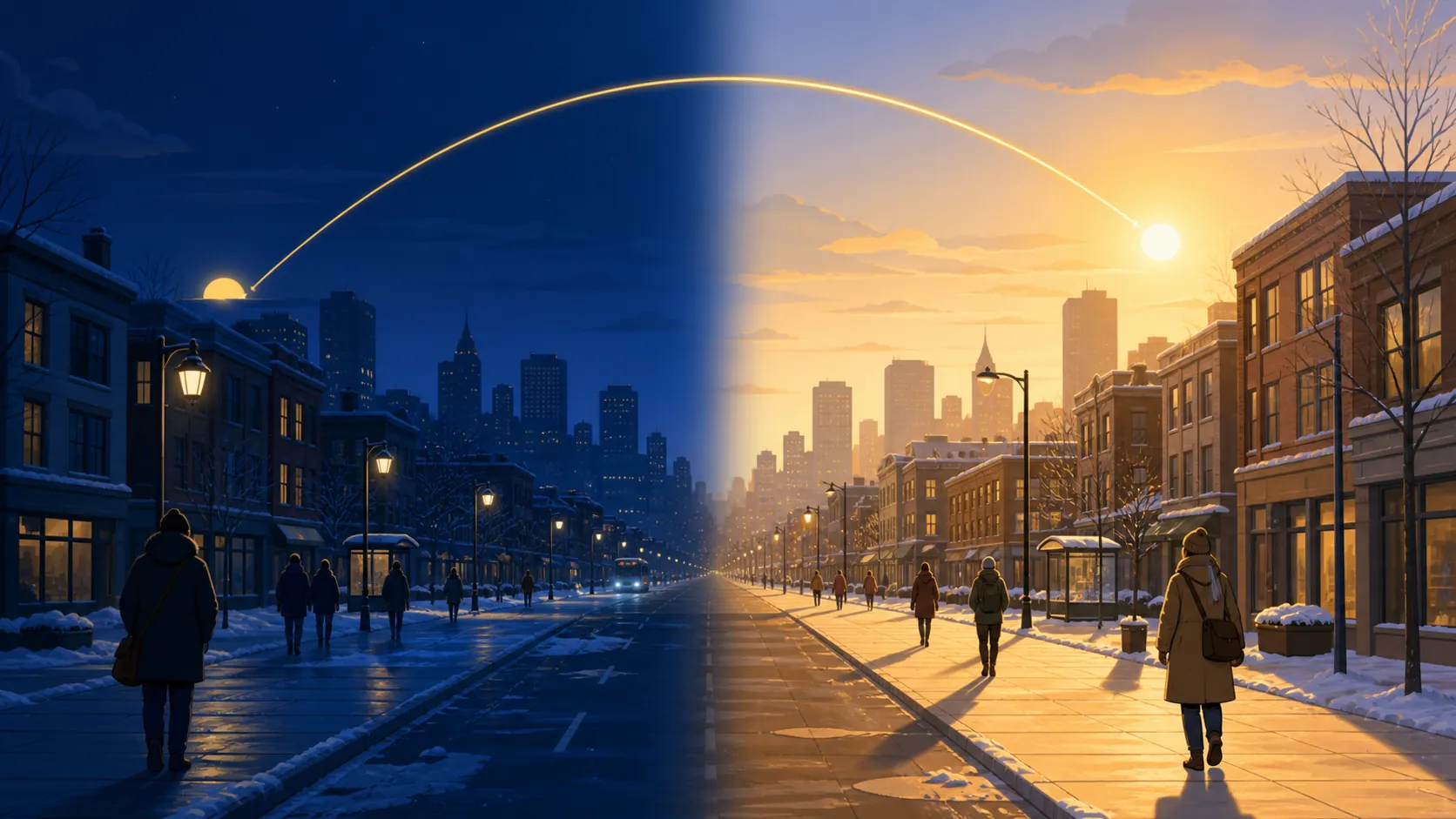
That is the part that often disappears inside the phrase “more evening sunshine.” The extra light after work is real. So is the missing light before school, before the early shift, before the first meeting, before the medication reminder, before the commute. The clock on the wall moves; the amount of sunlight does not.
| City | Approximate Jan. 1 sunrise under permanent DST |
|---|---|
| New York City | 8:20 a.m. |
| Atlanta | 8:42 a.m. |
| Minneapolis–St. Paul | 8:51 a.m. |
| Seattle | 8:57 a.m. |
For more geographic detail, the state-by-state version of this problem is covered separately in how permanent daylight saving time affects sleep, state by state. Here, the important point is simpler: permanent DST asks the body to wake earlier relative to the sun, especially in winter.
The hour moves; the alarm usually does not
Sleep timing is not set only by preference or discipline. The circadian system uses environmental light as a timing signal, and morning light is especially important because it helps anchor the body’s day earlier. The American Academy of Sleep Medicine states that permanent standard time aligns best with human circadian biology, and its position statements warn that daylight saving time can leave the body misaligned with the natural light-dark cycle.[2][3]
In plain language, darker winter mornings make it harder for the brain to receive the “day has started” signal at the time the social clock demands it. Brighter evening light can then push in the opposite direction, telling the circadian system that it is still daytime. The result is a later internal clock pressing against an unchanged school or work start.
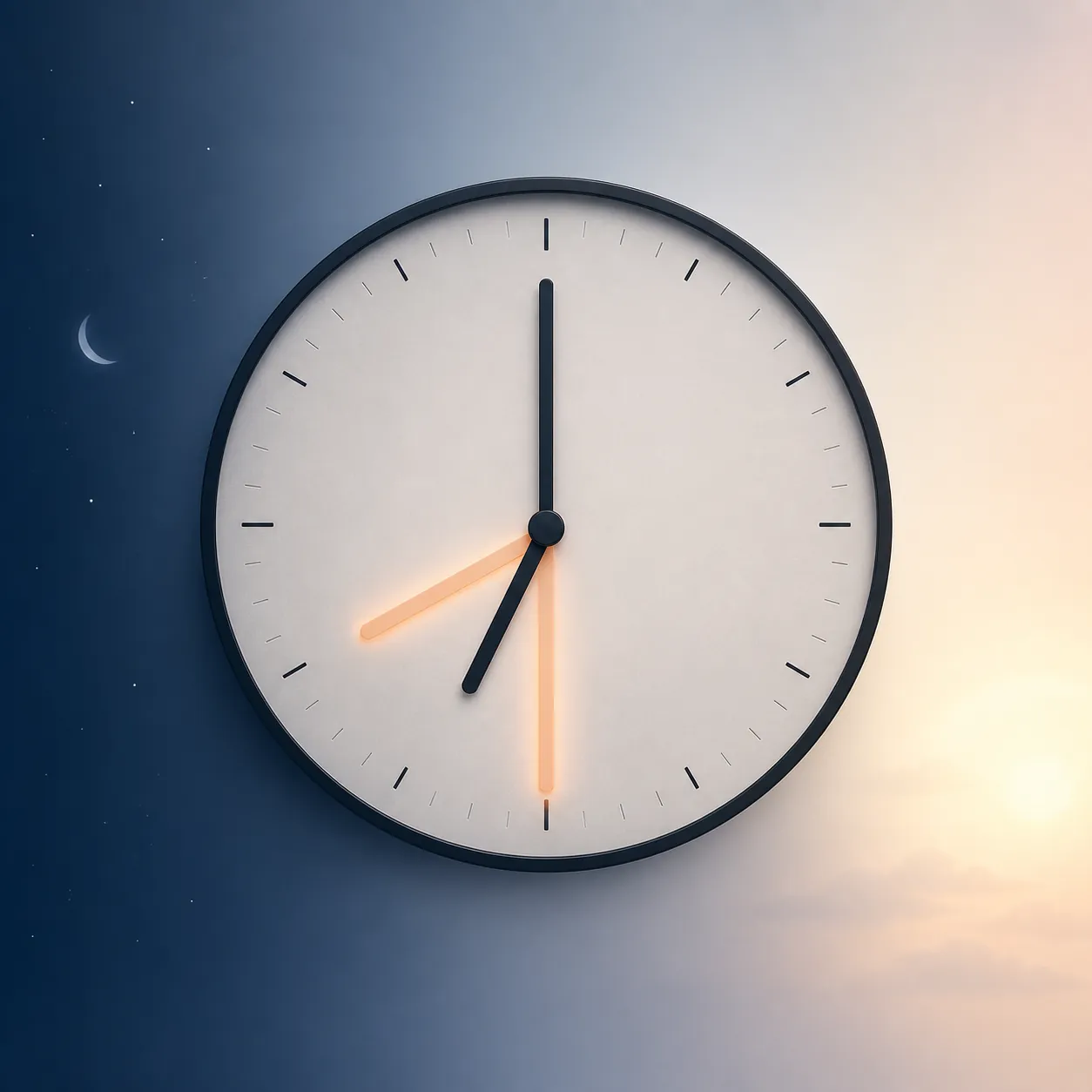
That later drift is called a phase delay. It does not mean everyone suddenly develops a sleep disorder. It means the body’s preferred sleep-wake timing is nudged later while obligations may stay where they are. A person who still needs to be awake at 6:30 a.m. may not feel the change as an elegant policy trade-off. They may feel it as a heavier morning, a shorter night, or the need to function before their body has fully entered its biological day.
This is why sleep scientists often describe permanent DST as a recipe for chronic social jet lag: the body clock and the social clock are separated day after day. If you want the deeper mechanics of light timing, zeitgebers, and daily habits, see From Sleep Hygiene to Circadian Hygiene. The same basic mechanism also helps explain why people with already-late sleep timing can struggle when morning cues are weak; that phase-delay pattern is discussed in What Is Delayed Sleep Phase Syndrome in Adults?.
The strongest sleep case is about alignment, not about liking mornings
There is nothing unserious about wanting light after work. Evening light can make the day feel more usable, especially in winter. The problem is treating that preference as if it were a free public-health gain. Permanent daylight saving time improves one part of the day by worsening another part of the day, and the worsened part is where the circadian system most needs a strong timing cue.
Permanent standard time does the opposite. It keeps solar noon, clock noon, and morning light closer together. That does not make winter easy. It does mean that the social clock is less aggressively set ahead of the sun. The AASM’s 2024 position statement calls permanent standard time the “optimal choice for health and safety,” and the earlier AASM statement says that standard time better aligns with human circadian biology.[2][3]
The phrase “better aligns” matters. It is not a claim that every person sleeps perfectly under standard time, or that every region has ideal winter light. It is a biological comparison between two clock policies. One gives more morning light relative to the alarm. The other delays morning light and extends evening light. For sleep, the direction of that trade matters.
What the evidence can prove directly, and what it supports indirectly
The evidence around daylight saving time is often bundled into one dramatic pile: lost sleep, heart attacks, crashes, groggy Mondays. Some of that evidence is strong. But much of it is about the twice-yearly clock transition, especially the spring shift, not about living indefinitely on permanent DST.
| Evidence tier | What it tells us | How to use it |
|---|---|---|
| Clock-transition studies | Spring-forward is associated with short-term sleep loss and acute health and safety signals. Reported findings include roughly 15–30 minutes less sleep per day after the spring transition, about 40 minutes less sleep on the following Monday, cardiovascular signals across studies, and increased fatal crash risk in some analyses.[3][4][5] | Strongest for the harm of clock switching. Useful context, but not direct proof of the chronic effects of permanent DST. |
| Direct chronic/permanent-DST evidence | AASM’s 2020 statement explicitly notes that few studies have evaluated the chronic effects of living under permanent daylight saving time.[3] | This is the main uncertainty. The mechanism is plausible and important, but the long-term outcome evidence is thinner than the transition evidence. |
| Sleep-medicine consensus | AASM position statements favor permanent standard time because it better matches human circadian biology; the 2024 statement was endorsed by more than 20 organizations.[2][3] | This is a synthesis judgment grounded in mechanism and available evidence, not a claim that every chronic outcome has been directly observed. |
| Modeling | A Stanford Medicine report on a mathematical model estimated that permanent standard time would be associated with about 300,000 fewer strokes and 2.6 million fewer people with obesity nationwide; permanent DST achieved roughly two-thirds of that modeled benefit, and any fixed time was modeled as healthier than switching.[6] | Directly compares policy options, but the numbers are model outputs, not observed national outcomes. |
| Systematic review preprint | A 2025 medRxiv preprint reviewed 149 studies across 36 countries and found strong evidence for acute myocardial infarction and fatal crash increases after spring-forward, while sleep-duration effects appeared mainly in people with early school or work start times; nearly all circadian-rhythm studies were rated low quality.[5] | Useful and cautionary, but not peer-reviewed at publication and not a reason to treat chronic permanent-DST effects as settled. |
The spring-forward data are compelling because the clock shift is abrupt and measurable. People lose sleep; Monday arrives fast; crashes and cardiovascular events can be counted in short windows. Those findings support the case against clock switching. They do not, by themselves, answer the more specific question of what happens after years of permanent daylight saving time.
The chronic case rests on a different kind of evidence: the physics of sunrise, the biology of circadian timing, professional synthesis, and modeling. That is still meaningful evidence. It is just not the same as a long natural experiment in which the entire country adopts permanent DST and researchers observe sleep, cardiovascular, metabolic, educational, and safety outcomes over many years.
What the Stanford model adds
The Stanford Medicine model is worth separating from both transition studies and consensus statements because it directly compares permanent standard time, permanent daylight saving time, and the current switching system. In that model, permanent standard time produced the largest estimated health benefit, permanent DST produced a smaller benefit, and switching was the least favorable option. The model also found an exception: about 15% of people categorized as morning larks did best under permanent DST.[6]
Those estimates should not be read as observed outcomes. They depend on assumptions, including a modeled 10 p.m. to 7 a.m. sleep schedule and limited outdoor light exposure. The Stanford report notes that real-world light habits may be worse than the model assumes, which could make circadian misalignment more pronounced, but that is still an inference from a model rather than a measured national result.[6]
The 2025 preprint complicates the easy version of the story
The 2025 medRxiv systematic review is useful partly because it resists overstatement. It supports strong concern about acute myocardial infarction and fatal crashes after spring-forward, but it also reports that sleep-duration effects were most evident among people with early school or work start times, and that nearly all circadian-rhythm studies it reviewed were low quality.[5]
Because it is a preprint, that review should not be treated as the final word. Still, its caution is healthy. The permanent-DST sleep argument is strongest when it stays precise: acute transition harms are more directly observed; chronic permanent-DST harms are supported by mechanism, expert consensus, and modeling, with fewer direct long-term studies.
The people who pay first are the people with fixed mornings
The burden is not evenly distributed. A later sunrise matters most when the morning cannot move: children waiting for school transportation, early-start workers, shift workers coming off difficult schedules, older adults whose sleep is already fragmented, and people with ADHD or delayed sleep timing who may rely heavily on strong morning cues. The unequal-burden question is large enough that it belongs in its own article: How Permanent Daylight Saving Time Unequally Affects Sleep.
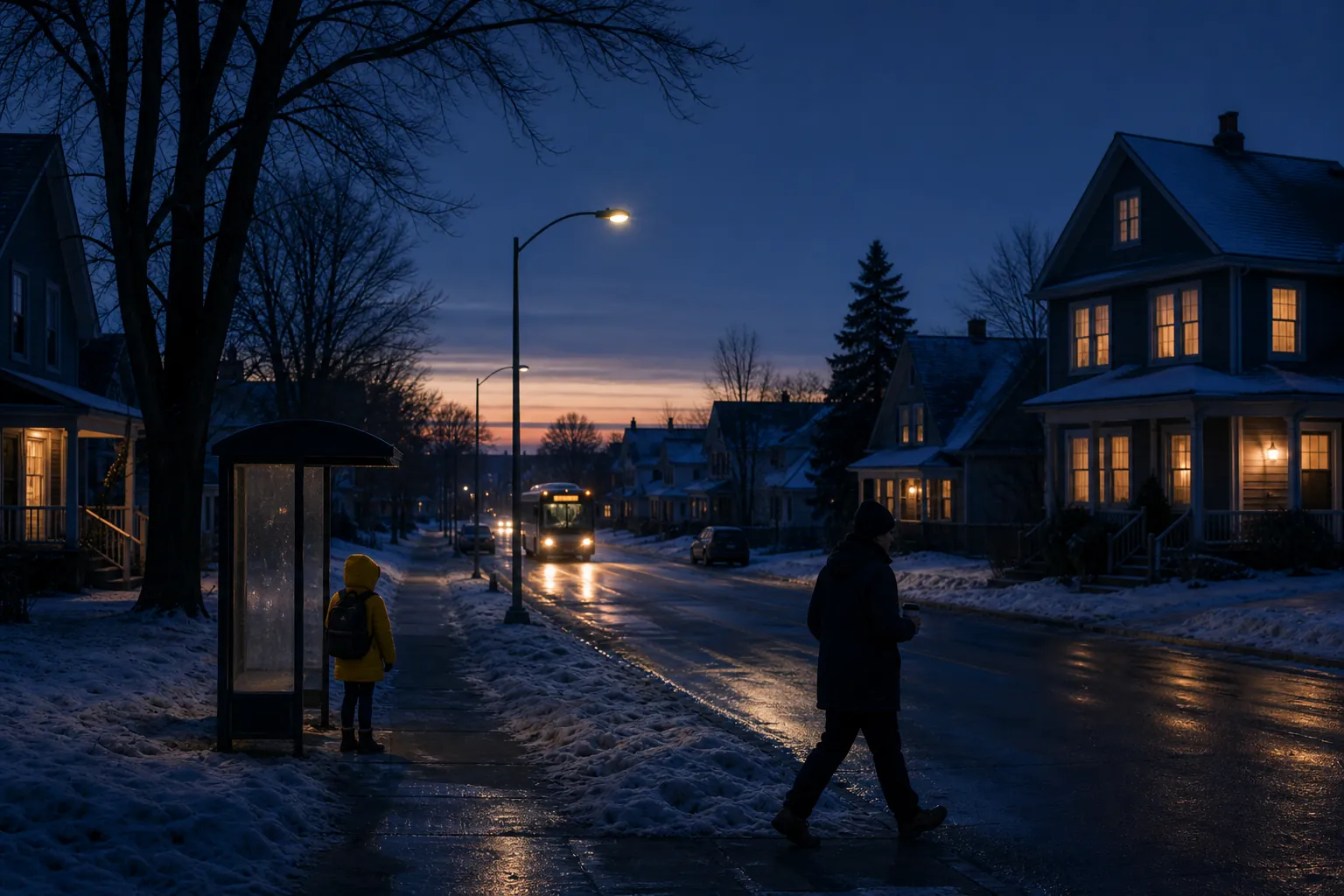
This is also why adjustment tips, while useful, do not solve the policy question. Morning light exposure, consistent wake times, and evening light management can help people live with whichever clock system exists; they do not create the missing winter sunrise. If the country continues switching clocks, practical transition advice is covered in How to Adjust to Daylight Saving Time Sleep Disruption.
Where the 2026 policy debate fits
As of Aug. 1, 2026, the federal push for permanent daylight saving time remains a live policy issue, but it is not settled law. The legislative status is tracked separately in How the Sunshine Protection Act Affects Sleep in 2026. For sleep, the key policy distinction is not whether people dislike changing clocks. Many do. The distinction is between ending the switches by choosing permanent standard time or ending them by choosing permanent daylight saving time.
Sleep organizations have been unusually consistent on that point. The Sleep Research Society advocates for permanent standard time, matching the AASM’s position that standard time better supports circadian alignment.[7][2]
So what would permanent DST do to sleep?
For many people, permanent daylight saving time would tend to push sleep timing later while school, work, caregiving, and commuting schedules remain fixed. The most visible mechanism is the dark winter morning: less early light to advance and stabilize the body clock, plus more later light that can delay it. The likely consequence is more circadian misalignment, especially for people who cannot shift their mornings later.
That does not mean every chronic health outcome has been proven by direct long-term permanent-DST studies. It means permanent DST is not a neutral clock preference. The evidence-calibrated conclusion is narrower and stronger: permanent standard time better protects morning circadian alignment, which is why sleep medicine organizations favor it; the chronic-risk case against permanent DST is strong by mechanism, consensus, and modeling, but not as directly observed as the acute harms of clock transitions.
References
- Permanent daylight saving time could mean 9 a.m. sunrises in some areas during winter — Fox Weather.
- Permanent standard time is the optimal choice for health and safety: an American Academy of Sleep Medicine position statement — Journal of Clinical Sleep Medicine, 2024.
- Daylight saving time: an American Academy of Sleep Medicine position statement — Journal of Clinical Sleep Medicine, 2020.
- Daylight saving time, circadian rhythms, and cardiovascular health — Journal of Clinical Medicine, 2018.
- Daylight-Saving Time & Health: A Systematic Review — medRxiv preprint, 2025.
- Study suggests most Americans would be healthier without daylight saving time — Stanford Medicine, September 2025.
- Permanent Standard Time — Sleep Research Society.
Supports these guides
Spot an error or have clinical feedback?
Because this article covers clinical, medication, or safety information, we use a moderated correction channel instead of open public comments. Let us know if something about “What permanent daylight saving time does to your sleep” needs a closer look.
Send feedback on this article