
When Chicago’s air quality index hit 402 during the July 2026 wildfire smoke episode, the question stopped sounding theoretical. The city briefly had the worst air quality of any major city globally, and a lot of people who usually sleep well had good reason to wonder why they woke up congested, restless, or oddly unrefreshed after a night indoors.[1]
The short answer is yes: bad air quality in Chicago can plausibly worsen sleep. The more useful answer is narrower. Smoke, PM2.5, nitrogen dioxide, and stale bedroom air can add physiological stress at night, but they do not explain every bad night, and they do not replace diagnoses like sleep apnea, chronic insomnia, anxiety disorders, or medication-related sleep disruption.
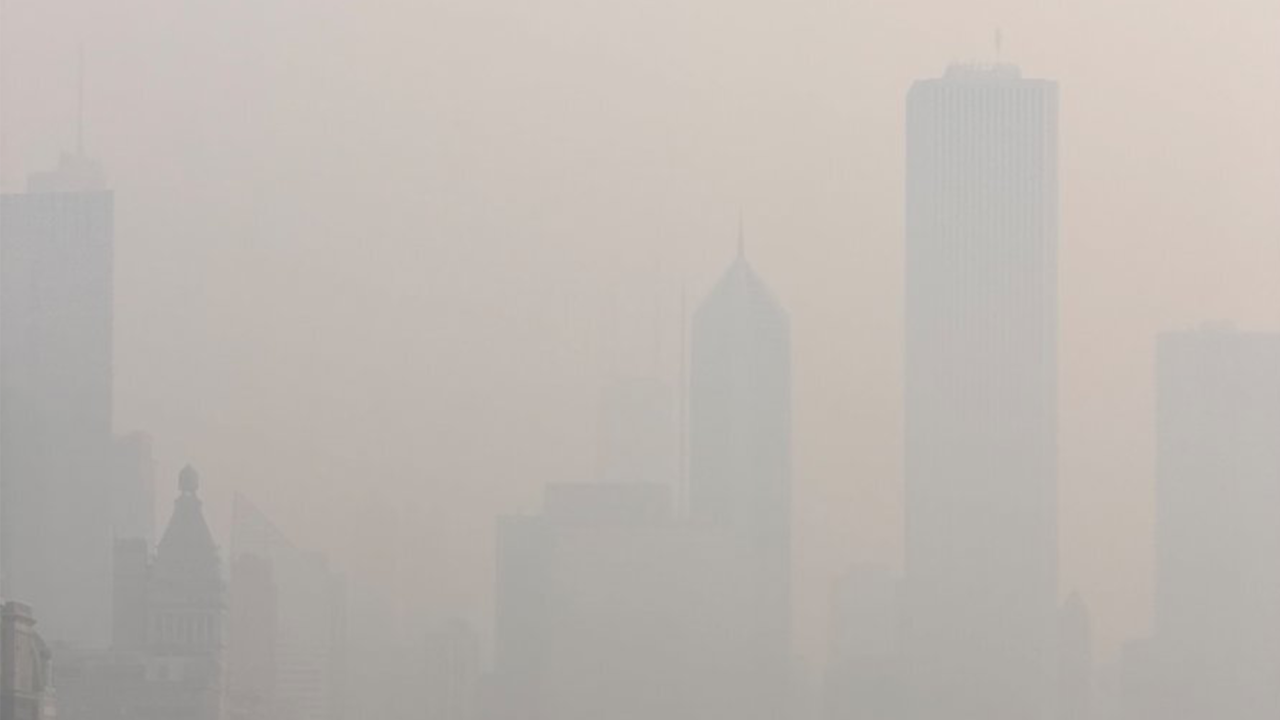
That distinction matters because July’s smoke was not Chicago’s normal air. The acute wildfire-driven spike was a different exposure pattern from the city’s usual 2026 baseline, which has averaged in the “Good” AQI range around 33 for much of the year.[2] A bedroom strategy for a smoke day is therefore not the same as a year-round explanation for insomnia.
Why Smoke Can Follow You Into Bed
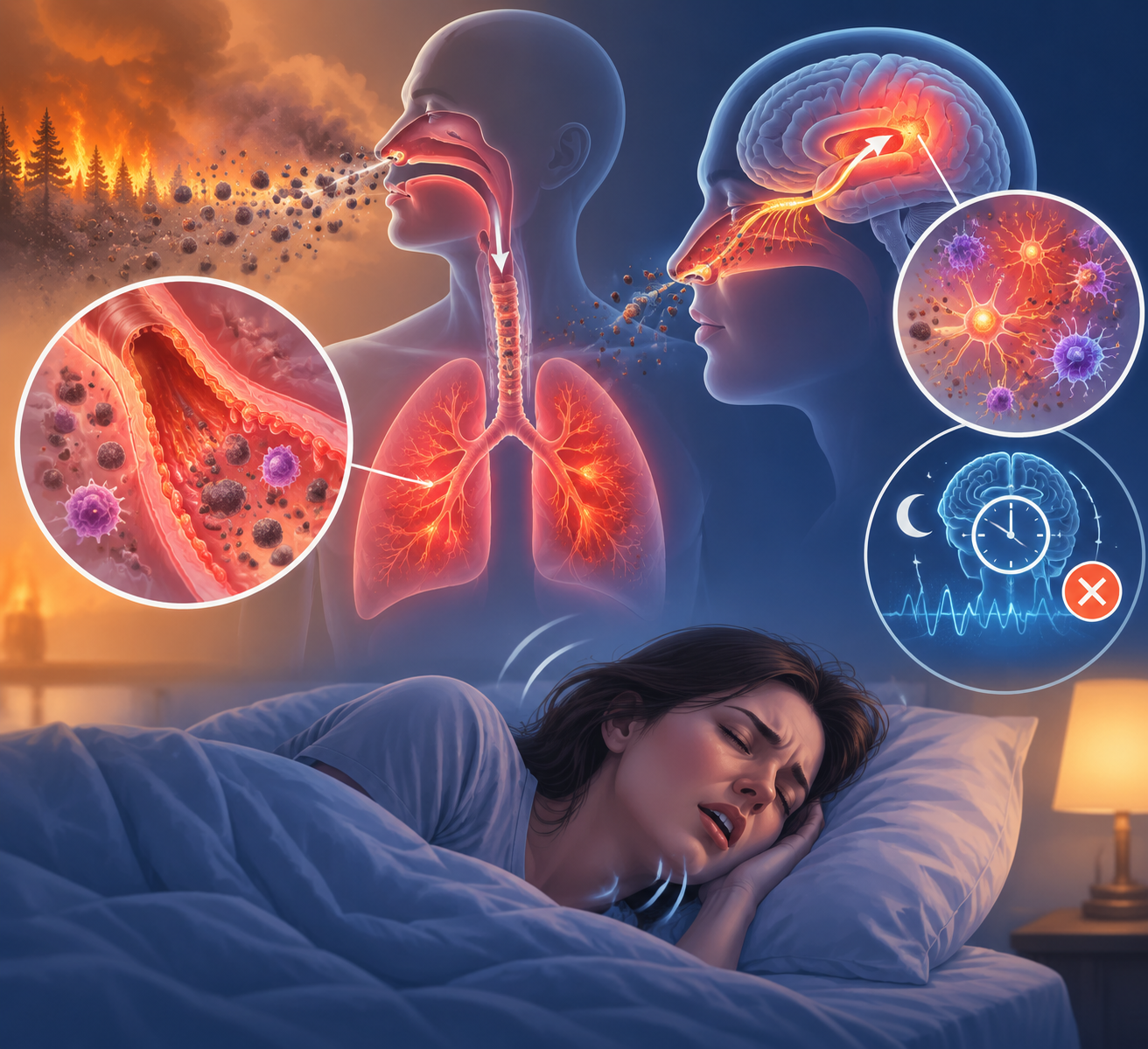
The bedroom is not sealed off from the city outside. Outdoor particles get indoors through window gaps, doors, ventilation systems, and the small leaks renters learn to notice only after a bad storm or a smoke event. Once inside, fine particulate matter is small enough to reach deep into the respiratory tract. That is the first sleep pathway: irritated airways.
PM2.5 can deposit in the airways and contribute to inflammation, swelling, and obstruction. For a person who snores, has asthma, has allergies, or has undiagnosed obstructive sleep apnea, that extra irritation can matter. Sleep already reduces upper-airway muscle tone; add inflamed nasal passages or irritated lower airways, and the night can tilt toward more mouth breathing, more snoring, more arousals, or more labored breathing.
The second pathway is neurological. Fine particles are not just a lung story. Research on air pollution and sleep describes routes by which particulate matter may affect the nervous system, including movement through the olfactory nerve, neuroinflammation, and changes in sleep-wake regulation.[3] That does not mean a smoky evening flips a single insomnia switch. It means air pollution can add pressure to systems the brain uses to organize sleep.
There is also the plain fact that smoke feels threatening. People check apps, smell burning, keep children indoors, tape window seams, and listen for the purifier. That psychological pathway deserves attention; it is covered more directly in why wildfire smoke keeps your brain on high alert at night. Here, the focus is the physical side: particles, gases, ventilation, and what they do to a sleeping body.
What The Evidence Says, Without Overselling It
The association between air pollution and poor sleep is not based on one smoky week in one city. A 2020 systematic review found that 21 of 22 studies reported a positive association between air pollution exposure and adverse sleep health.[3] That is a consistent signal, but not a perfectly tidy one. The review also noted that many studies relied on subjective sleep measures, and the methods varied enough that the authors could not combine the studies into a single meta-analysis.[3]
The size of the effect is important. In a study of 27,417 adults in rural China, each interquartile-range increase in PM2.5 was associated with an odds ratio of 1.15 for poor sleep quality, and each interquartile-range increase in nitrogen dioxide had an odds ratio of 1.14.[4] Those are not nothing. They are also not the kind of numbers that let anyone say pollution is the single cause of a person’s sleep problem.
This is the part that can feel unsatisfying but is clinically useful: the signal is real and modest. Pollution can make sleep worse across populations, especially when exposure rises, yet an individual bad night may still involve congestion, stress, heat, alcohol, an inconsistent schedule, untreated apnea, insomnia conditioning, or some combination of all of them.
The Bedroom Air Problem Is Not Distributed Evenly
Citywide AQI gives everyone the same number. Bedrooms do not give everyone the same exposure. A household with tight windows, central filtration, and a good portable HEPA unit is not living inside the same air as a household with old window frames, nearby traffic, no air conditioning, and a landlord who is slow to repair gaps.
The COMPASS study makes that indoor inequality harder to ignore. In a predominantly Black/African American South Side Chicago cohort, average household PM2.5 was 43.8 micrograms per cubic meter, about nine times the World Health Organization guideline of 5 micrograms per cubic meter.[5] The study also found that Black households had PM2.5 levels 46% higher than non-Black households, and households with annual income below $15,000 had average PM2.5 of 52.5 micrograms per cubic meter compared with 18.2 micrograms per cubic meter in households above $35,000.[5]
Those numbers should not be stretched into a map of every Chicago bedroom. The cohort was concentrated on the South Side, and its findings may not generalize cleanly to all neighborhoods. But they do show why “stay indoors” is incomplete advice. Indoors is not one exposure category. Some homes start the night with a much higher particle burden before wildfire smoke even arrives.
Ventilation Helps Sleep Until The Air Outside Becomes The Problem
There is a second bedroom-air variable that becomes awkward during smoke events: carbon dioxide. CO2 is not the same pollutant as PM2.5, and it is not the main wildfire-smoke concern. But it is a practical sleep issue because closed bedrooms can accumulate exhaled air overnight, especially when two people share a small room with the door shut.
In a field experiment on bedroom ventilation, rooms with windows closed averaged 2,585 ppm CO2, compared with 660 ppm when windows were open. Lower CO2 was associated with better sleep efficiency and better next-day cognitive performance.[6] On a normal clean-air night, that finding argues for ventilation. On a smoke night, it creates the tradeoff many Chicago residents felt in real time: opening a window may lower CO2 while bringing in PM2.5.
That is why the right question is not simply “Should I open the window?” It is “What am I trying to dilute, and what am I letting in?” During a high-smoke event, filtration usually becomes the safer first move. Once outdoor AQI improves, ventilation can again become part of the sleep strategy, especially in stuffy bedrooms where morning grogginess tracks with closed windows and poor air exchange.
What A HEPA Filter Can Realistically Do
The most useful intervention evidence is not spectacular, which is partly why it is useful. In a double-blind randomized crossover pilot study of 30 adults, using a HEPA air purifier in the bedroom increased total sleep time by 12 minutes per night and total time in bed by 19 minutes per night.[7] For a household trying to get through a smoke week, 12 minutes is not trivial. Over several nights, it can be the difference between feeling slightly less wrecked and feeling stuck in the same deficit.
But that same pilot study also found higher wake after sleep onset in the filter condition.[7] That counterintuitive result should stay in the discussion, not get hidden under product enthusiasm. The trial was small, and it does not prove that a purifier will make every sleeper more consolidated or refreshed. It suggests filtration may help some measurable parts of sleep while leaving other aspects mixed.
In practice, a bedroom purifier is most defensible as harm reduction: reduce particle exposure where you spend a long, vulnerable block of time, especially during wildfire smoke episodes. It is not a treatment for obstructive sleep apnea. It is not cognitive behavioral therapy for chronic insomnia. It is not a way to make a leaky, overheated, noisy bedroom suddenly ideal.
A Smoke-Night Bedroom Strategy
The goal on a bad-air night is not to perfect the bedroom. It is to reduce the exposures most likely to interfere with breathing and sleep continuity while avoiding fixes that create a different air problem.
| Situation | Better first move | Why it matters for sleep |
|---|---|---|
| Outdoor AQI is high from wildfire smoke | Keep windows closed and run bedroom filtration if available | Reduces particle entry during the hours when airway irritation can disturb sleep |
| Bedroom feels stuffy but outdoor air is still poor | Use filtration and internal air circulation before opening windows | Avoids trading lower CO2 for higher PM2.5 during smoke |
| Outdoor AQI has improved | Ventilate the room when conditions are cleaner | Helps reduce accumulated CO2 and stale indoor air |
| Sleep remains poor after the smoke clears | Look beyond air quality | Persistent insomnia symptoms, loud snoring, gasping, or daytime sleepiness need condition-specific evaluation |
Placement matters more than people like to admit. A portable purifier has to serve the air you actually breathe at night. That usually means the bedroom, with the door closed enough to create a cleaner zone, and with the unit running long enough before sleep to reduce particle levels. A purifier in the living room does less for a sleeping person behind a closed bedroom door.
Window decisions should follow outdoor conditions, not habit. On ordinary nights, cracking a window may improve ventilation and reduce CO2 buildup. During wildfire smoke, the same move can pull in the pollutant most likely to irritate airways. If the bedroom is hot, the tradeoff becomes harder, especially in homes without air conditioning. In that case, the least bad option may be filtration plus the safest available cooling method rather than assuming fresh air is clean air.
For renters, small leaks are not a moral failure. If smoke smell enters around a window, the person sleeping there is dealing with a building envelope problem, not a willpower problem. Temporary sealing around obvious gaps can reduce infiltration during a smoke event, but it should be paired with attention to heat, humidity, and ventilation once the outdoor air improves.
Population Benefits Are Real, But They Are Not Bedside Proof
At the population level, cleaner air could mean fewer people sleeping poorly. A 2025 report described a modeled projection that cutting PM2.5 in half could reduce the likelihood of poor sleep by about one in 10 among adults 45 and older.[8] That is a scale argument, not a promise that one household intervention will produce the same result for one sleeper.
This difference between population modeling and nightly experience matters. A city can improve sleep health by reducing pollution exposure across neighborhoods. A person can also improve their odds by filtering bedroom air during smoke. But if someone wakes gasping, has witnessed pauses in breathing, cannot sleep for months, or has disabling daytime sleepiness, the missing intervention is not simply more aggressive air cleaning.
So, Did Chicago’s Air Quality Disrupt Your Sleep?
During the July 2026 smoke episode, it is biologically plausible that Chicago’s air quality made sleep worse: more airway irritation, more congestion, more breathing instability in susceptible sleepers, more inflammatory signaling, and more stress on sleep-wake regulation. The AQI 402 number gives residents permission to connect a physical event with a physical night.
The calibrated answer is the one worth keeping. Improving bedroom air quality is a reasonable sleep-hygiene step during poor-air events, especially through filtration and careful ventilation choices. The expected benefit is usually modest, and that modesty is not a reason to ignore it. It is a reason to avoid pretending it is a cure.
If sleep improves when the smoke clears, the air probably was part of the story. If poor sleep persists, or if the nights include loud snoring, gasping, morning headaches, long-term insomnia, or significant daytime impairment, the next step is not just a better purifier. It is evaluation for the sleep disorder that may have been there before the smoke rolled in.
References
- Chicago air quality is the worst in the world, data shows — NBC Chicago, July 2026.
- Chicago Historical Air Quality Analysis — AQI.in.
- Air pollution exposure and adverse sleep health across the life course: A systematic review — Liu et al., 2020.
- Is long-term exposure to air pollution associated with poor sleep quality in rural China? — Chen et al., 2019.
- Household air pollution disparities between socioeconomic groups in Chicago — Krakowka et al., 2024.
- The effects of bedroom air quality on sleep and next-day performance — Strøm-Tejsen et al., Indoor Air, 2016.
- Can air purification improve sleep quality? A 2-week randomised-controlled crossover pilot study — 2022.
- Air pollution can affect how well we sleep, scientists discover — The Guardian, September 2025.
Comments
Join the discussion with an anonymous comment.