Mechanism explainer
How Sonic Booms Disturb Sleep — and What Actually Wakes You
The FAA's 'up to 82% sleep disturbance' estimate for overnight launches counts any sleep-stage change — in 1970s lab studies, only about 5% of simulated booms caused a full awakening. Here's what sonic booms do to sleeping physiology, how thin the evidence really is, and who repeated launch nights put at risk.
If a rocket launch sonic boom snapped you awake, your body probably did not “overreact.” A boom is a sudden pressure wave with a steep rise time, and sleeping brains do not turn the outside world off. They keep sampling sound for signs that something has changed. That monitoring can produce anything from a brief shift into lighter sleep to a racing-heart awakening you remember clearly in the morning.
The confusing part is that public numbers often use “sleep disturbance” more broadly than a household does. In the FAA’s final noise analysis for SpaceX Starship operations at Kennedy Space Center’s LC-39A, the agency modeled sleep disturbance from overnight sonic booms and reported estimates as high as 82%; the same analysis defines sleep disturbance as any induced change in sleep stage, not necessarily a behavioral awakening where someone opens their eyes, sits up, or remembers being awake. The same environmental review allows up to 44 Starship launches per year from LC-39A, with half assumed to occur between 10 p.m. and 7 a.m., which is why the sleep question has shifted from “could one boom wake me?” to “what happens if this repeats?” [1]
What actually woke you
A sudden boom can reach sleep through two overlapping routes. One is the acoustic startle pathway: a fast, unexpected sound can trigger muscle tension, a jump, a spike in heart rate, and a feeling of alarm before you have identified the source. The other is the brain’s overnight “watchman” function. Sleep is protected, but it is not sensory isolation; the auditory system continues to evaluate whether sound is meaningful, threatening, or unusual. Reviews of environmental noise and sleep describe this as one reason nighttime noise can fragment sleep even when the sleeper does not remember every event the next morning [2].
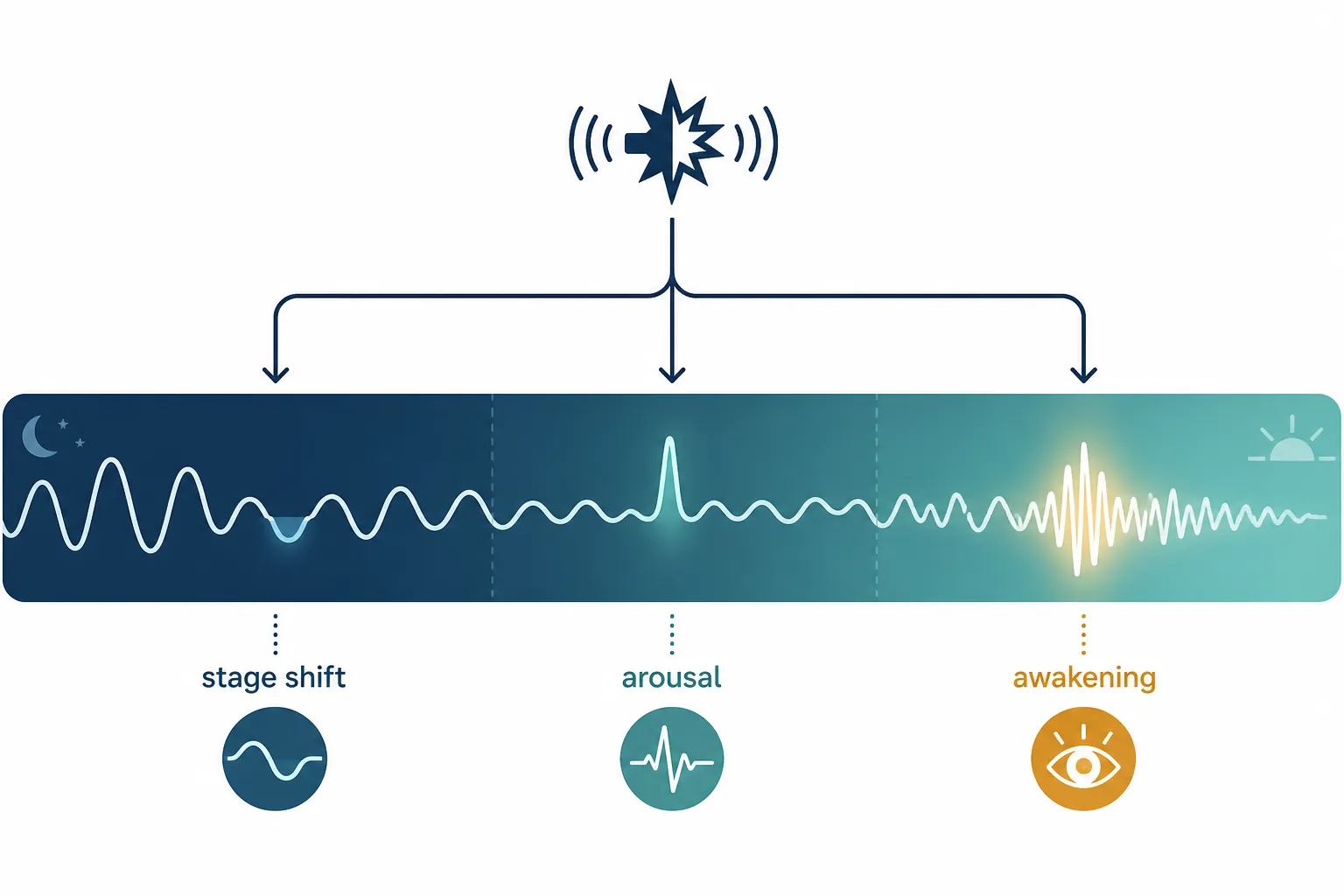
That distinction matters after a launch night. A person can have a real physiological response without having a full remembered awakening. The sleeper may move from deeper sleep to lighter sleep, have a short autonomic arousal, briefly wake and fall back asleep with no memory, or wake fully and remain alert. These are related outcomes, but they are not interchangeable.
| What happened | What it means | What you may remember |
|---|---|---|
| Sleep-stage shift | The brain moves from a deeper stage toward lighter sleep, or from one stage to another. This is included in the FAA’s broad “sleep disturbance” definition [1]. | Often nothing, or only a sense that sleep felt lighter. |
| Autonomic arousal | Heart rate, blood pressure, or stress physiology changes briefly, sometimes without a clear cortical awakening. | Possibly a jolt, a racing heart, or no memory at all. |
| Behavioral awakening | You become awake enough to notice the room, check the time, look outside, or search for the cause. | Usually remembered, especially if fear or confusion follows. |
| After-waking stress response | The body remains activated after the sound has passed because the event felt threatening or uncertain. | This is the part people often describe the next morning: “I couldn’t settle back down.” |
The “after” can be more disruptive than the boom’s duration. If you wake into uncertainty — was that an explosion, a storm, a launch, something near the house? — your brain has work to do. It checks for danger. It listens for a second sound. It may keep the body on alert long after the pressure wave is gone. For people who already sleep lightly, care for children, live with trauma reminders, or have trouble returning to sleep, that extra alert period is not trivial.
This is also why “it was only one noise” is too casual a response. A single event can be low risk for long-term health and still be a real interruption to a night. The right question is not whether the body reacted. It is what kind of reaction occurred, how often it happens, and who in the household has the least margin for recovery.
The 82% figure does not mean 82% of people woke up
The FAA’s “up to 82%” modeled estimate is alarming if it is read as “82% of nearby residents will sit upright in bed.” That is not what the model’s definition says. It counts an induced change in sleep stage. In sleep-science terms, that is a broader and more sensitive endpoint than a remembered awakening [1].
The older sonic-boom sleep evidence shows why the distinction is not academic. In 1970s simulated-boom laboratory work, roughly 5% of booms produced full awakenings, while roughly 14% produced sleep-stage shifts [3][4]. Those numbers are not a modern Starship prediction. They do, however, show the hierarchy: stage shifts are more common than remembered awakenings, and a broad disturbance definition will produce a larger number than an awakening-only definition.
So if a headline or social post turns the FAA estimate into “82% will be woken,” it has quietly changed the measurement. If someone says the number is meaningless because “people don’t all wake up,” that also misses the point. Sleep-stage changes can matter, especially when repeated, but they are not the same event as opening your eyes in panic.
Why lower-level sleep disruption can happen without a remembered awakening
Noise does not have to produce a dramatic awakening to disturb sleep architecture. Reviews of nighttime environmental noise describe increases in wakefulness and lighter sleep, with reductions in slow-wave sleep and REM sleep under noise exposure. They also separate cortical arousals — changes visible in brain activity — from autonomic responses such as heart-rate and blood-pressure changes, which may habituate less completely over time [2].
Aircraft-noise research is not a perfect substitute for rocket sonic booms. A jet overflight and a reentry boom are physically different events. But aircraft-noise dose-response curves help put the sleep endpoints on a scale. Penn State’s NoiseQuest summary describes older and newer aircraft-noise curves in which awakening probability rises as indoor event level rises; at an indoor sound exposure level around 58 dB, the 1992 FICON curve estimated about 10% awakened, while the field-based 1997 FICAN curve estimated about 3% at the same level [5].
The same broader literature reports that remembered awakenings occur at higher levels than some physiological responses. A review of environmental noise and sleep notes awakenings from nocturnal aircraft noise at levels as low as about 48 dB, while physiological arousals have been observed around 33 dB [2]. That gap is one reason official sleep models do not restrict themselves to “did the person remember waking?” The body can register an event below the threshold of morning recall.
For the person in bed, however, the remembered event is often the one that matters emotionally. A parent checks on a child. An older adult knows the next hour may be lost. A veteran startled by a blast-like sound may not experience it as ordinary neighborhood noise. The FAA’s own analysis names disturbance as especially likely for veterans with PTSD, children with autism or sleep disorders, and elderly people, and it notes that unexpected noise is most disturbing [1]. That is a more useful risk frame than treating “the community” as if every sleeper has the same nervous system.
The sonic-boom sleep evidence is real, but thin
The cleanest awakening-versus-stage-shift numbers come from old simulated-boom sleep experiments. They are valuable because they measured more than one sleep endpoint. They are fragile because the evidence base was small, the equipment reflected its era, and the studies were not designed around modern Starship-class operations. The FAA Office of Aviation Medicine report behind the 1970s work included only two sleeping subjects in the main laboratory experiment, with simulated indoor booms around 80–85 dBA [3].
Their main use here is not precision forecasting. It is measurement discipline: a more sensitive sleep endpoint will produce a larger disturbance number than an awakening-only endpoint. If a regulatory model counts sleep-stage changes, the result should not be translated into a household count of people who fully woke up.
A separate 1972 field study of military subjects is often cited more narrowly: the available abstract reports about a 10% increase in awakening frequency at an overpressure of roughly 60 N/m² [6]. That is useful as a field signal, but it should not be stretched into a general rule for coastal neighborhoods, children, older adults, or people sleeping through modern launch operations.
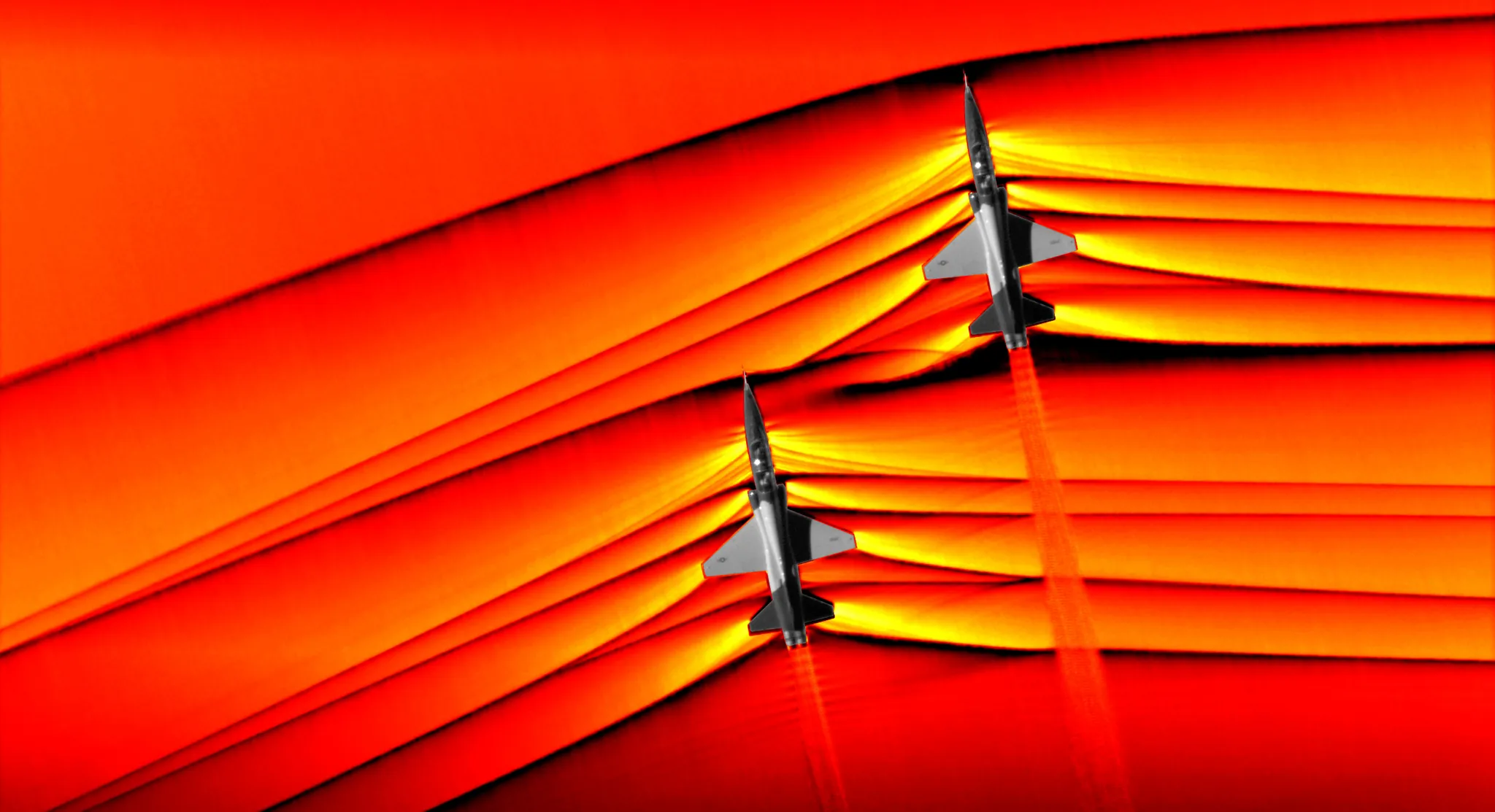
Modern Starship measurements make the caution even more necessary. Reports on Starship Flight 5 described sonic-boom levels up to 146 dB in some areas and overpressure around 9–11 psf at 6–10 km from the pad — a physical pressure event, not merely a loud sound heard through a wall [7]. Those measurements cannot be compared one-to-one with indoor simulated booms from the 1970s. They do explain why residents may describe the event as felt in the chest or house, not just heard.
What is missing is the study people most want: a peer-reviewed Starship-era sleep-outcome study that records real residents, actual overnight booms, indoor sound and pressure, sleep stages, awakenings, and next-day symptoms. Without that, the honest evidence tier is: 1970s simulated-boom lab data, a small field signal from older military-subject research, aircraft-noise sleep curves for context, and modern acoustic measurements of launch-related booms. That is enough to reject sloppy headlines. It is not enough to predict every household’s night.
One boom is usually a transient event; repeated overnight exposure is the open question
For a healthy adult who is startled awake once, the most likely outcome is an unpleasant, temporary disruption: a surge of alertness, a period of listening, then either a return to sleep or a shortened night. That does not mean the event was imaginary. It means a single arousal is not the same as evidence of lasting harm.
The sleep-health concern grows when events repeat, especially when they are uncertain. A launch window can disturb a fragile sleeper before any vehicle flies: staying alert for the window, checking updates, sleeping lightly because a boom might arrive, then interpreting every house sound as a possible event. That pattern resembles other forms of environmental sleep stress, where unpredictability becomes part of the exposure. Restful Ground has covered the same problem in other contexts, including sleep during severe weather and power-grid emergencies, where the sound itself and the loss of predictability can affect different household members differently.
This is where the FAA’s named vulnerable groups deserve more attention than the biggest modeled percentage. Veterans with PTSD, children with autism or sleep disorders, and older adults are not footnotes to the sleep question; they are the people for whom surprise, startle, and difficulty returning to sleep can carry the highest cost [1]. A launch schedule that is tolerable for one adult may be a hard night for another person in the same house.
What helps on launch nights, without pretending you can control the boom
The most practical first step is reducing surprise. If launch windows are public, checking them before bed can change the meaning of the sound from “unknown blast” to “expected event.” That does not make the pressure wave quieter, but it can shorten the threat-appraisal period after waking. For a child, an older adult, or someone with trauma reminders, a simple before-bed explanation may matter more than any gadget.
Earplugs are the more direct tool if you tolerate them safely. A 2026 randomized sleep study found that earplugs mitigated nearly all measured effects of environmental noise on sleep until noise levels reached about 65 dBA, while pink noise performed worse and was associated with reduced REM sleep [8]. That study was not a rocket-boom study, and earplugs will not erase low-frequency vibration or house-rattling pressure. They may still reduce the acoustic edge of the event enough to prevent a lighter sleeper from crossing into a full awakening.
Continuous background sound can help some people sleep through ordinary intermittent noise, but it is a weaker bet for a sharp boom and can become another stimulus if played too loudly. If you use it, the goal is a stable, comfortable background, not drowning out a launch. For people who wake and then cannot disengage from monitoring, the more useful skill may be a re-entry routine: check once if you need to, lower the room’s urgency, and give the body time to come down. For that middle-of-the-night reset, see how to stop trying to sleep.
The cleanest reading of the evidence is narrow. A sonic boom can wake you through startle and threat-monitoring pathways. Official sleep-disturbance figures can count lighter sleep-stage changes, not just remembered awakenings. One boom is usually a transient, low-risk disruption for healthy sleepers. Repeated overnight exposure is the unresolved concern, especially for the vulnerable groups the FAA itself names.
References
- SpaceX Starship LC-39A Final EIS Volume II Appendix C1 Noise Report — Federal Aviation Administration, February 2026
- Environmental noise and sleep disturbances: A threat to health? — Sleep Science, 2014
- Effects of sonic boom on sleep — Federal Aviation Administration Office of Aviation Medicine
- Effects of sonic boom on sleep — PubMed
- Noise Effects on Sleep — Penn State NoiseQuest
- Sonic booms and sleep — Journal of Sound and Vibration, 1972
- Acoustics group studies the roar of SpaceX’s Starship — Brigham Young University, February 2025
- Sleep 2026 zsag001 — Sleep, 2026
Supports these guides
Spot an error or have clinical feedback?
Because this article covers clinical, medication, or safety information, we use a moderated correction channel instead of open public comments. Let us know if something about “How Sonic Booms Disturb Sleep — and What Actually Wakes You” needs a closer look.
Send feedback on this article