
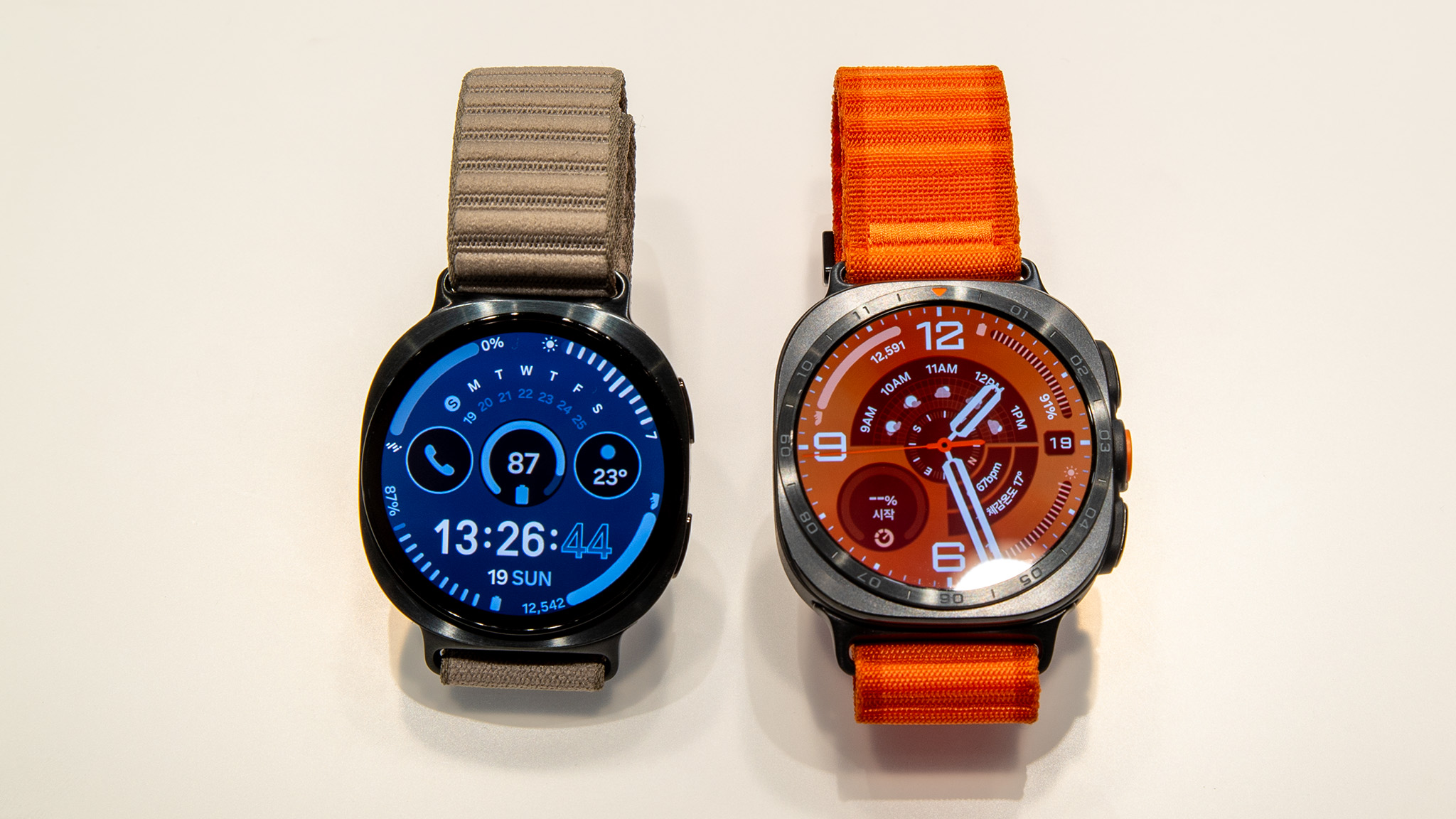
The easy mistake in the Galaxy Watch Ultra vs. Watch 9 sleep-tracking decision is assuming the Ultra must track sleep better because it costs more. For overnight tracking, that is the wrong starting point. Samsung lists both watches with the same BioActive sensor architecture, and Android Authority’s Watch 9 coverage also treats the sensor suite as shared rather than Ultra-exclusive hardware.[1][2]
That matters because sleep tracking is not won by titanium, a tougher case, or a more adventurous product name. It is won by the sensor package, the software interpreting the night, and whether the watch is still on your wrist when you wake up. On the first two, the Galaxy Watch Ultra and Galaxy Watch 9 are effectively even. On the third, the lighter Watch 9 has the more convincing sleep case.
| Sleep-tracking factor | Galaxy Watch 9 | Galaxy Watch Ultra | What it means at bedtime |
|---|---|---|---|
| Sensor platform | Samsung BioActive sensor | Samsung BioActive sensor | No clear Ultra advantage for raw sleep sensing |
| Sleep software | Samsung Health sleep tracking, Energy Score, sleep coaching, Bedtime Guidance | Same Samsung Health sleep features | The nightly interpretation layer is shared |
| Sleep apnea notifications | FDA-authorized adult screening under supported conditions | Same FDA-authorized adult screening under supported conditions | Useful, but not a differentiator |
| Comfort | Lighter, less imposing case | 47mm titanium body, 61.5g | The Ultra asks more of side sleepers |
| Battery continuity | Smaller cell, more charging discipline needed | Larger cell, 2+ day endurance reported | Ultra can reduce missed nights from charging |
| Price | $379–$459 for Watch 9 44mm Bluetooth | $649+ for Ultra | The Ultra premium is hard to justify for sleep alone |
The sleep engine is the same where it counts
Samsung’s current sleep package is not split into a regular-watch version and an Ultra version. Both models use the BioActive sensor platform and Samsung Health’s sleep software layer, including sleep stage classification, Energy Score, sleep coaching, and Bedtime Guidance.[1][3] If you are choosing between these two watches mainly to understand your nights, the Ultra is not buying you a separate sleep algorithm or an exclusive overnight dashboard.
That shared software package is the part most buyers actually see in the morning. Sleep stages are summarized inside Samsung Health. Energy Score folds sleep and recovery signals into a daily readiness-style number. Sleep coaching and Bedtime Guidance try to turn the data into a habit prompt rather than a pile of charts.[3] None of that becomes more available because the case is titanium.
The sleep apnea feature is also shared. Samsung’s supported watches can provide sleep apnea notifications for adults 22 and older, looking for signs associated with moderate-to-severe obstructive sleep apnea across two nights within a 10-day period under the supported setup.[3][4] That is a worthwhile screening feature, and it belongs in the buying discussion. It is not a diagnosis, and it is not a reason to pick the Ultra over the Watch 9. For a deeper look at how this feature fits the broader market, see Only Two Smartwatches Have FDA-Cleared Sleep Apnea Notifications.
This is where the Ultra’s “best watch” aura gets a little noisy. It may be the more rugged Samsung watch. It may be the one you want for outdoor training, impact resistance, or a more overbuilt case. But those are not the same as better sleep tracking. If the overnight sensing engine and the sleep software are shared, the real sleep question becomes much simpler: which one can you wear all night without noticing it?
The Ultra’s body is the sleep problem
The Galaxy Watch Ultra has a 47mm titanium body and weighs 61.5g.[5] That may sound reassuring in a store. At 2:40 a.m., after rolling onto the watch side, it is just more object between your wrist, pillow, and mattress.
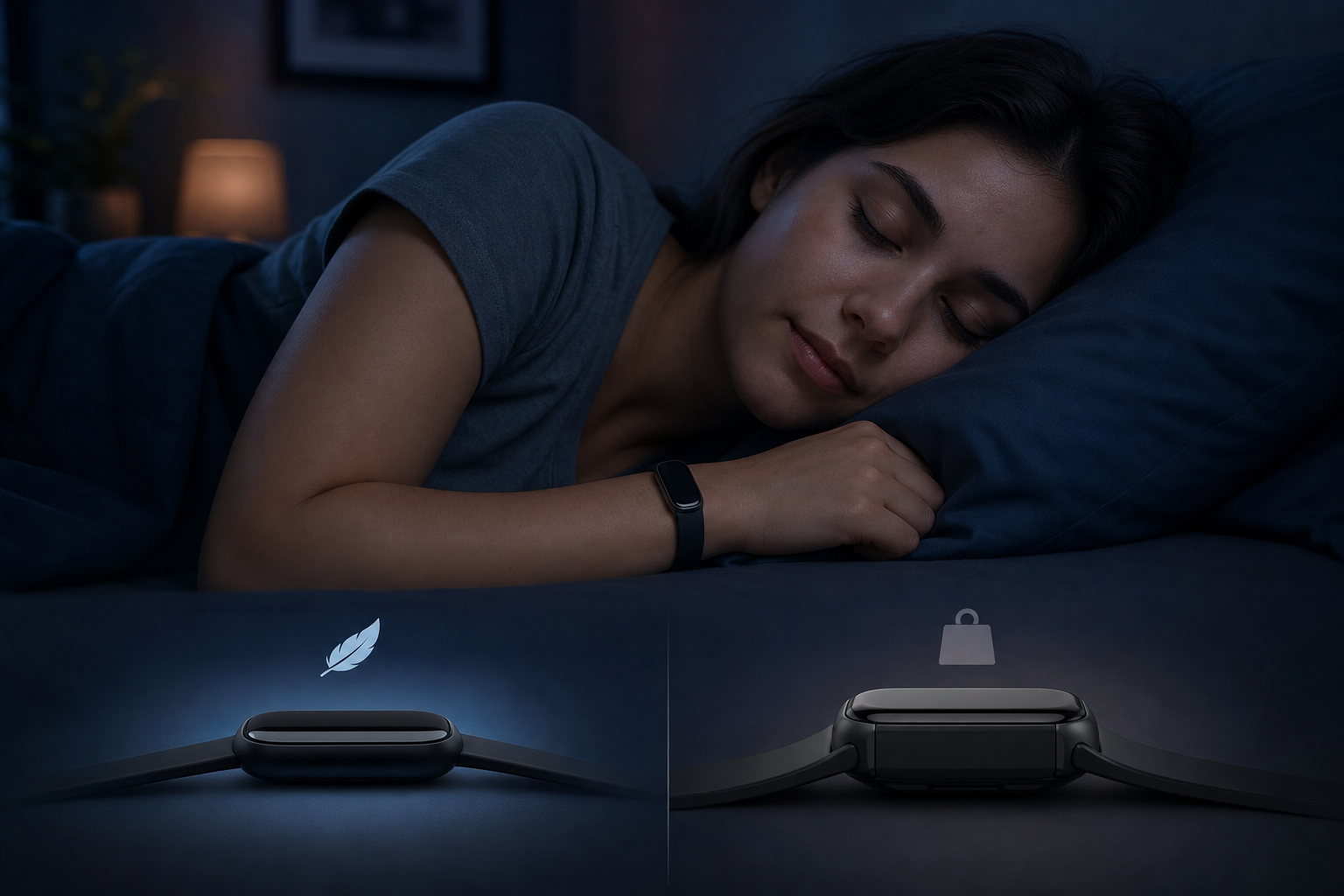
Reviewer experience lines up with that concern. PCMag’s Galaxy Watch Ultra review noted slightly inaccurate sleep time measurements and attributed the issue to the watch’s size on the wrist.[5] Forbes writer Mitch Wallace also described discomfort while sleeping on his side with the Ultra in a January 2025 piece about using the watch to gamify sleep.[6] These are not controlled lab findings, and they should not be inflated into a universal verdict. They are still the kind of bedtime friction that matters because a sleep tracker only works when people tolerate wearing it repeatedly.
This is the part spec sheets tend to underweight. A watch can have a beautiful display, expensive materials, and a bigger battery, yet still be a worse sleep tracker for the person who loosens the strap at midnight or leaves it on the charger because the case feels like too much. Side sleepers are especially exposed to this tradeoff because the watch is not merely sitting on top of the wrist; it gets pressed sideways into bedding.
The Watch 9’s advantage is less theatrical. It is the more bedtime-friendly choice because it asks less physical tolerance from the wearer while using the same sleep features. That is not anti-premium thinking. It is just refusing to reward bulk when bulk does not add a separate sleep-tracking engine.
Battery is the Ultra’s real sleep advantage
The Ultra does have one practical sleep advantage: battery continuity. PCMag lists the Ultra with a 590mAh battery, while early Watch 9 coverage points to smaller 390–445mAh cells depending on model size.[5][7] CNET rumor coverage has discussed an 800mAh figure for a newer Ultra model, but that remained unconfirmed as of July 2026.[8]
The point is not that a larger battery makes sleep stages more accurate. It does not change the underlying sensing engine. The point is that a longer-lasting watch creates fewer charging gaps. If you keep forgetting to recharge before bed, missing the night entirely is worse than having a slightly smaller device with the same sensors.
For some buyers, that is enough to keep the Ultra in the conversation. A two-plus-day watch can be easier to live with if you track every night and use GPS, workouts, notifications, and health features during the day. Charging discipline is boring, but it is part of sleep tracking. A dead watch at 11:30 p.m. produces no sleep data, no matter how comfortable it would have been.
Still, battery continuity is a narrower advantage than “better sleep tracking.” It helps you capture more nights. It does not give the Ultra a better sleep apnea feature, a different Energy Score engine, or a special sleep-stage model. If you can build a simple charging routine around the Watch 9, the Ultra’s biggest sleep-specific edge shrinks quickly.
The price premium buys mostly non-sleep hardware
Price makes the comfort argument harder for the Ultra. Watch 9 pricing places the 44mm Bluetooth model around $379–$459, while Ultra pricing sits at $649 and up.[2][9] That leaves roughly a $200–270 gap before any discounts or carrier offers.
That extra money is not imaginary value. It pays for the Ultra’s larger, tougher build and the kind of hardware that makes more sense for hiking, training, outdoor navigation, and rougher daily use. If those are your reasons, fine. Rugged engineering is not the villain here.
But if the purchase is mainly about sleep, the value stack tilts the other way. The Watch 9 gives you the same Samsung Health sleep system and the same sleep apnea notification capability in a lighter, cheaper package. The Ultra asks you to pay more and wear more mass to bed, then gives back battery life and ruggedness rather than a separate sleep-tracking tier.
Accuracy caveats apply to both watches
Samsung’s sleep tracking has some validation history, but it should be handled carefully. The best peer-reviewed context comes from older Galaxy Watch 3 and Watch 5 studies, not direct testing of the 2026 Watch 9 or the current Ultra generation. That makes the evidence useful for understanding Samsung’s sensor lineage, not proof that either new watch matches polysomnography night after night. For a broader breakdown, see How Accurate Are Smartwatches for Sleep Tracking? What Peer-Reviewed Research Says.
There is also a recent software caveat. TechRadar reported a Samsung-confirmed sleep tracking bug in 2025 affecting Galaxy Watch 4–7 and Ultra units.[10] The available material does not establish exactly how that history maps onto current Watch 9 software in Q3 2026, or whether both current models would be affected equally by related issues. The safe conclusion is smaller: Samsung sleep tracking is software-dependent, and shared software means shared strengths can come with shared weaknesses.
That is another reason not to frame the Ultra as the accuracy pick. If both models use the same sleep engine, the accuracy caveats travel with both. The more useful distinction is whether the watch is comfortable enough to produce consistent data in the first place.
Which one should you buy for sleep tracking?
Choose the Galaxy Watch 9 if sleep tracking is the main reason you are buying. It gives you the same BioActive sensor platform, the same Samsung Health sleep features, the same Energy Score, the same sleep coaching tools, the same Bedtime Guidance, and the same FDA-authorized sleep apnea notification capability in a lighter and less expensive body.[1][3][4]
Consider the Galaxy Watch Ultra only if its battery life and rugged non-sleep features matter enough to outweigh the larger 47mm case, 61.5g weight, side-sleeping complaints, and higher price.[5][6] For overnight use alone, the Ultra’s best argument is fewer charging interruptions. The Watch 9’s best argument is simpler: it tracks with the same system and is easier to actually wear to bed.
References
- Samsung Galaxy Watch compare, Samsung
- Samsung Galaxy Watch 9 coverage, Android Authority
- Use Samsung Health sleep features on your Galaxy Watch, Samsung US Support
- Sleep features on wearable devices, American Academy of Sleep Medicine
- Samsung Galaxy Watch Ultra Review, PCMag
- Samsung Galaxy Watch Ultra Has Gamified My Sleep, Forbes, January 2025
- Samsung Galaxy Watch 9 battery coverage, Tom's Guide
- Samsung Galaxy Watch Ultra 2 rumors, CNET
- Samsung Galaxy Watch 9 coverage, Android Central
- Samsung confirms Galaxy Watch sleep tracking bug, TechRadar, 2025

Comments
Join the discussion with an anonymous comment.