
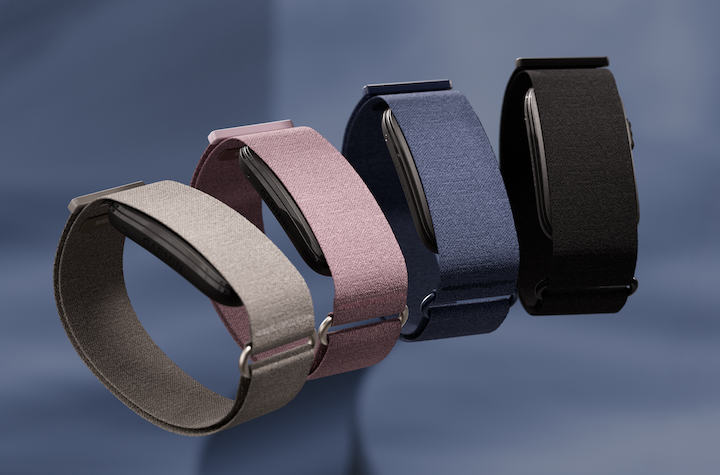
The Garmin CIRQA Smart Band was announced on July 21, 2026, and became available to order on July 24, 2026. For readers checking the release date and sleep features, the short version is this: CIRQA brings Garmin’s advanced sleep tracking suite into a screenless ComfortFit fabric band, including sleep score, sleep stages, HRV, respiration rate, skin temperature variation, Pulse Ox, Breathing Variations, Sleep Alignment, nap detection, and Smart Wake vibration alarms [1].
That sounds like “full Garmin sleep tracking,” and in feature terms it mostly is. The two conditions worth noticing before purchase are less glamorous but more useful: CIRQA uses Garmin’s Elevate Gen. 4 optical heart rate sensor, not the newer Gen. 5 sensor used in the Index Sleep Monitor, and Pulse Ox is off by default to preserve battery life [1]. If overnight blood oxygen is one of the reasons you are buying it, you need to turn that setting on yourself and accept the battery tradeoff.
What CIRQA Tracks Overnight
CIRQA is not just a silent step counter that happens to log bedtime. Its sleep package is built around Garmin Connect, where the overnight data becomes part of the same recovery system Garmin watch users already know: Body Battery, Training Readiness, HRV Status, and Training Status [1]. In plain terms, that means the band’s sleep data does not stay trapped in a sleep tab. It can influence Garmin’s estimate of how much energy you have, how ready your body looks for hard training, whether your overnight HRV is drifting from your normal range, and how your recent load lines up with recovery.
The headline number is the sleep score, a 0–100 rating that Garmin builds from sleep duration, stress, sleep stages, awake time, restlessness, and related overnight signals [4]. If you want the deeper mechanics, our guide to Garmin Sleep Score explains how to read that number without treating every one-point change as a diagnosis.
| Sleep feature | What CIRQA captures | Why it matters in use |
|---|---|---|
| Sleep score | A 0–100 nightly score with supporting sleep details | Gives a quick read on whether the night was restorative or disrupted |
| Sleep stages | Light, deep, REM, and awake periods | Shows how Garmin classified the structure of the night |
| HRV | Overnight heart rate variability | Feeds recovery signals such as HRV Status and Training Readiness |
| Respiration rate | Breathing rate during sleep | Adds context when a night looks unusual or physically stressful |
| Skin temperature variation | Overnight temperature changes | Supports cycle-related features and broader recovery context |
| Pulse Ox | Estimated blood oxygen saturation when enabled | Useful for users who specifically want SpO2 trends, but it is off by default |
| Breathing Variations | Patterns that may indicate irregular breathing during sleep | Adds another overnight signal without turning the band into a medical device |
| Sleep Alignment | How sleep timing lines up with the user’s normal schedule | Helps separate enough sleep from well-timed sleep |
| Nap detection | Automatic and manual nap logging | Keeps daytime sleep from disappearing from recovery calculations |
| Smart Wake | Vibration alarm timed around lighter sleep within a set window | Wakes the wearer without a glowing screen or phone alarm |
Sleep stages, HRV, and respiration
CIRQA classifies the night into light, deep, REM, and awake periods [1]. These stage labels are most useful as patterns over time, not as a frame-by-frame record of the brain. A rough night with repeated awake periods, shortened total sleep, and elevated overnight stress is a different story from a normal-length night where the stage graph simply looks odd.
HRV and respiration rate are the more recovery-oriented signals. HRV can fall when the body is under strain, while respiration rate gives another overnight baseline to compare against your usual pattern. Garmin uses this kind of overnight information to feed broader readiness and training metrics, so a CIRQA buyer who already owns a Garmin watch is not just buying a sleep report. They are buying a less intrusive way to supply the ecosystem with overnight data.
Temperature variation and cycle tracking
CIRQA tracks skin temperature variation during sleep [1]. Garmin also says its temperature tracking can sync with Natural Cycles, the FDA-cleared birth control app, for period prediction and past ovulation estimates [1]. That does not make CIRQA a fertility device by itself, and skin temperature is not the same as a clinical core temperature reading. Its value is in repeated overnight measurement under similar conditions, which is exactly where a soft band has a practical advantage over a watch someone keeps removing at 2 a.m.
Pulse Ox and Breathing Variations
Pulse Ox is present, but it is not continuously active out of the box. Garmin lists up to 10 days of battery life for CIRQA with typical use, assuming Pulse Ox is off [1]. That is a reasonable default for many people; SpO2 tracking is power-hungry and not everyone needs it nightly. It is also the setting most likely to disappoint a buyer who assumes every advertised sleep metric is running automatically.
Breathing Variations sit near Pulse Ox in the practical sleep story. They can help flag nights where breathing looked less steady than usual [1]. Garmin’s current materials do not support treating CIRQA as a diagnostic sleep apnea device, so this is a trend signal, not a medical conclusion.
Sleep Alignment, naps, and Smart Wake
Sleep Alignment is one of the less flashy additions, but it may be one of the more readable ones. Instead of only asking whether you slept long enough, it looks at how your sleep timing lines up with your usual schedule [1]. For shift workers, parents, and anyone whose bedtime drifts across the week, that timing context can explain why two nights with similar duration may not feel similar the next morning.
Nap detection is another place where CIRQA is more useful than a sleep-only band. It supports both automatic and manual nap logging [1]. That matters because daytime sleep can change how rested you feel and how Garmin estimates recovery. If the device only cared about the main overnight sleep block, a long afternoon nap would be invisible to the system.
Smart Wake uses haptic vibration to wake the wearer during lighter sleep within a configurable window before the set alarm time [2]. Forbes’ launch coverage also notes the single-button interaction: press to snooze, hold to dismiss [2]. The appeal here is not novelty. It is that CIRQA can wake you without lighting up a watch face or reaching for a phone on the nightstand.
The Band Design Matters More Than It Looks
CIRQA’s hardware is deliberately quiet: a screenless ComfortFit fabric band, a 14.8g removable module, and a machine-washable strap [1]. There is no touchscreen, no backlight, and no watch face to bump in bed. For a person who already owns a Forerunner, Fenix, Venu, or other Garmin watch but hates sleeping in it, that is the central use case.
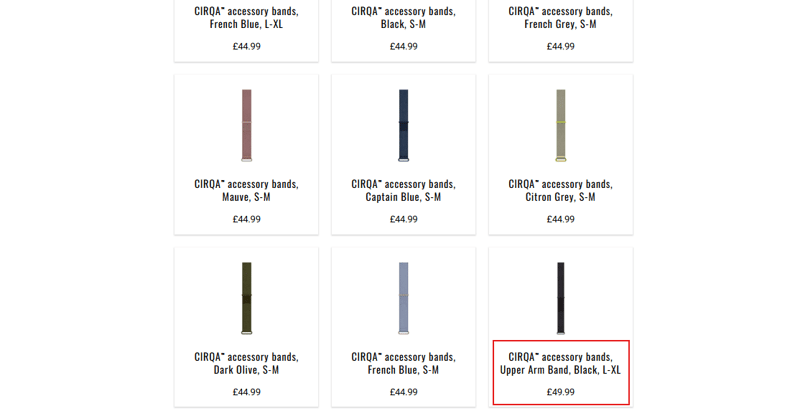
The more interesting design detail is placement. CIRQA can be worn on the wrist or upper arm [1]. The upper-arm option is not just a comfort extra; it gives side sleepers and restless sleepers another way to keep the sensor stable through the night. Garmin’s materials and early coverage present this as an explicit sleep-wear option, not an improvised workaround [1][2].
That flexibility also separates CIRQA from a ring or watch in the broader form-factor question. If you are still deciding what type of device belongs in your bed, our form-factor guide to sleep trackers is a better comparison point than a simple feature checklist.
CIRQA Versus Sleeping in a Garmin Watch
Against a Garmin watch, CIRQA’s case is comfort and compliance. The sleep metrics are familiar: sleep score, stages, HRV, respiration, temperature, Pulse Ox when enabled, and recovery integration. The difference is that CIRQA removes the screen, reduces the bulk, and can move from wrist to upper arm [1]. A tracker only helps if it is actually worn, and watches lose that argument for plenty of otherwise loyal Garmin users.
There is also a battery argument. Garmin rates CIRQA for up to 10 days of battery life with typical use [1]. Many sports watches can last several days, but real people often charge them opportunistically, and bedtime is when a low-battery watch becomes useless as a sleep tracker. CIRQA does not remove charging from your life; it makes nightly charging unnecessary for most default-use scenarios.
The algorithm context is helpful, but it should not be stretched too far. Garmin has described an internal validation study for its advanced sleep algorithm involving 67 participants, supervised by Dr. Suzanne Stevens at the University of Kansas Medical Center, with comparisons against polysomnography [3]. That is a real foundation for Garmin’s sleep staging work, and it is more meaningful than a company inventing stage labels from nothing. It is not the same as independent, CIRQA-specific validation on this new band.
That distinction matters because a watch-based algorithm study does not automatically prove the real-world accuracy of a screenless band worn on the upper arm by a hot sleeper, a side sleeper, or someone with loose fabric tension. If accuracy is your main concern, read the broader evidence in our 2026 Garmin sleep tracking accuracy update before assuming the CIRQA will perform exactly like your watch.
CIRQA Versus the Garmin Index Sleep Monitor
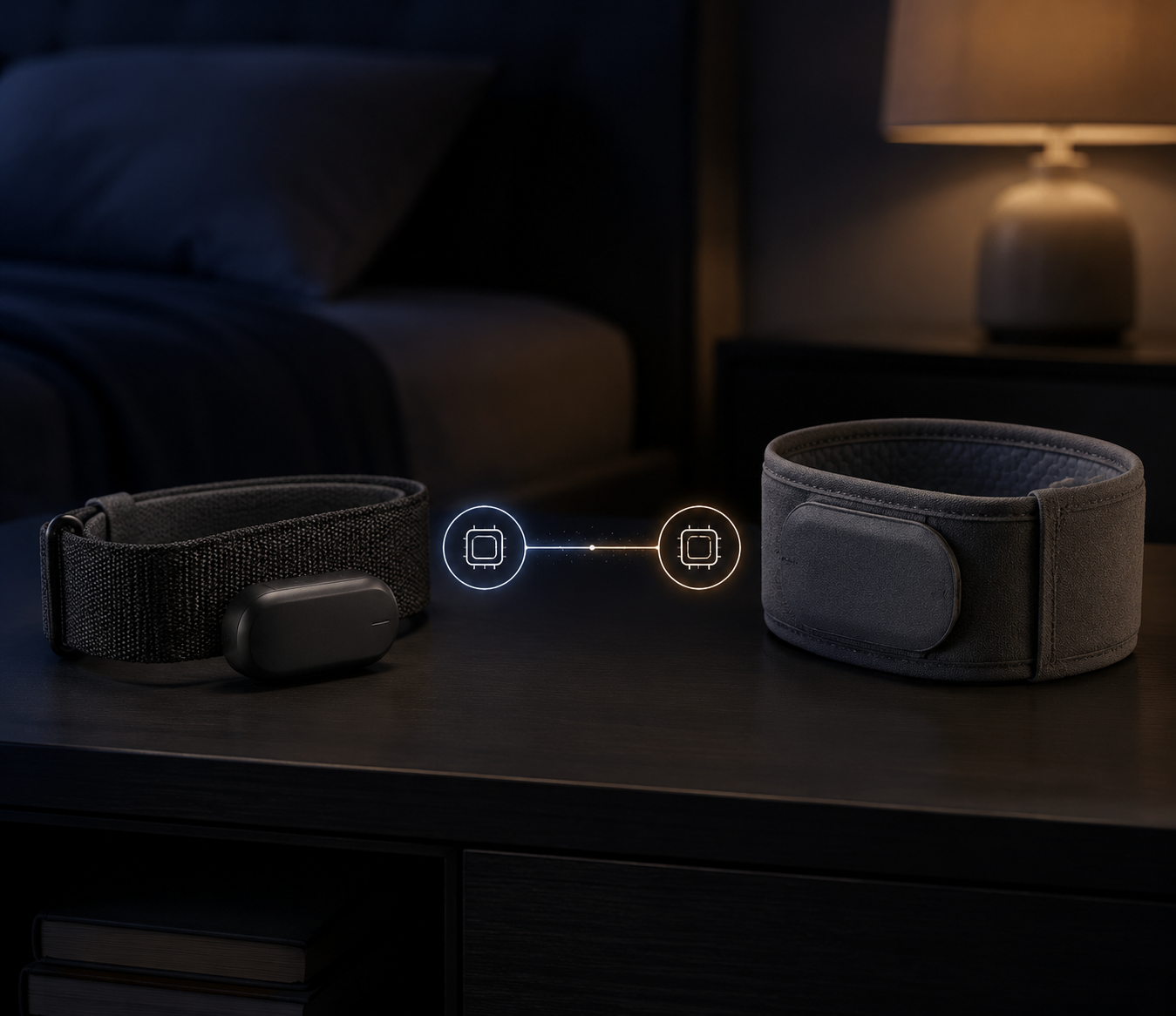
The more serious Garmin-to-Garmin comparison is not CIRQA versus a watch. It is CIRQA versus the Index Sleep Monitor. Garmin’s Index Sleep Monitor is the purer dedicated sleep device: upper-arm-only, sleep-focused, and listed with the newer Elevate Gen. 5 sensor [5]. CIRQA is broader and more flexible, but it uses Elevate Gen. 4 [1][5].
| Device | Best reason to choose it | Main tradeoff |
|---|---|---|
| Garmin CIRQA Smart Band | Screenless sleep tracking plus 24/7 activity and recovery inputs, wrist or upper-arm wear, naps, and Smart Wake | Older Elevate Gen. 4 optics and Pulse Ox off by default |
| Garmin Index Sleep Monitor | Dedicated sleep monitoring with newer Elevate Gen. 5 sensor | Less versatile, upper-arm-only, and not positioned as a 24/7 activity band |
| Garmin watch | Full smartwatch or sports-watch features plus sleep tracking | Bulkier overnight wear, screen presence, and more charging friction |
That does not mean the Index Sleep Monitor will automatically be more accurate for every sleeper. The current materials do not provide an independent head-to-head test showing the size of any overnight accuracy gap between Gen. 4 and Gen. 5 in these bands. What they do show is enough to make the sensor generation a buying criterion. If sleep-only tracking quality is your top priority, the Index Sleep Monitor deserves a close look before CIRQA.
CIRQA pushes back with features the sleep-only device does not emphasize. It works as a 24/7 activity and recovery input device, supports nap detection, includes Smart Wake, and can be worn on the wrist or upper arm [1][2]. For someone already living in Garmin Connect, that may be the better practical package even if the sensor sheet is not the newest one Garmin sells.
Price, Subscription, and What You Actually Get
CIRQA is priced at $199.99 [1]. Garmin’s core sleep tracking and Garmin Connect syncing do not require a mandatory subscription, which keeps the device away from the monthly-fee model that has become common in screenless recovery bands [1]. Garmin Connect+ is optional at $6.99 per month, and current launch materials leave some boundaries around advanced coaching and AI-style features less than perfectly clear [1].
For sleep buyers, the important point is simple: the main CIRQA sleep features are part of the product, not a subscription teaser. If you are buying it for sleep score, stages, HRV, respiration, temperature trends, Pulse Ox when enabled, naps, Smart Wake, and recovery integration, Garmin’s materials support that as the core package [1].
Who Should Buy CIRQA for Sleep?
CIRQA makes the most sense for two groups: Garmin users who want overnight recovery data without sleeping in a watch, and first-time screenless-band buyers who want sleep tracking without adding another glowing rectangle to the bedroom. It is especially attractive if upper-arm wear sounds more comfortable than a watch, or if nap detection and Smart Wake are part of how you want the device to fit into your day.
It is a less automatic choice if you care most about sleep-only accuracy, want Garmin’s newer optical sensor generation, or expect overnight SpO2 to be active by default. Those buyers should compare CIRQA closely with the Index Sleep Monitor and wait for independent CIRQA-specific testing. And if you already know that more sleep data tends to make your nights more anxious, start with our guide to sleep trackers for people who actually cannot sleep before buying a band that is designed to collect a lot of overnight signals.
CIRQA’s appeal is real because it fixes a practical problem Garmin has had for years: some people like Garmin’s recovery system but do not want a sports watch in bed. The purchase condition is just as real. This is a capable screenless sleep band built around Garmin Connect, but its Gen. 4 sensor, Pulse Ox default, and lack of CIRQA-specific validation should stay in the decision, not in the fine print.
References
- Meet CIRQA Smart Band, Garmin, July 21, 2026
- Garmin CIRQA Is Here: 10 Top Facts, Forbes, July 21, 2026
- The Study Behind Advanced Sleep, Garmin Blog
- Sleep Score and Sleep Insights, Garmin Blog
- Garmin Wiki

Comments
Join the discussion with an anonymous comment.