How Student Loan Stress Worsens Sleep in Perimenopause
Learn how the combination of student loan debt stress and perimenopausal hormone changes creates a compounded sleep disruption in women over 40, and discover strategies that address both triggers—from CBT-I to income-driven repayment plans.
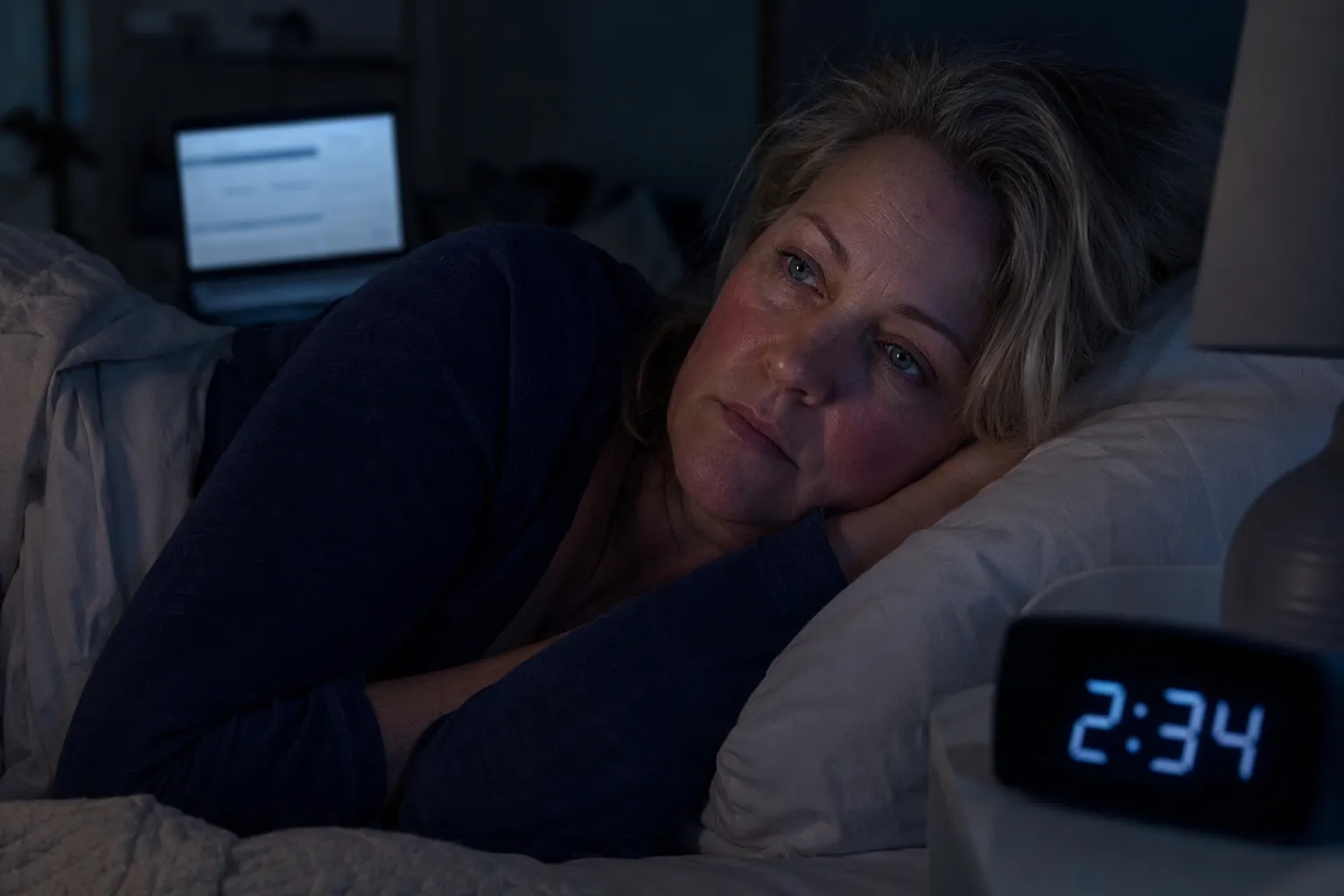
At 2:34 a.m., student loan stress does not arrive as a spreadsheet. It arrives as heat in the chest, a recalculation of next month’s payment, a thought about retirement savings, and then the familiar realization that the body is too alert for sleep. For many women over 40, the strange part is not that money stress affects sleep. It is that the same worry they used to push through now seems to hit a more reactive system.
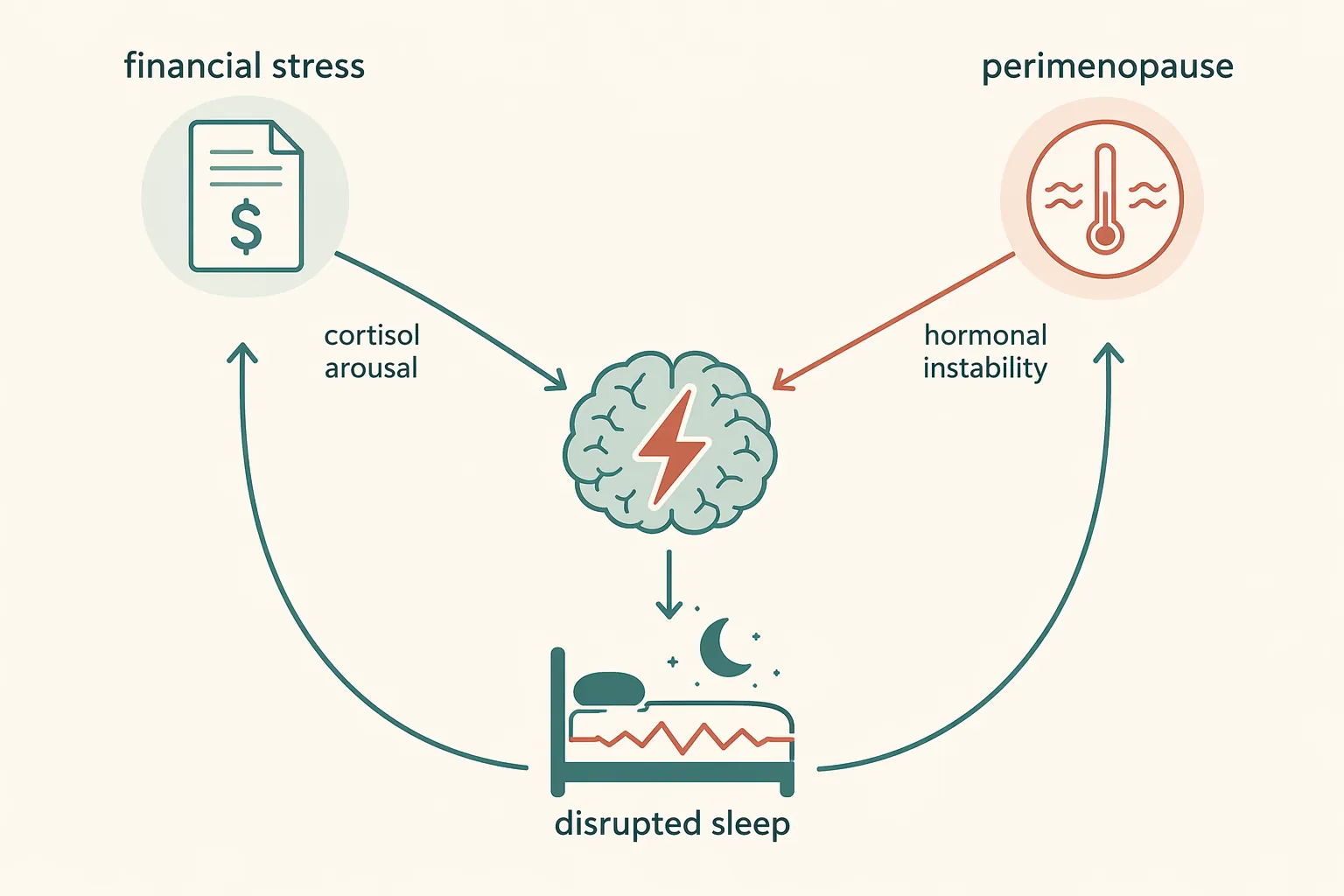
That is the core of how student loan stress affects sleep in women over 40: the debt can keep the stress-response system activated, while perimenopause can make sleep lighter, hotter, more fragmented, and less forgiving. The loan balance may be the thought that starts the night’s spiral. Hormonal change may be the reason the spiral is harder to exit.
A useful way to think about this is not “financial stress or hormones.” It is two sleep-disrupting pathways landing in the same body at the same time.
The money worry is physiological, not just emotional
Financial strain is often described as worry, but sleep research makes it more concrete. In a polysomnography-confirmed study of older adults, people with chronic financial strain took longer to fall asleep than those without it: 35.44 minutes versus 23.53 minutes. Their sleep efficiency was also lower, 73.8% versus 80.9%, even after researchers controlled for age, sex, mental health, and physical health.[1]
That study was not conducted specifically in perimenopausal borrowers; its participants were older, with a mean age of 74. So it should not be stretched into a direct claim about women ages 40 to 55 with student loans. What it does show, carefully, is that financial strain can be associated with measurable sleep-continuity problems, not only with feeling upset before bed.[1]
The likely pathway is familiar to anyone who has lain awake doing math in the dark. A threatening bill or loan balance can cue vigilance: the brain scans for consequences, the body prepares for action, and cortisol-linked arousal works against sleep onset. Sleep requires enough safety for the nervous system to stand down. Debt can make bedtime feel like the first quiet moment when all the postponed calculations finally get a hearing.
Borrower surveys capture the lived version of that pattern. In Fidelity’s 2026 State of Student Debt Survey, 41% of student loan borrowers reported losing sleep or feeling anxious about finances at least weekly.[2] That is not the same as a sleep lab measurement, and the survey sample may skew toward employed borrowers with access to workplace benefits. Still, it helps explain why loan stress shows up in bed instead of staying politely inside a budgeting app.
Perimenopause makes the sleep system easier to disturb
Perimenopause does not simply add a second item to the worry list. It changes the sleep environment inside the body. Estrogen decline can affect serotonin and norepinephrine regulation of the sleep-wake cycle, while progesterone, which has sedating properties, also declines.[3] For a broader look at these hormonal sleep changes, see how aging changes sleep for women over 50.
Thermoregulation matters too. A hot flash is not just “feeling warm.” It can be a body-level alarm that interrupts sleep continuity, raises discomfort, and makes the next return to sleep harder. Up to 47% of perimenopausal women and up to 60% of postmenopausal women experience clinically significant sleep disruption, according to SWAN data cited by Midi Health.[3]
This is where standard sleep advice can start to sound thin. A cool room, a consistent wake time, and less late-night scrolling may help some people. But if a woman wakes because a vasomotor symptom has triggered heat and adrenaline, then spends the next hour calculating whether income-driven repayment would leave enough for an emergency fund, the problem is not just poor bedtime discipline.
Why student debt is a midlife sleep issue for women
The scale of the debt burden matters because this is not a niche complaint. Women hold nearly two-thirds of U.S. student debt, totaling $929 billion, and take about two years longer than men to repay their loans, according to AAUW.[4] By midlife, that extra repayment time can overlap with caregiving, retirement catch-up, medical expenses, career interruptions, divorce, or supporting adult children.
Federal student debt also does not disappear after early adulthood. Borrowers ages 35 to 49 average $44,288 in federal student loan debt, and borrowers ages 50 to 61 average $46,790, the highest average of any age group reported by EducationData.org.[5] The National Consumer Law Center reports that 3.5 million older Americans hold more than $125 billion in student loans.[6]
Retirement anxiety is part of the sleep story because it turns a monthly payment into a future-threat signal. In a study of older women and student loan repayment, 63% reduced retirement savings because of student loans.[7] A woman who is paying consistently but watching retirement contributions shrink is not irrational for feeling activated at night. She is responding to a real trade-off.
The loop: debt arousal, hormonal vulnerability, worse next-day control
No single study directly proves a combined “student loan debt plus perimenopause” sleep effect in women over 40. The most honest conclusion has to be built from adjacent evidence: financial strain is associated with poorer sleep continuity; perimenopause is associated with disrupted sleep physiology; and women carry a large share of midlife student debt. That is enough to take the overlap seriously, but not enough to name it as a formally established diagnosis.
The combined pattern is still clinically plausible. Debt stress can raise nighttime vigilance. Perimenopause can reduce the stability of sleep through hormone shifts, hot flashes, and more variable stress-response patterns. Once sleep is shortened or fragmented, the next day’s executive function and emotional regulation suffer. That can make financial tasks harder: opening the loan servicer’s message, comparing repayment options, calling for clarification, or resisting avoidance.
The next night then starts with more unfinished business. The borrower is not only tired; she may also feel ashamed for not dealing with the account, worried about interest, or angry that a degree taken years ago is still shaping the household budget. If a hot flash wakes her at 3 a.m., the brain has material ready.
Debt has also been linked with broader midlife health markers. In a study of 4,193 U.S. adults in early midlife, student debt was associated with elevated C-reactive protein and higher 30-year Framingham cardiovascular disease risk scores; those who repaid their student debt had the lowest risk profiles.[8] That study is not a sleep study, and it does not show that debt causes insomnia. It does reinforce that student debt can sit inside a wider stress-health pathway rather than remaining a purely financial category.
How to tell which lever to pull first
A useful plan starts by separating the first trigger from the maintaining pattern. The first trigger is what usually starts the bad night. The maintaining pattern is what keeps the sleep problem alive even when the original trigger changes. Student loan anxiety may start the arousal. Perimenopausal awakenings may give that arousal more chances to take hold. After several weeks, insomnia can become conditioned: the bed itself starts to feel like the place where financial threat gets reviewed.
| What you notice | What it may point toward | First lever to consider |
|---|---|---|
| You fall asleep only after long periods of loan calculations or future-focused worry | Cortisol-driven cognitive arousal | CBT-I, scheduled financial review time, repayment-plan review |
| You wake hot, sweaty, or flushed and then begin worrying | Perimenopausal sleep disruption followed by financial rumination | Hormonal evaluation, cooling strategy, CBT-I skills for wake periods |
| You wake gasping, snore heavily, or feel unrefreshed despite enough hours in bed | Possible sleep apnea or another sleep disorder | Clinical sleep evaluation before assuming it is only stress or hormones |
| Sleep changed after starting or changing a medication | Medication-related sleep disruption or interaction with midlife symptoms | Medication review with a clinician |
The third row matters. Midlife women are often told their sleep disruption is “just hormones” or “just stress,” but sleep apnea, restless legs, thyroid problems, mood disorders, pain, alcohol effects, and medication changes can all complicate the picture. If snoring, gasping, morning headaches, persistent daytime sleepiness, or resistant insomnia are present, distinguishing sleep apnea from perimenopause is not optional housekeeping. It changes treatment.
Treat the trigger and the vulnerable sleep system
The most credible relief plan does not make CBT-I compete with repayment planning or hormonal care. These tools address different parts of the loop.
Use CBT-I to retrain the insomnia pattern
Cognitive behavioral therapy for insomnia is the first-line behavioral treatment for chronic insomnia because it works on the mechanisms that keep insomnia going: conditioned arousal, irregular sleep scheduling, catastrophic sleep thoughts, and unhelpful time-in-bed patterns. For a borrower, CBT-I does not erase the loan balance. It can reduce the amount of time the bed becomes the place where the balance is mentally litigated.
The practical move is to give financial worry a scheduled container outside the sleep window. That may mean a weekly loan-admin block, a written list of next actions, or a rule that no servicer portal opens after dinner. The point is not avoidance. It is moving problem-solving to a time when the brain can actually solve problems.
Review repayment options as a sleep-relevant stress intervention
Income-driven repayment, consolidation decisions, forgiveness eligibility, deferment or forbearance consequences, and tax filing status are financial topics, not sleep treatments in the usual sense. But if the payment amount or uncertainty is the arousal trigger, then reducing that trigger can be sleep-relevant. A calmer nervous system is easier to train than one receiving fresh threat signals every night.
This is a place for caution, not improvisation at midnight. Borrowers may need a qualified student-loan counselor, a financial planner familiar with federal repayment rules, or a nonprofit resource. The sleep goal is simple: replace vague dread with a known next step, a known review date, and a payment plan that does not require nightly re-deciding.
Evaluate hormone-related sleep disruption instead of enduring it
If awakenings cluster around hot flashes, night sweats, cycle irregularity, or new temperature sensitivity, a clinician-guided discussion of perimenopause treatment belongs in the plan. Hormone therapy may be appropriate for some women and inappropriate for others, depending on personal risk factors, timing, symptoms, and medical history. Nonhormonal options may also be relevant.
Medication context matters here. Weight-loss medications, antidepressants, blood pressure drugs, stimulants, alcohol, and over-the-counter sleep aids can interact with midlife sleep in ways that are easy to miss. If a sleep change tracks a medication change, a clinician should review it; this is also where resources on how Mounjaro affects sleep in perimenopause can help frame the right questions.
Lower heat load when the body is already reactive
Cooling strategies are not a cure for debt stress, but they can reduce one source of awakenings. Lighter bedding, breathable sleepwear, a fan, a cooler pre-bed routine, and attention to alcohol or spicy evening meals may reduce the number of times the body wakes with a heat signal. During extreme weather, perimenopausal temperature sensitivity can make sleep more fragile; practical guidance on sleeping during a heat dome is more relevant for this group than generic “keep the bedroom cool” advice.
A combined plan is not overcomplicated; it is more accurate
For a woman over 40 carrying student debt, the right first step depends on the dominant pattern. If loan thoughts reliably start the night, begin with CBT-I tools and a structured repayment review. If hot flashes or early-morning awakenings open the door to rumination, bring perimenopause treatment into the conversation sooner. If snoring, gasping, severe daytime sleepiness, or medication timing is involved, check for other sleep disruptors before assuming the story is only debt plus hormones.
The point is not to make every night a medical-financial project. It is to stop treating the borrower as if she has one isolated problem. Student loan stress can activate the arousal system. Perimenopause can weaken sleep stability. Together, they can create a self-reinforcing loop in which worry, heat, awakenings, and next-day depletion keep handing the problem back and forth.
Relief is most credible when the plan addresses both sides: reduce the financial threat signal where possible, treat the insomnia pattern directly, evaluate hormonal symptoms with a clinician, and stay alert for other midlife sleep disorders that need their own care.
References
- Financial Strain is a Significant Correlate of Sleep Continuity Disturbances in Late-Life. PMC. 2008.
- Fidelity 2026 State of Student Debt Survey. Fidelity. 2026.
- Sleep Problems—and Solutions—at Midlife. Midi Health.
- Women & Student Debt. AAUW.
- Average Student Loan Debt by Age [2025]: Facts & Statistics. EducationData.org.
- 3.5 Million Older Americans Have Over $125 Billion in Student Loans. National Consumer Law Center.
- Repaying Student Loan Debt: Implications for Older Women's Financial Well-Being and Retirement Planning. PMC. 2020.
- Student Debt and Cardiovascular Disease Risk Among U.S. Adults in Early Mid-Life. PMC. 2022.
Explore the mechanism
Next step
Spot an error or have clinical feedback?
Because this article covers clinical, medication, or safety information, we use a moderated correction channel instead of open public comments. Let us know if something about “How Student Loan Stress Worsens Sleep in Perimenopause” needs a closer look.
Send feedback on this article