
The Anxiety-Sleep Loop: Why GABA Suppression Keeps You Awake
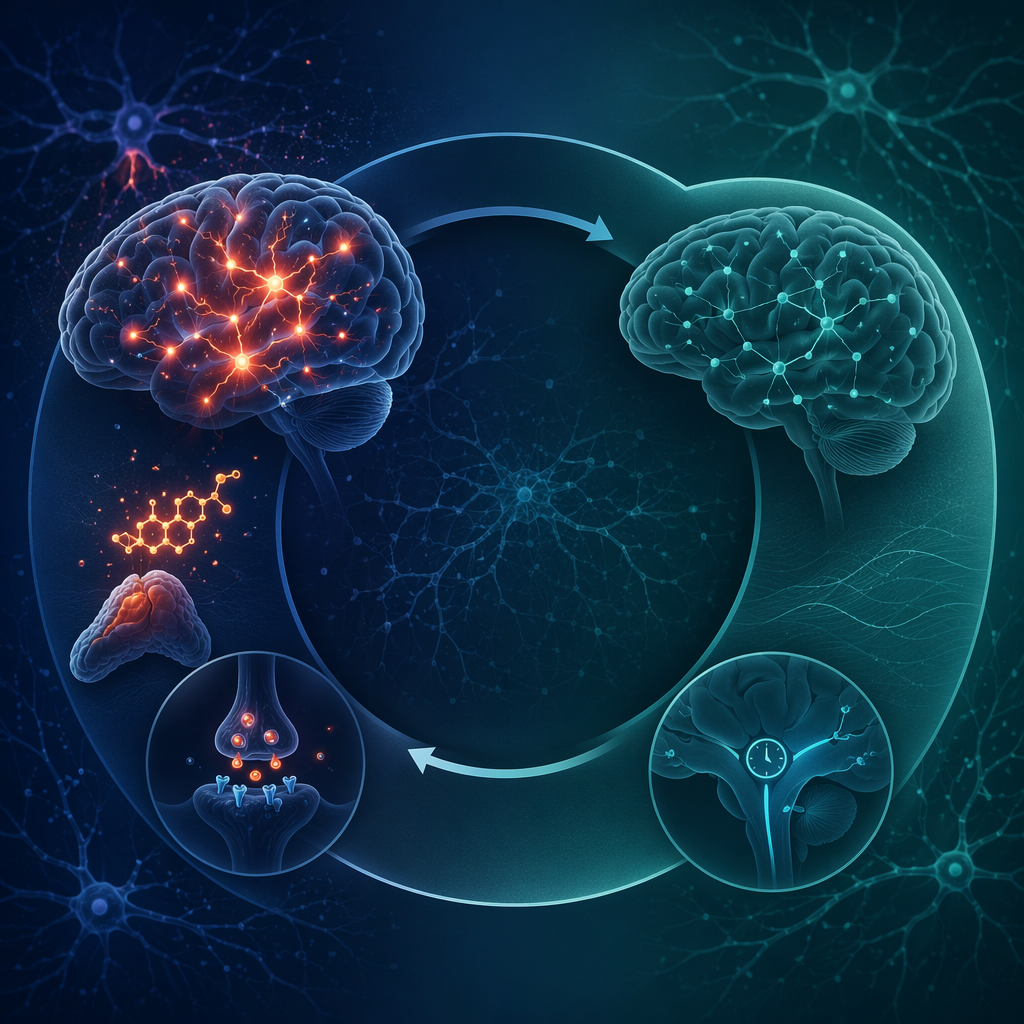
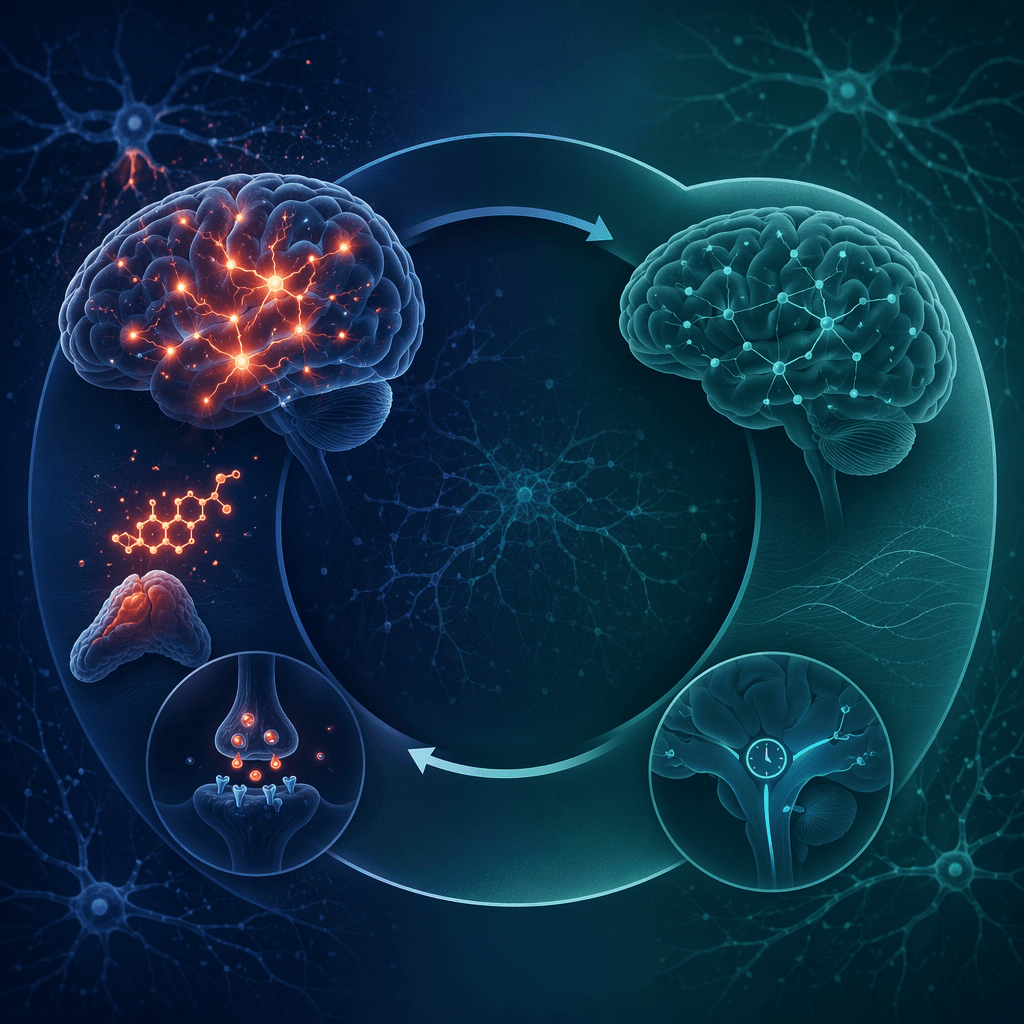
Anxiety and insomnia share a bidirectional relationship that can be difficult to break. When you are anxious, your sympathetic nervous system remains in a state of hyperarousal, keeping cortisol elevated and heart rate variability low. This state directly suppresses the activity of gamma-aminobutyric acid (GABA), the brain's primary inhibitory neurotransmitter. GABA acts as a brake on neural excitation — when GABA signaling is weak, the brain cannot transition from wakefulness into the early stages of non-REM sleep.
This is why many prescription anxiolytics, such as benzodiazepines, work by enhancing GABA activity. They are effective, but they carry risks of tolerance, dependence, and next-day sedation. For adults who want to address both anxiety and sleep disruption without prescription medication, several over-the-counter supplements target the same GABA pathway — though with milder effects and a different safety profile.
The four supplements covered in this article — valerian root, L-theanine, magnesium glycinate, and kava — each modulate GABAergic activity through distinct mechanisms. Understanding how they differ in potency, evidence quality, and safety is essential for making an informed choice.
For a deeper look at the cortisol-melatonin conflict that drives nighttime hyperarousal, see our article on why anxiety gets worse at night. For a broader overview of the anxiety-insomnia connection and first-line treatments, read our guide on sleep anxiety and insomnia.
Valerian Root: GABA Modulation with Meta-Analytic Support
Valerian root (Valeriana officinalis) is one of the most studied herbal sleep aids. Its primary active compounds, valerenic acid and valerenol, are thought to increase GABA availability by inhibiting its breakdown and enhancing its binding to GABA-A receptors.
A 2024 literature review published in Psychiatry Investigation, which analyzed 18 randomized controlled trials, reported that valerian produced a standardized mean difference (SMD) of -0.71 for sleep latency (95% CI: -1.05 to -0.37) and an SMD of -0.46 for sleep quality (95% CI: -0.77 to -0.14) compared to placebo. These effect sizes are moderate and clinically meaningful, particularly for people who struggle with falling asleep due to a racing mind.
The typical dosage range is 300–600 mg of standardized root extract taken 30–60 minutes before bed. Most studies limit use to 4–6 weeks, as long-term safety data are limited. Side effects are generally mild and include headache, dizziness, and morning drowsiness. The Mayo Clinic notes that while some studies show therapeutic benefit, others have not, and the evidence remains mixed.
L-Theanine: Calm Without Sedation
L-theanine is an amino acid found almost exclusively in tea leaves (Camellia sinensis). Unlike valerian, L-theanine does not produce a sedative effect. Instead, it promotes a state of relaxed alertness by increasing levels of GABA, serotonin, and dopamine in the brain. This makes it particularly useful for people whose anxiety interferes with sleep but who need to remain functional the next day.
Clinical studies typically use doses of 200–400 mg per day for 4–8 weeks. The Sleep Foundation notes that L-theanine does not appear to help people fall asleep faster, but it may enhance sleep quality by reducing nighttime awakenings — making it a better fit for sleep-maintenance insomnia than sleep-onset insomnia. A key advantage is the absence of next-day grogginess, which is a common complaint with antihistamine-based sleep aids.
L-theanine is well-tolerated at recommended doses. The most common side effects are mild and include headache or dizziness. Because it is not a controlled substance and does not produce tolerance, it can be used more flexibly than valerian or kava. However, the evidence base is smaller than for valerian, and most studies have been short-term.
Magnesium Glycinate: Enhancing GABA Receptor Sensitivity and Reducing Cortisol
Magnesium is an essential mineral involved in over 300 enzymatic reactions, including those that regulate the nervous system. Magnesium glycinate, a chelated form bound to the amino acid glycine, is often recommended for sleep and anxiety because glycine itself has calming properties and the form is well-absorbed without causing the laxative effect associated with magnesium citrate.
Magnesium enhances GABA receptor sensitivity, meaning the brain becomes more responsive to the calming effects of GABA even if absolute GABA levels are unchanged. It also lowers serum cortisol, the primary stress hormone that drives hyperarousal. A randomized trial of 46 older adults taking 500 mg of magnesium daily for 8 weeks found significant increases in total sleep time, reductions in sleep onset latency, and lower serum cortisol levels compared to placebo.
The recommended dietary allowance (RDA) for magnesium is 300–420 mg per day for adults, depending on age and sex. For sleep-specific purposes, doses at the higher end of this range or slightly above (up to 500 mg) are common in clinical studies. Side effects are rare but can include diarrhea, especially with non-glycinate forms.
Kava: Potent Anxiolytic Effects with a Hepatotoxicity Caveat
Kava (Piper methysticum) is a plant native to the South Pacific whose root extracts produce strong anxiolytic and sedative effects. The active compounds, called kavalactones, modulate GABA-A receptors in a manner similar to benzodiazepines, though through a different binding site. This makes kava one of the most potent OTC options for anxiety-related insomnia.
A 2004 randomized controlled trial of 61 adults with anxiety disorders found that 120 mg per day of a standardized kava extract significantly improved sleep latency, sleep duration, and sleep efficiency compared to placebo. The 2024 PMC review confirms these findings and notes that kava's effects on sleep are mediated through its anxiolytic action rather than direct sedation.
However, kava carries a well-documented risk of hepatotoxicity (liver damage). This risk is strongly associated with the type of extract used. Traditional aqueous (water-based) extracts, which are prepared by steeping the root in water, have a much lower risk profile. Non-aqueous extracts made with alcohol or acetone solvents concentrate kavalactones differently and have been linked to cases of severe liver injury.
Combination Preparations: Valerian and Hops
Some OTC sleep aids combine multiple GABAergic ingredients, with valerian and hops being the most common pairing. Hops (Humulus lupulus) contains compounds that enhance GABA activity and are thought to complement valerian's effects. A 2025 scoping review of 51 RCTs published in Sleep Medicine identified valerian plus hops as one of the most promising combination preparations, with positive effects on insomnia symptoms in the majority of studies.
One notable trial involving 184 participants found that a valerian and hops combination improved sleep quality compared to placebo. The 2024 PMC review also lists valerian, hops, and melatonin as the best-evidenced supplements for sleep through GABA modulation and circadian regulation.
Combination products may offer additive benefits, but they also introduce complexity: the exact ratio of ingredients, the quality of each extract, and the presence of other inactive ingredients vary widely between brands. Readers should review the label carefully and choose products from manufacturers that provide third-party testing results.
Comparison Table: GABA-Targeting Supplements at a Glance
| Supplement | Mechanism | Typical Dose | Evidence Strength | Onset of Effect | Key Side Effects | Drug Interactions |
|---|---|---|---|---|---|---|
| Valerian Root | Increases GABA availability via valerenic acid | 300–600 mg, 30–60 min before bed | Moderate (SMD -0.71 sleep latency, -0.46 sleep quality; 18 RCTs) | 1–2 weeks for consistent effect | Headache, dizziness, morning drowsiness | May potentiate sedatives, alcohol, and benzodiazepines |
| L-Theanine | Increases GABA, serotonin, and dopamine | 200–400 mg/day, 4–8 weeks | Limited but consistent for anxiety reduction | Same day (relaxation within 30–60 min) | Mild headache, dizziness; no next-day sedation | Minimal; may potentiate caffeine effects |
| Magnesium Glycinate | Enhances GABA receptor sensitivity; lowers cortisol | 300–500 mg/day (as glycinate) | Moderate (1 RCT in 46 older adults; 8 weeks) | 1–2 weeks for sleep improvement | Diarrhea (rare with glycinate form) | May interact with antibiotics, diuretics, and bisphosphonates |
| Kava (Aqueous Extract) | Modulates GABA-A receptors via kavalactones | 120 mg/day (standardized to kavalactones) | Moderate (1 RCT in 61 adults; 2004) | Same day (anxiolytic effect within 30–60 min) | Hepatotoxicity risk (low with aqueous extracts); dizziness | May potentiate sedatives, alcohol, and medications metabolized by the liver |
Practical Guide: Layering GABA Supplements with Sleep Hygiene and CBT-I
GABA-targeting supplements can be helpful tools, but they are not replacements for first-line treatments for chronic insomnia. The American Academy of Sleep Medicine and the American College of Physicians both recommend cognitive behavioral therapy for insomnia (CBT-I) as the primary treatment for chronic insomnia, including when it co-occurs with anxiety.
Here is a practical framework for integrating these supplements into a broader sleep improvement plan:
- Start with sleep hygiene and stimulus control. Before adding any supplement, ensure your sleep environment and behaviors are optimized. This includes consistent bedtimes, no screens 60 minutes before bed, and a cool, dark, quiet room.
- Consider CBT-I as the foundation. If you have chronic insomnia (symptoms lasting 3+ months, occurring 3+ nights per week), CBT-I is the most effective long-term solution. Our article on CBT-I for comorbid insomnia explains how this protocol works when you have another condition like anxiety.
- Choose one supplement, not a stack. Start with a single GABAergic supplement at the lowest effective dose. Combining multiple GABA-enhancing ingredients (e.g., valerian plus kava plus magnesium) increases the risk of excessive sedation and unknown interactions.
- Match the supplement to your symptom profile. If your primary issue is sleep-onset latency (taking more than 30 minutes to fall asleep), valerian or kava may be more appropriate. If you wake frequently during the night, L-theanine or magnesium glycinate may be better suited.
- Set a trial period. Give any supplement at least 2 weeks of consistent use before evaluating its effect. Keep a simple sleep log noting bedtime, estimated time to fall asleep, number of awakenings, and morning alertness.
- Monitor for side effects and interactions. Pay attention to next-day grogginess, digestive changes, or any unusual symptoms. If you take prescription medications, consult a pharmacist or healthcare provider before adding any supplement.
For a comprehensive overview of the anxiety-insomnia connection and all available treatment options, including when to seek professional care, see our article on sleep anxiety and insomnia.

Comments
Join the discussion with an anonymous comment.