
Why Perimenopause Creates the Perfect Conditions for Chronic Insomnia
Perimenopause is not a gentle transition for sleep. The period leading up to menopause — which can last up to four years — brings a convergence of physiological changes that directly attack the architecture of healthy rest. Understanding why this happens is the first step toward recognizing why standard sleep hygiene advice so often fails and why a targeted behavioral intervention like CBT-I is uniquely suited to the problem.
The hormonal story begins with estrogen and progesterone. As estrogen declines, the body's thermoregulatory center in the hypothalamus becomes less stable. This instability is the direct trigger for hot flashes and night sweats — but the relationship with sleep is more insidious than simply being woken by heat. Research from Johns Hopkins Medicine indicates that many women actually awaken just before a hot flash occurs; the same brain changes that initiate the hot flash may also trigger the arousal from sleep. Progesterone, meanwhile, has natural sedative properties, and its decline during perimenopause contributes to difficulty falling asleep, lighter sleep, and more frequent nighttime awakenings.
The prevalence figures underscore the scale of the problem. A 2023 meta-analysis by Salari et al. found that the overall prevalence of sleep disorders among postmenopausal women was 51.6% (95% CI: 44.6–58.5%). For insomnia specifically, the highest prevalence occurred during perimenopause, affecting 37.6% of women (95% CI: 28.5–47.7%). The Study of Women's Health Across the Nation (SWAN) reported that 37% of women aged 40–55 reported difficulty sleeping. These are not minor complaints — they represent millions of women experiencing clinically significant sleep disruption.
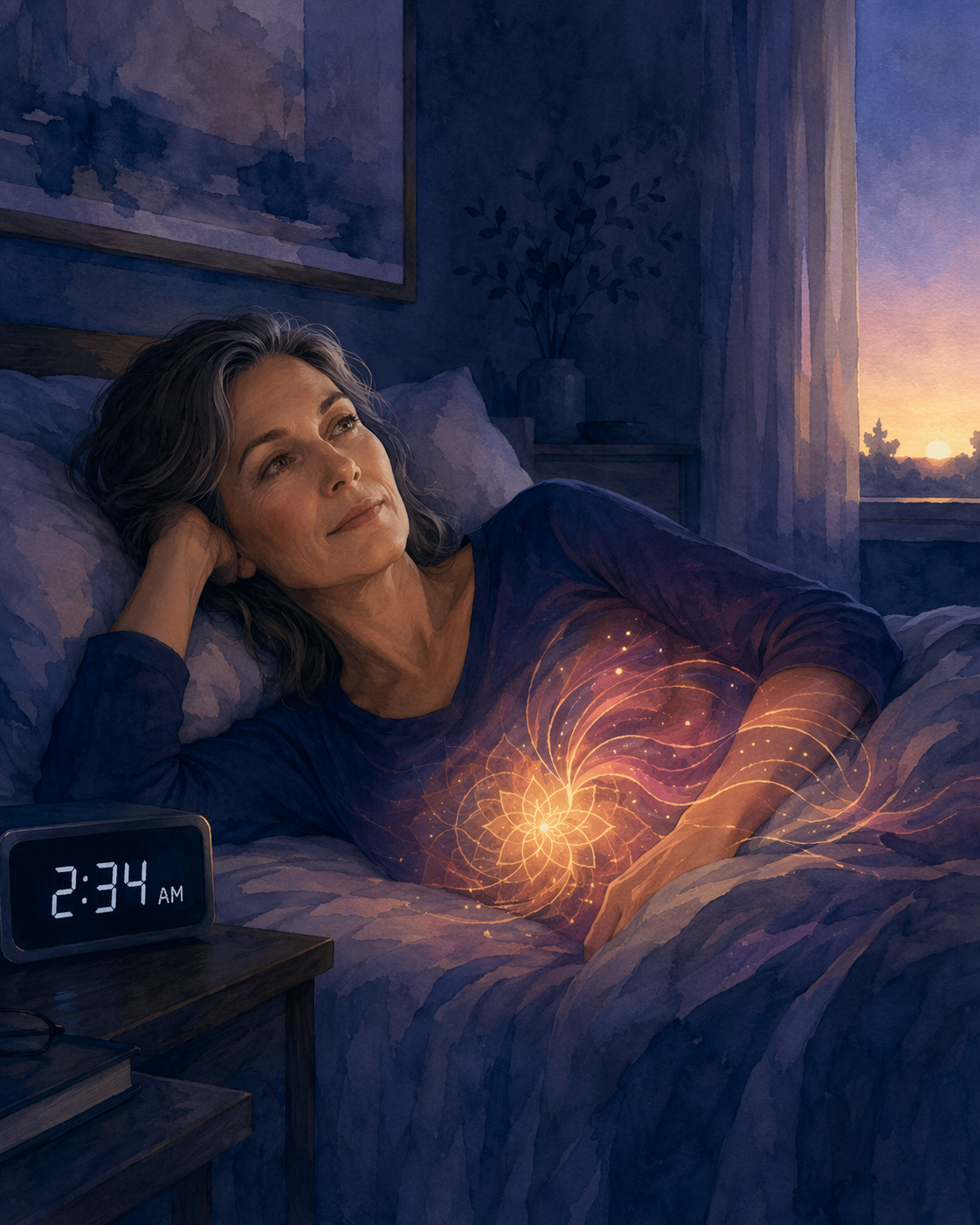
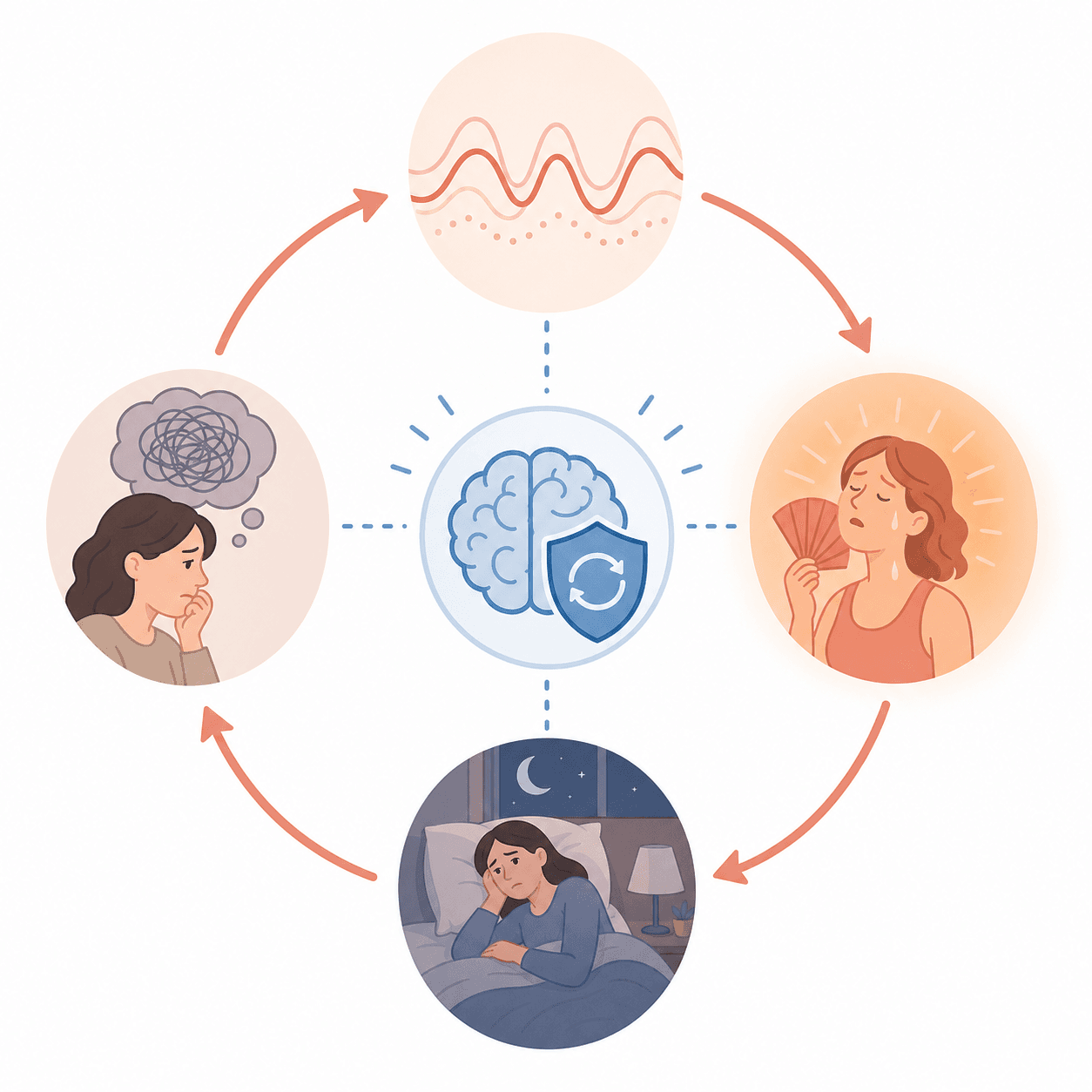
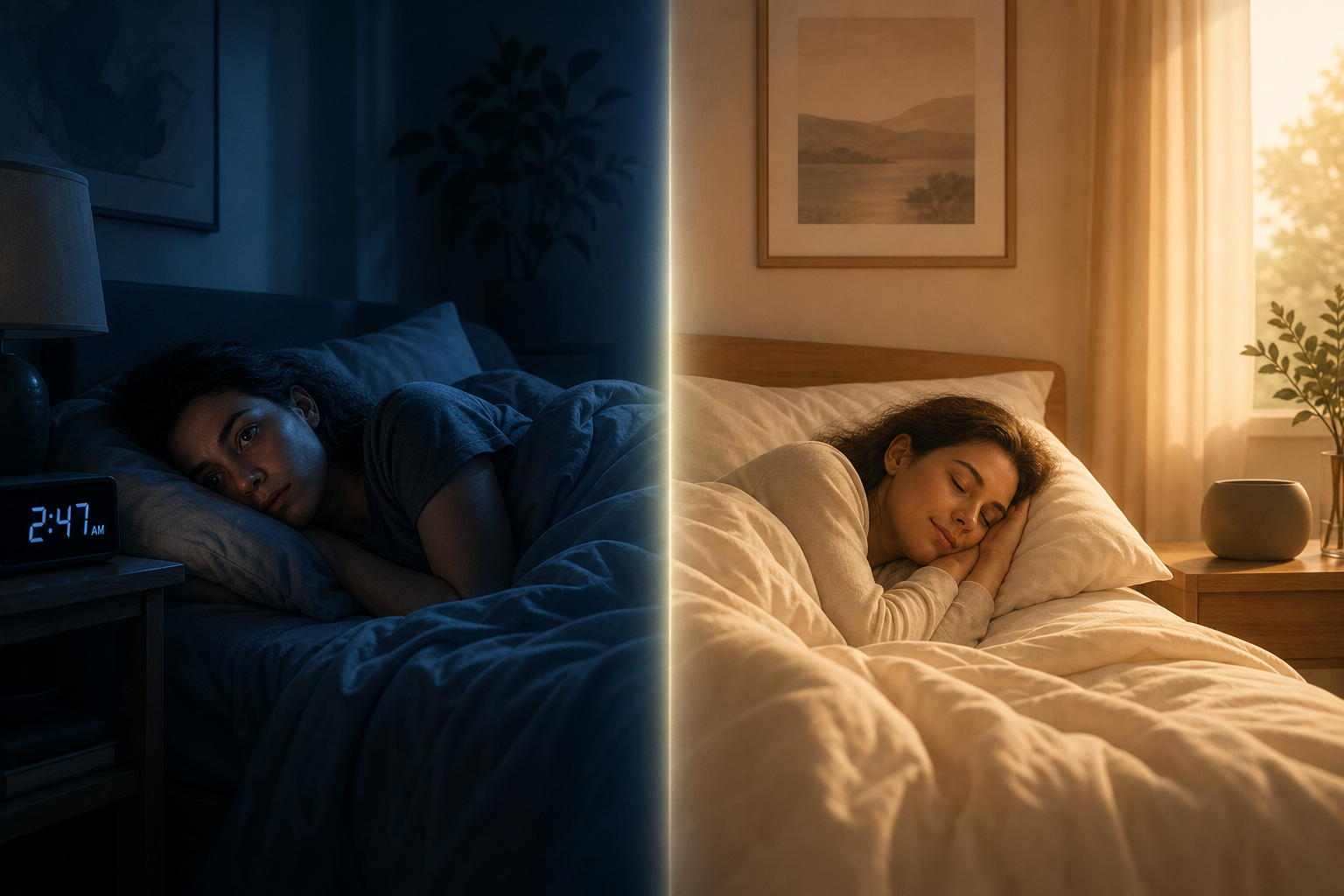
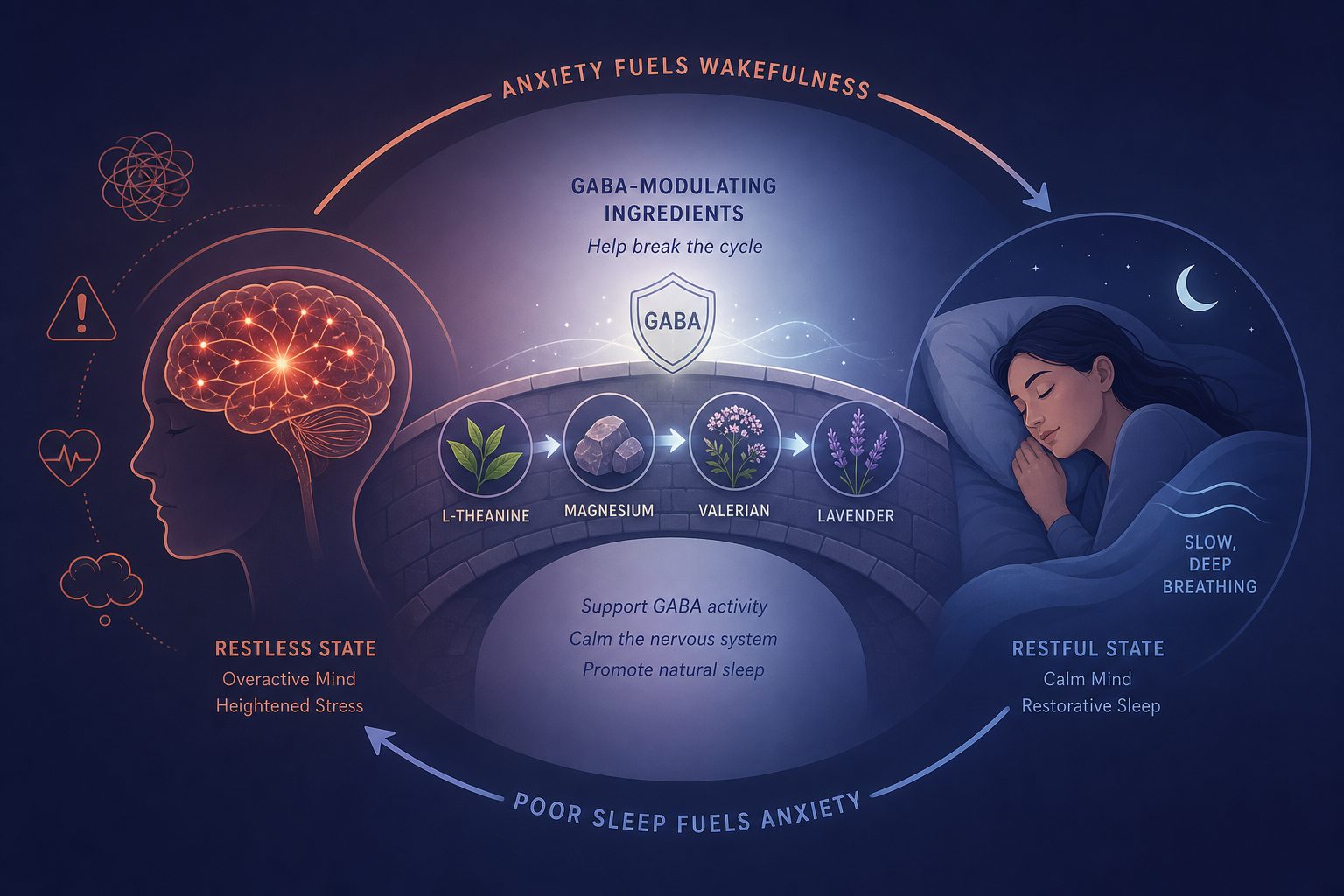
But hormones are only part of the picture. After months of broken sleep — waking at 2:34 AM, lying awake for an hour, finally drifting off just before the alarm — the brain begins to associate the bed with frustration and hyperarousal rather than rest. This is the mechanism that transforms situational sleep disruption into chronic insomnia. The bed becomes a conditioned cue for wakefulness. Sleep-related anxiety takes hold: "Will I be able to fall asleep tonight? What if I wake up at 3 AM again?" This cognitive-emotional loop is what CBT-I is specifically designed to interrupt.
Clinical psychologist Sara Nowakowski, a CBT-I expert, notes that fifty percent of perimenopausal women experience insomnia, and perimenopausal and postmenopausal women are up to two times more likely to report sleep issues than non-menopausal women. The Stanford Lifestyle Medicine program reports that 40 to 60 percent of women in perimenopause and menopause experience sleep difficulties, yet most do not receive satisfactory treatment because the problem is often misunderstood or minimized. As psychologist Natalie Solomon, PsyD, states, "Insomnia is underdiagnosed and undertreated in women in midlife."
What the Clinical Evidence Shows: CBT-I Outperforms Medications and HRT
The evidence base for CBT-I in perimenopausal women is not thin — it is among the strongest for any non-pharmacologic intervention in sleep medicine. Three landmark studies form the foundation of this evidence, and their findings are remarkably consistent: CBT-I reduces insomnia symptoms more effectively than medications, hormone therapy, or supplements in this population.
The MsFLASH Pooled Analysis
The most comprehensive evidence comes from the pooled MsFLASH (Menopause Strategies: Finding Lasting Answers for Symptoms and Health) analysis conducted by Guthrie et al. (2018). This analysis combined data from four clinical trials and directly compared CBT-I against pharmacologic interventions — including estradiol (hormone therapy), venlafaxine (an antidepressant), and escitalopram (an SSRI) — in women with vasomotor symptoms. The result was clear: CBT-I reduced insomnia symptoms more than any of the medication arms. This is a striking finding because it suggests that for perimenopausal insomnia, a behavioral intervention outperforms treatments that directly target the hormonal and neurochemical pathways thought to drive the problem.
The McCurry et al. Telephone CBT-I Trial
The McCurry et al. (2016) trial, published in JAMA Internal Medicine, tested a telephone-delivered CBT-I protocol in 106 women with a mean age of 54.8 years. Participants received six sessions over eight weeks and were compared to a menopause education control group. The results were statistically significant across multiple domains: sleep efficiency improved (P < .001), depression scores improved (P = .006), and perceived stress decreased (P = .04). These are not marginal improvements — they represent clinically meaningful changes in both sleep and mental health outcomes.
Importantly, the telephone delivery format matters for accessibility. Many perimenopausal women have demanding schedules — careers, caregiving responsibilities, or both — and attending weekly in-person therapy sessions can be a barrier. The fact that CBT-I remains effective when delivered by phone means that geographic and scheduling barriers do not have to prevent access to first-line treatment.
The MENOS 2 Trial
The MENOS 2 trial evaluated both group-based and self-help cognitive behavioral therapy for menopausal symptoms. The findings, reported by the MGH Center for Women's Mental Health, showed that women receiving either format of CBT had significantly reduced hot flash and night sweat symptom ratings compared to a no-treatment control group. Improvements extended beyond vasomotor symptoms to include mood, sleep quality, and overall quality of life. This trial is particularly relevant because it demonstrates that even a self-help format — which requires no therapist involvement — can produce meaningful improvements.
| Study | Intervention | Key Findings | Population |
|---|---|---|---|
| MsFLASH pooled analysis (Guthrie et al., 2018) | CBT-I vs. estradiol, venlafaxine, escitalopram | CBT-I reduced insomnia symptoms more than any pharmacologic arm | Women with vasomotor symptoms |
| McCurry et al. (2016), JAMA Intern Med | Telephone-delivered CBT-I (6 sessions over 8 weeks) | Sleep efficiency (P < .001), depression (P = .006), perceived stress (P = .04) | 106 women, mean age 54.8 |
| MENOS 2 trial | Group CBT and self-help CBT | Reduced hot flash/night sweat ratings; improved sleep and mood | Peri- and post-menopausal women |
How CBT-I Works for Perimenopause Specifically
CBT-I is not a single technique but a structured, multi-component protocol typically delivered over four to eight sessions. While the core components are the same for all adults with chronic insomnia, the perimenopause context makes each component particularly relevant — and particularly effective.
Sleep Restriction: Building Sleep Pressure to Counter Fragmentation
Sleep restriction is the most counterintuitive — and often the most effective — component of CBT-I. The principle is straightforward: when you spend too much time in bed trying to sleep, your sleep becomes fragmented and shallow. By temporarily limiting time in bed to the actual amount of time you are sleeping (plus a small buffer), you build homeostatic sleep pressure. This makes it easier to fall asleep quickly and stay asleep through the night.
For perimenopausal women, this is particularly powerful. Hormonal fluctuations already produce lighter, more fragmented sleep. Sleep restriction consolidates that sleep into a more efficient, higher-quality block. The goal, as Dr. Nowakowski explains, is to "build sleep pressure and increase sleep quality, not time spent in bed trying to sleep." Many women find that after years of lying awake for hours, reducing time in bed actually increases total sleep time because the sleep they get is deeper and more continuous.
Stimulus Control: Breaking the Bed → Anxiety Link
After months of lying awake in bed — watching the clock, worrying about the next day's fatigue, feeling the heat of a night sweat — the bed itself becomes a conditioned cue for wakefulness and frustration. Stimulus control directly addresses this. The core rule: if you are not asleep within approximately 15–20 minutes, get out of bed and do something quiet and relaxing in another room until you feel sleepy again. Return to bed only when sleepy.
This rule is deceptively simple but neurologically profound. It breaks the associative link between the bed environment and the state of anxious wakefulness. Over time, the bed becomes a strong cue for sleep again. For perimenopausal women who have developed this conditioned arousal pattern over months or years, stimulus control can produce rapid improvements in sleep onset and nighttime awakenings.
Cognitive Restructuring: Addressing the 'I'll Never Sleep Again' Spiral
The cognitive component of CBT-I targets the catastrophic thinking that perpetuates insomnia. Thoughts like "If I don't sleep tonight, I'll fall apart tomorrow" or "I've been awake for an hour — this is going to be another terrible night" generate anxiety that directly activates the sympathetic nervous system, making sleep physiologically impossible.
Cognitive restructuring teaches women to identify these thoughts, examine their accuracy, and replace them with more balanced alternatives. For example: "I've had bad nights before and still functioned okay the next day. Even if I don't sleep well tonight, I can manage." This shift reduces the performance anxiety around sleep that is often the primary driver of chronic insomnia in perimenopause.
Practical Access Options: In-Person, Telephone, and Digital CBT-I
One of the most common barriers to CBT-I is simply knowing how to access it. Unlike a prescription that can be filled at any pharmacy, CBT-I requires finding a trained provider. The good news is that access has expanded significantly in recent years, and multiple delivery formats have been validated in clinical trials.
- In-person CBT-I: Many academic medical centers and sleep clinics offer CBT-I programs. The Stanford Sleep Health and Insomnia Program, for example, uses CBT-I as its frontline treatment. A typical program involves 4–8 weekly sessions with a trained psychologist or behavioral sleep medicine specialist. Insurance coverage varies but is improving as CBT-I becomes more widely recognized as first-line treatment.
- Telephone-based CBT-I: The McCurry et al. trial demonstrated that six 20–30 minute telephone sessions over eight weeks produce significant improvements in sleep efficiency, depression, and perceived stress. This format is ideal for women who cannot attend in-person sessions due to geographic distance, scheduling conflicts, or caregiving responsibilities. Many providers now offer telehealth CBT-I as a standard option.
- Digital and app-based CBT-I: Several evidence-based digital programs deliver CBT-I content through structured online modules. While these lack the personalized guidance of a therapist, the MENOS 2 trial showed that even self-help CBT formats can produce meaningful improvements in sleep and mood. Digital programs are typically the most affordable and accessible option, though they work best for motivated, self-directed users.
When searching for a provider, look for credentials in behavioral sleep medicine (BSM) or cognitive behavioral therapy for insomnia. The Society of Behavioral Sleep Medicine maintains a provider directory. For telephone or telehealth options, ask specifically whether the provider offers CBT-I remotely — many do, but not all advertise it.
How CBT-I Compares to HRT and When to Combine Treatments
Hormone replacement therapy (HRT) is often presented as the primary treatment for perimenopausal sleep problems, and for good reason: it addresses the root hormonal cause of vasomotor symptoms. But the relationship between HRT and sleep is more nuanced than a simple cause-and-effect equation, and the evidence increasingly suggests that CBT-I and HRT serve complementary roles.
| Treatment | Mechanism | Duration of Effect | Best For | Limitations |
|---|---|---|---|---|
| CBT-I | Breaks conditioned arousal; builds sleep pressure; reduces sleep-related anxiety | Effects persist after treatment ends (skill-based) | Chronic insomnia driven by behavioral and cognitive factors | Requires time commitment and active participation; does not address vasomotor symptoms directly |
| HRT | Replaces declining estrogen; stabilizes thermoregulation; reduces hot flashes and night sweats | Effects last only as long as treatment continues | Moderate-to-severe vasomotor symptoms driving sleep disruption | Not appropriate for all women (contraindications include certain cancers, cardiovascular risk); does not address conditioned arousal |
The key distinction is durability. CBT-I builds skills that persist after treatment ends. Once you have learned to identify and interrupt the cycle of conditioned arousal, you carry that ability with you regardless of what happens with your hormone levels. HRT, by contrast, works only as long as you continue taking it. If you stop HRT, vasomotor symptoms — and the sleep disruption they cause — typically return.
However, for women with moderate-to-severe vasomotor symptoms — particularly night sweats that cause frequent awakenings — HRT may be necessary to reduce the physiological trigger before CBT-I can be fully effective. The emerging clinical consensus, supported by the MsFLASH findings and clinical expertise, is that the optimal approach for many women is a combination: HRT to stabilize the hormonal and thermoregulatory drivers, plus CBT-I to address the conditioned arousal and sleep-related anxiety that have developed over months of disrupted sleep.

For readers weighing broader treatment options — including medication comparisons — Restful Ground's guide on CBT-I, Sleep Medication, or Both? provides a detailed overview of the 2026 AASM guideline recommendations for treating chronic insomnia.
The Bottom Line: A Skill-Based Approach That Lasts
Perimenopausal insomnia is not a character flaw, a failure of willpower, or something you simply have to endure. It is a treatable condition with a well-established, evidence-based first-line treatment. CBT-I directly addresses the specific mechanisms that make perimenopause such a challenging period for sleep: the conditioned arousal that develops after months of hormone-driven awakenings, the sleep-related anxiety that perpetuates the cycle, and the fragmented sleep architecture that leaves you exhausted despite spending adequate time in bed.
The clinical evidence is consistent and compelling. The MsFLASH pooled analysis found CBT-I superior to estradiol, venlafaxine, and escitalopram for reducing insomnia symptoms. The McCurry et al. trial demonstrated that even six telephone sessions produce significant improvements in sleep efficiency, mood, and stress. The MENOS 2 trial showed that group and self-help CBT reduce hot flash ratings and improve sleep quality. And unlike medications or supplements, CBT-I's effects persist after treatment ends because you are learning skills, not taking a substance.
If you are a perimenopausal woman who has been struggling with sleep for three months or longer — who has tried melatonin, magnesium, or over-the-counter sleep aids without lasting relief — CBT-I is the intervention most likely to help. The first step is finding a provider. The second is committing to the process. The third is discovering that your sleep is not broken beyond repair; it just needs a different approach.

Comments
Join the discussion with an anonymous comment.