
The Hidden Cost of a Good Night’s Sleep: 1.7 Million Life Years Lost
Every night, millions of older Americans reach for a prescription sleep aid hoping for relief. The numbers are staggering: an estimated 15.3 million people over age 50 in the United States regularly use prescription sleep medications, according to a 2025 microsimulation study published in The Lancet Regional Health – Americas. But what if that pill is quietly taking more than it gives?
The study, which modeled the lifetime burden of insomnia medication using the Future Elderly Model based on 1998–2018 Health and Retirement Study data, produced a sobering counterfactual: if this entire cohort stopped using sleep medications, the population would see an 8.5% reduction in lifetime fall incidence, a 2.1% decrease in cognitive impairment, and a net gain of 0.11 years in life expectancy. Across the entire population, that adds up to 1.7 million life years and 1.3 million quality-adjusted life years (QALYs) saved. The net economic savings would reach roughly $101 billion nationally.
This is not a fringe concern. The majority of the burden identified in the study came not from direct medical costs but from reduced quality of life — the accumulated toll of falls, fractures, cognitive fog, and dependence that sleep medications exact over years of use. For the older adult who started taking a zolpidem or temazepam prescription five or ten years ago, the question is no longer whether the pill helps them fall asleep faster. The question is whether the price they are paying for those extra minutes of sleep is worth it.
How Aging Bodies Process Sleep Medications Differently
A medication that worked well at age 50 can become dangerous by age 70 — not because the drug changed, but because the body that processes it has. Three physiological shifts in aging make sleep medications riskier for older adults.
- Reduced liver and kidney function. The liver enzymes that break down z-drugs and benzodiazepines slow with age, and kidney filtration rates decline. This means the same dose stays in the system longer, leading to accumulation and prolonged sedation that extends well into the next day.
- Increased brain sensitivity to sedatives. The aging central nervous system becomes more sensitive to GABA-receptor agonists — the class that includes benzodiazepines and z-drugs. A dose that once produced mild sedation can now cause significant cognitive impairment, confusion, and daytime grogginess.
- Higher risk of drug interactions. Older adults frequently take multiple medications for hypertension, diabetes, arthritis, or other chronic conditions. Sleep medications can interact with these drugs, compounding side effects like dizziness, hypotension, and sedation.
These changes mean that the risk-benefit calculus shifts dramatically with age. A medication that was marginally beneficial at 55 may be actively harmful at 75 — even at the same dose.
The Harm Profile: Falls, Fractures, Cognitive Decline, and Dependence
The harms of prescription sleep medications in older adults are not theoretical. They are documented across multiple large-scale studies and are serious enough that the American Geriatrics Society (AGS) explicitly lists these drugs as potentially inappropriate for adults 65 and older.
The most immediate and measurable risk is falls. Research from Penn State University using Health and Retirement Study data found that sleep medication use is associated with a 33% greater fall risk (hazard ratio: 1.33; 95% CI: 1.18–1.51) in adults aged 65 and older. To put that in context: the probability of a fall rises from 28% for older adults with no insomnia symptoms to 40% for those reporting all four insomnia symptoms — and the risk was always higher among those taking physician-prescribed sleep medication, regardless of symptom severity.
| Harm Category | Key Finding | Source Context |
|---|---|---|
| Falls | 33% greater fall risk (HR 1.33) in adults 65+ using sleep medication | Penn State / HRS data (2017) |
| Cognitive impairment | 2.1% reduction in lifetime incidence if sleep medication use were avoided | Lancet microsimulation (2025) |
| Fractures | Increased risk due to falls and reduced bone density from prolonged sedation | AGS Beers Criteria |
| Dependence | Tolerance develops rapidly; withdrawal insomnia can be worse than original condition | CCJM review (2025) |
| Daytime sedation | Prolonged half-life in older adults leads to next-day grogginess and impaired function | AGS Beers Criteria |
Beyond falls, the cognitive toll is significant. The AGS Beers Criteria — a widely accepted clinical standard for medication safety in older adults — specifically flags benzodiazepines, z-drugs (zolpidem, eszopiclone, zaleplon), and sedating antihistamines (diphenhydramine, chlorpheniramine) as potentially inappropriate due to increased risk of cognitive problems, delirium, falls, accidents, and fractures. This is not a fringe opinion; it is the consensus of the leading geriatric medicine body in the United States.
Why the Benefits Are Modest: What the Numbers Actually Show
If the harms are substantial, the benefits must be equally large to justify continued use. But the clinical trial data tells a different story. For older adults, the sleep improvements from z-drugs are modest at best.
A review in the Cleveland Clinic Journal of Medicine (January 2025) notes that z-drugs reduce sleep latency by an average of 10–19 minutes compared to placebo in older adults. The American Academy of Family Physicians (AAFP) review reports a wider range — z-drugs decrease sleep latency by an average of 42 minutes versus 20 minutes for placebo — but even the more generous estimate still places the net benefit at roughly 22 minutes. For a medication that carries a 33% increased fall risk and is linked to cognitive decline, 10 to 22 minutes of faster sleep onset is a poor trade.
| Medication Class | Sleep Benefit vs. Placebo | Key Safety Concern |
|---|---|---|
| Z-drugs (zolpidem, eszopiclone) | 10–19 min reduction in sleep latency (CCJM); ~22 min net benefit (AAFP) | 33% increased fall risk; listed in Beers Criteria |
| Benzodiazepines (temazepam, triazolam) | Similar modest sleep latency reduction | High abuse potential; not recommended as first-line; Beers Criteria |
| Sedating antihistamines (diphenhydramine) | Limited efficacy data in older adults | Anticholinergic effects; confusion; fall risk; Beers Criteria |
| Lemborexant (dual orexin receptor antagonist) | NNT = 3; NNH ≥ 10 | Newer class; fewer data in older adults; less studied for long-term use |
The CCJM review also provides number-needed-to-treat (NNT) and number-needed-to-harm (NNH) data for newer agents like lemborexant (NNT = 3, NNH ≥ 10) and daridorexant 50 mg (NNH = 78). While these newer drugs may have a more favorable safety profile than benzodiazepines, they are still not risk-free, and their long-term effects in older populations remain less studied.
The Beers Criteria Context: Why These Drugs Are Flagged for Older Adults
The American Geriatrics Society Beers Criteria is the gold standard for identifying potentially inappropriate medications in older adults. It is not an obscure academic guideline — it is used by clinicians, pharmacists, and health systems across the United States to guide prescribing decisions for patients aged 65 and older.
The Beers Criteria explicitly lists the following sleep-related medications as potentially inappropriate for older adults:
- Benzodiazepines (short-, intermediate-, and long-acting): increased risk of cognitive impairment, delirium, falls, fractures, and motor vehicle accidents.
- Z-drugs (zolpidem, eszopiclone, zaleplon): similar concerns to benzodiazepines, including fall risk and next-day impairment.
- Sedating antihistamines (diphenhydramine, chlorpheniramine): strong anticholinergic effects that can cause confusion, constipation, dry mouth, and urinary retention — particularly dangerous in older adults.
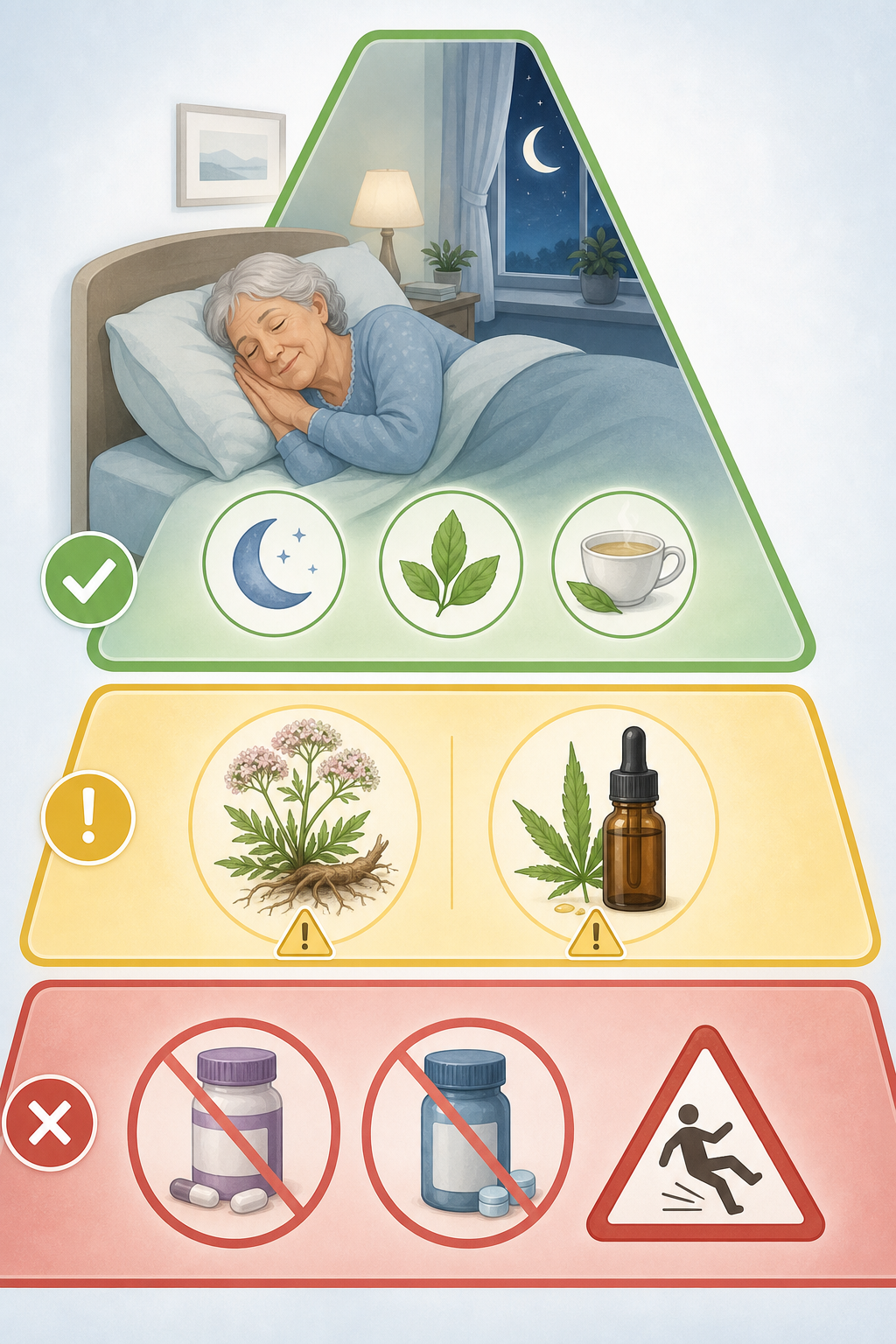
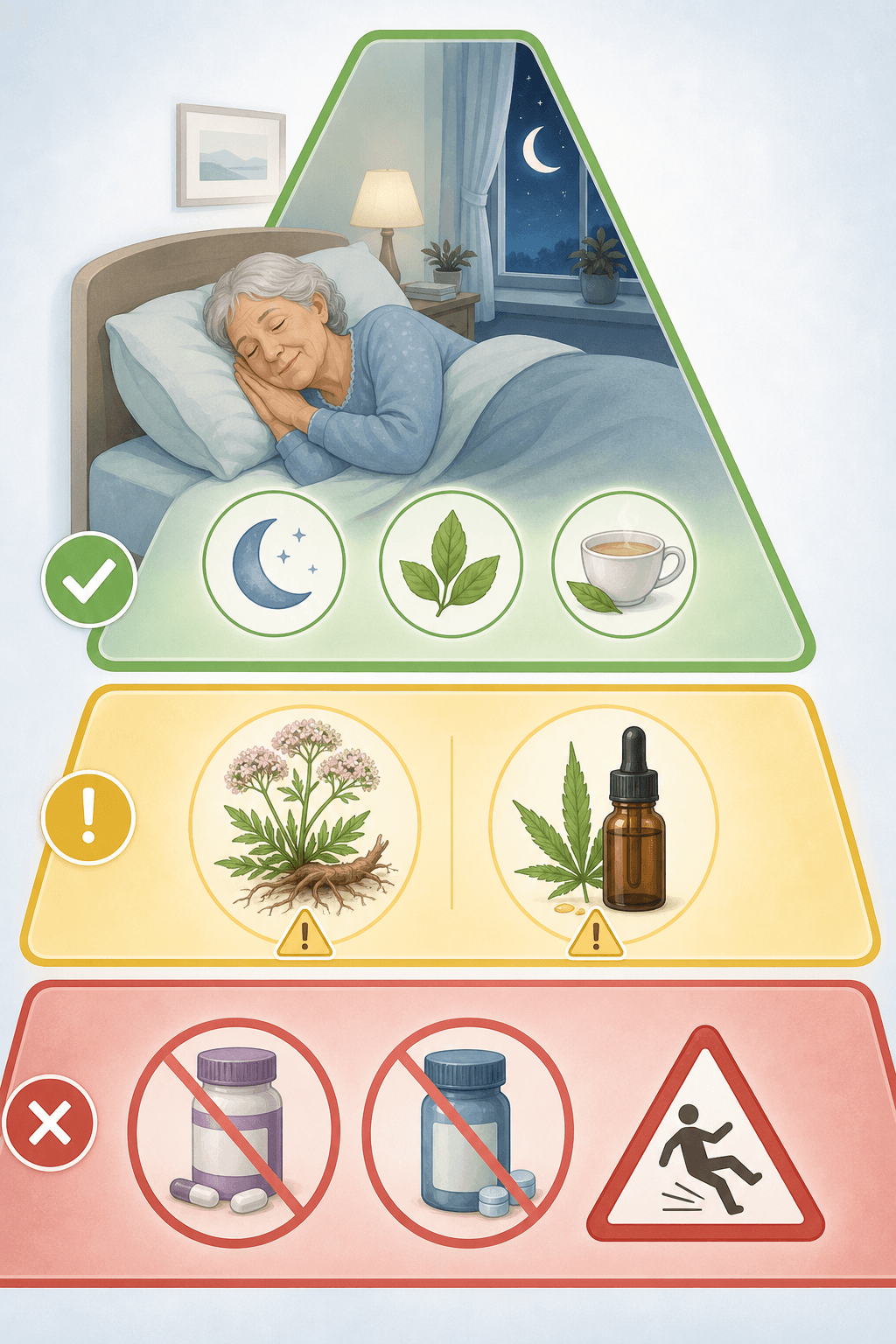
The AAFP review reinforces this position, stating that the American Geriatrics Society recommends against benzodiazepines and other sedative-hypnotics as first-choice treatment for insomnia in older adults. Instead, controlled-release melatonin and low-dose doxepin are recommended as first-line pharmacological options when medication is necessary.
Deprescribing Works: The Evidence for Tapering Off Sleep Medications
The case for deprescribing is not just about removing a harmful medication — it is about replacing it with something that works better and carries no side effects. Cognitive behavioral therapy for insomnia (CBT-I) is the gold-standard, first-line treatment for chronic insomnia in all adults, including older adults. And the evidence for its efficacy in this population is strong.
A 2025 umbrella review published in PMC analyzed 19 systematic reviews covering 160 randomized controlled trials of non-pharmacological interventions for sleep in older adults. The findings were clear: CBT-I significantly reduces sleep onset latency by an average of 9.29 minutes, reduces wake after sleep onset (WASO) by approximately 22 minutes, and improves sleep efficiency by 7.9%. These improvements are comparable to — and in many cases better than — the modest gains from sleep medications, and they come without the risk of falls, cognitive decline, or dependence.
| Intervention | Key Outcome in Older Adults | Evidence Source |
|---|---|---|
| CBT-I | Reduces WASO by ~22 min; improves sleep efficiency by 7.9% | Umbrella review of 160 RCTs (2025) |
| Melatonin / Ramelteon | Improves objective TST by 21 min; reduces sleep latency by ~14 min | Marupuru et al. meta-analysis (2022) |
| Exercise (Tai Chi) | Reduces PSQI global score by ~1.05 points | Umbrella review (2025) |
| Z-drugs (for comparison) | Reduces sleep latency by 10–19 min vs. placebo | CCJM review (2025) |
For older adults who need pharmacological support during the tapering process, melatonin or ramelteon can serve as a safer stepping stone. The Marupuru et al. meta-analysis (2022) found that melatonin and ramelteon improved objective total sleep time by 21 minutes and reduced sleep latency by approximately 14 minutes compared to placebo in older adults. While these effects are modest, they are comparable to z-drugs — and without the fall risk, cognitive impairment, or Beers Criteria flags.
Practical Deprescribing Guidance: How to Taper Safely
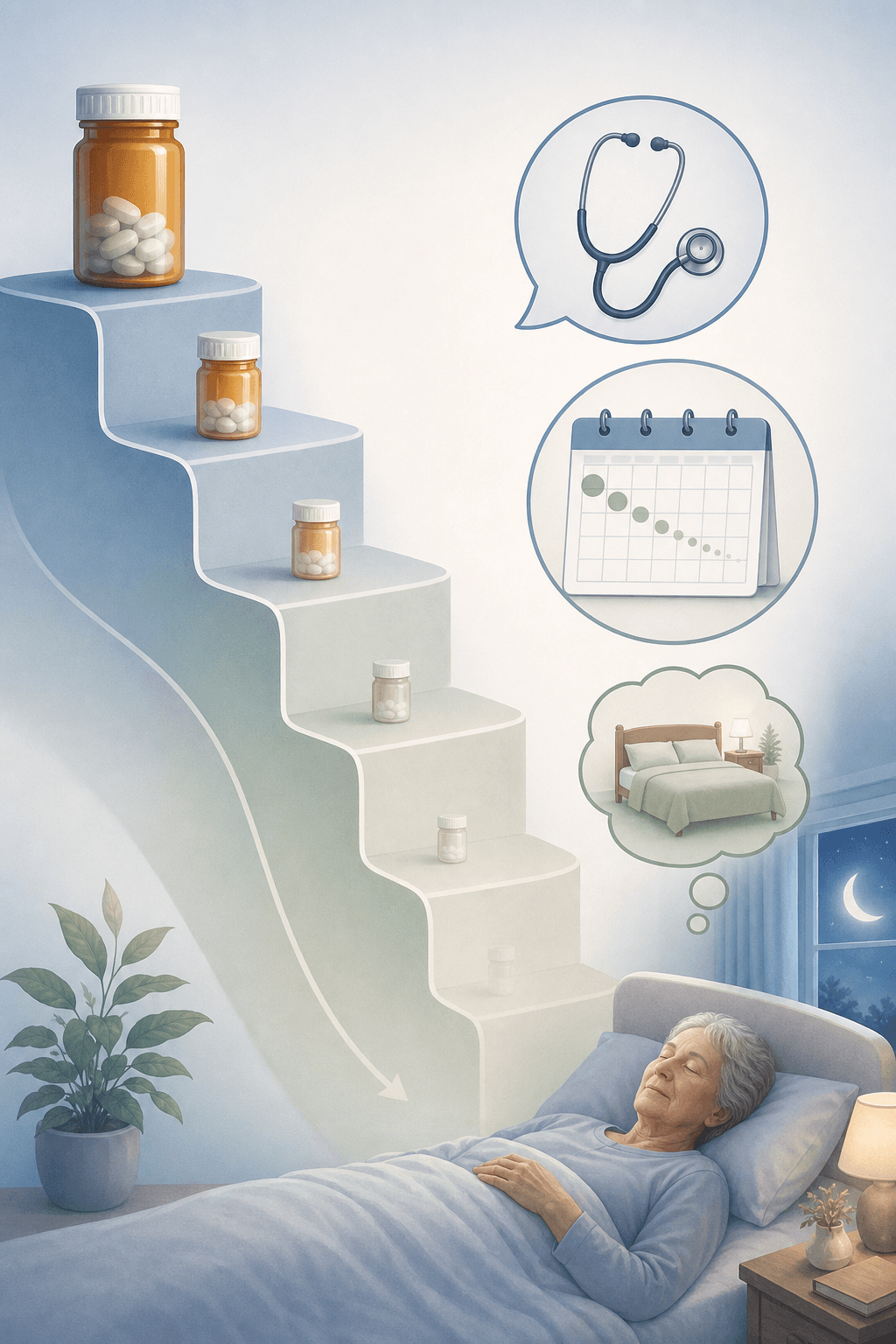
Deprescribing is a medical process that should be guided by a healthcare professional. The goal is not to stop medication overnight — it is to gradually reduce the dose while building alternative sleep habits that make the medication unnecessary. Here is a framework for approaching this safely.
- Consult your prescribing physician. This is the first and most important step. Do not attempt to taper off sleep medication without medical supervision, especially if you have been taking it for more than a few weeks. Your doctor can create a tapering schedule that minimizes withdrawal symptoms.
- Use a gradual tapering schedule. A typical approach is to reduce the dose by 10–25% every 1–2 weeks, depending on the medication and duration of use. Some protocols use a longer taper for benzodiazepines (which have higher dependence potential) and a shorter taper for z-drugs.
- Track your sleep with a diary. Before and during the taper, keep a simple sleep diary noting bedtime, wake time, estimated sleep duration, and any nighttime awakenings. This provides objective data to share with your doctor and helps you see progress that may not feel obvious night-to-night.
- Implement CBT-I components. The two most powerful behavioral techniques are stimulus control and sleep restriction therapy. Stimulus control strengthens the association between your bed and sleep by limiting time in bed to actual sleep time. Sleep restriction therapy consolidates sleep by initially limiting time in bed to your average sleep duration, then gradually expanding it as sleep efficiency improves.
- Consider melatonin as a bridge. For those who need pharmacological support during the taper, melatonin (at an appropriate dose and timing) can ease the transition. Our melatonin dosage guide can help you find the right dose and timing for your specific sleep problem.
For readers who want to dive deeper into the specific CBT-I techniques, our stimulus control therapy guide explains the conditioning logic behind each rule, and our sleep restriction therapy troubleshooting guide addresses common challenges that can stall progress. Both are essential components of a successful deprescribing plan.
The Bottom Line: Better Sleep Without the Risks
The evidence is clear: for older adults, the modest sleep improvements from prescription sleep medications are not worth the documented harms. A 10- to 19-minute reduction in sleep latency does not justify a 33% increase in fall risk, accelerated cognitive decline, and reduced quality of life. The 1.7 million life years and 1.3 million QALYs that the Lancet microsimulation attributes to sleep medication use represent a population-level burden that is both measurable and preventable.
Deprescribing — guided by a clinician, supported by CBT-I, and paced to the individual — offers a safer, more effective path to better sleep. The evidence shows that CBT-I reduces wake after sleep onset by approximately 22 minutes and improves sleep efficiency by 7.9% in older adults, with no side effects, no fall risk, and no dependence. For those who need a pharmacological bridge during the transition, melatonin or ramelteon provide a safer alternative that is not flagged by the Beers Criteria.
If you are currently taking a prescription sleep medication and wondering whether it is time to reconsider, the answer is likely yes — but the path forward requires planning, support, and patience. Start the conversation with your doctor. Keep a sleep diary. Explore CBT-I. And know that the goal is not just to stop a medication, but to build a sustainable, medication-free sleep routine that serves you well into later life.


Comments
Join the discussion with an anonymous comment.