
The ordinary move is simple: you open the bottle, read “3 mg,” take one gummy, and assume you have taken 3 milligrams of melatonin. That assumption is the weak point. With melatonin sleep gummies, the number on the label may be more of a promise than a measurement.
In a 2023 JAMA study of 25 melatonin gummy products sold in the United States, 22 products were inaccurately labeled. The measured melatonin ranged from 74% to 347% of the amount listed on the label, and one product contained no detectable melatonin at all.[1]
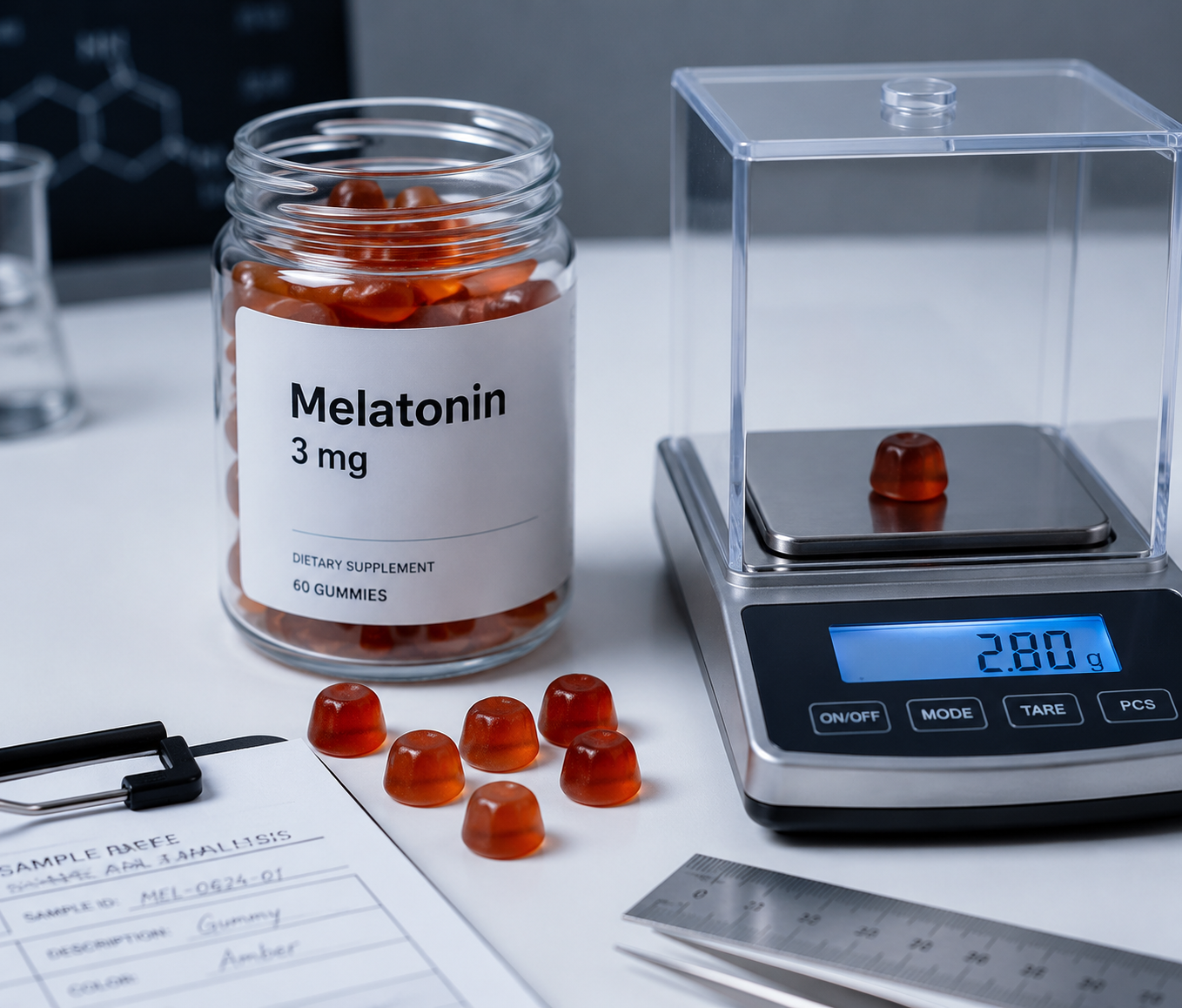
That is not the same as saying every gummy is dangerous, or that every brand is careless. The study was small, and 25 products cannot stand in for every bottle on every shelf. But it is enough to puncture the most convenient belief on the front of the package: that the labeled dose is a reliable dose meter.
The Dose Problem Hides in a Familiar Form
A capsule at least looks medicinal. A gummy borrows the language of candy: color, chew, fruit flavor, soft texture, sometimes a sugar-dusted finish. That does not make it unserious by itself. For some adults, a gummy is the form they will actually remember to take. The trouble is that the friendlier the format becomes, the more the label has to do its job.
The JAMA finding matters because it turns a cautious habit into an uncertain one. Someone who intentionally chooses a lower-dose product may still get more than expected. Someone who buys a stronger gummy may get less, then decide it “doesn’t work” and take another. In the most awkward case, the consumer may be taking a sleep gummy that contains no detectable melatonin, while attributing the result to their body, their bedtime routine, or their stress level instead of the product itself.[1]
The spread is the part worth sitting with. A label that misses by a few percentage points is a manufacturing tolerance issue. A product range from 74% to 347% of the stated quantity is a consumer information problem. The person swallowing the gummy cannot inspect the active ingredient by taste, texture, or sleepiness an hour later. The number on the label is the only number they are given.
Children’s Products Make the Same Weakness Harder to Ignore
The concern sharpens when the product is made for children. BMJ reported in 2025 on an FDA analysis of 110 children’s melatonin products. According to that report, tested doses ranged from 0% to 667% of the stated amount, and only 50% of products fell within a 76% to 126% accuracy band.[2]
Those figures should be handled carefully. The accessible source here is BMJ’s reporting on the FDA analysis, not the full study text. Even with that caveat, the pattern is difficult to dismiss because it points in the same direction as the gummy study: the package may state a dose more confidently than the product can support.
Parents are often told to be careful with melatonin, but careful depends on usable information. If a children’s product contains none of the stated ingredient, far less than stated, or several times more than stated, the adult measuring out one gummy is not actually controlling the dose as precisely as the bottle suggests.
Poison center data add pressure to that point, without proving that label inaccuracy caused the events. CDC researchers reported 260,435 pediatric melatonin ingestions from 2012 through 2021, a 530% increase, and 94.3% of the unintentional ingestions were in children aged 5 years or younger.[3]
That is a storage and supervision problem first. But the candy-like form factor changes the stakes of inaccurate labeling. A bottle that attracts a young child should not also leave the adult uncertain about what each piece contains.
Why Can a Sleep Product Vary This Much?
In the United States, melatonin is sold as a dietary supplement. That classification matters more than the soothing design of the bottle. Dietary supplements do not go through FDA premarket approval for strength, purity, or safety in the way drugs do before they reach consumers.[4]
| What the label may imply | What the regulation actually means |
|---|---|
| The listed milligrams have been confirmed before sale | FDA premarket approval is not required for dietary supplement strength |
| A children’s sleep product has been checked more tightly because of the audience | The supplement category still does not work like drug approval |
| A familiar brand or polished package means the dose is dependable | Manufacturing quality varies, and independent verification is a separate question |
This is the machinery behind the mismatch. A melatonin gummy can sit on a shelf beside pharmacy products, use clinical-looking typography, and describe a precise amount per serving, while the system behind it has not required FDA confirmation that each gummy contains that amount before sale.
Purity concerns are related, though they should not be overstated. NCCIH notes that a 2017 study found serotonin in 26% of melatonin supplements tested; that study was not specific to gummies.[4] It still belongs in the conversation because it shows that the issue is not only whether a supplement contains enough melatonin. Sometimes the question is what else may be present.
A Low Dose Is Only as Good as the Product Behind It
It is tempting to solve the problem by picking a smaller number on the front of the bottle. That can be a reasonable instinct, especially for adults who are trying to avoid taking more than they need. But inaccurate labeling makes the choice less dependable. A “low-dose” gummy is not truly low-dose unless the manufacturer can make and verify it that way.
This is also why dosage advice can get slippery. The cleanest answer is not for every consumer to memorize a universal personal dose. The more immediate issue is that a stated dose cannot do its safety work if the product does not contain what it says it contains.
For adults using melatonin occasionally, the practical consequence is modest but real: do not treat the front-label milligrams as the only safety check. For parents, the margin for casual trust is even smaller. A child-resistant cap, out-of-reach storage, and professional guidance matter, but so does the less visible question of whether the product was independently tested.
What to Look for Before You Trust the Milligrams
The useful shopping habit is not hunting for the prettiest sleep claim. It is turning the bottle around and looking for evidence that someone outside the brand checked the product.
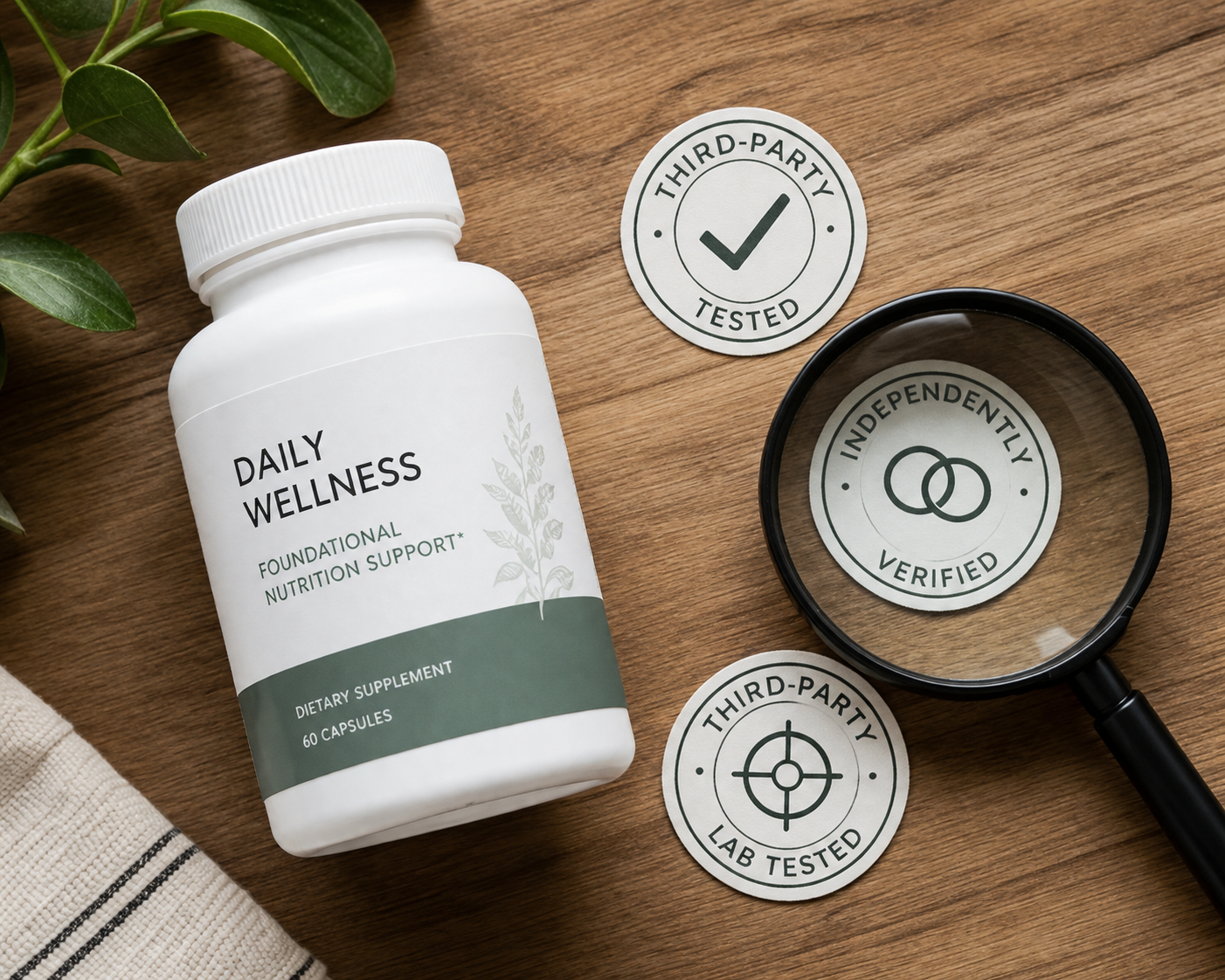
- Look for a USP Verified mark, NSF certification, or ConsumerLab verification rather than relying only on brand language.
- Check whether the company publishes recent third-party Certificates of Analysis for the specific product, not just a general quality statement.
- Prefer products that identify the amount per serving clearly and make the serving size hard to misread.
- Be wary when “natural sleep support,” “calming,” or “non-habit forming” gets more space than testing information.
- Treat a gummy like an active supplement, not a bedtime candy, especially in homes with young children.
These checks do not prove that melatonin is necessary for you, and they do not turn a gummy into a risk-free product. They may also be harder to find on gummy products than consumers might expect. Still, they move the decision from trust in packaging to trust in verification. That is a better standard than a pleasant label and a precise-looking number.
The uncomfortable lesson from the available evidence is narrow but important: the question is not only “How many milligrams does this bottle promise?” It is “Has anyone independent checked what is actually inside?”
References
- Quantity of Melatonin and CBD in Melatonin Gummies Sold in the US, JAMA Network
- Children’s melatonin products may contain far more or less of the hormone than labelled, BMJ, 2025
- Pediatric Melatonin Ingestions — United States, 2012–2021, CDC MMWR, 2022
- Melatonin: What You Need To Know, National Center for Complementary and Integrative Health


Comments
Join the discussion with an anonymous comment.