
On a pharmacy shelf, melatonin gummies, magnesium capsules, valerian drops, CBD products, chamomile teas, PM pain relievers, diphenhydramine tablets, and doxylamine sleep aids can look like variations on the same idea. For adults 65 and older, they are not in the same safety category.
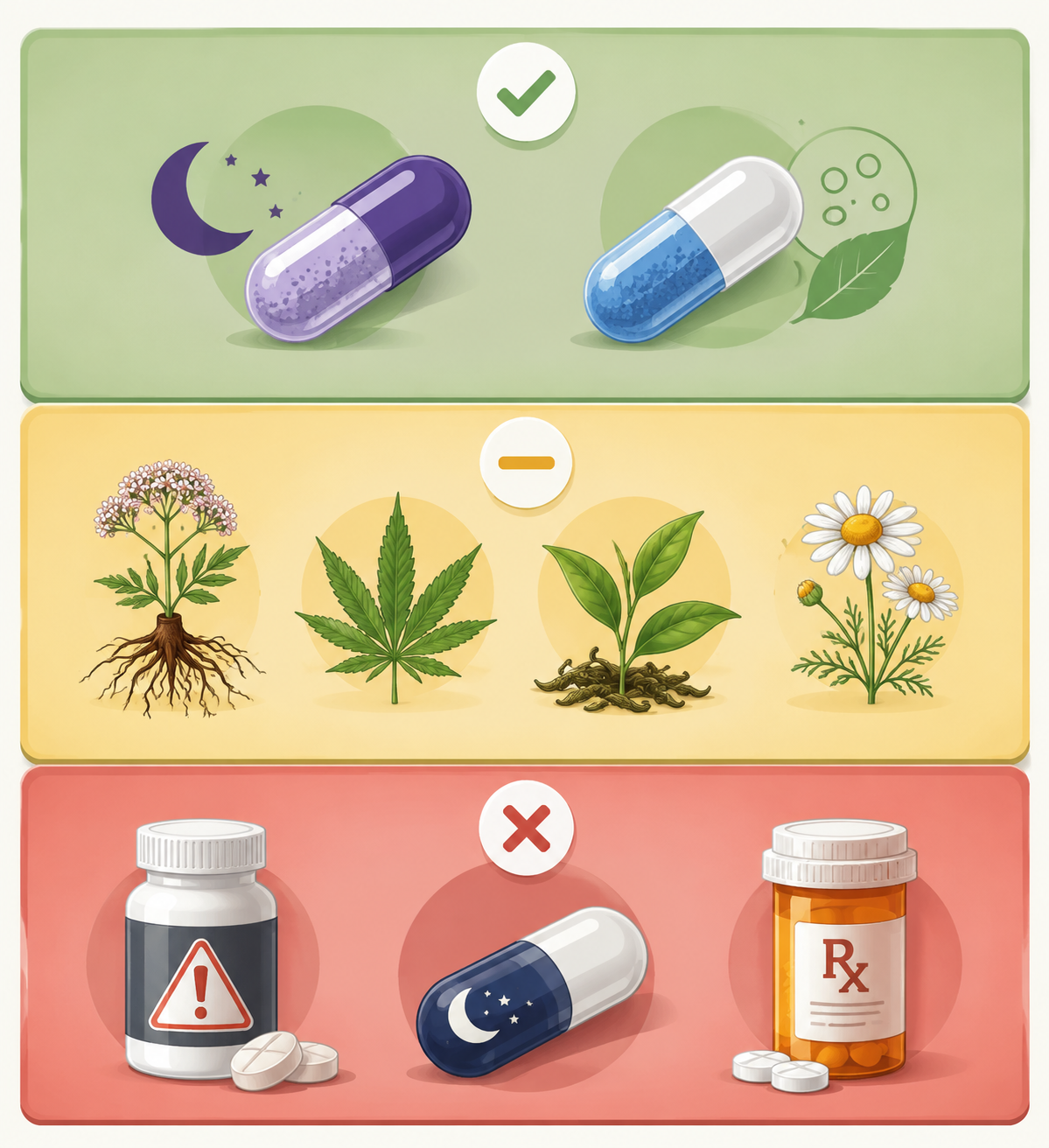
The short answer is this: low-dose melatonin and magnesium glycinate are the relatively safer over-the-counter sleep supplements for many older adults, though neither should be treated as a strong or risk-free fix. Valerian, CBD, L-theanine, and chamomile look gentler but have weak or very limited evidence for insomnia in this age group. Diphenhydramine, doxylamine, benzodiazepines, and Z-drugs belong in the avoid pile for most adults 65 and older because geriatric safety criteria flag them as potentially inappropriate.[1]
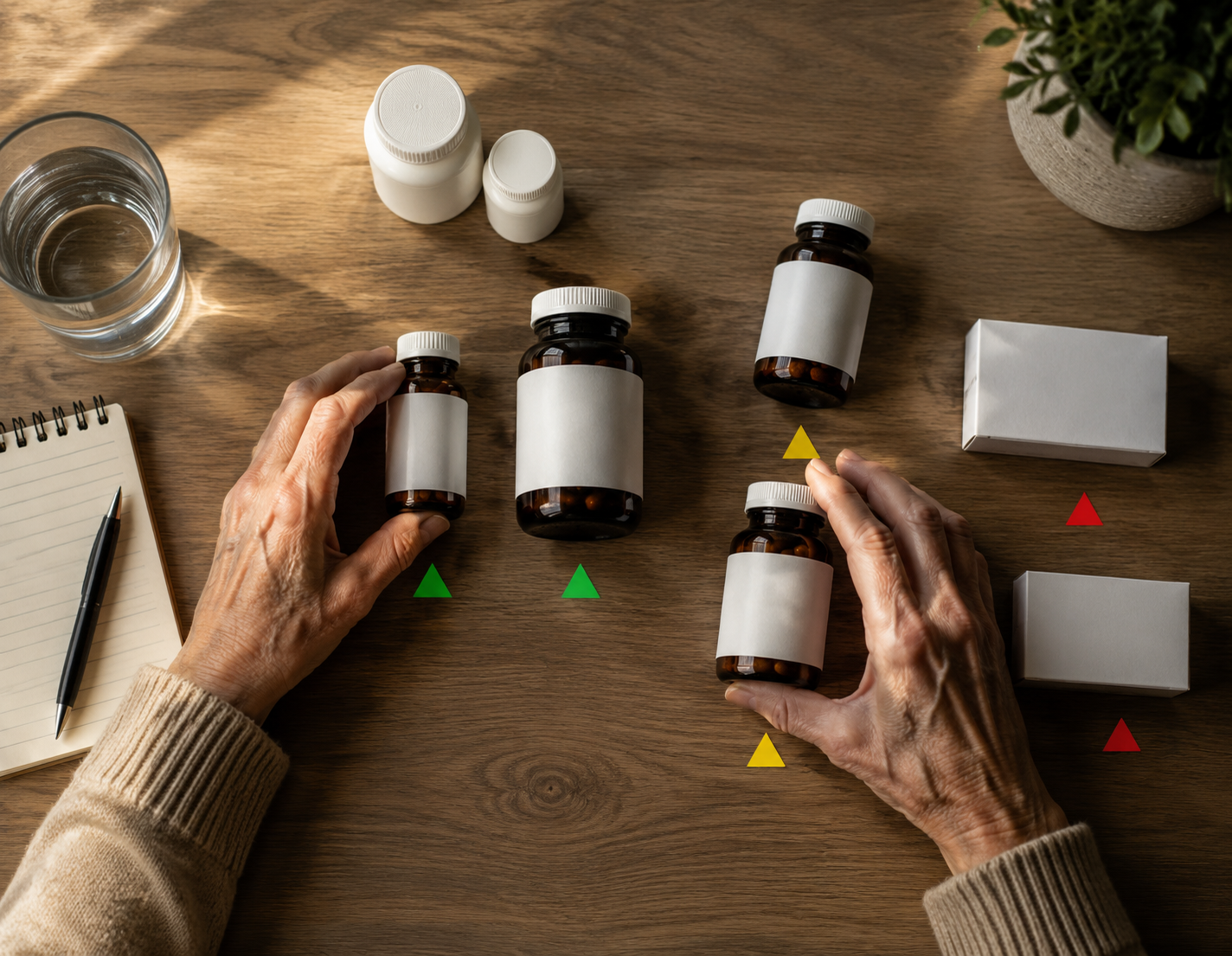
| Tier | Sleep aid | Bottom line for adults 65+ |
|---|---|---|
| Relatively safer, modest evidence | Low-dose melatonin; magnesium glycinate | Reasonable to discuss with a clinician or pharmacist, especially if the dose is low and the medication list is reviewed. |
| Safer-looking but unproven or thin evidence | Valerian; CBD; L-theanine; chamomile | Not automatically dangerous, but not well proven as insomnia treatments for older adults. |
| Avoid for routine sleep use | Diphenhydramine; doxylamine; benzodiazepines; Z-drugs | Flagged for older adults because the risks can outweigh sleep benefit.[1] |
The red flag items are common, not exotic
The most important label check is often not on a supplement bottle at all. It is on the PM pain reliever, nighttime cold product, or branded sleep tablet already sitting in the cabinet. Diphenhydramine and doxylamine are first-generation antihistamines with anticholinergic effects. In older adults, that can mean confusion, dry mouth, urinary retention, constipation, blurred vision, next-day grogginess, and impaired balance.
The 2023 American Geriatrics Society Beers Criteria lists diphenhydramine and doxylamine as potentially inappropriate for adults 65 and older; it also flags benzodiazepines and Z-drugs such as zolpidem, zaleplon, and eszopiclone.[1] That matters because the problem is not only whether a pill helps someone fall asleep. The problem is what happens when that person gets up at 2 a.m. to use the bathroom.
A hospital fall study from Nagoya City University Hospital makes the risk less abstract. Among 726 inpatient falls, 31% involved people using sleep medication. In those taking sleep medication, 62% of falls happened between 10 p.m. and 6 a.m., compared with 18% among those not taking sleep medication. Repeat falls were also more common: 24% of patients using sleep medication had three or more falls, compared with 5% of non-users.[2]
That study does not prove every OTC antihistamine will cause a fall at home. It does show why “it’s sold without a prescription” is a poor safety test for older adults. Johns Hopkins Medicine also warns that some sleep aids may be linked to dementia risk, another reason anticholinergic sleep products deserve more caution than their familiar packaging suggests.[3]
Melatonin: probably the first supplement to consider, but not a free pass
Melatonin has become the default “natural” sleep answer in many households. Its use among U.S. adults 65 and older tripled from 0.6% to 2.1% between 1999 and 2018.[4] That increase is understandable: melatonin is not on the Beers avoid list, it does not have the same anticholinergic burden as diphenhydramine, and it can be useful when the problem is sleep timing rather than deep, long-standing insomnia.
The benefit, however, is modest. Reviews in older adults report about a 14-minute reduction in sleep latency and about a 21-minute increase in total sleep time.[5] For someone lying awake for hours, that may not feel like much. For someone whose sleep schedule has drifted later and later, it may be enough to matter. The difference is important because melatonin is often marketed as if more milligrams should mean more sleep, when older adults usually need the opposite approach.
A cautious starting range is 0.3 to 2 mg, with 3 mg as a practical upper limit unless a clinician gives a specific reason to go higher. Older adults can reach much higher blood concentrations from the same dose than younger adults; one pharmacokinetic review reported peak concentrations up to 240% higher in older adults compared with young adults.[6] A 10 mg gummy is not automatically “stronger in a helpful way.” It may simply be more likely to leave someone foggy, dizzy, or prone to dose escalation when the first night disappoints.
The bottle itself is another problem. In a Journal of Clinical Sleep Medicine analysis of melatonin products, actual melatonin content ranged from 83% below the label claim to 478% above it. The same study found serotonin contamination in 26% of tested products.[7] That finding is especially irritating from a safety standpoint because it breaks the tidy mental shortcut many people use: low-risk ingredient, low-risk product.
Medication interactions also belong on the kitchen-table checklist. Fluvoxamine can increase melatonin exposure 17-fold. Melatonin has been reported to reduce nifedipine’s antihypertensive effect, with a blood pressure increase of 6.5/4.5 mmHg, and it may elevate INR in people taking warfarin.[6] Those are not front-label warnings on most bottles, but they matter to the person taking blood pressure medicine or an anticoagulant every day.
The safest way to use melatonin is as a short, low-dose trial: pick a product with independent quality testing when possible, take it at a consistent time, avoid combining it with alcohol or sedating drugs, and stop if morning grogginess, dizziness, vivid dreams, or confusion appear. Long-term safety data beyond 26 weeks are not available for older-adult use, so a nightly indefinite habit is a different decision from a brief experiment.[6]
Magnesium glycinate: a reasonable second option when the dose stays modest
Magnesium glycinate sits in the relatively safer tier for a different reason than melatonin. It is not a sedative in the antihistamine sense, it is not flagged by the Beers Criteria as a potentially inappropriate sleep medication, and the glycinate form is often chosen because it tends to be better tolerated than some other forms that can cause diarrhea.
The evidence for sleep benefit is still restrained. The research base in older adults has been rated low to very low certainty, so magnesium should not be sold to a 70-year-old as a proven insomnia treatment. It may be most reasonable when someone has low dietary magnesium intake, nighttime muscle discomfort, or a clinician has already suggested supplementation for another reason.
The upper limit from supplements is 350 mg per day. That limit refers to supplemental magnesium, not magnesium naturally present in foods. People with kidney disease, significant heart rhythm problems, or complex medication regimens should not treat magnesium as casual, because impaired clearance can turn an ordinary supplement into a problem.
- Check the Supplement Facts panel for “elemental magnesium,” not just the total compound weight.
- Avoid stacking magnesium from several products, such as a sleep capsule plus a multivitamin plus a laxative.
- Separate magnesium from medications when a pharmacist advises spacing, especially with drugs whose absorption can be affected by minerals.
- Stop or reduce the dose if diarrhea, weakness, unusual fatigue, or lightheadedness appears.
The middle tier: gentler image, weaker proof
Valerian root has a better safety reputation than diphenhydramine, but that is not the same as convincing insomnia efficacy. Reviewed evidence describes a generally good safety profile across a broad age range, yet does not show reliable benefit over placebo for treating insomnia. For an older adult already taking several medications, that makes valerian a “why add it?” product more than a dependable sleep plan.
CBD deserves a more specific kind of caution. A Cleveland Clinic Journal of Medicine review notes one small randomized controlled trial in which a 150 mg dose improved sleep efficiency, with mild adverse events such as dizziness, tinnitus, and dry mouth occurring in less than 15% of participants.[8] That is a signal worth watching, not a mature evidence base. CBD products also raise quality-control concerns, including mislabeling, possible THC contamination, and CYP enzyme interactions that can matter for older adults taking anticoagulants, seizure medicines, heart drugs, or psychiatric medications.[8]
L-theanine and chamomile generally sit in the same practical category: not obvious first-line dangers for many people, but not well proven for adults 65 and older with insomnia. Chamomile tea may be part of a calming bedtime routine. L-theanine may feel appealing because it is not a classic sedative. Neither should distract from the harder questions: Is the person falling, feeling confused, mixing products, or delaying evaluation of pain, urinary symptoms, depression, sleep apnea, restless legs, or medication side effects?
How to make a cautious choice without turning bedtime into a lecture
A useful sleep-aid decision for an older adult starts with the medication list, not the supplement aisle. Bring the bottle, or a photo of the front and Supplement Facts panel, to a pharmacist or clinician. This is especially important for people taking blood pressure medicines, anticoagulants, antidepressants, sedatives, seizure medicines, diabetes drugs, or multiple OTC products with overlapping ingredients.
- If the active ingredient is diphenhydramine or doxylamine, do not use it as a routine sleep aid at age 65+ unless a clinician has given a specific reason.
- If choosing melatonin, start low, usually 0.3 to 2 mg, and avoid assuming higher-dose gummies are safer or better.
- If choosing magnesium glycinate, keep total supplemental magnesium at or below 350 mg per day unless medically directed.
- If considering CBD, treat it like a medication-interaction question, not a harmless wellness product.
- If any sleep aid causes morning grogginess, confusion, dizziness, unsteady walking, or a fall, stop and reassess.
The quiet pattern to watch is dose creep. One tablet becomes two. A melatonin gummy is paired with a PM pain reliever. Chamomile tea gets combined with CBD because the first choice was not enough. In an older adult, the accumulated next-morning effect can be more important than the bedtime promise on any single package.
Supplements are secondary for chronic insomnia
Sleep trouble is common later in life; about 50% of older adults report difficulty sleeping, and 12% to 20% meet criteria for chronic insomnia.[8] But chronic insomnia is not best managed by rotating through bottles. Cognitive behavioral therapy for insomnia, or CBT-I, remains the first-line treatment recommended by the American Academy of Sleep Medicine, and one review reported mean effect sizes of 0.96 for CBT-I compared with 0.87 for pharmacotherapy.[8]
That does not mean every older adult must refuse every supplement. It means the hierarchy should stay clear. Low-dose melatonin and magnesium glycinate are the most reasonable OTC options when a short trial makes sense and the medication list has been checked. Valerian, CBD, L-theanine, and chamomile should not be mistaken for well-proven insomnia treatments. Diphenhydramine, doxylamine, benzodiazepines, and Z-drugs carry geriatric risks that can outlast the night’s sleep.
References
- AGS 2023 Beers Criteria — Journal of the American Geriatrics Society, 2023
- Relationship between use of sleep medication and accidental falls during hospitalization — PMC, 2021
- Sleep Aids — Johns Hopkins Medicine
- Trends in use of melatonin supplements among US adults, 1999–2018 — JAMA, 2022
- Should Melatonin Be Used as a Sleeping Aid for Elderly People? — PMC
- Current Insights into the Risks of Using Melatonin… — Clinical Interventions in Aging, Dovepress, 2023
- Melatonin natural health products… — Journal of Clinical Sleep Medicine, PMC, 2017
- Insomnia in older adults: A review of treatment options — Cleveland Clinic Journal of Medicine, January 2025


Comments
Join the discussion with an anonymous comment.