
If sleep warmth means “I get chilled and cannot build enough heat,” alpaca is usually the more convincing direction. If sleep warmth means “I need to stay warm without waking damp,” merino wool is usually the safer place to start. That is the practical split behind merino wool vs alpaca for sleep warmth: alpaca is better at dry heat retention, while merino is better at buffering the damp, humid layer that often makes a bed feel wrong by 3 a.m.
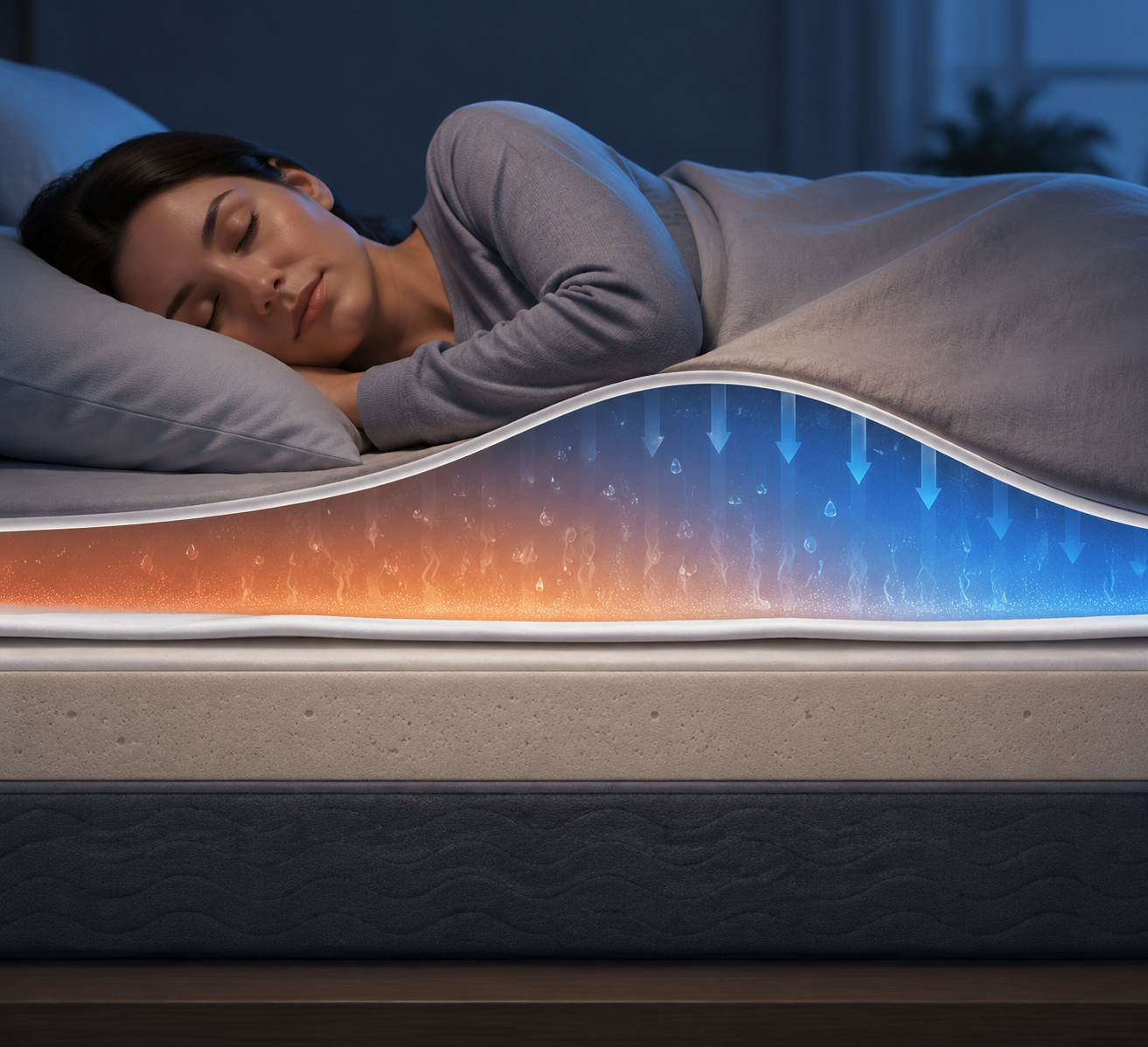
The important layer is not the blanket by itself. It is the sleep microclimate: the thin zone of temperature and humidity trapped between skin, sleepwear, sheets, blankets, mattress, and room air. A fiber can be “warm” in a lab or on a product page and still be the wrong kind of warm once body heat, perspiration, room humidity, and bedding construction are all working together.
The Warmth Question Is Really a Humidity Question
Most bad warmth decisions come from treating cold and damp as the same problem. They are not. A cold sleeper in a dry bedroom may need more trapped still air and less heat loss. A warm sleeper who wakes clammy may already have enough insulation; the failure is that moisture vapor has nowhere useful to go.
That distinction matters more than whether a product is a duvet, blanket, topper, or base layer. The closer the fiber sits to the body, the more its moisture behavior matters. Sleepwear and sheets sit inside the microclimate and feel every small change in humidity. A lofty comforter or blanket sits farther out, where air trapping and heat retention become more dominant.
| Sleep problem | Fiber direction that usually fits better | Why |
|---|---|---|
| Cold in a dry room | Alpaca | Hollow or semi-hollow fibers support stronger dry heat retention. |
| Warm but damp under bedding | Merino wool | Crimped wool fibers buffer moisture vapor before the bed feels wet. |
| Night sweats or humidity buildup | Merino wool | Higher moisture-vapor absorption helps stabilize the microclimate. |
| Lanolin sensitivity | Alpaca | Alpaca is lanolin-free; merino wool still contains lanolin. |
| Want warmth, softness, and more resilience | A merino-alpaca blend | Blends can pair alpaca’s dry warmth with merino’s elasticity and moisture handling. |
Why Alpaca Feels Like Dry Retained Heat
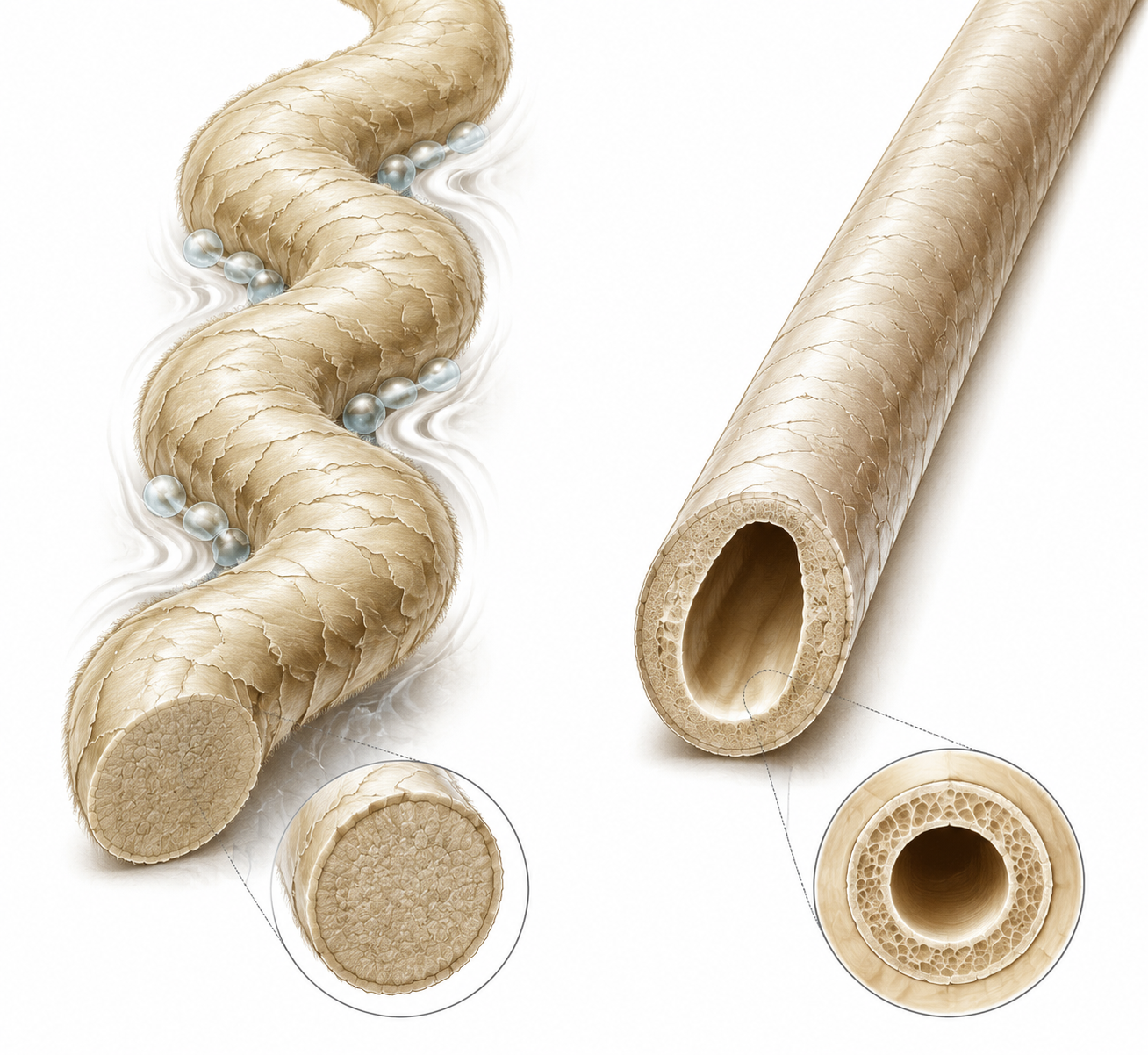
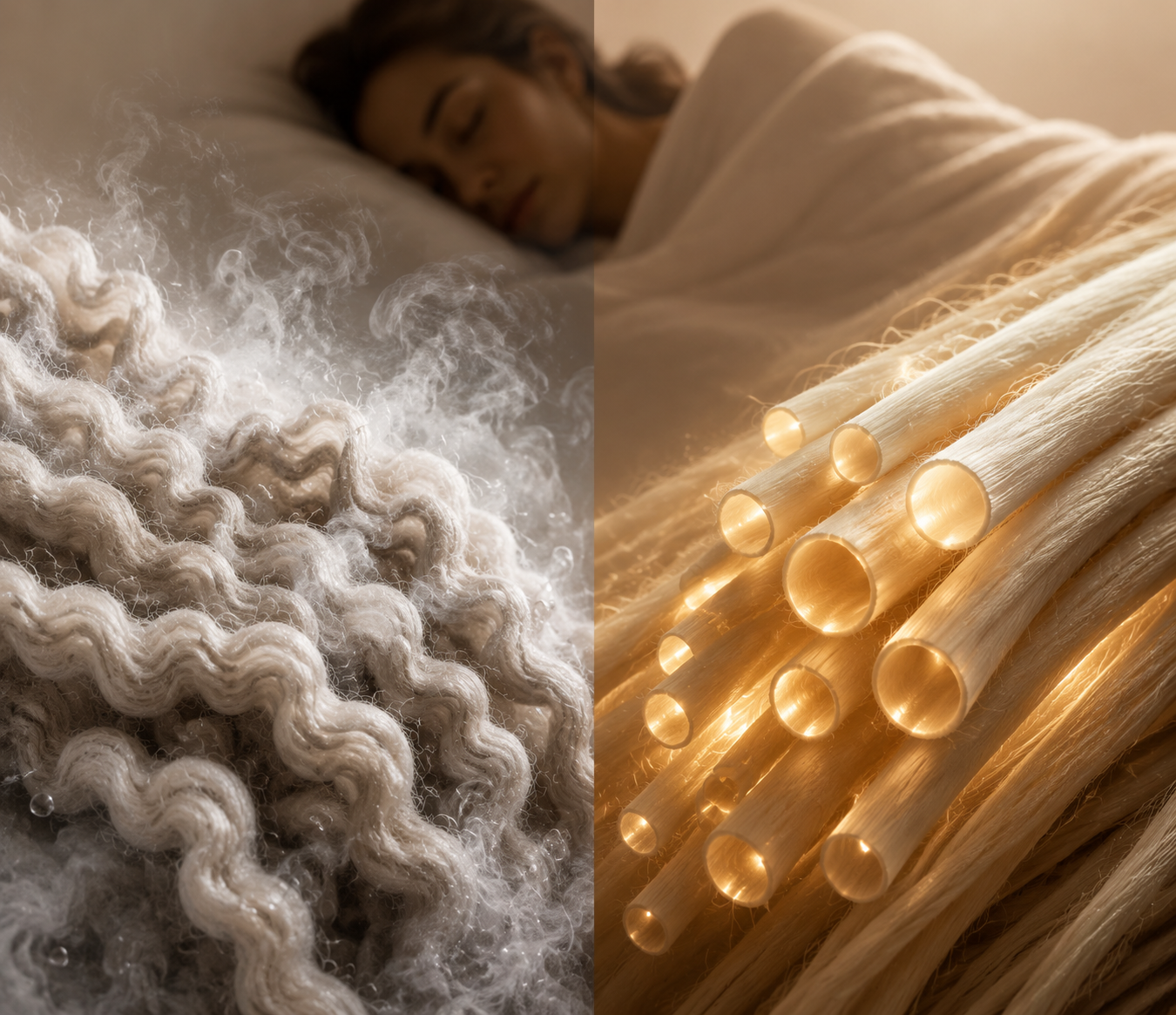
Alpaca fiber is often medullated, meaning it can have a hollow or semi-hollow core running through the fiber. That inner air space acts as a thermal break. In bedding terms, it helps slow heat movement away from the body, especially when the surrounding air is cool and dry.
This is the part of alpaca that deserves respect. The warmth is not just marketing poetry about mountain animals. The fiber architecture gives alpaca a plausible mechanical reason to feel efficient at holding heat without requiring as much bulk as some other materials.
The stronger claim is where caution is needed. Alpaca industry and retail sources sometimes describe alpaca as dramatically warmer than wool, including versions of the claim that it is “3x warmer.” The more defensible framing from the available comparison material is that alpaca can offer up to about 30% more thermal insulation, and even that depends on fiber grade, micron count, loft, density, weave or knit, fill weight, and product construction.[1]
For sleep, that means an alpaca blanket or comforter can be an excellent answer for the person who lies still and keeps losing heat. It is less automatically ideal for someone who alternates between cold feet at bedtime and a damp torso before dawn. Alpaca absorbs less moisture vapor than wool, roughly around 10–11% of its dry weight in the comparison sources, so it is not the same kind of humidity buffer.[1]
Why Merino Wool Can Be Warm Without Feeling as Stuffy
Merino’s warmth works differently. The fiber is crimped, springy, and generally solid rather than hollow. Its bends create small spaces between strands, and those spaces trap still air. In a blanket or base layer, that loft is part of the insulation.
But merino’s more interesting sleep behavior is moisture buffering. Wool can absorb moisture vapor into the fiber through hygroscopic sorption, commonly described as up to 30% of its dry weight before it feels wet to the touch.[2] That does not make sweat disappear. It does mean the vapor phase of moisture can be taken up and released more gradually, instead of condensing quickly into the clammy feeling that makes a warm bed feel hostile.
There is also a small thermal effect: when wool absorbs moisture vapor, it can release heat of sorption. In plain sleep terms, wool is not only trapping air; it is interacting with humidity changes inside the bed. That is why merino can be useful for someone who needs warmth at bedtime but tends to overheat later.
This is also where “breathable” becomes too vague to be useful. A sleeper does not benefit from breathability in the abstract. They benefit when humidity near the skin stays low enough that the body can regulate temperature without the bedding feeling wet, chilled, or airless.
What Sleep Research Can—and Cannot—Tell Us
The strongest sleep-specific evidence here is not an alpaca-versus-merino trial. It is a University of Sydney study by Shin and colleagues comparing wool and cotton sleepwear and bedding at ambient temperatures of 17°C and 22°C. In the 17°C condition, wool sleepwear was associated with shorter sleep onset latency, about 9.9 minutes compared with 18.1 minutes for cotton, and skin temperature variables explained 67.8% of the variance in sleep onset latency.[3]
That is useful because it connects fabric choice to measurable sleep physiology rather than stopping at fiber specifications. The study points toward the importance of skin temperature and the fabric layer closest to the body. It supports the idea that wool can affect how quickly people fall asleep under tested temperature conditions.[3]
It does not prove that merino beats alpaca for sleep warmth. The comparison was wool versus cotton, not merino versus alpaca. It also used specific ambient temperatures, specific bedding and sleepwear setups, and a controlled study design that may not map neatly onto every bedroom. The study was supported by Australian Wool Innovation and the Woolmark Company, which is worth disclosing without dismissing the findings out of hand.[3]
So the evidence base is asymmetrical. Wool has closer sleep-specific research. Alpaca has a strong fiber-physics argument for dry warmth, plus commercial bedding experience, but not the same kind of polysomnography evidence in the material reviewed here.
Match the Fiber to the Sleeper, Not to the Warmth Claim
If You Run Cold and Stay Dry
Choose alpaca first if your main complaint is that the bed never becomes warm enough, especially in a dry room. This is the sleeper who adds a blanket and finally feels relief rather than dampness. Alpaca’s hollow-core structure is well matched to that problem because the job is simple: hold more dry heat near the body.
A lofty alpaca blanket, comforter, or throw layer makes more sense here than a very thin layer expected to do everything. Loft still matters. A fine fiber with poor construction can underperform, and a well-built merino blanket can outperform a poorly built alpaca one. Fiber type is only one part of the sleep system.
If You Wake Warm, Damp, or Clammy
Choose merino first if warmth tends to turn into moisture. This includes sleepers who fall asleep cold, wake too hot, kick off the covers, then get chilled again. The issue is not a lack of insulation; it is instability in the microclimate.
Merino’s moisture-vapor absorption gives it a better argument for sleepwear, base layers, and blankets used close to the body. The closer the fiber is to skin, the more valuable that buffering becomes. A merino sleep shirt can affect the layer that actually touches the sleeper; a heavy outer blanket may mostly affect total insulation.
If Night Sweats Are Part of the Pattern
Merino is the more logical first test for night sweats, with one important limit: no fiber fixes the underlying cause of sweating. The fabric can only change what happens after moisture enters the bedding system. Merino can buffer vapor and may feel drier for longer; it cannot prevent the body from sweating.
For people who sweat heavily, construction may matter as much as fiber. A tightly packed, heavy product can still feel oppressive. A lighter merino layer combined with adjustable top bedding is often more forgiving than one very warm item that leaves no easy way to vent heat.
If Lanolin Sensitivity Is the Deciding Factor
Alpaca has the cleaner answer here because it is lanolin-free. Lanolin sensitivity is often described as affecting a small minority, around 1–2% of people in the comparison material, but for that group the distinction is not theoretical.[1]
Fine-micron merino is a different issue from old scratchy wool. Merino in the 17.5–18.5 micron range is commonly presented as fine enough to reduce prickle for many wearers, but it is still wool and still contains lanolin.[4] If a person has a known lanolin reaction, alpaca is the more straightforward trial.
If the Bedroom Is Humid
A humid bedroom pushes the decision toward merino, not because merino is cooler in every construction, but because humidity makes moisture management more important. When the room air is already carrying moisture, the bed’s microclimate has less room for error. A fiber that buffers vapor buys time before the sleeper feels damp.
In a dry room, the balance changes. Alpaca’s lower moisture uptake is less of a disadvantage when there is less vapor to manage, and its dry heat retention becomes more valuable.
Bedding and Sleepwear Do Not Ask the Same Job of the Fiber
For sleepwear, merino has the stronger case. It sits directly against the skin, where moisture vapor first appears and where small changes in skin temperature can affect comfort. That is also where the University of Sydney wool sleepwear findings are most relevant, even with the caveats already noted.[3]
For top-of-bed warmth, alpaca becomes more competitive. A comforter, blanket, or throw is often asked to hold heat in the larger bedding envelope rather than manage the first layer of perspiration. If the sleeper wears a moisture-buffering base layer or uses breathable sheets, an alpaca top layer can supply warmth without needing to solve every humidity problem alone.
Mattress toppers are trickier. They sit below the body, where compression reduces loft and airflow. A fiber that performs beautifully as an airy blanket may behave differently when pressed under body weight for hours. In toppers, look beyond fiber name to construction: quilting, fill migration, density, cover fabric, and whether the product can recover loft after compression.
Feel Still Matters, Just Not More Than the Microclimate
Alpaca often has a silky, smooth hand. Fine merino tends to feel soft, elastic, and more springy. Those sensory differences can decide whether a person actually uses the item every night, so they are not trivial.
Still, tactile preference should not override the pattern of bad sleep. If the recurring problem is damp heat, the softest dry-warm fiber may still be wrong. If the recurring problem is a persistent chill in a dry room, the most moisture-buffering fabric may not provide enough retained heat unless the construction is warm enough.
Where Blends Make Sense
A merino-alpaca blend is not a compromise only for indecisive buyers. It can be a rational middle path when the sleep problem contains both sides: a person runs cold at bedtime but dislikes the heavy, damp warmth of overbuilt bedding. In that case, alpaca can contribute hollow-core warmth and a smoother feel, while merino can add elasticity, loft recovery, and moisture management.
The blend ratio matters, but the label rarely tells the whole story. A small amount of one fiber may affect feel more than performance. A high alpaca blend in a dense weave may feel very different from the same ratio in a lofty knit. When judging blends, look for the role the product is supposed to play: next-to-skin humidity buffering, outer-layer insulation, or a washable, resilient everyday layer.
A Practical Buying Read
- Start with the failure mode: chilled all night points toward alpaca; warm and damp points toward merino.
- Separate sleepwear from bedding: merino has the better argument close to skin; alpaca has the cleaner argument as a dry-warm outer layer.
- Treat “warmer” claims carefully: fiber grade, micron count, loft, density, and construction can outweigh the fiber name.
- Check sensitivity history: alpaca is lanolin-free; merino is often comfortable in fine grades but remains a wool fiber.
- Use blends when the sleep pattern is mixed rather than expecting one pure fiber to solve both cold and humidity.
There is no universal winner between merino wool and alpaca for sleep warmth. Merino is the stronger choice when warmth has to stay dry, buffered, and tolerable through humidity changes. Alpaca is the stronger choice when the body simply needs more retained dry heat. The right answer is the one that matches the failure you are actually waking up from.
References
- Alpaca vs Wool, Alpaca Direct.
- Why Merino Wool?, Ridge Merino.
- The effects of fabric for sleepwear and bedding on sleep at ambient temperatures of 17°C and 22°C, Shin et al., 2016.
- Alpaca vs Merino Wool Comforter: Which Sleeps Cooler?, Antipodean Home.


Comments
Join the discussion with an anonymous comment.