
If you are considering senna tea for constipation before bed, the timing makes sense: senna usually takes 6 to 12 hours to work, so a bedtime cup can line up with a morning bowel movement rather than a middle-of-the-day emergency. It is also naturally caffeine-free, so it should not keep you awake the way black tea, green tea, or coffee can. The part worth taking seriously is not chemical stimulation of the brain; it is what your gut and bladder may do overnight.
That distinction matters. Senna is a stimulant laxative, not a sleep aid. Used occasionally and carefully, it can be a reasonable night-before option for uncomplicated constipation. Used too late, too strong, too often, or in the wrong medical situation, it can trade one problem for another: cramps, diarrhea, or a 2 a.m. bathroom trip.

Why Bedtime Is the Practical Window
Senna works because compounds called sennosides are converted by gut bacteria into active metabolites that stimulate contractions in the colon. That conversion is part of the delay. The NHS describes senna as taking about 8 hours to work and says it is usually taken at bedtime, while broader dosing guidance commonly places the onset in the 6- to 12-hour range.[1][2]
That is the real reason bedtime use has stuck around. It is not just a cozy ritual with a mug. If you drink senna tea after dinner or before bed, the active effect is more likely to arrive after you have slept several hours. For many people, the desired outcome is simple: wake up, feel the urge, use the bathroom, and avoid straining.
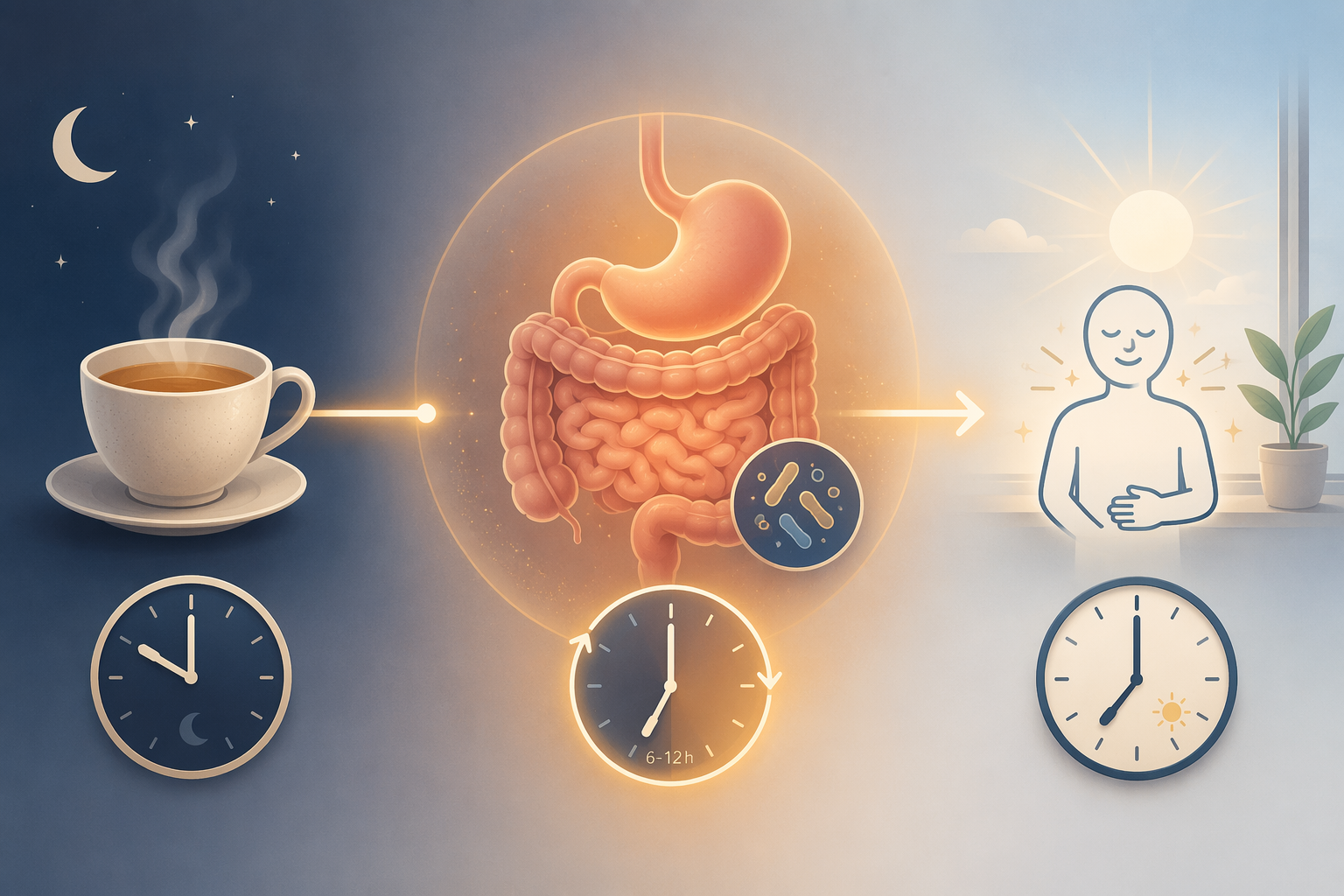
A typical overnight pattern looks like this:
| Time | What is happening | What to watch for |
|---|---|---|
| Early evening to bedtime | You drink one prepared cup of senna tea. | Avoid making it stronger than the label or clinician instructions suggest. |
| First few hours | The tea moves through the digestive tract; sennosides are not usually immediate. | If you are sensitive, cramping may still begin before morning. |
| Roughly 6-12 hours later | Bacterial conversion and colon stimulation may produce a bowel movement. | Morning relief is the goal; diarrhea means the dose may have been too much. |
| Next day | Constipation should be improved if senna is the right fit. | If you still need laxatives repeatedly, the issue deserves a broader plan. |
The 2023 joint guideline from the American Gastroenterological Association and American College of Gastroenterology gave senna a conditional recommendation for chronic idiopathic constipation, with low certainty of evidence.[3] That is meaningful because senna is not being judged only as folklore. It is also not a blank check. “Conditional” and “low certainty” should keep the advice modest: senna can help, but it is not the right nightly habit for everyone.
One often-cited clinical signal comes from a 28-day nursing home study of 86 residents in which a branded senna-containing tea produced four times more bowel movements than placebo.[4] Useful, yes. Directly transferable to every box of plain senna leaf tea, no. The product was a multi-ingredient formula, the setting was a nursing home, and the study was small. It supports the idea that senna tea can move bowels; it does not prove that every person should drink it every night.
How Close to Bed Should You Drink It?
For most adults using senna tea occasionally, the sensible window is after dinner or in the hour or two before bed, not right after you get into bed with the lights off. That gives the tea time to settle, reduces the chance that the full cup of fluid wakes your bladder, and still keeps the laxative effect aimed toward morning.
If you already wake often to urinate, especially if you are over 60, the fluid matters almost as much as the senna. An 8-ounce mug is not enormous, but taken close to sleep it may be enough to add another nighttime bathroom trip. Older adults who are juggling constipation, nighttime urination, and several medications may need a different plan than “just have a tea.” That is the same practical territory covered in guidance on sleep hygiene for older adults, where the problem is often less about discipline and more about physiology.
The other timing mistake is drinking it too early and assuming nothing will happen until morning. The 6- to 12-hour window is a range, not a promise. Someone who drinks senna tea at 6 p.m. may be glad by breakfast; another person may be awake with cramps before midnight. On a first try, it is better to choose a night when an imperfect result will not create a work, travel, or caregiving problem the next morning.
Dose: Keep the First Cup Boring
The safest first cup is not the strongest cup. Common directions use one cup steeped for about 10 minutes, often from 1 to 2 grams of dried senna leaf, while standardized senna products may refer to 15 to 17.2 milligrams of sennosides. General consumer drug references also warn against exceeding one dose per day and against using senna for more than 7 consecutive days without medical advice.[1][7]
Tea complicates dosing because it is not as exact as a tablet. Potency can vary by brand, leaf quality, bag size, steeping time, water volume, and whether the product includes other herbs. A cup steeped for 20 minutes is not automatically “more natural”; it may simply be stronger and more likely to cause cramps or diarrhea.
- Use the product’s label directions rather than doubling tea bags.
- Start with one cup, not repeated cups through the evening.
- Do not combine senna tea with other laxatives unless a clinician told you to.
- Stop if the result is diarrhea rather than a formed bowel movement.
- Do not use it as a nightly routine for ongoing constipation without medical guidance.
This is where “occasional use” is not a decorative warning. Stimulant laxatives push the bowel to contract. If constipation keeps returning, the answer may involve fiber intake, fluid timing, medications, pelvic floor function, medical conditions, or a different bowel regimen. Senna can be part of that conversation, but it should not quietly become the whole plan.
Will Senna Tea Disrupt Sleep?
Senna tea should not disrupt sleep chemically through caffeine. The more realistic sleep risks are physical: abdominal cramping, diarrhea, urgency, and urination from the liquid itself. Stomach cramps affect more than 1 in 100 people taking senna, and diarrhea is also a recognized side effect.[6]
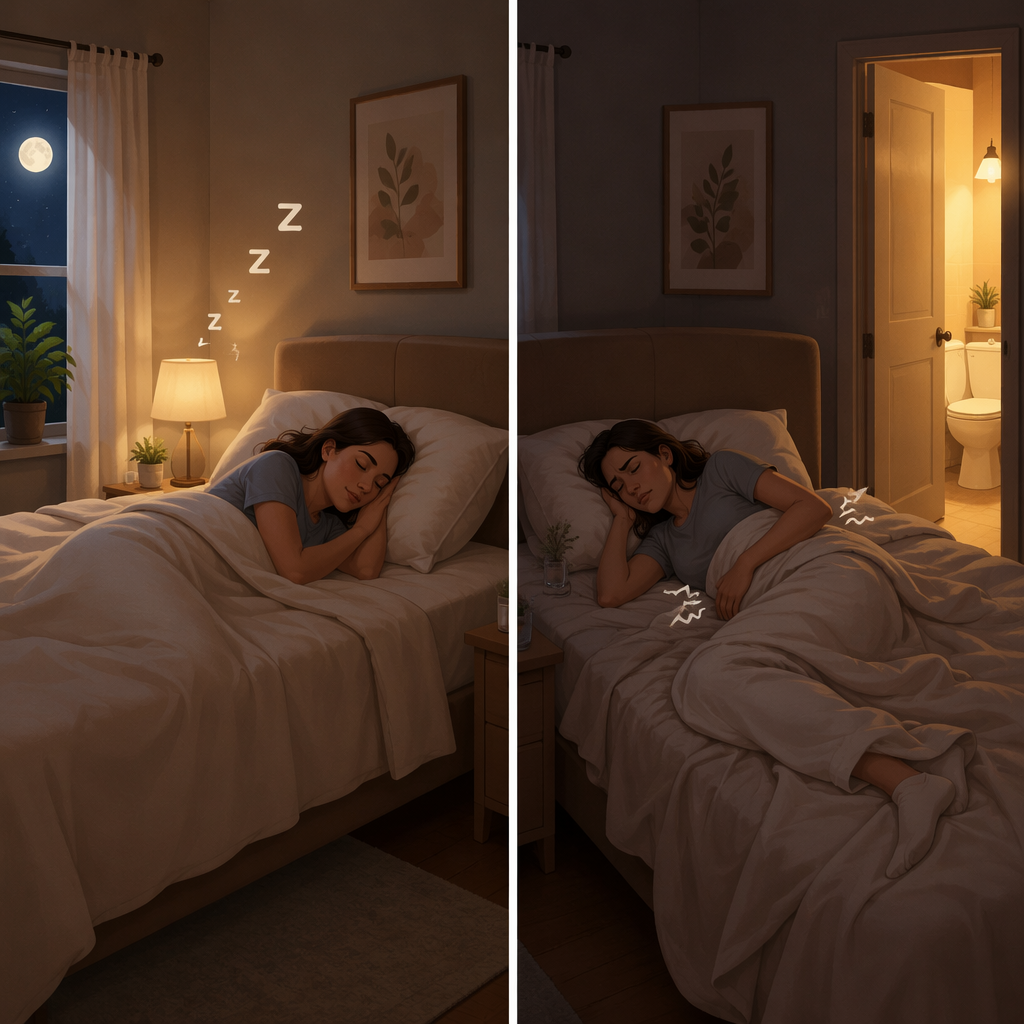
That may sound minor until it happens at night. A cramp at 2 a.m. is not an abstract side effect. It can wake you, send you to the bathroom, and leave you lying there afterward trying to decide whether the worst has passed. Diarrhea can also mean fluid loss and next-day fatigue, which defeats the purpose if the original hope was to sleep better and wake relieved.
There is also a broader sleep signal worth treating carefully. A 2022 cross-sectional study of 2,946 adults with a mean age of 60.5 who underwent in-lab polysomnography found that laxative users had 7.1% lower sleep efficiency, 25.5 more minutes awake after sleep onset, 29.4 fewer minutes of total sleep time, and 1.7 times higher odds of reporting insomnia symptoms.[5]
That study does not prove senna causes poor sleep. It grouped laxative users together rather than isolating senna tea, and people who need laxatives may differ from non-users in health status, medications, pain, diet, or underlying bowel problems. Still, it is a useful warning against pretending bowel medication and sleep are separate worlds. If your gut is active, uncomfortable, or unpredictable overnight, your sleep may notice.
If constipation is repeatedly disturbing your nights, it may help to step back and match the intervention to the actual sleep problem. A laxative may solve a bowel-timing issue, while a sleep-onset problem, medication-related awakening, or chronic insomnia pattern may need a different approach. The broader framework in choosing the right sleep aid for your sleep problem is useful when the night has more than one cause.
Who Should Not Treat Senna Tea as a Simple Bedtime Fix
Senna is plant-derived, but it is still a medicine with contraindications and interactions. People with inflammatory bowel disease, suspected intestinal obstruction, significant unexplained abdominal pain, or symptoms that could suggest a blockage should not use senna as a casual home remedy. Pregnancy requires medical caution, and senna is not generally treated as a do-it-yourself option for children under 12.[8]
Medication lists matter too. Senna can be a concern with digoxin, warfarin, and diuretics, and prolonged use can contribute to electrolyte imbalance.[8] That combination is especially relevant for older adults, who are more likely to be managing constipation, nighttime urination, heart medications, blood thinners, and sleep complaints at the same time. If you are already in polypharmacy territory, it is worth reading medication-safety discussions such as what the Beers Criteria says about sleep aids for older adults, even though senna itself is being used for the bowel.
Also pause if constipation is new, severe, painful, accompanied by vomiting, associated with blood in the stool, or part of a pattern that is getting worse. Senna may produce a bowel movement and still fail to address the reason constipation started. Relief is welcome; masking a warning sign is not.
A Reasonable Senna-Tea Night
A reasonable senna-tea night is fairly specific: you are an adult with occasional constipation, you have no red-flag symptoms or relevant contraindications, you are not mixing it with interacting drugs or other laxatives, and you can tolerate the possibility that your gut may wake you before morning. You make one normal-strength cup, drink it early enough that the fluid is not sitting on your bladder at lights-out, and expect relief in the morning rather than instantly.
That is the practical bargain. Senna tea before bed can be effective because its delayed action fits the overnight schedule. It should not keep you awake through caffeine. But if the dose is too strong, the timing is poor, or your body is sensitive, the same mechanism that helps you go in the morning can make the night more eventful than you wanted.
References
- How and when to take senna, NHS.
- About senna, NHS.
- ACG and AGA guideline on chronic constipation management is first to recommend supplements magnesium oxide and senna as evidence-based treatments, American Gastroenterological Association, 2023.
- Efficacy of a dietary supplement laxative tea in nursing home residents with chronic constipation, PubMed, 2006.
- Laxative use and sleep in adults undergoing polysomnography, PubMed, 2022.
- Side effects of senna, NHS.
- Senna, WebMD.
- Common questions about senna, NHS.


Comments
Join the discussion with an anonymous comment.