
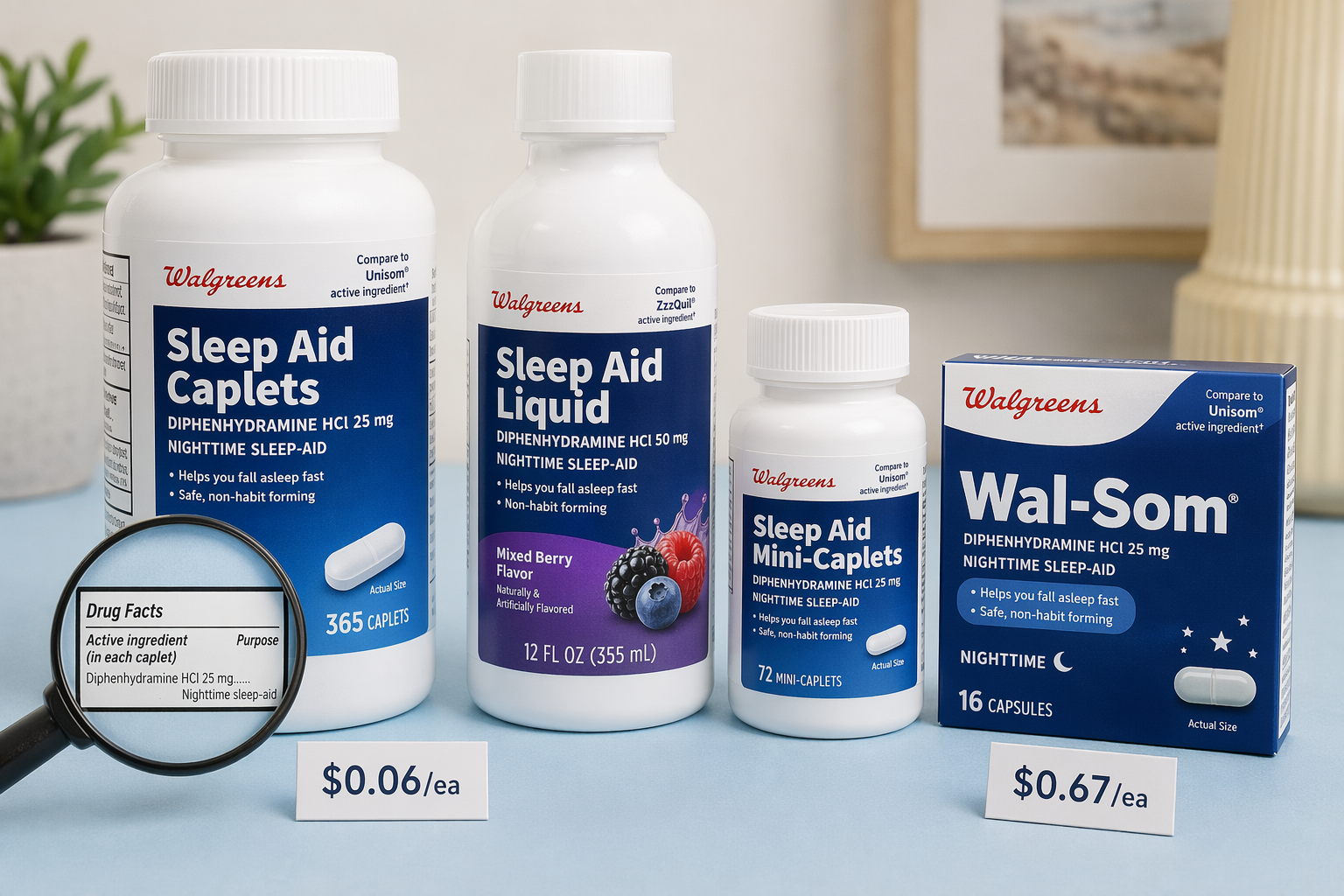
Most Walgreens Sleep Aids Contain Ingredients the Beers Criteria Warns Against for Older Adults
If you are 65 or older and reach for a Walgreens-brand sleep aid to help you fall asleep, you are likely choosing a product that the American Geriatrics Society (AGS) explicitly advises against for your age group. The AGS Beers Criteria — a clinical guideline used by healthcare providers to identify potentially inappropriate medications in older adults — recommends that people 65 and older avoid the two active ingredients found in nearly every Walgreens sleep aid: diphenhydramine and doxylamine.
This is not a niche concern. A 2017 study published in the Journal of the American Geriatrics Society found that 59% of older adults who used an over-the-counter (OTC) sleep aid in the previous month took a product containing diphenhydramine or doxylamine. More troubling, only 38% of those users were aware of the safety risks associated with these ingredients, compared to 49% of non-users (p=0.016). This awareness gap means millions of older adults may be unknowingly exposing themselves to risks like confusion, falls, and potential long-term cognitive effects.
What Is the Beers Criteria and Why Does It Matter for Sleep Aids?
The Beers Criteria is a regularly updated list of medications that the American Geriatrics Society considers potentially inappropriate for older adults. It was first developed in 1991 by the late geriatrician Dr. Mark Beers and has since become a cornerstone of geriatric pharmacology. The criteria are not a legal prohibition — you can still buy these products without a prescription — but they represent a consensus among geriatric experts that the risks of these medications in people over 65 often outweigh the benefits.
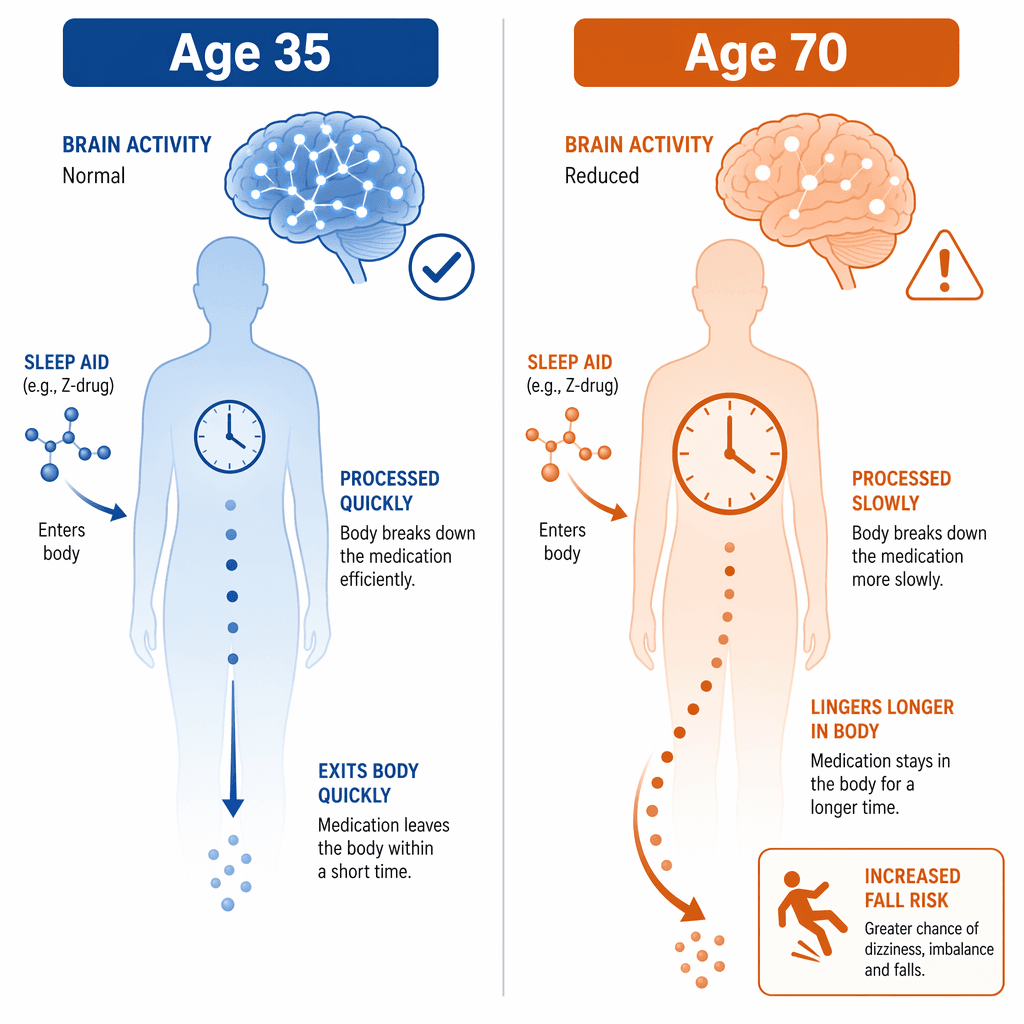
Diphenhydramine and doxylamine are flagged in the Beers Criteria specifically because of their strong anticholinergic properties. Anticholinergic drugs block the neurotransmitter acetylcholine, which plays a critical role in memory, learning, and muscle function. In older adults, whose bodies metabolize drugs more slowly and who may have age-related changes in brain chemistry, these anticholinergic effects can lead to confusion, sedation, constipation, urinary retention, and an increased risk of falls.
Which Walgreens Sleep Aid Products Are Affected?
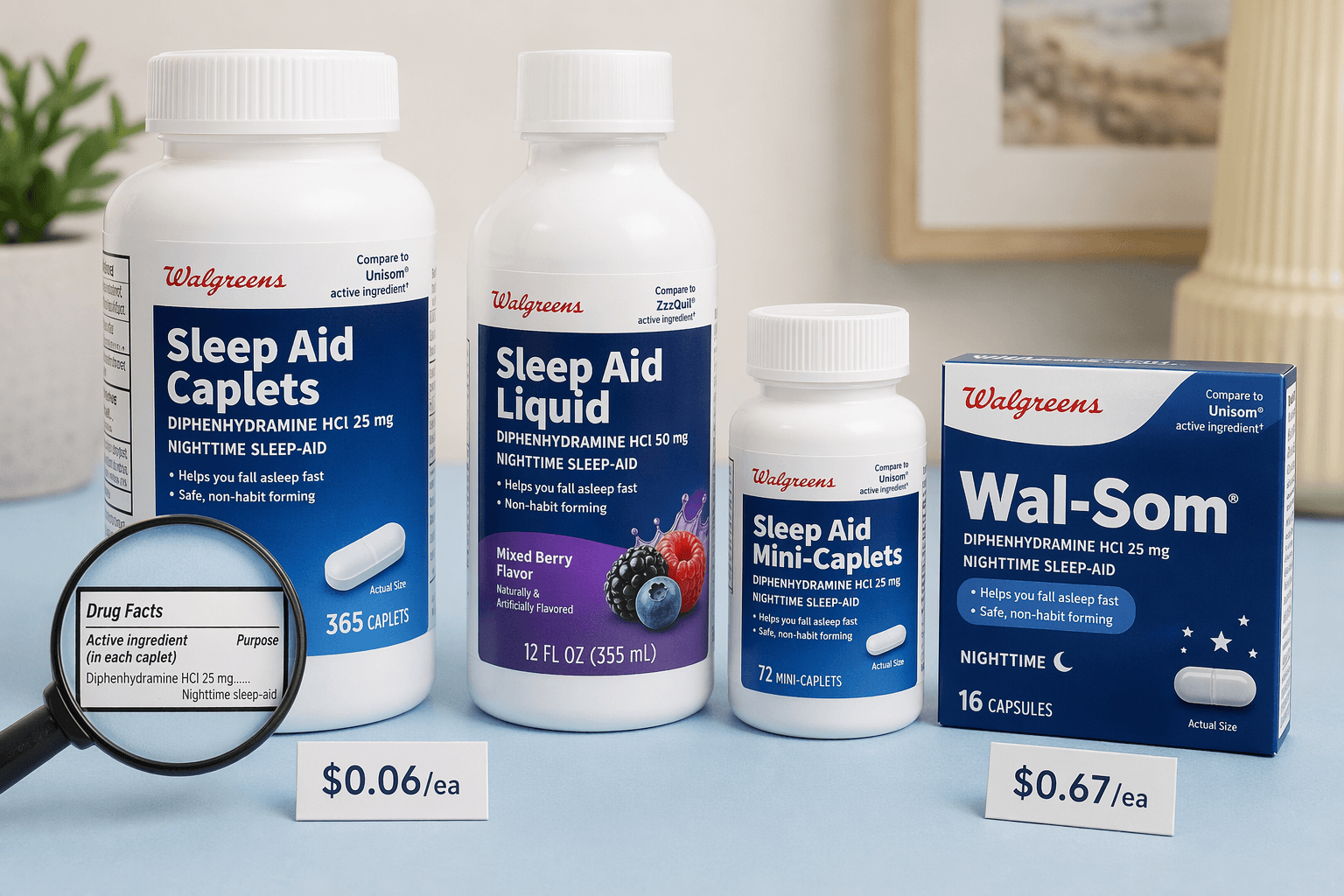
Walgreens sells several store-brand sleep aid products. The table below lists the ones that contain diphenhydramine or doxylamine — the two ingredients the Beers Criteria advises older adults to avoid.
| Product Name | Active Ingredient | Dosage Form | Key Label Warnings |
|---|---|---|---|
| Walgreens Sleep Aid Caplets | Diphenhydramine HCl 25 mg | Caplet | Glaucoma, breathing problems (emphysema/chronic bronchitis), difficulty urinating due to prostate enlargement |
| Walgreens Sleep Aid Liquid Berry | Diphenhydramine HCl 50 mg per 30 mL | Liquid | Glaucoma, breathing problems, difficulty urinating due to prostate enlargement |
| Wal-Sleep Z (diphenhydramine solution) | Diphenhydramine HCl 50 mg per 30 mL | Liquid | Glaucoma, breathing problems, difficulty urinating due to prostate enlargement |
| Wal-Som | Doxylamine succinate 25 mg | Tablet | Glaucoma, breathing problems, difficulty urinating due to prostate enlargement |
Note that Wal-Sleep Z may no longer be available in stores. Its DailyMed listing shows a marketing end date of October 23, 2025. The current liquid diphenhydramine product is the Walgreens Sleep Aid Liquid Berry (revised April 2026). Wal-Som (doxylamine) remains available as of this writing.
The label warnings on these products are not arbitrary. Glaucoma, chronic bronchitis, emphysema, and prostate enlargement are all conditions that become more common with age. The fact that the manufacturer itself advises consulting a doctor before use if you have these conditions underscores the importance of age-specific safety considerations.
Why Diphenhydramine and Doxylamine Are Riskier for Adults Over 65
The risks of diphenhydramine and doxylamine in older adults are not theoretical. They stem from well-understood pharmacological mechanisms that are amplified by the physiological changes of aging.
- Longer half-life and residual sedation. Diphenhydramine has a longer half-life in older adults, meaning it stays in the system longer. This increases the risk of next-day grogginess, which can impair driving, increase fall risk, and reduce daytime functioning. Harvard Health quotes sleep expert Dr. Lawrence Epstein: "There is the potential that antihistamines may cause side effects in older adults, such as confusion and falls."
- Anticholinergic activity and dementia risk. Both diphenhydramine and doxylamine are first-generation antihistamines with strong anticholinergic properties. The Sleep Foundation notes that "some OTC sleep aids also have anticholinergic activity, which may be associated with an increased risk of confusion and accelerated dementia in the elderly." The Mayo Clinic similarly states that sleep aids pose risks for people over age 65, "including an increased risk of dementia."
- Fall risk. The sedative effects of these antihistamines can impair coordination and balance. The Sleep Foundation advises that "older people should be cautious about taking OTC sleep aids because of their detrimental effects on coordination and concentration." Falls are a leading cause of injury in older adults, and any medication that increases fall risk deserves careful consideration.
- Interaction with common health conditions. As the Walgreens product labels themselves warn, these medications can worsen glaucoma, breathing problems (emphysema, chronic bronchitis), and urinary retention due to prostate enlargement — all conditions that are more prevalent in the 65+ population.
The Awareness Gap: What the Research Shows
The University of Pittsburgh study (Abraham et al., 2017) provides the most direct evidence of the disconnect between OTC sleep aid use and safety awareness among older adults. The study surveyed 169 participants aged 65 and older who had used an OTC sleep aid in the past 30 days. The findings were striking:
- 59% of participants used a product containing diphenhydramine or doxylamine.
- Only 38% of those users were aware of the safety risks associated with these ingredients.
- In contrast, 49% of participants who did not use these ingredients were aware of the risks (p=0.016), indicating a statistically significant awareness gap.
This awareness gap is particularly concerning because OTC sleep aids are often perceived as harmless. Unlike prescription medications, which come with pharmacist counseling and detailed patient information, OTC products are self-selected from store shelves. The Beers Criteria warning is not printed on the front of the box — it is buried in clinical guidelines that most consumers never see.
Safer Alternatives Available at Walgreens
If you are 65 or older and need help with sleep, you do not have to choose between suffering through insomnia and taking a potentially risky antihistamine. Walgreens carries several alternatives that do not contain diphenhydramine or doxylamine. However, "safer" does not mean "risk-free." Any supplement or medication should be discussed with a healthcare provider before use.
- Melatonin supplements. Walgreens sells its own Free & Pure brand of melatonin, as well as national brands. Melatonin is a hormone that regulates the sleep-wake cycle. Evidence for its effectiveness is mixed — it is most useful for circadian rhythm disruptions (jet lag, shift work) rather than chronic insomnia. It is generally well-tolerated, but side effects can include headaches, dizziness, and daytime drowsiness.
- Magnesium glycinate. Magnesium is a mineral that plays a role in muscle relaxation and nervous system regulation. Magnesium glycinate is a form that is well-absorbed and less likely to cause digestive upset. Some studies suggest it may help with sleep quality, particularly in people with magnesium deficiency. Walgreens carries several magnesium supplement options.
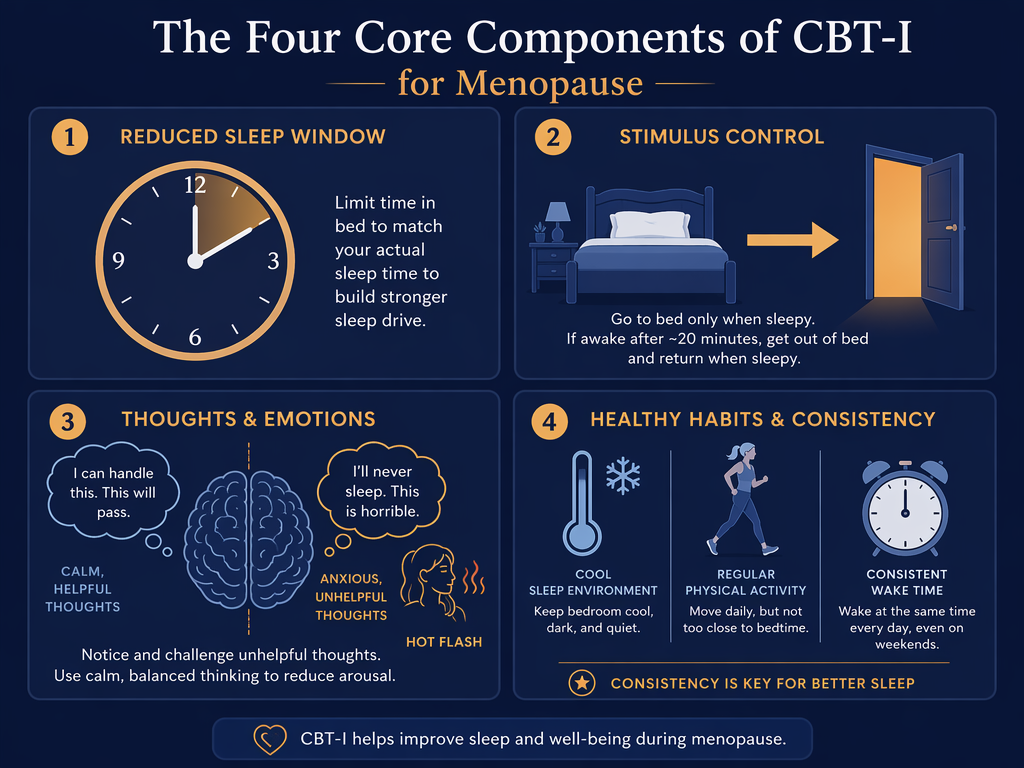
- Non-pharmacologic approaches. The most evidence-supported approach for chronic insomnia in older adults is Cognitive Behavioral Therapy for Insomnia (CBT-I). CBT-I is a structured program that addresses the thoughts and behaviors that perpetuate insomnia. It has no side effects and is recommended as first-line treatment by the American College of Physicians and the American Academy of Sleep Medicine. Walgreens does not sell CBT-I, but your doctor can refer you to a trained provider or recommend a digital CBT-I program.
When to Talk to a Doctor or Pharmacist
If you are 65 or older and currently use a Walgreens sleep aid containing diphenhydramine or doxylamine, do not stop abruptly without consulting a healthcare provider. Instead, schedule a conversation with your doctor or pharmacist to discuss safer alternatives. This is especially important if you have any of the conditions listed on the product label: glaucoma, breathing problems (emphysema, chronic bronchitis), or difficulty urinating due to prostate enlargement.
You should also talk to a healthcare provider if you:
- Take other medications (prescription or OTC) that could interact with antihistamines
- Have experienced falls or near-falls recently
- Notice increased confusion, memory problems, or daytime drowsiness
- Have been using a sleep aid for more than two weeks
- Are a caregiver for an older adult who uses OTC sleep aids

Comments
Join the discussion with an anonymous comment.