
The Evidence-to-Practice Gap: Why CBT-I Remains Underused for Menopause Insomnia
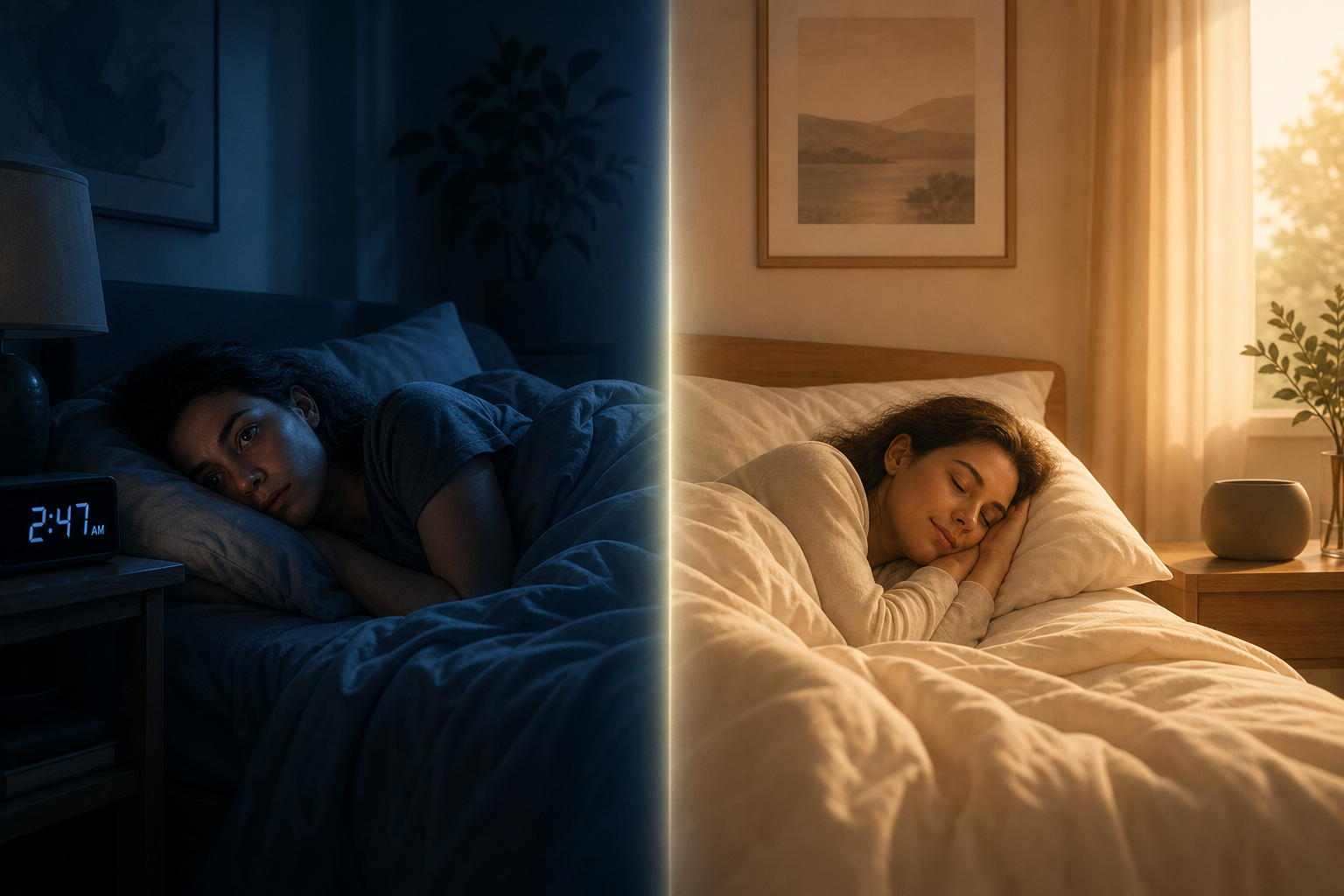
If you are a woman in your 40s or 50s who has been lying awake at 3 a.m. for months — maybe years — you have likely tried the usual remedies: melatonin gummies, a glass of wine, a new mattress, or a white noise machine. What you almost certainly have not been offered is the treatment that clinical guidelines say should come first.
Cognitive Behavioral Therapy for Insomnia (CBT-I) is the first-line intervention for chronic insomnia according to both the American Academy of Sleep Medicine (AASM) and the European Sleep Research Society (ESRS). Yet fewer than 2% of women with menopausal insomnia have ever been referred for it. This is not a niche oversight — it is a systemic gap between what the evidence supports and what actually reaches patients.
This article is written for women who have tried the over-the-counter route and found it wanting. It explains why CBT-I is the treatment you deserve, what it actually involves, the research that proves it works for menopause-related sleep disruption, and — most importantly — how to get it.
Why CBT-I, Not Sleep Medication, Is the First-Line Treatment
The clinical rationale for CBT-I is straightforward: insomnia is a behavioral and cognitive condition, not a chemical deficiency. Sleep medications — whether over-the-counter antihistamines, prescription Z-drugs like zolpidem, or low-dose antidepressants — work by sedating the central nervous system. They do not address the underlying mechanisms that perpetuate insomnia: conditioned arousal, maladaptive sleep habits, and catastrophic thinking about sleep loss.
According to a 2024 review by Jeon published in the Journal of Clinical Medicine, both the AASM and ESRS clinical practice guidelines designate CBT-I as the first-line intervention for all patients with chronic insomnia, and the same consideration should apply to menopausal women. The review emphasizes that sleep medication is recommended only for short-term use, while CBT-I builds skills that produce durable improvements — benefits that persist after treatment ends.
For menopausal women, the case for CBT-I is even stronger. The hormonal shifts of perimenopause and menopause — declining estrogen and progesterone — narrow the body's thermoneutral zone, making hot flashes and night sweats more likely to trigger awakenings. Sleep medications can blunt the perception of these awakenings but do not stabilize the underlying thermoregulatory instability. CBT-I, by contrast, teaches the brain to respond differently to nocturnal arousal, reducing the time spent awake even when hot flashes occur.
What CBT-I Involves: The Four Core Components Adapted for Menopause
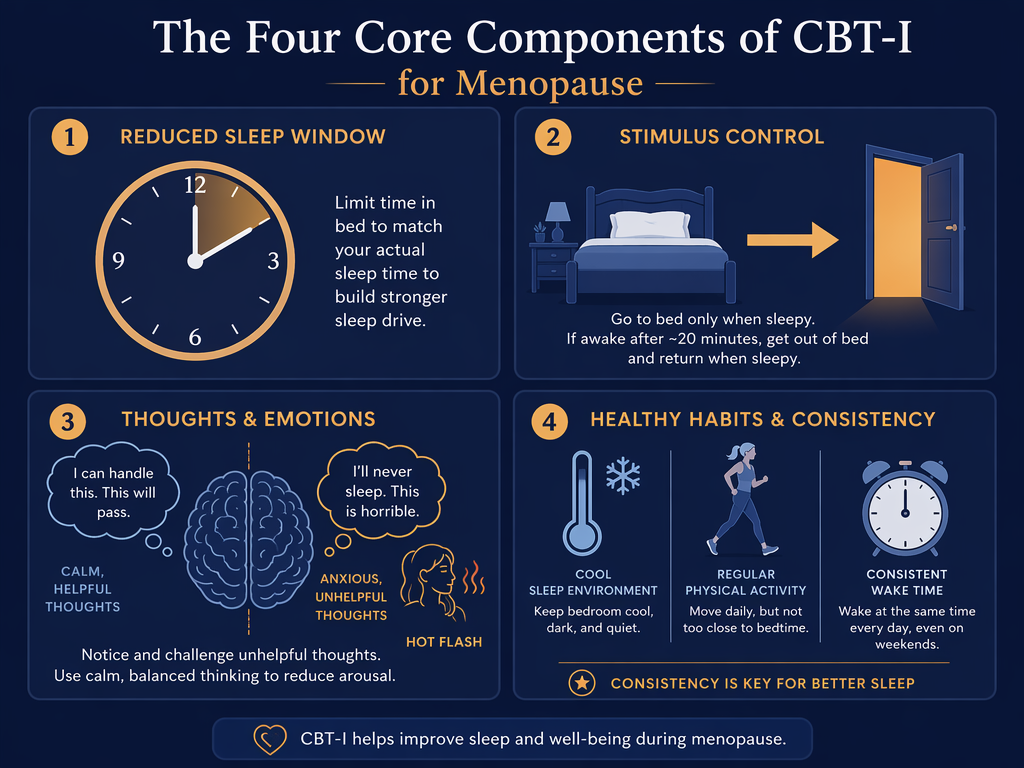
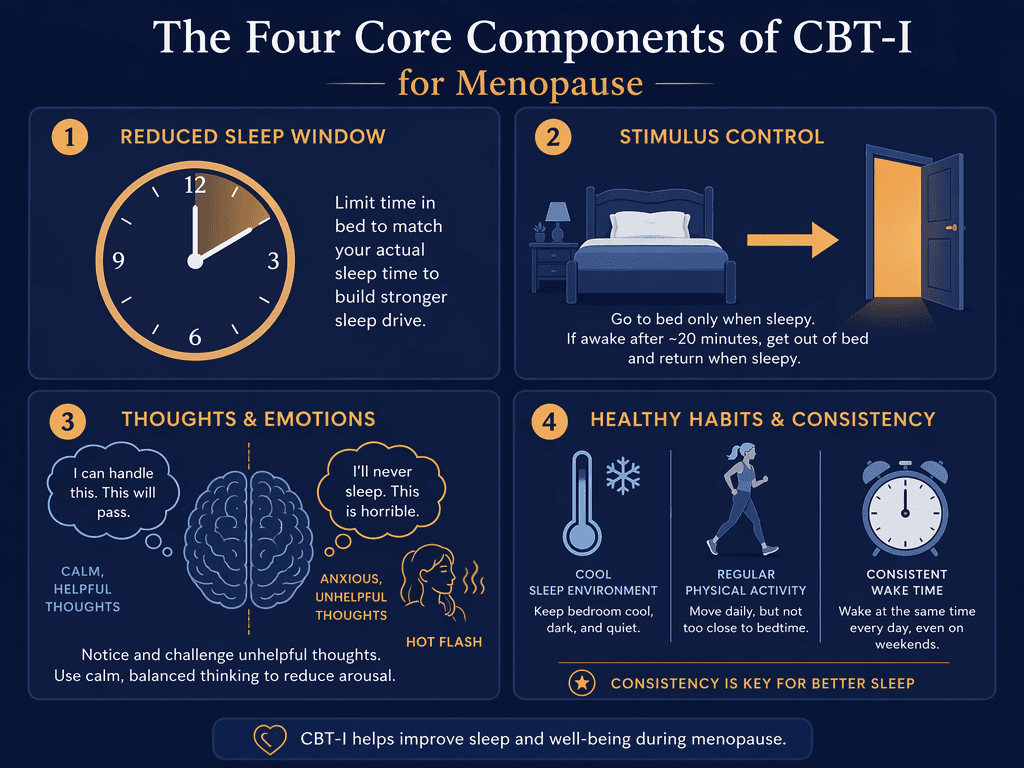
CBT-I is not a single technique but a structured, multi-component program typically delivered over 6 to 8 sessions. Each component targets a specific mechanism that perpetuates insomnia. When adapted for menopause, these components address the unique challenges of sleep disruption driven by vasomotor symptoms and hormonal changes.
1. Sleep Restriction Therapy
Sleep restriction consolidates sleep by limiting time in bed to the average amount of actual sleep a person is getting. For a woman sleeping 5 hours out of 8 hours in bed, the initial prescription might be a 5.5-hour window. This creates mild sleep pressure, which shortens sleep onset latency and reduces time spent awake during the night. As sleep efficiency improves, the window is gradually expanded. For menopausal women, sleep restriction helps counteract the fragmented sleep pattern that hot flashes and night sweats create.
2. Stimulus Control
Stimulus control rebuilds the association between the bed and sleep. The core rule: if you are not asleep within 15–20 minutes, get out of bed and do something calm and non-purposeful in dim light until you feel sleepy again. This is the 15-20 minute rule described by Dr. Sara Nowakowski. It prevents the bed from becoming a cue for frustration and wakefulness — a common trap for women who lie awake after a hot flash, worrying about the next one.
3. Cognitive Restructuring
Cognitive restructuring targets the thoughts that fuel insomnia. For menopausal women, these often involve catastrophic thinking about hot flashes: "If I have another hot flash, I'll be awake for hours" or "I'll be exhausted tomorrow and can't function." CBT-I teaches women to identify these thoughts, challenge their accuracy, and replace them with more balanced alternatives. This is a key element of the CBT-mi (CBT for menopausal insomnia) adaptation.
4. Sleep Hygiene
While sleep hygiene alone is rarely sufficient for chronic insomnia, it is an essential supporting component. For menopausal women, this includes maintaining a cool bedroom temperature (65–68°F), using moisture-wicking bedding, avoiding alcohol and caffeine in the evening, and establishing a consistent wake time — even after a poor night. The goal is to create an environment and routine that minimizes the likelihood of hot flash-triggered awakenings.
For a comprehensive breakdown of each component, see our CBT-I: A Complete Protocol Guide.
The Evidence: What the Research Shows for Menopausal Women
The efficacy of CBT-I for menopausal women is not theoretical — it is supported by randomized controlled trials specifically designed for this population.
| Study | Population | Key Finding |
|---|---|---|
| McCurry et al. 2016 (JAMA Internal Medicine) | Perimenopausal and postmenopausal women with vasomotor symptoms (VMS) | Telephone-based CBT-I significantly improved insomnia severity and reduced hot flash interference compared to a control group. |
| Guthrie et al. 2018 (Sleep) — pooled analysis of 4 MsFLASH RCTs | N=546 women with hot flashes | CBT-I was more effective for reducing insomnia symptoms than pharmacologic treatments (e.g., escitalopram, gabapentin) or exercise interventions. |
The MsFLASH (Menopause Strategies: Finding Lasting Answers for Symptoms and Health) trials are particularly important because they directly compared CBT-I to other active treatments. The pooled analysis by Guthrie et al. found that CBT-I outperformed both pharmacologic and exercise interventions for reducing insomnia symptoms in women with hot flashes. This is not a marginal advantage — it is a clear signal that behavioral treatment is more effective than pills for this specific population.
The broader context is striking. A 2023 meta-analysis by Salari et al. of 41 studies involving more than 12,000 postmenopausal women found the overall prevalence of sleep disorders in this population to be 51.6%. Insomnia specifically affected 37.4% of postmenopausal women. A 2024 AASM survey of 2,006 U.S. adults found that 50% of women aged 45–64 reported sleep disruption due to menopause. Yet despite this prevalence, the vast majority of these women are never offered the treatment with the strongest evidence base.
The CBT-mi Adaptation: Addressing Hot Flash-Related Catastrophic Thinking
Standard CBT-I is effective for menopausal women, but a specialized adaptation — CBT for menopausal insomnia (CBT-mi) — goes further by directly addressing the cognitive and physiological patterns unique to this population.
The key difference lies in how CBT-mi handles hot flash-related catastrophic thinking. A woman who wakes with a hot flash may immediately think: "This is going to be another terrible night. I'll be exhausted tomorrow. I can't keep doing this." This cascade of catastrophic thoughts activates the sympathetic nervous system, raising heart rate and body temperature — which, in turn, can trigger another hot flash or prolong the awakening.
CBT-mi teaches women to recognize this pattern and interrupt it. The cognitive restructuring component is specifically tailored to hot flash-related thoughts, replacing catastrophic predictions with more realistic ones: "I may have a hot flash, but I can use my stimulus control techniques to get back to sleep quickly. Even if I lose some sleep, I can still function tomorrow."
The 15-20 minute rule from Dr. Sara Nowakowski's protocol is a practical application of this approach. When a woman wakes after a hot flash and cannot fall back asleep within 15–20 minutes, she gets out of bed and engages in a calming activity — reading a book in dim light, listening to a podcast, or doing a gentle breathing exercise — until she feels sleepy again. This prevents the bed from becoming a site of frustration and breaks the cycle of hot flash → awakening → catastrophic thinking → prolonged wakefulness.
- Identify the catastrophic thought: "I'll be awake for hours."
- Challenge its accuracy: "Have I ever been awake for hours after a hot flash? Usually I fall back asleep within 30 minutes."
- Replace with a balanced thought: "I may be awake for a bit, but I can use my stimulus control techniques to get back to sleep."
- If not asleep within 15–20 minutes, get out of bed and do something calming until sleepy.
For more on the perimenopause-specific context, see our related article: Why CBT-I Is the First-Line Treatment for Perimenopause Insomnia.
How to Access CBT-I: Practical Pathways for Menopausal Women
Knowing that CBT-I is the right treatment is one thing; actually getting it is another. Here are the most practical pathways for menopausal women.
Find a Behavioral Sleep Medicine Provider
The Society of Behavioral Sleep Medicine (SBSM) maintains a directory of certified providers. These are psychologists, social workers, and nurses with specialized training in CBT-I. Dr. Sara Nowakowski specifically recommends this directory for women seeking a provider who understands the menopausal context.
Use the VA Insomnia Workbook
The U.S. Department of Veterans Affairs offers a free, evidence-based insomnia workbook that covers all four components of CBT-I. While designed for veterans, the content is universally applicable and can be used as a self-help resource or as a supplement to therapist-guided treatment. This is an excellent starting point for women who cannot access a specialist immediately.
Evaluate Digital CBT-I Programs
Several digital CBT-I programs — Sleepio, CBT-I Coach, and others — have been validated in clinical trials. These can be more affordable and accessible than in-person therapy, though they lack the personalized adaptation that a specialist can provide for menopausal women. For readers who may not have access to a therapist, our self-directed guide to CBT-I techniques offers a practical starting point.
How CBT-I Compares to Alternatives: MHT, Melatonin, Z-Drugs, and Antidepressants
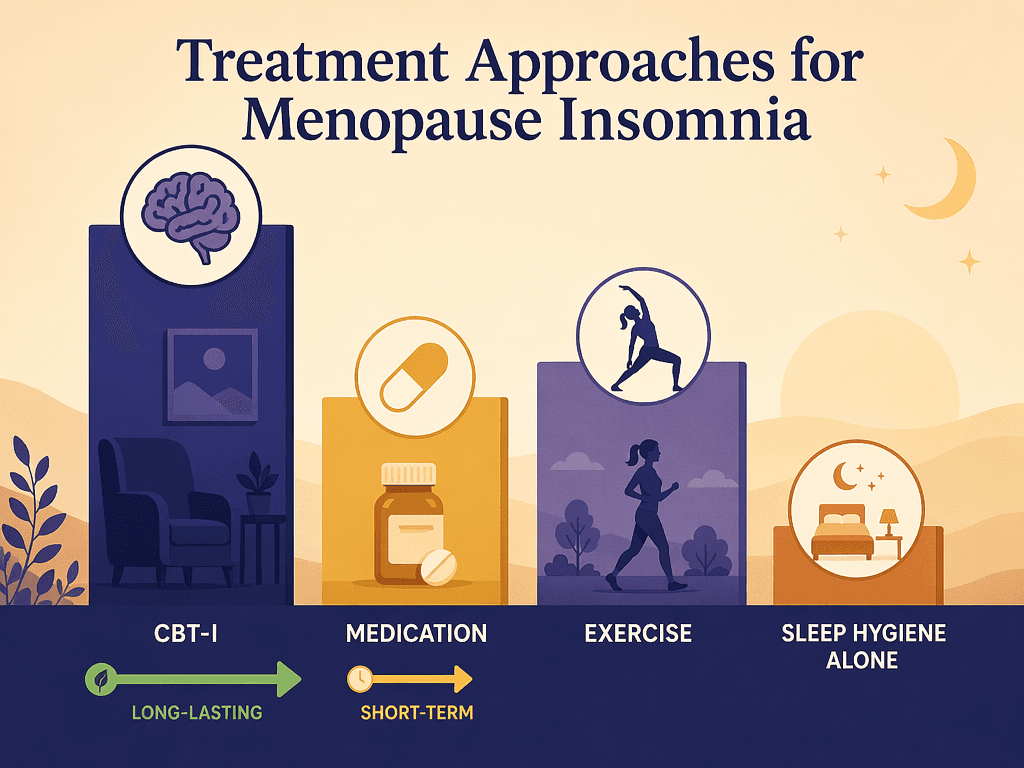
CBT-I is not the only treatment option for menopause insomnia, but it is the only one that addresses the behavioral and cognitive roots of the condition. Here is how it compares to the most common alternatives.
| Treatment | Efficacy for Menopause Insomnia | Durability | Safety Considerations |
|---|---|---|---|
| CBT-I | Strong — outperforms medication and exercise in MsFLASH trials (Guthrie 2018) | Benefits persist after treatment ends | No side effects; requires time commitment |
| Menopausal Hormone Therapy (MHT) | Moderate — improves sleep quality in women with VMS (Jeon 2024 review) | Benefits last only while taking MHT | Not recommended for women with certain cancer histories or cardiovascular risk |
| Melatonin | Weak — limited evidence for chronic insomnia; may help circadian timing | No durable effect | Generally safe but long-term safety data limited |
| Z-Drugs (zolpidem, eszopiclone) | Moderate — short-term efficacy for sleep onset and maintenance | Tolerance develops; rebound insomnia on discontinuation | Risk of dependence, falls, and next-day impairment |
| Low-dose antidepressants (trazodone, mirtazapine) | Moderate — sedating effects can improve sleep continuity | Benefits persist while taking medication | Side effects include daytime sedation, weight gain, dry mouth |
For women with moderate-to-severe vasomotor symptoms, combining CBT-I with MHT may be the most effective approach. MHT reduces the frequency and severity of hot flashes, while CBT-I addresses the conditioned arousal and maladaptive sleep habits that have developed in response to those hot flashes. The Jeon 2024 review notes that a meta-analysis of 42 trials (N=15,468) showed MHT improved sleep quality in menopausal women with VMS, but the SWAN study found that women with trouble falling asleep, early morning awakening, and frequent hot flashes or night sweats were more likely to have persistent sleep problems even after menopause — suggesting that behavioral factors persist even when the hormonal trigger is addressed.
For a deeper comparison of CBT-I versus medication, see our FAQ on CBT-I vs. sleep medication. For women with comorbid conditions like depression or sleep apnea, our guide to CBT-I for comorbid insomnia provides additional context.
When to Seek Professional Help and What to Expect
Not every night of poor sleep requires professional intervention. But if you meet the following criteria, it is time to seek a behavioral sleep medicine specialist.
- Persistent insomnia lasting 3 months or longer
- Failed self-help attempts (sleep hygiene alone, OTC aids, melatonin)
- Significant daytime impairment — fatigue, mood changes, difficulty concentrating
- Suspected comorbid sleep disorders — sleep apnea (women may present with insomnia rather than snoring) or restless legs syndrome
The SWAN study found that among midlife adults aged 45–64, the percentage who slept fewer than 7 hours was similar for men (31.1%) and women (30.7%), but among adults 65 and older, a higher percentage of women (25.5%) than men (22.6%) slept fewer than 7 hours. This suggests that sleep problems during menopause can persist into later life if not addressed. The same study found that women with trouble falling asleep, early morning awakening, and frequent hot flashes or night sweats were more likely to have persistent sleep problems even after menopause, with a median follow-up of 15 years from pre-menopause through early post-menopause.
When you do seek help, here is what to expect from a CBT-I program:
- Initial assessment: Your provider will take a detailed sleep history, including sleep logs, and may ask you to complete questionnaires like the Insomnia Severity Index (ISI).
- Session structure: Typically 6–8 weekly sessions, each lasting 45–60 minutes. Sessions can be in-person or via telehealth.
- Homework: You will be asked to keep daily sleep logs and practice the techniques between sessions. This is essential for progress.
- Timeline for improvement: Many women see meaningful improvement within 4–6 weeks, with full benefits typically achieved by the end of the program.
CBT-I is not a quick fix. It requires effort, consistency, and a willingness to temporarily experience some sleep restriction. But for women who have spent months or years cycling through ineffective remedies, it offers something no pill can: a durable, side-effect-free path back to restful sleep.


Comments
Join the discussion with an anonymous comment.