
Best HBO Max shows to watch before bed depend on your life stage
The best shows to watch before bed on HBO Max are not the same for everyone. A perimenopausal viewer waking after a hot flash may need less emotional heat. A pregnant viewer may need fewer anxiety hooks. An ADHD adult may need a familiar track that lowers decision load. An older adult may want company without sharp sound, fast cuts, or a plot that keeps asking for one more episode.
So the useful question is not “What is the coziest show on Max?” It is: which show gives your nervous system the least extra work at 11:20 p.m.? For bedtime, a show earns its place by pace, emotional tone, episode structure, predictability, sound design, and cliffhanger pressure. That is a different standard from prestige, popularity, or even comfort.
Dr. Janet Kennedy’s “low-challenge shows” framing is a tidy way to name what many tired viewers are already trying to do: choose television that does not demand much memory, suspense, moral outrage, or emotional investment before sleep.[1] Cleveland Clinic makes a similar practical distinction, noting that some people use TV like white noise and that romance or comedy is usually a safer bedtime direction than true crime or news.[2]
That does not make HBO Max a sleep aid. It makes it a tool that can either reduce friction or add stimulation. The difference often shows up in the body before it shows up in the watch history.
A quick match before you press play
| If bedtime usually goes wrong because of... | Look for... | Try on HBO Max... |
|---|---|---|
| Hot flashes, wake-ups, or perimenopausal sensitivity to stimulation | Low-stimulation period drama, nature, calm narration, minimal cliffhanger pressure | The Gilded Age, Planet Earth, A World of Calm |
| Pregnancy anxiety, discomfort, or late-night worry loops | Low-threat comedy, food, craft, warmth without medical or crime tension | Somebody Somewhere, Selena + Chef, The Great Pottery Throw Down |
| ADHD racing thoughts or bedtime task-switching | Short episodes, familiar structure, repeatable rhythms, low decision load | Joe Pera Talks With You, Friends, Aqua Teen Hunger Force |
| Older-adult light sleep, loneliness, or sensitivity to sound | Slower pacing, period settings, gentle voices, low sonic spikes | Julia, For the Love of Kitchens, Antiques Roadshow |
These are not diagnoses-by-streaming-menu. They are matching cues. The same title can be soothing on one night and too activating on another if your body brings a different sleep problem to bed.
Perimenopause: choose shows that do not punish a wake-up
Perimenopause is where generic comfort-TV lists can quietly fail. If you wake after a hot flash, the problem may not be falling asleep during the first episode. It may be what happens at 2:40 a.m., when the body is already warm, alert, and annoyed, and the show offers a murder reveal, an argument, a jump in music, or a cliffhanger that makes returning to sleep harder.
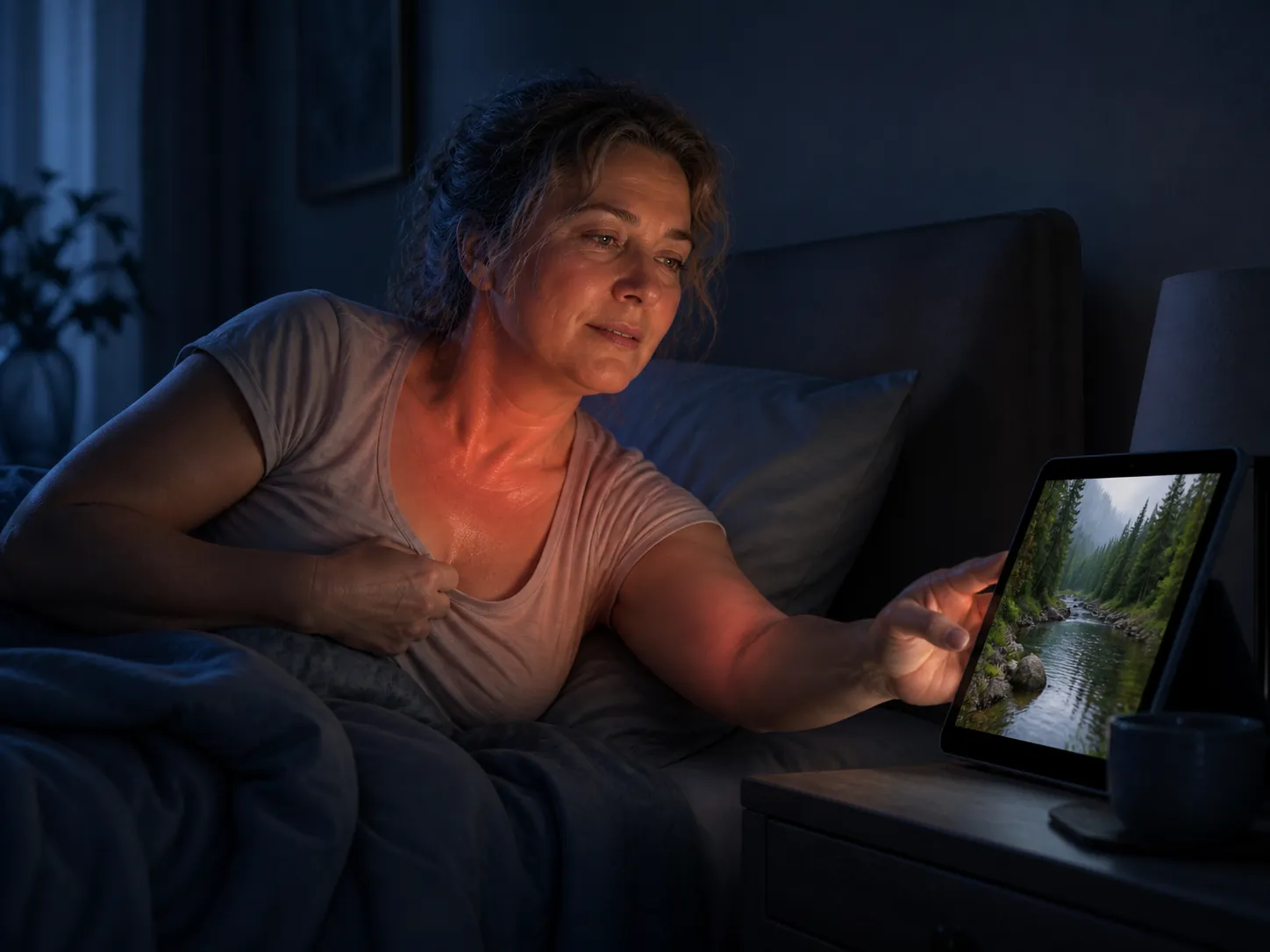
The safer Max picks here are not necessarily the sleepiest shows. They are the shows least likely to escalate the wake-up. The Gilded Age works because its pleasures are visual, social, and relatively contained: rooms, gowns, manners, alliances, entrances. It has tension, but not the kind that usually depends on threat imagery or shock sound. For a viewer who wants narrative but not adrenaline, that matters.
Nature programming such as Planet Earth can also fit, especially when the goal is to shift attention away from internal monitoring. The caution is predator-prey intensity. A nature series is not automatically gentle just because it has oceans and forests. If you know chase sequences wake you up, save those episodes for earlier.
The most literal perimenopause bedtime candidate is A World of Calm. The New Yorker described it as “anti-entertainment by design,” which is not much of an insult if the job is to help you stop caring what happens next.[3] A show can be boring in exactly the right way when the alternative is lying awake with a body that already feels too interesting.
If your perimenopause pattern includes binge momentum, thriller sensitivity, or late-night science fiction that keeps the brain lit, go deeper with why perimenopause turns a Netflix binge into a sleepless night, why Netflix sci-fi keeps you awake in perimenopause, and why scary movies keep you up at night during perimenopause. For Max specifically, though, the rule is simple: pick the show you can abandon mid-scene without feeling a tug.
Pregnancy: avoid shows that hand anxiety a script
Pregnancy bedtime viewing has a different failure mode. The show may not be loud or fast, but it can still feed worry. Medical drama, true crime, catastrophe plots, and emotionally punishing documentaries are poor companions for a body already managing discomfort, uncertainty, and interrupted sleep.
For many pregnant viewers, the better Max lane is low-anxiety comedy and competent people making something. Somebody Somewhere is gentle without feeling synthetic. Selena + Chef gives the brain a task to watch without making the viewer responsible for doing anything. The Great Pottery Throw Down has stakes, but the stakes are clay, timing, skill, and kindness rather than danger.
Cleveland Clinic’s preference for comedy or romance over true crime and news is especially useful here because it focuses on threat level, not taste.[2] A show does not have to be childish or plotless to be safer before bed. It just has to stop feeding the exact worries that pregnancy can magnify.
If pregnancy insomnia changes from trimester to trimester for you, the show choice may need to change too. The deeper physiology belongs in why pregnancy insomnia changes and what helps each trimester; the Max shortcut is to avoid anything that leaves you rehearsing danger in the dark.
ADHD: predictable does not always mean calm
For ADHD adults, bedtime TV is often less about relaxation in the spa-music sense and more about giving racing thoughts a rail to run on. The show has to be interesting enough to catch the mind, but not so interesting that it creates a second bedtime.
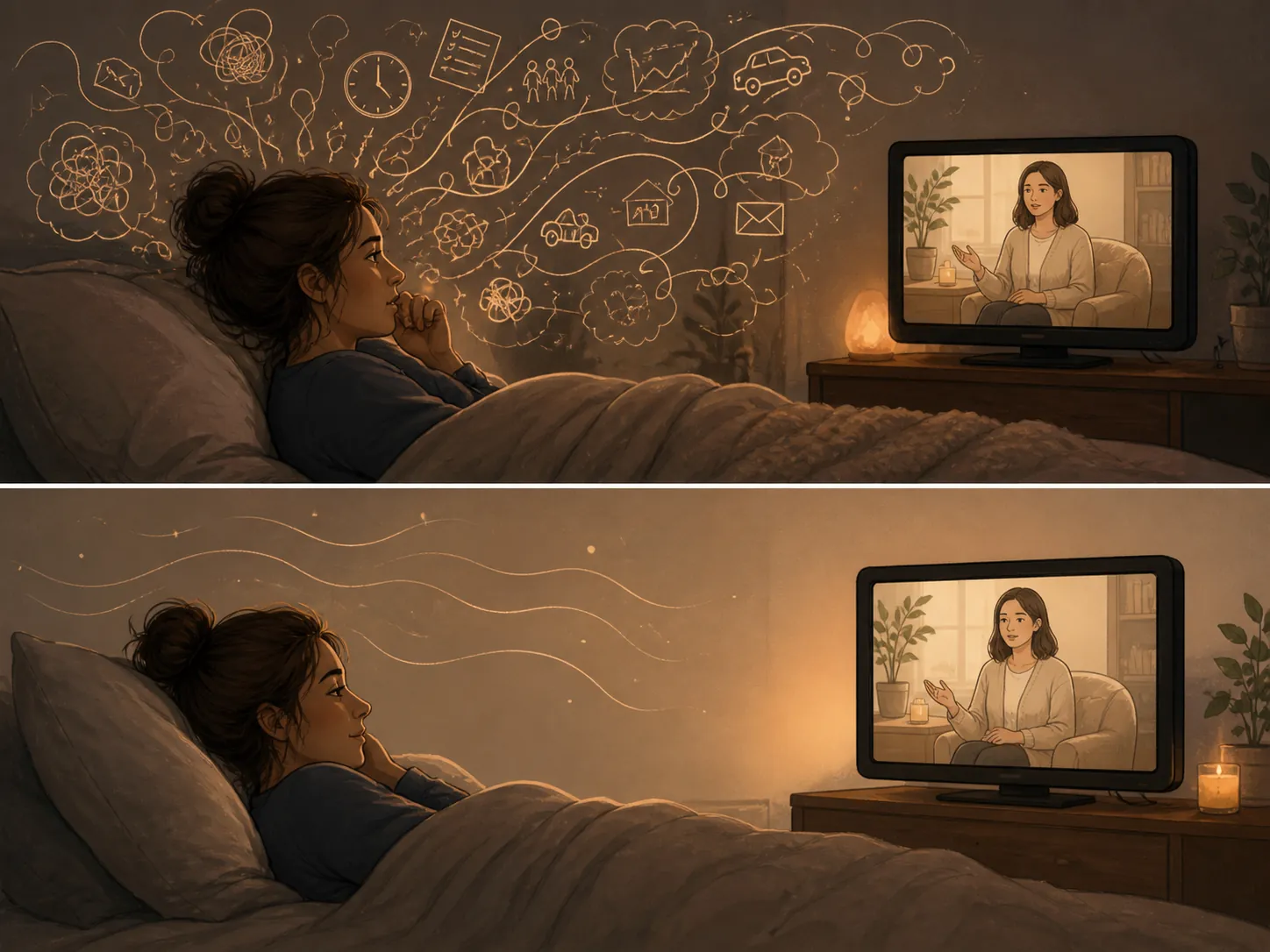
That is why short episodes and familiar structure matter. A long prestige drama asks the viewer to remember motives, track subplots, anticipate consequences, and decide whether one more episode is necessary. A short predictable show lowers the number of decisions. It can also make stopping feel less dramatic.
The most obvious Max pick is Joe Pera Talks With You. In an r/ADHD thread asking for HBO Max shows to fall asleep to, Joe Pera surfaced as the top community pick.[4] That is not clinical evidence, and it should not be treated like a trial. It is still useful pattern recognition: many ADHD viewers are drawn to a voice, pace, and episode shape that feel almost deliberately under-stimulating without being empty.
But ADHD-friendly does not mean every recommendation should sound like a whisper. Friends works for some people because it is socially familiar, episodic, and emotionally legible. You can rejoin after missing a minute. You can predict the rhythm. The laugh track may be comforting for one viewer and too intrusive for another, so this is a sensory-fit choice rather than a universal calm choice.
Then there is Aqua Teen Hunger Force, which is not calm in any ordinary sleep-hygiene brochure sense. Its appeal, when it works, is different: short duration, low continuity burden, and a strange predictability of chaos. For some ADHD brains, absurdity is less sticky than serialized suspense. For others, it is exactly the wrong frequency. The test is not whether the show looks relaxing from the outside; it is whether your body is quieter ten minutes in.
A useful ADHD bedtime rule is to decide before opening the app: one familiar show, one episode or one short block, no browsing after. The browsing is often more activating than the show.
Older adults: lower the sound spikes and social strain
For older adults, a bedtime show may be less about distraction and more about company. That does not make the choice trivial. Fast editing, uneven volume, harsh conflict, and suspenseful music can be more disruptive than the basic presence of a screen.
Good Max candidates tend to have slower pacing, warm interiors, period detail, and voices that do not keep leaping out of the speakers. Julia offers food, work, relationships, and period texture without the sensory aggression of many late-night dramas. For the Love of Kitchens has the built-in softness of craft and domestic space. Antiques Roadshow is structured around reveal, but the reveal is usually informational rather than threatening.
The better pick is the one that lets the viewer drift in and out without penalty. If missing a few minutes creates confusion, frustration, or a need to rewind, it is doing more bedtime work than it appears to be doing.
Where the screen caution actually belongs
It would be too easy to turn all of this into “TV before bed is bad,” which is both scolding and imprecise. The better caution is about timing, duration, interactivity, and light.
AASM Sleep Education reported a 2025 screen-time study finding a 59% higher insomnia risk per hour of post-bedtime screen use.[5] That number is worth taking seriously, but it covers screen activity after bed broadly. It should not be flattened into proof that one passive, planned HBO Max episode causes insomnia. Phone scrolling, notifications, messaging, gaming, and algorithmic browsing can be much more stimulating than rewatching a familiar episode with the lights low.
There is also a separate light-exposure issue. Claims about weight gain and sleeping with artificial light should not be treated as TV-specific proof; that evidence comes from artificial light during sleep, not from HBO Max as a category. If the screen stays on after you are asleep, or the room remains lit all night, that is a different exposure than a planned episode that ends.
The most reassuring nuance comes from work discussed by Vulture on the Ellithorpe et al. 2022 Journal of Sleep Research study: planned pre-bed media use, limited to one hour and not paired with multitasking, was associated with earlier bedtime.[6] Association is not a prescription. It does, however, support a more humane reading of bedtime TV: a planned, bounded show is not the same behavior as losing an hour to restless scrolling.
If you want the broader screen physiology, including why children are a different case, read why screens before bed disrupt kids’ sleep more than adults. For this HBO Max choice, the practical boundary is narrower: keep the show intentional, keep the device out of your hands if possible, and do not let the app turn bedtime into a second evening.
The usable rule
Pick a show you can leave without regret. Keep it planned and time-limited. Avoid multitasking. Match the show’s stimulation profile to the sleep problem your body is already bringing to bed: less emotional heat for perimenopause, less threat for pregnancy, less decision load for ADHD, and gentler pacing and sound for older adults.
That is the difference between using HBO Max as a low-challenge cue and letting it quietly extend arousal.
References
- The Best TV Shows to Watch While Falling Asleep, Vulture
- Why Some Like to Sleep with TV On, Cleveland Clinic, 2024
- The Unsettling Anti-Entertainment of A World of Calm, The New Yorker
- Best shows to fall asleep to on HBO Max?, Reddit
- Screen Time and Sleep: What New Studies Reveal, AASM Sleep Education, 2025
- Is Falling Asleep to TV Really So Bad?, Vulture
Read the full guide: How war stress affects your sleep and what to do about it