How to Sleep After a Tornado Knocks Out Your Power
If you cannot sleep after a tornado knocks out the power, assume two things may be true at the same time: the room may be too hot, dark, noisy, or unsafe, and your nervous system may still be acting as if the danger is not over. That is not weakness. It is what a body does after sirens, impact noise, pressure changes, broken glass, and waiting for the next warning.
Before you try to sleep, do the short safety pass. Keep any generator outdoors and at least 20 feet away from windows, doors, and vents; carbon monoxide can collect fast and cannot be smelled. Use flashlights or battery lanterns instead of candles. Do not sleep in a room with ceiling sagging, water coming through electrical fixtures, major cracks, or the smell of gas. If you are trying to decide whether food is safe, do not turn it into a midnight guessing game: an unopened refrigerator keeps food cold for about 4 hours, a full freezer for about 48 hours, and perishable food above 40°F should be thrown out.[1]
For more detail on the safety side, use this power-specific guide: sleeping during a power outage safely. For tonight, the job is simpler: pick the safest place you can reasonably lie down, cool your body, reduce surprises, and stop treating normal post-tornado alertness as a personal failure.
The Tonight Plan
| What to handle | What to do tonight |
|---|---|
| Immediate danger | Move away from structural damage, gas smells, floodwater, candles, and generator exhaust. |
| Heat | Sleep on the lowest safe level, loosen bedding and clothing, and cool pulse points. |
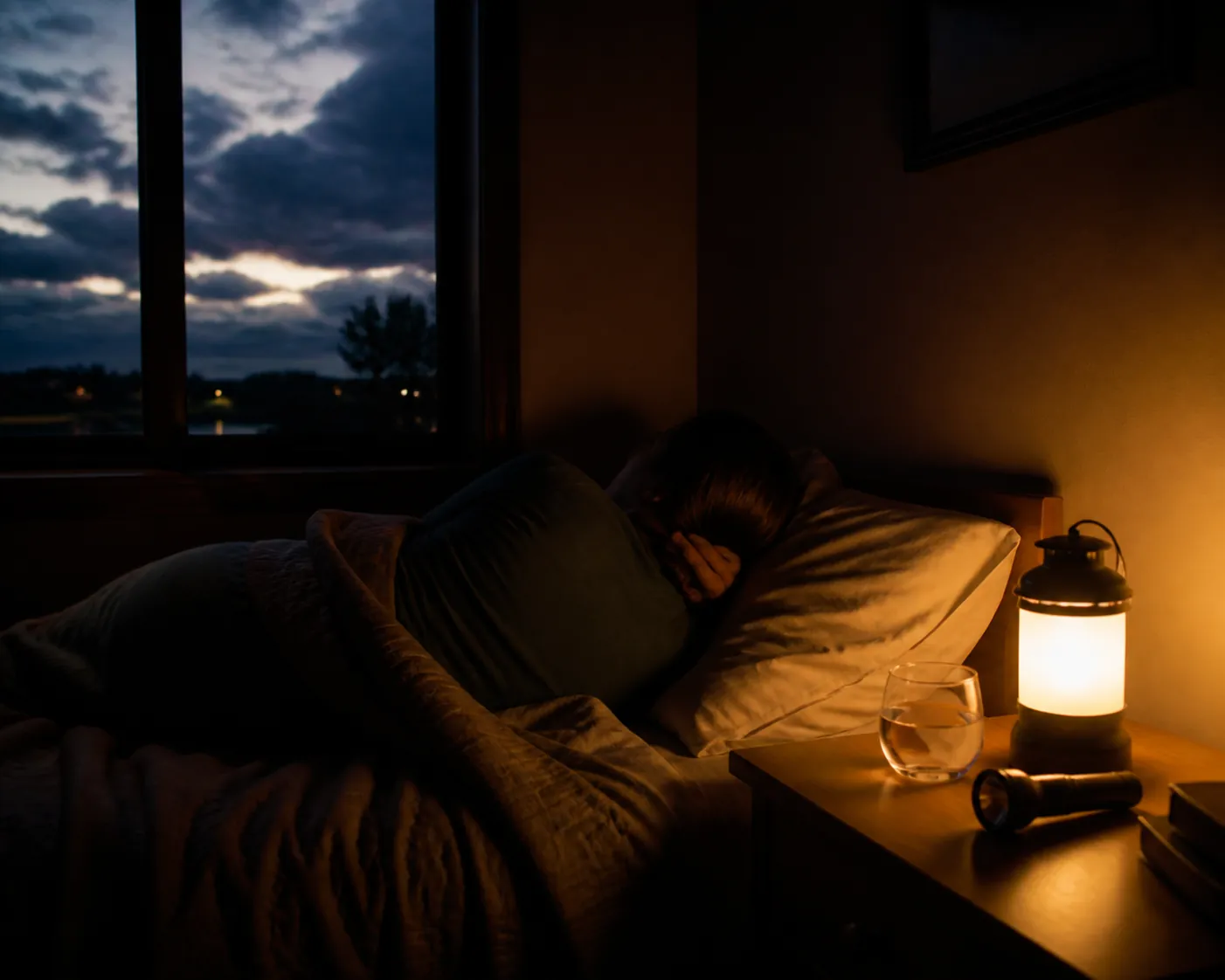
| Darkness and noise | Keep one light source, shoes, phone, water, and keys within reach so your brain does not have to keep checking. |
| Threat response | Use grounding, slow breathing, and a short written plan to tell the body what is handled for now. |
| Bed-struggling | If you are awake and agitated for roughly 20 minutes, get up briefly and do something quiet in dim light until drowsy. |
This is not a promise of eight clean hours. It is triage. A safer, cooler, quieter stretch of rest is a good result after a tornado power outage.
Pick the safest sleeping spot before the coolest one
The coolest room is not useful if it puts you under a damaged ceiling or beside a window with loose glass. Start with the boring questions: Is the floor dry? Does the room smell normal? Can you leave quickly if another warning comes? Are shoes close enough that you will not walk through debris barefoot?
Once the spot is safe enough, move lower if you can. Heat rises, so a first floor or basement is usually cooler than an upstairs bedroom. Sleep can become harder when indoor temperature rises above 75°F, and the commonly recommended sleep range is about 68–72°F, which is one reason a powerless house can feel impossible even when you are exhausted.[2]
If the basement is dry, intact, and not trapping generator fumes or gas odors, it may be the best place for a few hours. If the basement is damp, flooded, musty, or hard to exit, choose a safer above-ground room and cool the body instead. Do not make the perfect bedroom the goal tonight. Make a tolerable resting station.
- Put shoes, a flashlight, phone, charger or power bank, water, medications, and keys where your hand can find them.
- Keep one small battery light available, but do not leave a bright lantern pointed at your face.
- Sleep away from windows, heavy wall hangings, unstable shelves, and rooms with visible storm damage.
- If another warning is possible, keep the route to your shelter area clear instead of rearranging the whole room.
Cool the body, not the whole house
Without AC or fans, you probably cannot fix the house tonight. Aim smaller. Lower the heat load on your skin, bedding, and blood flow enough that your body stops fighting the room.
Open windows for cross-ventilation only if the outside air is cooler, the weather has settled, and the opening is safe. If the air outside is hotter, smoky, full of debris, or rain is still blowing in, leave the window alone. Reflective blinds can reduce heat gain by about 45%, but that matters more before and during daytime heat than in the middle of a powerless night.[3]
The fastest low-tech cooling targets are pulse points: the neck, wrists, inner elbows, and behind the knees. Blood vessels run close to the skin there, so a cool damp cloth or wrapped ice pack can make the body feel cooler without needing to chill the entire room.[2]
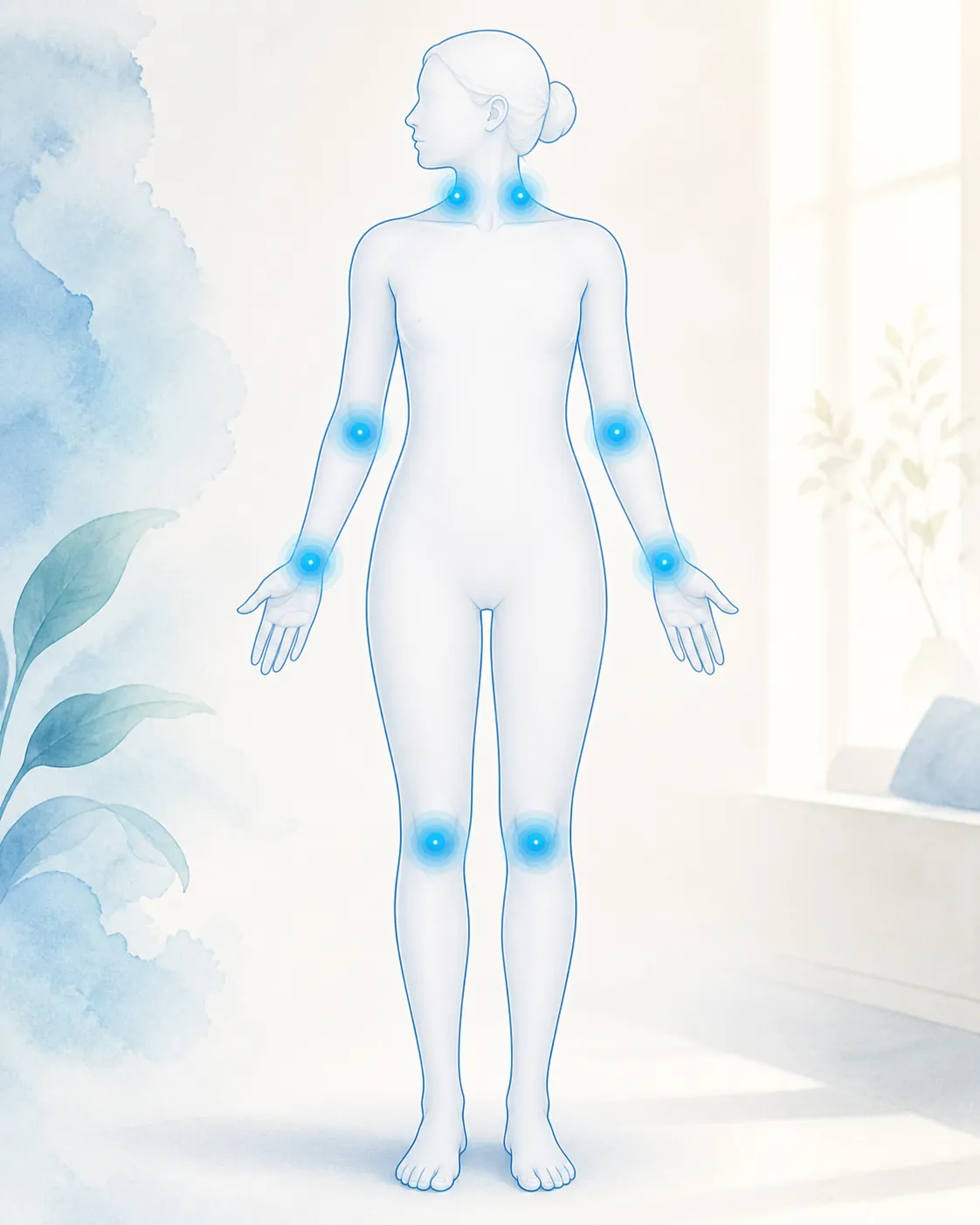
- Use a cool damp cloth on the neck or wrists for a few minutes at a time.
- Wrap ice packs or frozen items in fabric; do not press ice directly on bare skin.
- Loosen tight clothing and switch to the lightest breathable layer you can safely wear.
- Use a sheet instead of a blanket if you need cover to feel settled.
- If you sweat through clothing or bedding, change the layer touching your skin rather than trying to remake the whole bed.
Some people use a damp towel, a chilled cloth under the pillowcase, or a wrapped cold pack near the feet. Treat those as comfort measures, not medical treatment. If someone is confused, faint, vomiting, very weak, or no longer sweating in dangerous heat, that is not a sleep problem; seek emergency help.
If heat is the main thing keeping you awake and the storm damage is not the limiting factor, this heat-focused guide may help later: how to sleep during a Denver heatwave. Tonight, keep it low-tech and safe.
Reduce the checking your brain thinks it must do
After a tornado, darkness is not just darkness. Every creak can sound like more damage. Every phone buzz can feel like another warning. If you have to keep sitting up to check the door, the hallway, the child in the next room, the weather app, or the flashlight, your body is doing work that looks like insomnia.
Make the room boringly predictable. Put the items you may need in the same place. Decide where everyone is sleeping. Decide what sound means you will get up: a weather alert, a specific family member calling, the smell of gas, or water entering the room. Everything else can wait until morning unless it changes safety.
- Set one person, if possible, to monitor alerts instead of having every adult half-monitor all night.
- Turn phone brightness down and keep alerts on for emergency warnings only.
- Tell children or older relatives exactly where you will be if they wake up.
- Write down the morning tasks, such as calling insurance, checking neighbors, or dealing with spoiled food, so they stop circling in your head.
That last step matters. A plan does not have to solve tomorrow. It only has to convince the part of your brain still scanning for danger that the next few moves are not being ignored.
Why your body still feels on alert
Sleep trouble after a tornado is documented. A systematic review of 29 tornado mental-health studies covering 27,534 participants found sleep disorder among the consistently reported mental-health consequences after tornadoes.[4] That does not mean every awake person has a disorder. It means the pattern is real enough that you do not need to be ashamed of it.
There is also disaster-sleep research outside tornadoes. One American Academy of Sleep Medicine report described a 165-participant study of earthquake survivors in Haiti in which 94% reported clinically significant insomnia symptoms after the disaster, and 42% showed clinically significant PTSD two years later.[5] That 94% number should not be treated as a tornado prevalence rate or a prediction for you. It is useful because it shows how powerfully a disaster can disturb sleep even after the immediate physical danger has passed.
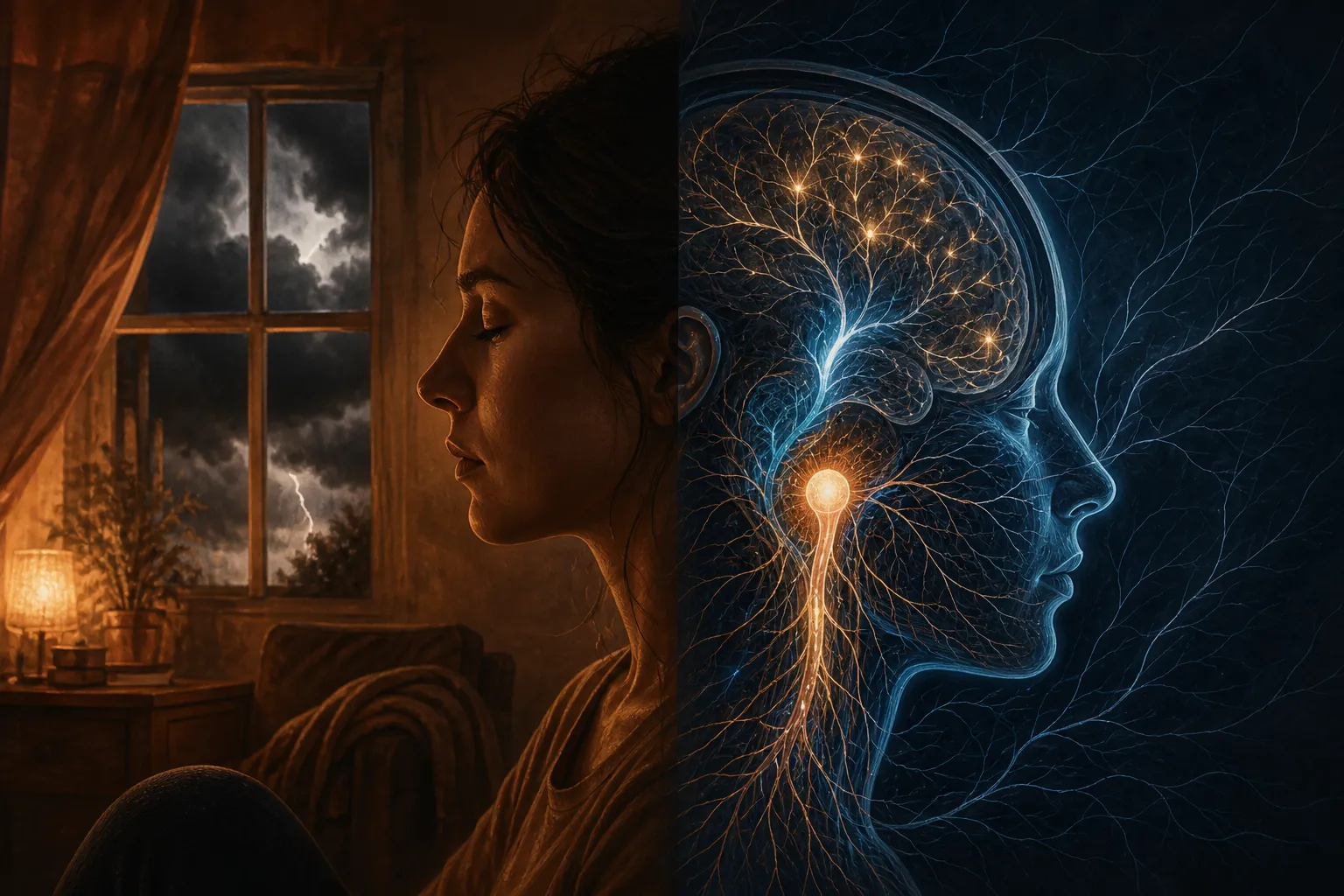
The plain version: the threat-detection system is still turned up. Your body may hold muscle tension, jump at sounds, replay moments, or resist closing your eyes because sleep feels like letting go of watch duty. That is a physiological response after threat exposure, not a failure to follow sleep hygiene.
Grounding gives the alarm system a job it can finish
Try the 5-4-3-2-1 exercise once, slowly: name five things you can see, four things you can feel, three things you can hear, two things you can smell, and one thing you can taste. The point is not to become serene. The point is to bring the brain back to the room you are actually in, instead of leaving it alone with the storm replay.
Breathing should be steady, not heroic
Use a slow pattern you can tolerate. Box breathing is one option: inhale for four counts, hold for four, exhale for four, hold for four. If holding your breath feels bad, skip the holds and make the exhale a little longer than the inhale. Trauma self-care guidance commonly includes grounding, breathing, limiting repeated exposure to distressing media, and leaning on practical support after disaster events.[6]
Make the plan, then put it away
On paper or in a notes app, write three lines: where you are sleeping, what would make you get up, and what can wait until daylight. Then put the paper or phone face down. Rechecking the same plan every five minutes keeps the alarm loop fed. A written plan lets you stop negotiating with yourself in the dark.
If storm anxiety is the larger pattern for you, this related guide on sleeping when severe weather makes you anxious may be useful after tonight. If you are pregnant, use the more specific tornado guidance here: how to sleep during a tornado warning when pregnant.
If you are still awake, stop wrestling the bed
Lying still for hours while your pulse pounds can teach the bed to feel like a checkpoint. The American Academy of Sleep Medicine’s trauma-related sleep guidance advises getting out of bed if you cannot sleep after about 20 minutes, then doing a quiet, low-stimulation activity until you feel drowsy again.[7]
Do not make that a rigid rule you enforce with a stopwatch. Use it as a relief valve. If you notice you are getting more agitated, sit in a safe dim spot, sip water, read something dull, fold a towel, or repeat the grounding exercise. Keep the light low. Do not start damage research, insurance forms, social media scrolling, or fridge inventory unless there is a safety reason.
Then return to the sleeping spot when your body drops even one notch. You are not trying to win the night. You are giving sleep more chances to arrive without turning the bed into another emergency scene.
What can wait until morning
Some decisions feel urgent because the house is dark and your body is flooded with adrenaline. Separate true safety from morning work.
| Handle tonight | Can usually wait until daylight |
|---|---|
| Generator placement, gas smell, active leaking near electricity, unsafe sleeping area | Full damage documentation |
| Emergency alerts and shelter access | Calling every non-emergency office |
| Medication, water, shoes, flashlight, family location | Cleaning the whole house |
| Food that is clearly unsafe or has exceeded safe cold-holding limits | Sorting every item in the refrigerator if the door stayed closed and timing is still within guidance |
If you are caring for children, older adults, disabled family members, or anyone using medical equipment, your threshold for getting outside help should be lower. Heat, power loss, medication timing, mobility, and communication problems stack up quickly.
The next day and the next month
One bad night after a tornado does not mean you are broken. Several rough nights can still be part of an acute stress response. Watch the direction, not just the first night: Are you getting any stretches of rest? Are nightmares, panic, or replaying scenes easing at all? Are you able to function enough to eat, hydrate, make calls, and stay safe?
If severe sleep disruption, nightmares, panic, intrusive memories, or feeling constantly on guard persist beyond about a month, get professional support. Trauma-sleep guidance notes that many people improve without formal treatment, but persistent symptoms deserve evaluation rather than more self-blame.[7] The SAMHSA Disaster Distress Helpline is available at 1-800-985-5990 for disaster-related emotional distress.[8]
For what comes after the first night, use staged sleep strategies for tornado disaster insomnia relief. If you want a deeper look at the insomnia-PTSD loop, this piece on how trauma and poor sleep can reinforce each other may help.
Tonight, aim for safer, cooler, quieter rest. Perfect sleep can wait.
References
- Power Outage Safety, American Red Cross.
- Tips for sleeping in hot weather without AC, HealthPartners.
- 8 Tricks to Get the Best Night's Sleep During Summer Without AC, Real Simple.
- Mental Health Impacts of Tornadoes: A Systematic Review, Lee & First, 2022.
- Disturbed sleep linked to mental health problems in natural disaster survivors, American Academy of Sleep Medicine.
- Self-Care After Disaster Events, VA National Center for PTSD.
- Sleeping after a trauma, SleepEducation.org.
- Disaster Distress Helpline, SAMHSA.
Read the full guide: Can you sleep during a tornado watch? What to know