
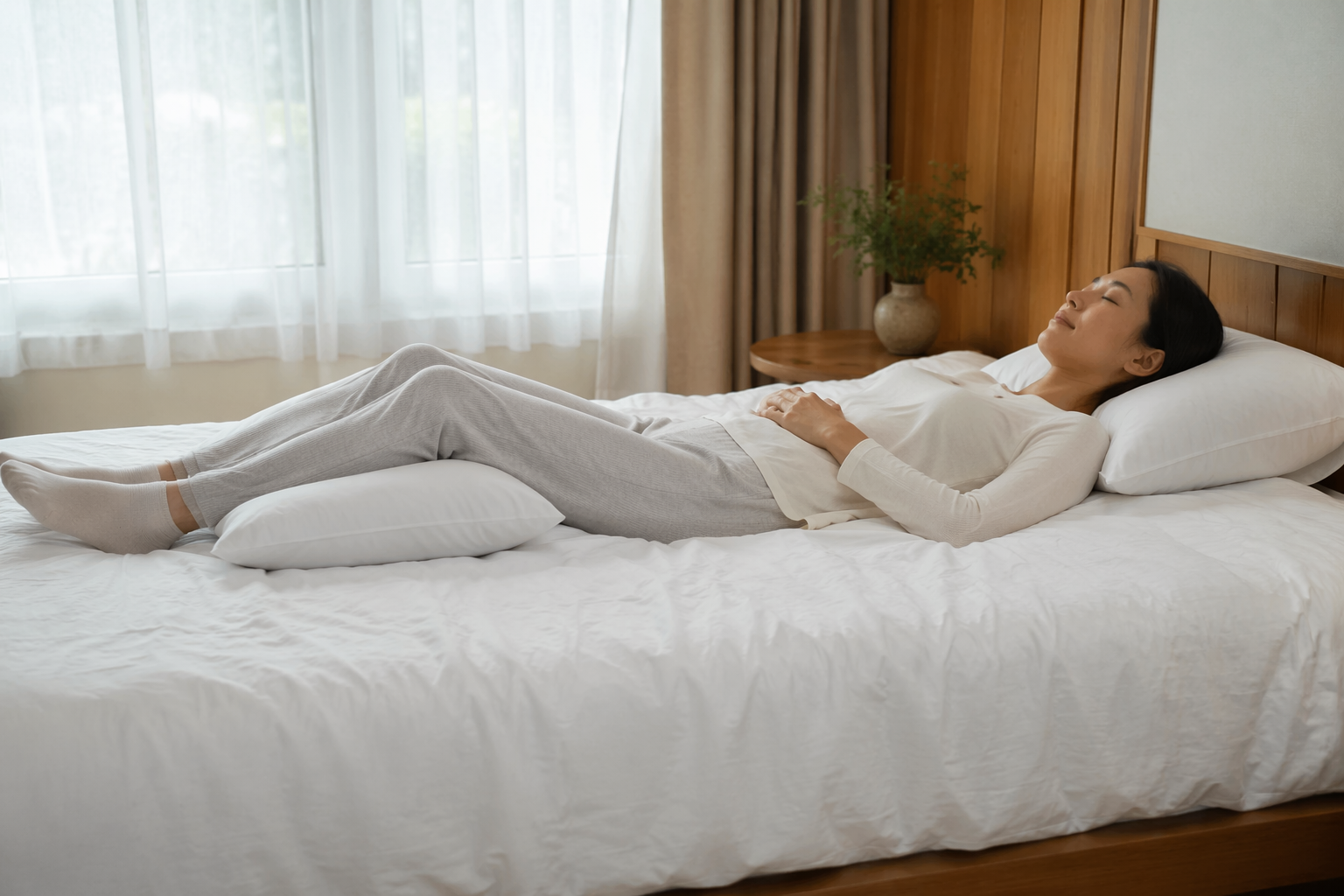
Most people do not stay in one posture all night. In a 2017 study of 664 adults, about 38% slept on their back, 54% on their side, and 7% on their stomach, and adults changed position 11–45 times per night [1]. That is why trying to sleep on your back usually fails after a few hours: the body keeps moving while you are not supervising it. If you need back sleeping for back pain, skin, or a surgical instruction, the question is not whether you can force yourself to stay still. It is how to make the bed do the remembering. If you are still deciding whether this position fits your health profile, start with Sleep on Your Back: A Decision Framework for Adults Who Want Evidence, Not Opinions.
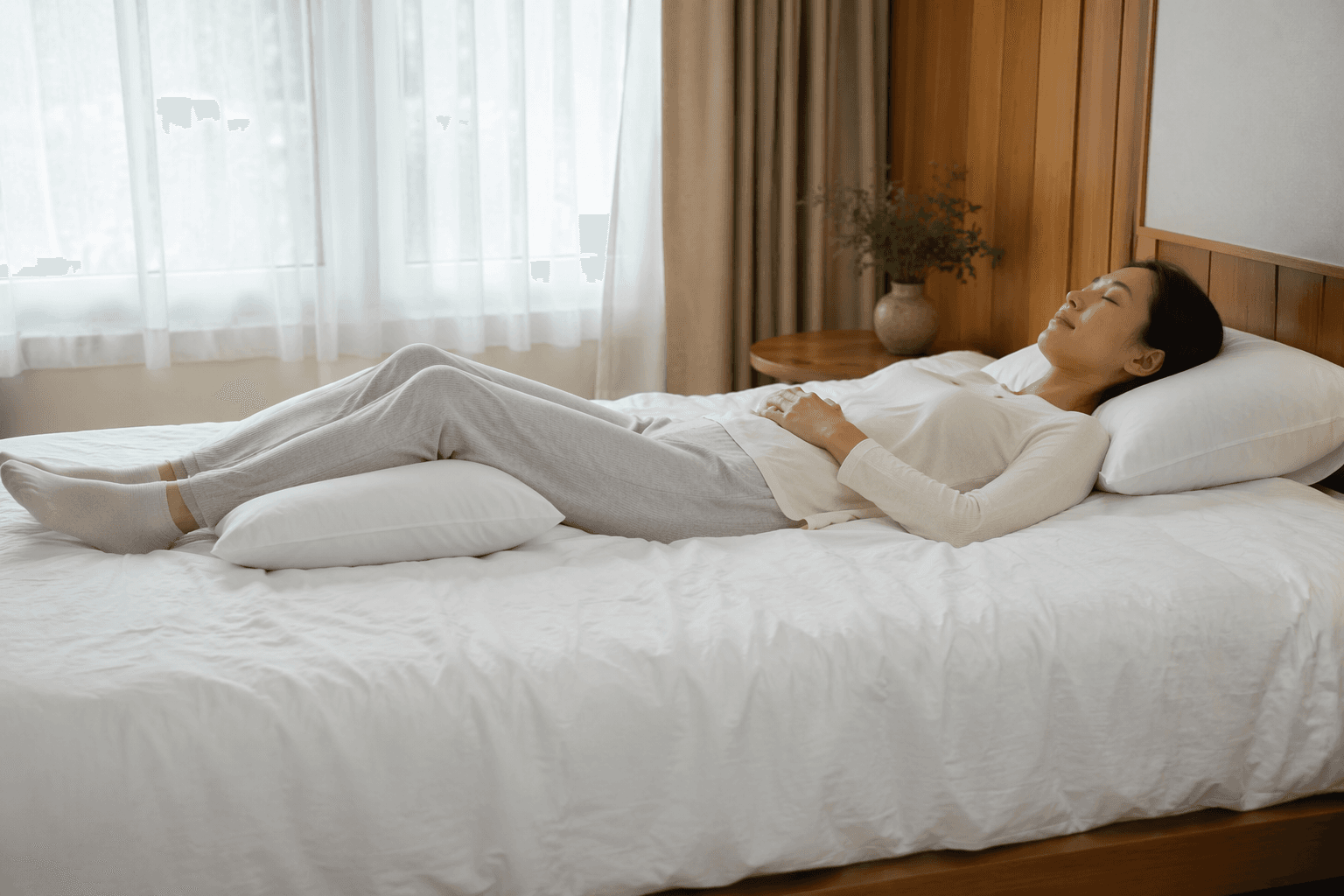
First check whether back sleeping is the wrong experiment
Untreated or suspected obstructive sleep apnea is the clearest red flag, because supine positioning can let gravity narrow the airway and positional-therapy sources note that apnea severity can rise substantially on the back [6][7]. In the third trimester of pregnancy, flat back sleeping has been linked in non-randomized evidence to a 2–8× higher stillbirth risk, but that signal comes from a small study with limitations and possible confounding [8]. If reflux is the main issue, back sleeping may need to be modified with head-of-bed elevation rather than used flat [10]. If any of those applies, the decision framework is the better next stop.
Set up the bed to do the remembering
The support stack matters because supine sleep still loads the spine. The American Chiropractic Association, as cited by the National Spine Health Foundation, puts that load at about 50 lbs, which is a useful reminder that lying on your back is not the same as removing strain [2].
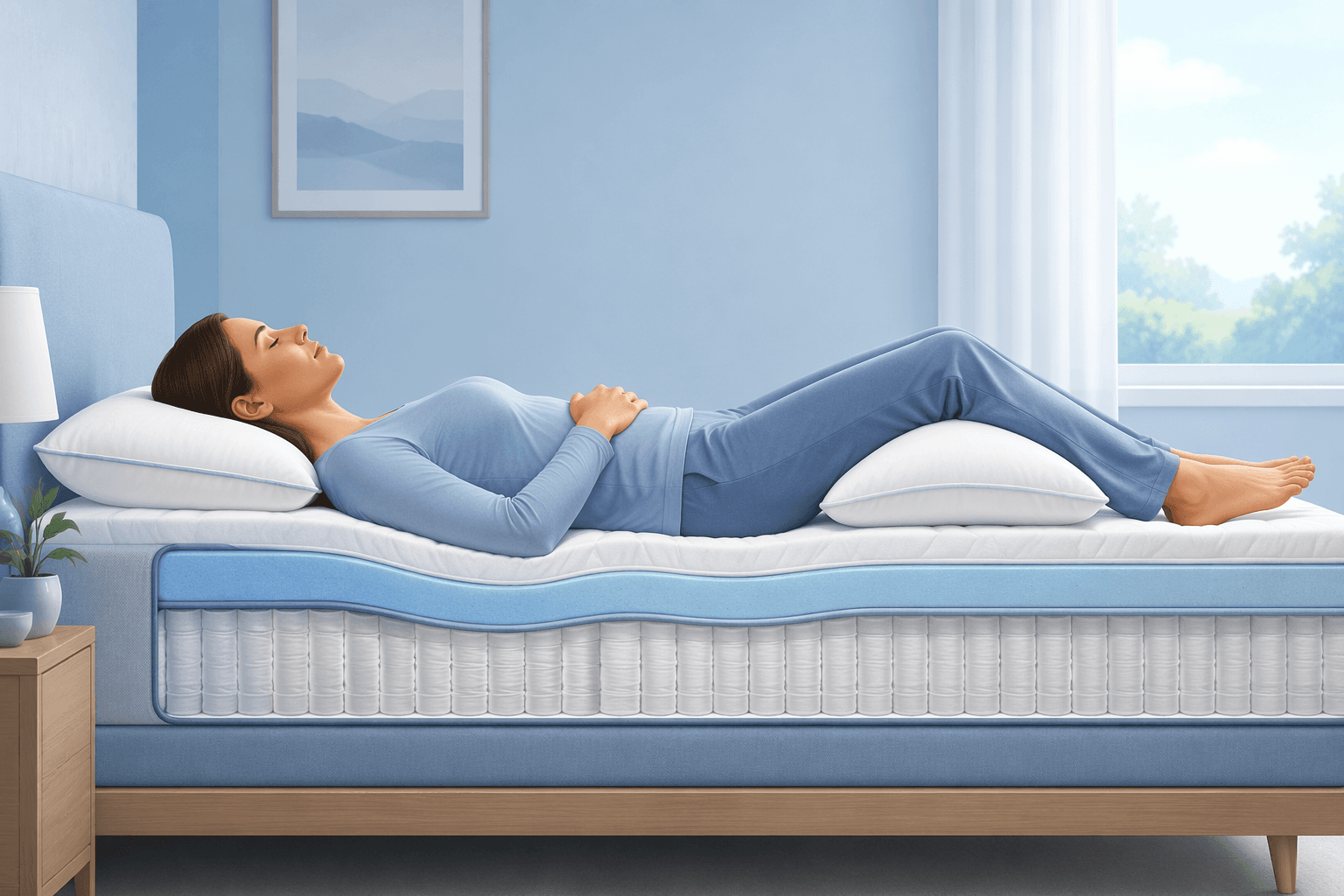
- Use a medium-loft pillow that fills the gap between the neck and the mattress so the head stays neutral instead of tipping forward or backward [4][5].
- Place a pillow under the knees to support the lumbar curve and make it easier for the lower back to stay relaxed [4][5].
- Choose a medium-firm mattress when you can; Mayo Clinic notes that soft mattresses tend to give back sleepers less support than they need [3].
- If you roll easily, add side pillows or rolled blankets as barriers. They are not there to trap you; they are there to make back sleeping the path your body returns to after it moves [1].
Train the pattern without relying on willpower
Think of the first nights as calibration. Start with the support already in place, fall asleep on your back, and reset the pillows when you wake up on your side or stomach instead of treating the night as a failure. Because adults shift position 11–45 times per night [1], the win is not perfect stillness. It is making the easiest route through the bed the one that keeps bringing you back to supine sleep.
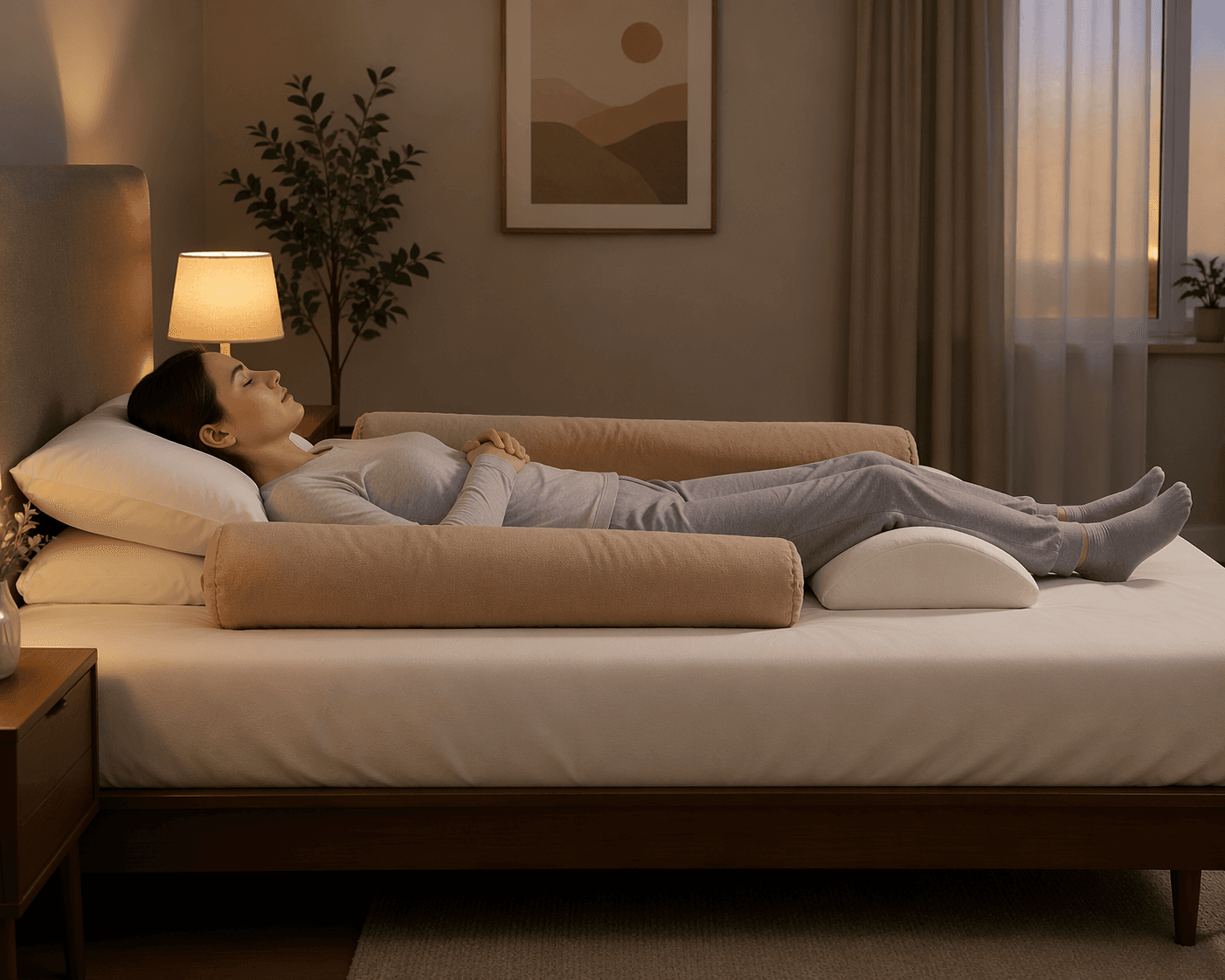
- Keep one setup constant long enough to tell what is helping.
- Change pillow height before you add more gear.
- If the mattress is soft enough to swallow the hips, fix that first [3].
What back sleeping can realistically change
The upside is mostly biomechanical. A neutral head, neck, and spine position can reduce morning joint irritation for some people, and better surface support matters because the mattress is part of the posture, not just the place where posture happens [2][3]. Less facial compression is another plausible benefit because the face is not pressed into a pillow all night [9]. With head elevation, back sleeping may also help some people with sinus drainage. Those are useful reasons to try the position. They are not reasons to ignore a contraindication or stay with a setup that keeps twisting the body.
Should you do this tonight?
If untreated sleep apnea, third-trimester pregnancy, or reflux that needs elevation is not part of your situation, back sleeping is reasonable to trial as a setup problem rather than a discipline test. The first-night version is simple: medium-loft pillow at the neck, pillow under the knees, a supportive mattress, and side barriers if you need them. If you want help deciding whether the position belongs in your routine at all, use the decision framework; if you want the mechanics in more depth, the sleep-position science explainer goes further.
References
- Sleep positions and body movements during sleep — Nature and Science of Sleep, 2017, PubMed
- Sleeping and the Spine — National Spine Health Foundation
- Sleeping positions: what’s best for your back? — Mayo Clinic
- How to Sleep on Your Back — Sleep Foundation
- How to Sleep on Your Back — Verywell Health
- Best Sleeping Position for Sleep Apnea — Sleep Foundation
- Positional Therapy — AASM Sleep Education
- Exactly How Bad Is It to Sleep on Your Back When You’re Pregnant? — Cleveland Clinic
- Sleeping on Your Back May Help You Get the Rest You Need — Healthline
- Head of bed elevation to relieve gastroesophageal reflux symptoms: a systematic review — PMC
Comments
Join the discussion with an anonymous comment.