
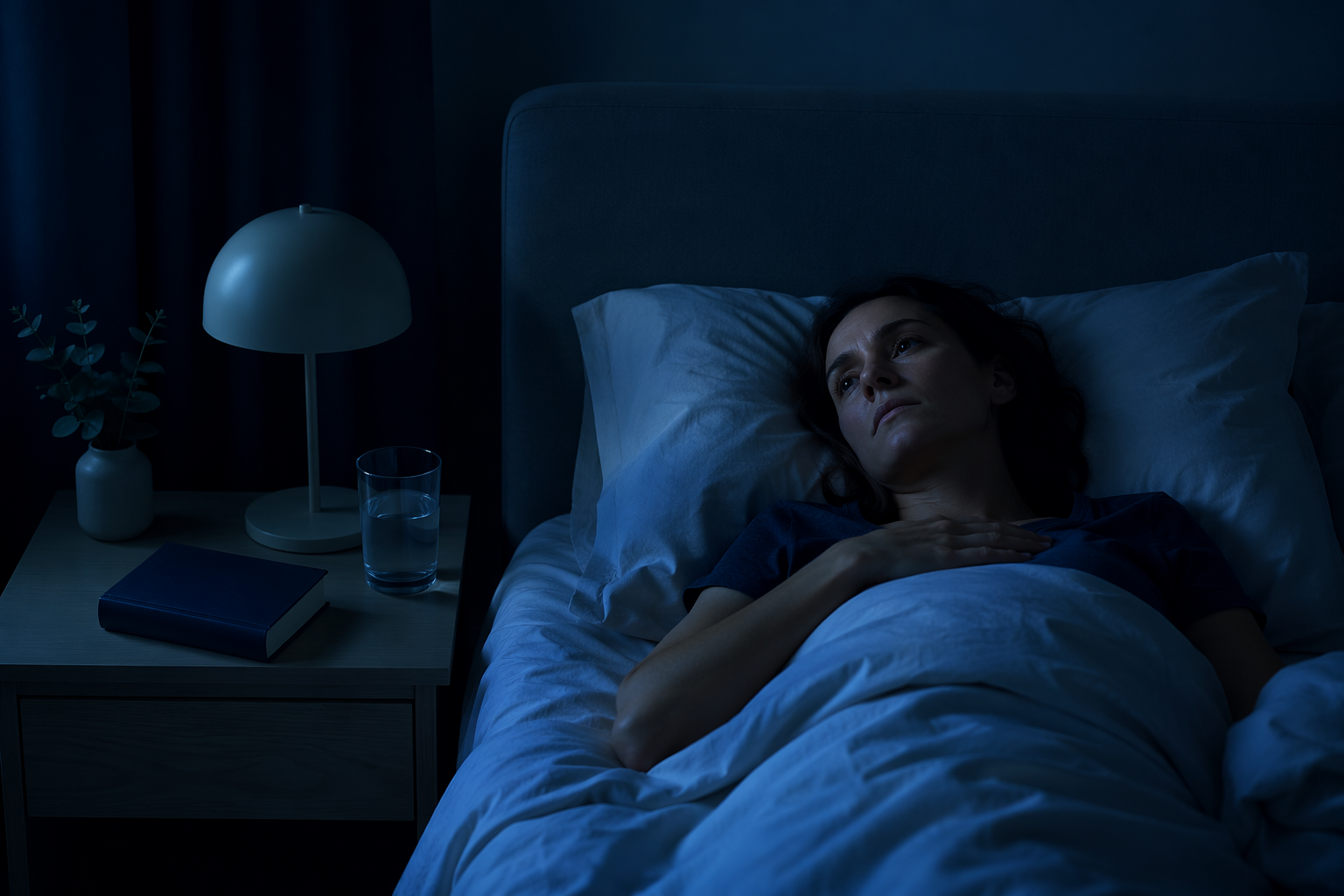
If you searched for tips for insomnia after another night of doing everything “right,” the problem may not be your effort. You may have stopped caffeine early, kept the room dark, bought the blackout curtains, put the phone away, tried the wind-down routine, and still found yourself awake with your heart up, your mind rehearsing tomorrow, and the bed starting to feel like a place where failure happens.
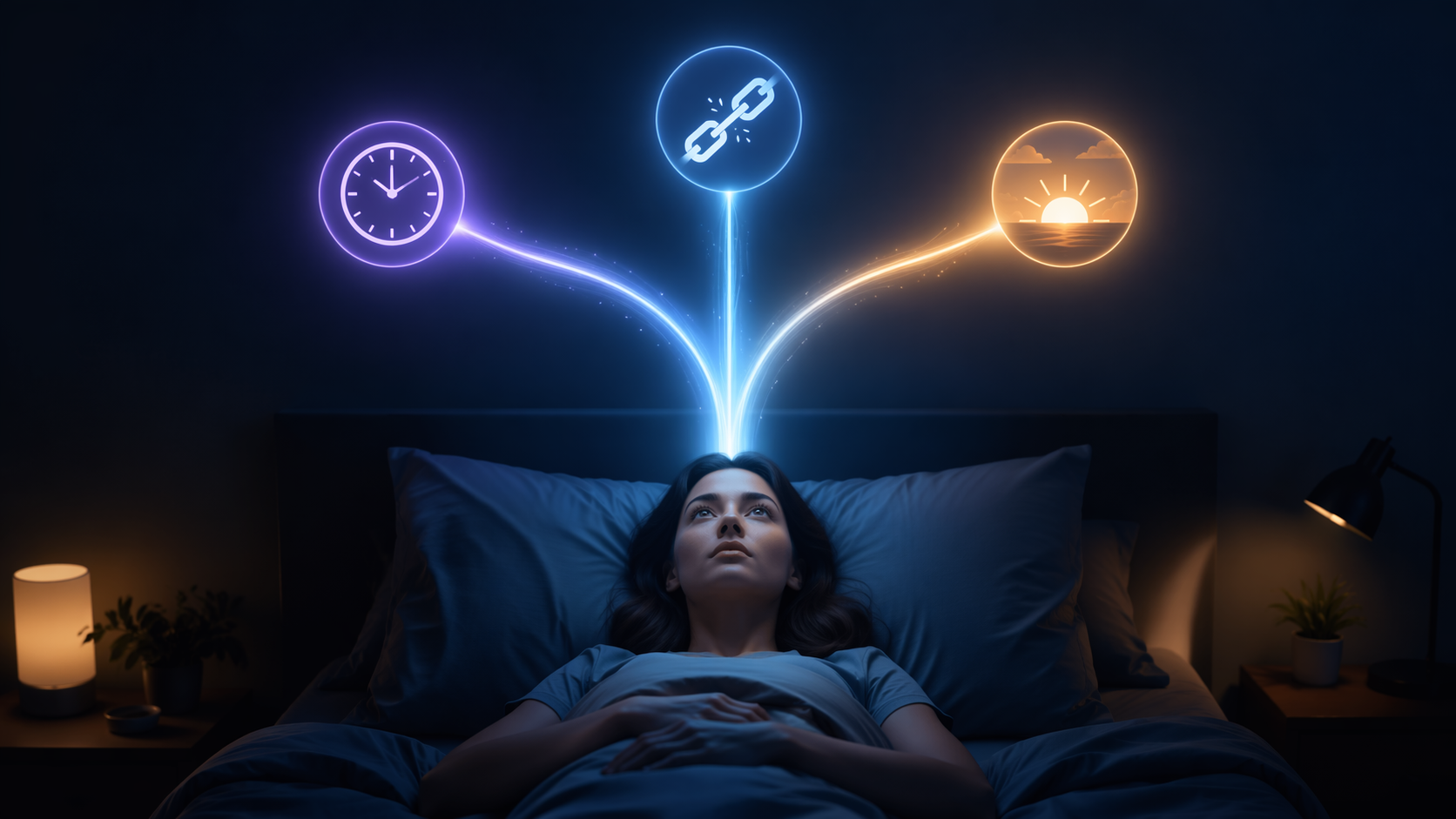
That is not rare stubbornness. Chronic insomnia often persists because the original trigger is no longer the main driver. A stressful month, illness, grief, travel, a newborn, or work disruption can start the sleep problem. But after enough bad nights, the sleep system can learn a new pattern: bed means alertness, darkness means monitoring, and “trying to sleep” means threat detection.
Sleep hygiene can help with the conditions around sleep. It can reduce obvious friction: late caffeine, irregular wake times, alcohol-disrupted sleep, a bright bedroom, or an overstimulating evening. For many people with occasional bad sleep, that is enough. For chronic insomnia, though, sleep hygiene is often aimed at the wrong level of the problem. It tidies the runway after the nervous system has already learned to treat takeoff as danger.
That distinction is why clinical guidelines do not place generic sleep hygiene at the top of the treatment hierarchy for chronic insomnia. Stand-alone sleep hygiene has shown minimal treatment effects, while cognitive behavioral therapy for insomnia, usually called CBT-I, is designed to target the learned loops that keep insomnia going. [1]
When Bad Sleep Becomes a Maintained Pattern
A few poor nights after a deadline or family crisis are not the same clinical problem as chronic insomnia. The scale is still worth naming briefly: chronic insomnia affects approximately 10% to 15% of adults, and a 2024 American Academy of Sleep Medicine survey found that 12% of Americans reported having been diagnosed with chronic insomnia. [2][3]
The useful question is not “What caused the first bad night?” It is “What is keeping this going now?” The 3P model of insomnia gives that question some structure. It separates predisposing factors, precipitating factors, and perpetuating factors: the vulnerabilities a person brings in, the event that disrupts sleep, and the habits or beliefs that maintain the insomnia after the trigger has faded. [1]
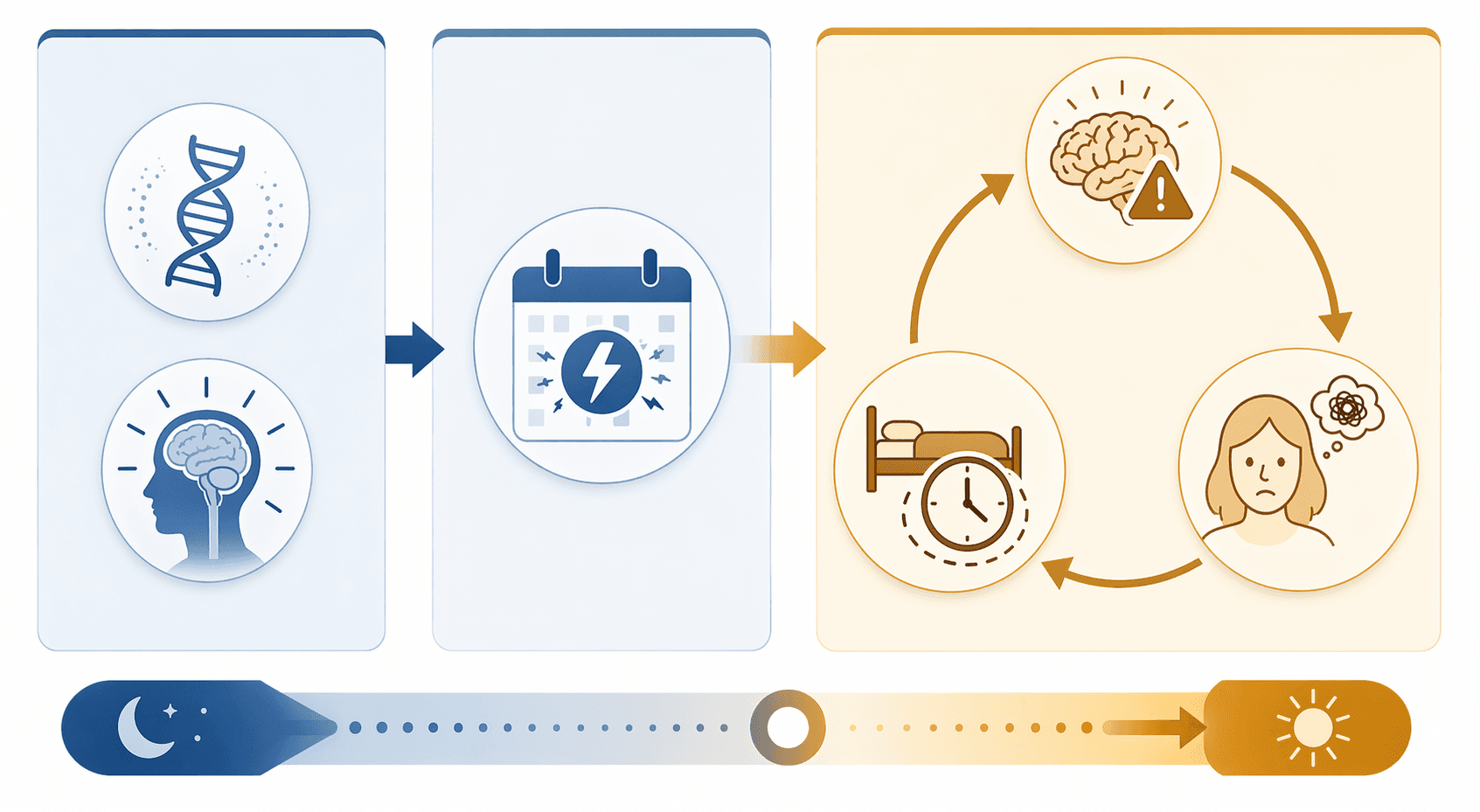
Predisposing factors can include high reactivity or a tendency toward hyperarousal. Precipitating factors are the disruptions people can usually name: the breakup, the job change, the pain flare, the exam, the caregiving stretch. Perpetuating factors are the quieter ones. They are the understandable responses that start as survival tactics and become part of the insomnia engine.
Someone sleeps poorly, so they spend more time in bed to “catch up.” They nap or sleep in, so sleep pressure is weaker the next night. They begin checking the clock, calculating the remaining hours, and scanning the body for signs of sleepiness. The bed stops being a cue for sleep and becomes a cue for performance anxiety. By the time this loop is established, a cleaner evening routine may be helpful, but it is not a treatment plan.
What Sleep Hygiene Can and Cannot Do
Sleep hygiene belongs in the conversation. It is not fake, and it is not useless. If someone drinks coffee at 8 p.m., works under bright light until midnight, sleeps until noon on weekends, and treats alcohol as a sedative, those factors deserve attention. A stable wake time, reduced evening light, a cooler bedroom, and a realistic caffeine cutoff can make sleep less vulnerable.
But sleep hygiene mainly changes the environment and routine around sleep. CBT-I changes the learned relationship among bed, wakefulness, anxiety, and compensatory behavior. That is the difference between adjusting the room and retraining the system that has learned to stay alert in the room.
For background on where healthy sleep habits fit and where they run out of force, see the limits of sleep hygiene. For routine-building basics, sleep hygiene fundamentals are still useful groundwork. The point is placement. Sleep hygiene is supportive care for chronic insomnia, not the main mechanism-based intervention.
CBT-I Targets the Perpetuating Loop
CBT-I is not simply “sleep hygiene with a therapist.” Multi-component CBT-I usually combines behavioral and cognitive interventions that deliberately press on the factors maintaining insomnia: weak or mistimed sleep pressure, conditioned arousal in bed, and catastrophic sleep-related beliefs.
That is also why CBT-I can feel counterintuitive. People arrive exhausted and hope the treatment will give them more permission to rest. Instead, the behavioral pieces often ask for less time in bed, more consistency, and fewer escape routes. The discomfort is not incidental; it is part of how the treatment stops the insomnia pattern from being rehearsed every night.
Sleep Restriction Consolidates Sleep Pressure
Sleep restriction therapy is badly named for how it feels. It does not mean depriving someone of sleep as a goal. It means temporarily restricting time in bed to better match the amount of sleep the person is actually getting, then expanding the sleep window as sleep becomes more consolidated.
In the CBT-I primer, sleep restriction is adjusted using sleep efficiency: the percentage of time in bed actually spent asleep. Time in bed is reduced when sleep efficiency is below 85%, and increased when sleep efficiency is above 90%. [1]
This matters because many people with chronic insomnia do the most human thing possible: they give themselves a longer sleep opportunity. If six hours of sleep felt terrible, maybe nine hours in bed will at least create a chance to recover. But when the body is only sleeping in fragments across that larger window, the bed becomes a place where wakefulness gets more practice. Sleep restriction narrows the window so sleep pressure can build and the brain can relearn that bed is where sleep happens in a consolidated block.
This is one reason professional guidance matters. Sleep restriction can increase daytime sleepiness early in treatment, and it is not appropriate to casually self-prescribe for everyone. People with bipolar disorder, seizure disorders, or other conditions where sleep loss may carry medical risk need qualified oversight before using a sleep-deprivation-based behavioral intervention.
Stimulus Control Breaks the Bed-Awake Association
Stimulus control is the piece many people recognize only after it is explained: the bed has become a conditioned cue. At first, the bed was where insomnia happened. After enough repetitions, the bed can become one of the triggers for insomnia.
The classic instruction is simple and inconvenient: if you cannot sleep after about 20 minutes, get out of bed, and reserve the bed for sleep and sex. [1]
The number is not meant to create another clock-checking ritual. It is an estimate. The purpose is to stop long awake stretches from being paired with the mattress, pillow, darkness, and dread. The person leaves the bed, does something quiet and low-stimulation, and returns when sleepy. Over time, the bed gets fewer repetitions as a place of alert waiting.
This is where generic advice often becomes too polite. “Have a relaxing bedroom” sounds reasonable, but it does not interrupt three hours of anxious wakefulness in that bedroom. Stimulus control does. It asks the person to stop practicing insomnia in the exact place where the brain has learned to perform it.
Cognitive Work Lowers the Threat Level
The cognitive component of CBT-I is not positive thinking about sleep. It is a way of identifying beliefs and predictions that keep arousal active: “If I do not sleep eight hours, tomorrow is ruined,” “I will lose control,” “My body has forgotten how to sleep,” or “I have to solve this tonight.”
Those thoughts are not silly. They usually come from real consequences: nodding through meetings, snapping at family, driving tired, cancelling plans, or fearing another long night. But when the mind treats wakefulness as an emergency, the body responds with alertness. The harder the person tries to force sleep, the more sleep becomes a monitored performance.
Cognitive restructuring examines the prediction, the evidence, and the behavioral consequence. A clinician may help the person distinguish “tomorrow will be harder” from “tomorrow is impossible,” or “I dislike being awake” from “being awake is dangerous.” The goal is not to make sleep loss pleasant. It is to lower the threat response enough that sleep can become less effortful.
How Strong Is the Evidence?
Once the mechanism is clear, the outcome data make more sense. CBT-I is not recommended because it sounds more serious than bedtime advice. It is recommended because it targets the maintaining factors and has measurable effects.
A CBT-I primer summarizing meta-analytic evidence reports average treatment effect sizes of 1.0 to 1.2, corresponding to roughly a 50% post-treatment reduction in individual insomnia symptoms. It also notes that CBT-I effects are maintained for up to 24 months after treatment. [1]
The Sleep Foundation, citing evidence on multi-component CBT-I, reports clinically meaningful improvement in 70% to 80% of patients with primary insomnia. [4]
Those numbers do not mean every patient gets the same result, or that every version of CBT-I is equally available, affordable, or well delivered. They do mean the treatment belongs in a different category from another generic tip list. It has a model, components matched to that model, and durability data that fit the claim.
The guideline hierarchy reflects that. The American College of Physicians recommended CBT-I as first-line treatment for chronic insomnia in 2016, the American Academy of Sleep Medicine issued a behavioral and psychological treatment guideline in 2021, and the AASM reaffirmed CBT-I as a first-line treatment in its 2026 guideline on combination treatment for chronic insomnia. [2]
What Treatment Usually Looks Like
CBT-I is structured treatment, not a single trick. It often runs over a brief course of about 6 to 8 sessions, though some people notice improvement sooner. The early work usually includes a sleep diary, regular wake time, calculation of sleep efficiency, and agreement on a sleep window. Then the plan is adjusted based on actual sleep data rather than on how guilty or desperate the person feels.
| Problem maintaining insomnia | CBT-I target | What changes |
|---|---|---|
| Too much time in bed while awake | Sleep restriction therapy | Time in bed is matched more closely to actual sleep, then expanded as sleep efficiency improves |
| Bed becomes linked with alertness | Stimulus control | Long wakeful stretches move out of bed so the bed can become a sleep cue again |
| Sleep becomes a monitored threat | Cognitive restructuring | Catastrophic predictions are tested so arousal has less fuel |
| Routine factors add friction | Sleep hygiene as adjunct | Light, caffeine, alcohol, timing, and bedroom factors are adjusted to support the main treatment |
A qualified CBT-I pathway may involve a sleep psychologist, behavioral sleep medicine clinician, trained therapist, physician-supervised program, or validated digital CBT-I program when in-person care is not available. The important feature is not the branding. It is whether the treatment actually includes the behavioral and cognitive components that address perpetuating factors.
This also helps separate CBT-I from vague wellness coaching. A person should not be told only to “relax more” or “make bedtime sacred” when the data show they are spending long anxious stretches awake in bed. The treatment should have a way to measure sleep efficiency, adjust time in bed, reduce conditioned arousal, and work with the fear that sleep loss has acquired.
Where Sleep Hygiene Still Belongs
Sleep hygiene is still worth keeping when it removes preventable obstacles. A consistent wake time gives the circadian system an anchor. Morning light can support daytime alertness and nighttime timing. A calmer evening can reduce unnecessary stimulation. These steps are not wrong because they were insufficient.
The harm comes when sleep hygiene is treated as the whole answer for chronic insomnia. Then the patient hears, directly or indirectly, that continued sleeplessness must mean they failed the advice. Many have not failed it. They have outgrown it as the primary intervention.
A more accurate hierarchy is simple: use sleep hygiene to clear away routine and environmental barriers; use CBT-I to treat the conditioned arousal, sleep anxiety, and compensating behaviors that maintain chronic insomnia. If insomnia has become chronic, the next step is not another generic list of tips. It is evaluation for CBT-I or a qualified CBT-I pathway, with sleep hygiene kept in its proper supporting role.
References
- Cognitive Behavioral Therapy for Insomnia (CBT-I): A Primer. PMC.
- AASM publishes new guideline on combination treatments for chronic insomnia. American Academy of Sleep Medicine. 2026.
- Survey shows 12% of Americans have been diagnosed with chronic insomnia. American Academy of Sleep Medicine. 2024.
- Cognitive Behavioral Therapy for Insomnia. Sleep Foundation.


Comments
Join the discussion with an anonymous comment.