
Natural remedies for sleep are not one category
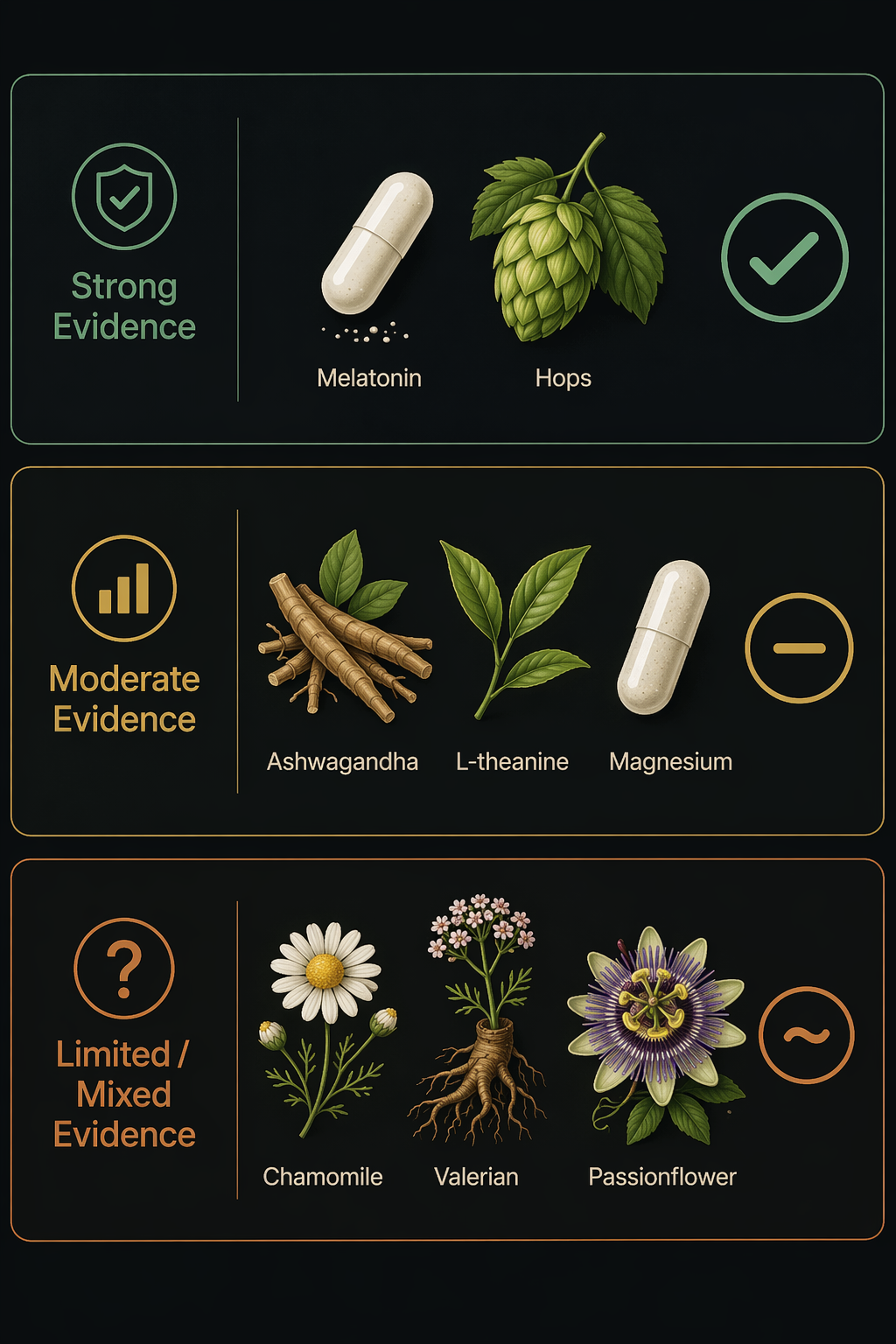
People looking for natural remedies for sleep are usually not shopping for a philosophy; they are trying to solve a specific problem, whether that is jet lag, a drifting sleep schedule, trouble falling asleep, or waking too often. The scale of the issue helps explain why the market is so noisy: more than 60 million Americans report poor sleep quality, and sleep-aid use is common enough that the line between a useful experiment and a misleading label matters. A better way to read the aisle is by evidence tier, because melatonin, chamomile, magnesium, and behavior change are not doing the same job.
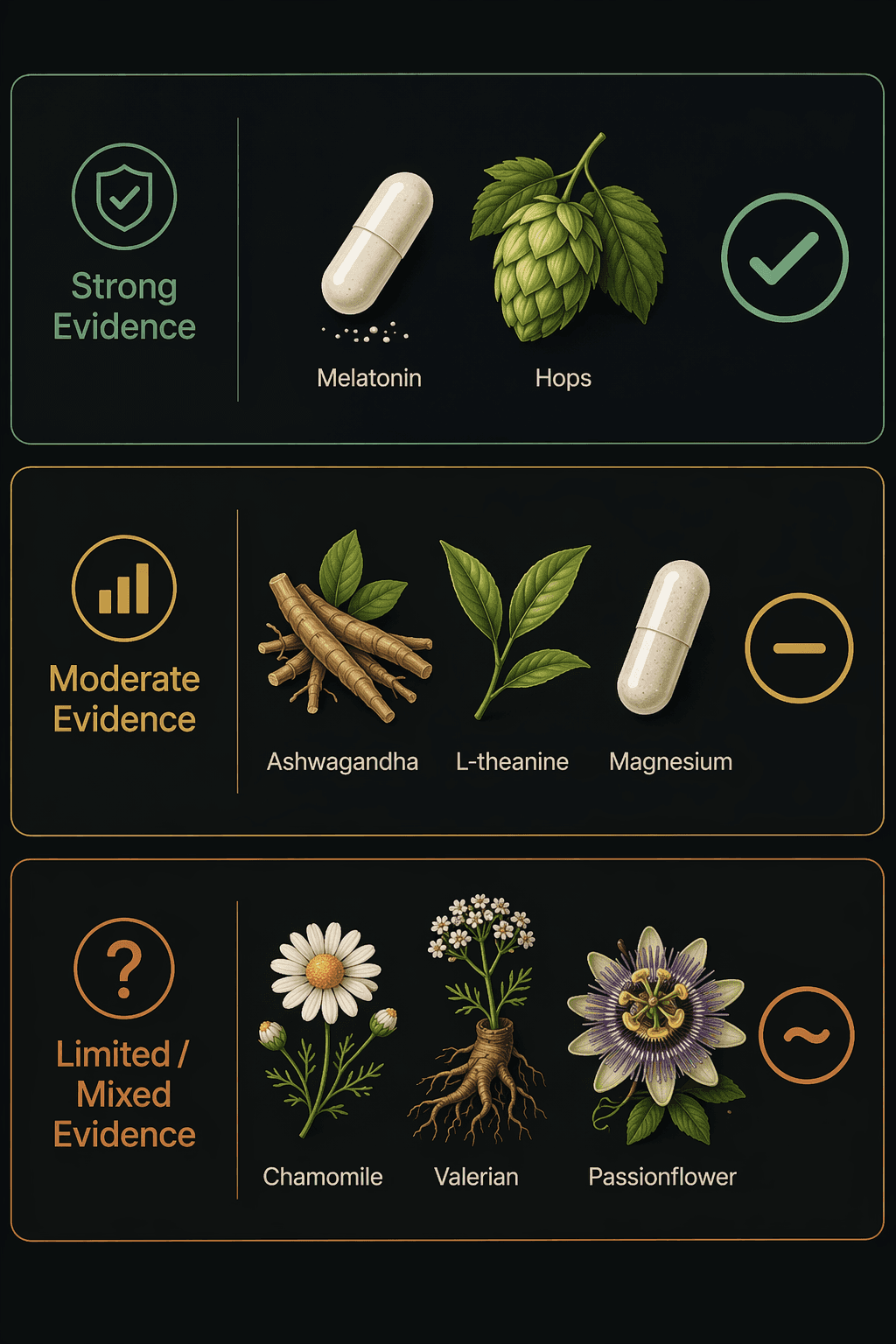
The strongest natural-option evidence starts with melatonin, but only when the problem is circadian rhythm misalignment or jet lag. It does not become a general fix for chronic insomnia just because it is common on drugstore shelves. The same top tier in the 2025 scoping review of 51 randomized controlled trials also included valerian combined with hops, which is very different from treating valerian-alone capsules as interchangeable with melatonin. The question is not whether a remedy sounds natural; it is whether the mechanism and the sleep complaint actually match.
Moderate evidence is where the most useful supplement conversations happen
Ashwagandha has the clearest moderate-tier signal when it is taken at 300–600 mg/day for 8 weeks or longer: the best summaries show small but significant improvements in sleep quality, sleep latency, and total sleep time, especially in people with insomnia. The caveat is that most of the trials were conducted in India, so the result is encouraging without yet being fully universal. L-theanine has a narrower story: at 200–450 mg/day it appears to improve sleep quality and reduce night wakings, but it does not seem to help sleep onset. Magnesium bisglycinate is more modest still; a 2025 randomized trial found only a 1.6-point improvement on the insomnia severity scale versus placebo. For ingredient-level detail, the deeper reads on magnesium glycinate for sleep and L-theanine for sleep make more sense than a generic supplement roundup.
The lower-confidence tier is where familiar names can look friendlier than the data justify. Valerian alone has mixed results and enough concern about publication bias that it should not be treated as a dependable stand-alone choice for chronic insomnia. Chamomile is gentler on packaging than in the evidence: meta-analysis suggests a sleep-quality benefit, but the effect is small. Glycine, passionflower, and lavender aromatherapy all sit in the same general zone of “interesting enough to study, not strong enough to assume.”
Safety changes the decision faster than branding does. Dietary supplements are not reviewed by the FDA for safety, effectiveness, or label accuracy before they reach the market, and the idea that a bottle’s contents always match the label is optimistic. Older adults should be especially cautious with OTC sleep aids built around antihistamines, and pregnancy is still an area where many herbal sleep products do not have enough safety data to be treated casually. If the real problem is chronic insomnia rather than a short-term timing issue, behavioral treatment — including CBT-I — belongs ahead of most supplements.
References
- Natural Sleep Aids: Home Remedies to Help You Sleep — Johns Hopkins Medicine
- Scoping review of randomized controlled trials on natural sleep remedies — Sleep Medicine
- Ashwagandha: Health Professional Fact Sheet — Office of Dietary Supplements, NIH
- L-Theanine for Sleep — Sleep Foundation
- Magnesium glycinate and insomnia severity: 2025 randomized trial — PubMed Central
- Valerian — National Center for Complementary and Integrative Health
- Does Chamomile Tea Make You Sleep? — Sleep Foundation
Comments
Join the discussion with an anonymous comment.