
Mechanism explainer
Recovering From Insomnia After Santa Rosa's Wildfires
The insomnia that follows wildfire trauma is a predictable stress response, not a personal failure. This explainer details the mechanism behind persistent sleep disruption and reviews evidence-based treatments — CBT-I and imagery rehearsal therapy — that help Santa Rosa survivors recover sound sleep.
| Page signal | Details |
|---|---|
| Evidence tier | Wildfire sleep findings: observational studies and systematic review. CBT-I and nightmare treatment: clinical treatment evidence and expert guidance. |
| Last reviewed | July 31, 2026 |
| Medical note | Informational only; not a diagnosis or a substitute for care from a licensed clinician. |
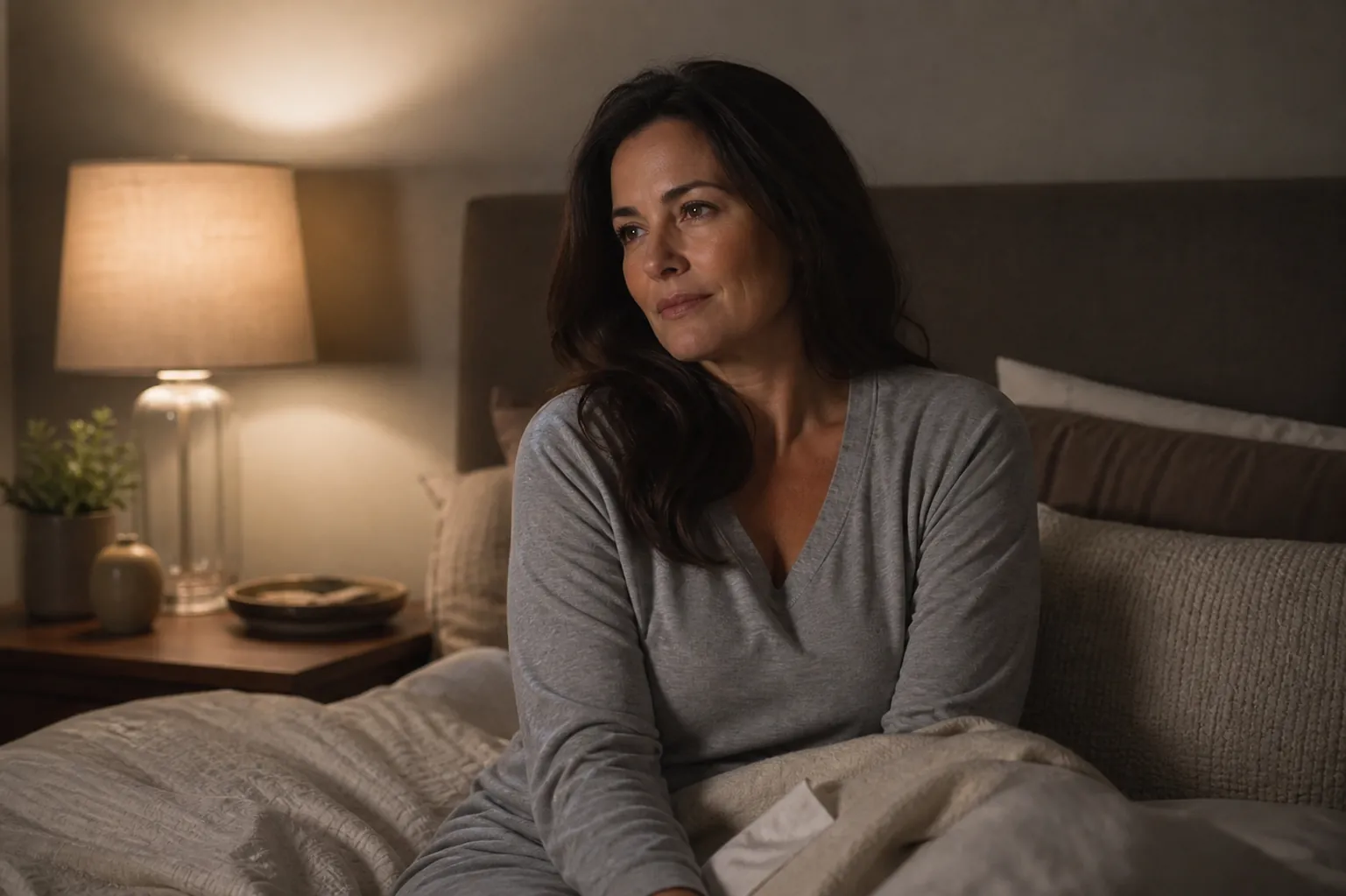
The hard part for many Santa Rosa and Sonoma County survivors is not always the daytime. It is the moment the room gets quiet and the body begins scanning again: wind against the house, a siren in the distance, the smell of smoke from somewhere else, a dream that makes sleep feel less like rest than exposure. If that has continued months or years after a wildfire, it does not mean the person is weak, dramatic, or “bad at relaxing.” It means the nervous system and the sleep system may have learned to treat night as a time for threat monitoring.
That distinction matters. Wildfire-related insomnia is a predictable stress response, and when it persists it can also become a treatable sleep disorder. The recovery path is usually stronger when sleep is treated directly — especially with cognitive behavioral therapy for insomnia, or CBT-I, and nightmare-focused therapy when dreams are keeping bed unsafe — while trauma symptoms are addressed in parallel.
Santa Rosa belongs in this discussion, but the evidence has to be stated carefully. In the WHAT-Now CA study of 1,461 households surveyed after the October 2017 North Bay fires, 74.9% were Sonoma County households, and persistent mental-health needs months later were nearly three times higher than persistent needs in other categories.[1] That does not give us a Santa Rosa-specific insomnia rate. It does show why sleep and mental health after the fires still belong in the local health conversation.
The clearest prevalence numbers come from studies of wildfire survivors, not from a Tubbs Fire sleep study. In a systematic review, self-reported insomnia affected 63% to 72.5% of survivors assessed 1 to 10 months after wildfires, nightmares affected 33.3% to 46.5%, clinical-interview insomnia was reported at 43.6%, and insomnia appeared in 79.1% of those with PTSD.[2] The ranges are wide because the studies used different measures and time points. Still, they make one point hard to ignore: insomnia and nightmares after wildfire exposure are not rare.
Why sleep can stay broken after the fire is over
Sleep asks the brain to lower its guard. Trauma teaches the brain that lowering its guard can be costly. After a wildfire, those two lessons can collide in the same bedroom.
The first mechanism is hyperarousal. In plain terms, the body is prepared to detect danger before the thinking mind has decided anything is wrong. Heart rate may rise quickly. Muscles may stay subtly braced. Sounds that other people sleep through may land as information that needs to be checked. The VA’s disaster guidance notes that in fire-prone communities, “fire trucks, sirens, or even high winds can serve as regular reminders” of the event for years.[3] For a survivor, those reminders are not abstract. They can become cues that pull the body back into watch mode.

That is the same threat-detection system that matters during an actual evacuation night; the difference is timing. A during-event plan belongs in a practical guide like How to Sleep During Santa Rosa Fire Evacuation Nights. Afterward, the work changes. The question is no longer only “How do I get through tonight safely?” It becomes “How does my body relearn that ordinary nights are not evacuation nights?”
The second mechanism is nightmares. A nightmare does not have to replay the fire exactly to make sleep feel dangerous. Some dreams are literal; others carry the same helplessness, urgency, separation, smoke, heat, animals, roads, phones, or the sense of being unable to act. When nightmares repeat, a person may begin to dread sleep itself. Bed becomes the place where the next bad dream might happen.
The third mechanism is conditioning. At first, insomnia may be a direct reaction to trauma reminders. Over time, the bed can become associated with being awake, vigilant, frustrated, or afraid. The person lies down, notices they are not asleep, checks how much time is left before morning, and the bed starts carrying a history of failed attempts. That is why “just go to bed earlier” often backfires. More time in bed can become more time practicing wakefulness.
Smoke can add another pathway. Irritation, odor cues, worry about air quality, and checking behavior can all interfere with sleep, even when trauma symptoms are not the whole story. For that overlap, the companion article Why Can’t I Sleep When There’s Wildfire Smoke? separates the smoke pathway from the trauma pathway. In real bedrooms, they often arrive together.
Exposure severity also matters. In 725 Camp Fire survivors, directly exposed people had significantly worse sleep quality than indirectly exposed people, and indirectly exposed people had worse sleep quality than non-exposed people.[2] That dose-response pattern is important because it validates a common private observation: the person who was closer to danger, lost more, evacuated under greater threat, or had fewer margins afterward may not sleep the same as someone whose exposure was more distant.
When “normal after trauma” becomes a reason to seek targeted sleep care
Sleep disruption in the first days and weeks after trauma is expected. The brain is trying to sort danger, memory, loss, logistics, and uncertainty. AASM Sleep Education describes sleep problems as common stress reactions after trauma, notes that acute stress disorder lasts up to about a month, and says many people recover without treatment; it also notes that about half of people with PTSD improve within three months.[4]
That early-normal framing should not become a reason to wait indefinitely. If insomnia is still shaping life after the immediate recovery period — taking more than a brief bad week, driving dread of bedtime, worsening mood or concentration, or making the person organize the day around the coming night — it deserves direct attention. The same is true if nightmares are making sleep feel unsafe, or if the person is using alcohol, extra sedatives, or exhausting routines to force sleep.
A useful boundary is not “Am I overreacting?” It is “Has my sleep system gotten stuck?” If the answer is yes, the next step is not more self-blame. It is a treatment matched to the mechanism.
There is also evidence from other disasters that insomnia can remain prominent long after the event. Four years after the Beirut port explosion, 62.1% of 248 adults still reported insomnia symptoms; clinically significant insomnia was about twice as likely among people close to the blast, and insomnia correlated strongly with PTSD symptoms while depression and anxiety had normalized.[5] That is not wildfire evidence, and it should not be imported as a Sonoma County rate. It is a reminder that sleep can remain one of the last systems still carrying disaster exposure.
The treatment path with the strongest support
Generic calming advice can help at the edges. It is not the main treatment for persistent trauma-related insomnia. The stronger path is to treat insomnia as insomnia, nightmares as nightmares, and trauma symptoms as trauma symptoms — without assuming that one will automatically fix the others.
CBT-I: the first-line insomnia treatment
The VA National Center for PTSD describes CBT-I as the best treatment for insomnia, with sleep improving in about 7 in 10 people who complete it, typically over about six sessions.[6] Those figures come from general adult evidence, not a Santa Rosa wildfire trial, so they should be used carefully. The relevant point is still strong: CBT-I directly targets the learned insomnia pattern that can persist after trauma.
CBT-I is not simply “sleep hygiene.” A clinician trained in CBT-I usually works on the behaviors and beliefs that keep the sleep system stuck. That may include reducing excessive time in bed, strengthening the bed-sleep connection, setting a consistent wake time, changing the way a person responds to wakefulness at night, and loosening catastrophic predictions about what will happen if sleep is imperfect.
For wildfire survivors, that can be especially relevant because some safety behaviors are understandable but costly. A person may repeatedly check weather alerts from bed, keep replaying what they would grab, sleep lightly so they can monitor the house, or stay in bed for hours trying to make up for lost sleep. Some of those behaviors began as protection. CBT-I asks whether they are still protecting sleep or now training the body to stay awake.
The VA notes that CBT-I can be delivered in person, by video, through online programs, and with support from tools such as the CBT-I Coach app.[6] That flexibility matters in a county where waitlists, transportation, insurance, work schedules, and caregiving can decide whether evidence-based care is actually usable.
Imagery rehearsal therapy: when nightmares are driving fear of sleep
If the main problem is recurring nightmares, insomnia treatment alone may not be enough. Imagery rehearsal therapy, often called IRT, is a nightmare-focused treatment in which the person works with a clinician to change the dream script while awake and rehearse the new version. The goal is not to deny what happened. It is to reduce the nightmare’s power to keep the sleep system braced.
A meta-analysis of 13 studies with 511 participants found large effects of imagery rehearsal therapy on nightmare frequency, sleep quality, and PTSD symptoms, with effects sustained at 6 to 12 months.[7] The same analysis found that CBT-I plus imagery rehearsal therapy outperformed imagery rehearsal alone on sleep quality.[7] For someone whose nights include both long wakefulness and repeated bad dreams, that combination finding is practical, not academic.

Trauma care should run beside sleep care when trauma symptoms are present
Some survivors need trauma-focused treatment as well as sleep treatment. Signs can include intrusive memories, avoidance, numbness, irritability, guilt, panic-like body reactions to reminders, or feeling persistently unsafe. Treating insomnia directly does not mean ignoring PTSD or grief. It means not asking a person to endure months of broken sleep while waiting for trauma therapy to indirectly solve the night.
The VA’s PTSD sleep guidance makes the same practical point: sleep problems can be treated, and CBT-I may also reduce nightmares.[6] For many people, better sleep gives trauma work a steadier base. For others, trauma work reduces the reminders that keep sleep on alert. The order and mix should be decided with a clinician, but the sleep problem itself does not have to be treated as secondary or untouchable.
What can help while you are finding care
Comfort measures are not a substitute for CBT-I or nightmare-focused treatment when insomnia is entrenched. They can still reduce needless friction while a person looks for care.
- Move fire-season planning out of bed. Keep evacuation documents, alerts, pet supplies, and charging routines organized earlier in the evening so the bed is not where planning begins.
- Use a consistent wake time more than an ambitious bedtime. A fixed wake time gives the sleep system a stronger anchor than going to bed early because last night was bad.
- If smoke is part of the trigger, separate air-quality work from sleep work. Practical bedroom-air steps belong before bedtime, not as repeated checking from bed. The companion guide How to Sleep During Wildfire Smoke With Clean Bedroom Air covers that environmental side.
- Treat middle-of-the-night wakefulness as a cue to reduce struggle. Lying in bed for hours trying to force sleep can strengthen the bed-wakefulness link; a CBT-I clinician can tailor the safest way to handle this.
- Do not use alcohol as a sleep treatment. It can make sleep more fragmented and becomes especially risky when combined with sedating medications.
If the person is currently displaced or facing an active evacuation risk, the problem is different: immediate safety and temporary sleep strategy come first. For that situation, use a displacement-night guide such as How to sleep during a wildfire evacuation. This article is about the after-period, when the danger has passed but the body has not fully stood down.
Medication can be useful, but it has narrow boundaries
Medication decisions belong with a clinician, especially when PTSD symptoms, older age, alcohol use, opioid prescriptions, falls risk, breathing problems, or other sedating medications are involved. The VA describes sleep medications as short-term tools, generally about 2 to 4 weeks, and notes that benzodiazepines are not recommended for PTSD-related sleep problems.[6]
The same VA guidance warns that sleep medications may not be recommended for people 65 and older, and that combining them with alcohol or opioids can be dangerous.[6] Older adults should be especially cautious because a medication that produces sleepiness can also increase confusion, falls, and next-day impairment. For broader safety thinking in older adults during environmental stress, see How older adults can sleep safely during a heat dome.
Prazosin appears in VA guidance as an option that may be used for nightmares, but it is not a self-help step.[6] It requires a clinician who can weigh blood pressure, other medications, side effects, and whether nightmares are the right treatment target.
How to look for the right kind of help
For persistent wildfire-related insomnia, the search terms matter. Look for CBT-I, behavioral sleep medicine, insomnia treatment, nightmare treatment, imagery rehearsal therapy, trauma-focused therapy, or a sleep medicine clinic. A primary care clinician can help rule out other contributors such as sleep apnea, restless legs, medication effects, pain, menopause symptoms, substance use, or mood disorders.
A reasonable route is to ask for one of these:
- A therapist trained in CBT-I, especially if the main pattern is trouble falling asleep, staying asleep, waking too early, or spending too much time awake in bed.
- A clinician familiar with imagery rehearsal therapy or nightmare-focused treatment, especially if dread of dreams is keeping sleep unsafe.
- A trauma-focused mental-health clinician when reminders, avoidance, intrusive memories, panic, guilt, or persistent unsafety are present.
- A sleep medicine evaluation if loud snoring, breathing pauses, severe daytime sleepiness, unusual movements, or complex medical issues are part of the picture.
Professional directories from sleep-medicine and behavioral-sleep organizations, such as AASM-accredited sleep-center listings or behavioral sleep medicine provider directories, are a safer starting point than a generic wellness search. If you contact a provider, it is fair to ask directly: Do you provide CBT-I? Do you treat trauma-related nightmares? Do you coordinate with trauma-focused therapy when PTSD symptoms are present?
Sleep after wildfire trauma can recover, but persistent insomnia deserves CBT-I, recurring nightmares deserve nightmare-focused care, and trauma symptoms deserve trauma care in parallel.
References
- WHAT-Now CA study, PMC, 2025.
- Sleep-related disturbances in wildfire survivors: a systematic review, PMC, 2021.
- Help for Survivors in the Aftermath of Wildfires, VA National Center for PTSD.
- Sleeping after a trauma, AASM Sleep Education.
- Insomnia and Mental Health Outcomes After Catastrophic Disasters: A Cross-Sectional Study Four Years After the Beirut Port Explosion, Neuropsychiatric Disease and Treatment, 2025.
- Sleep Problems and PTSD, VA National Center for PTSD.
- A meta-analysis of imagery rehearsal for post-trauma nightmares: effects on nightmare frequency, sleep quality, and posttraumatic stress, PMC, 2012.
Supports these guides
Spot an error or have clinical feedback?
Because this article covers clinical, medication, or safety information, we use a moderated correction channel instead of open public comments. Let us know if something about “Recovering From Insomnia After Santa Rosa's Wildfires” needs a closer look.
Send feedback on this article