
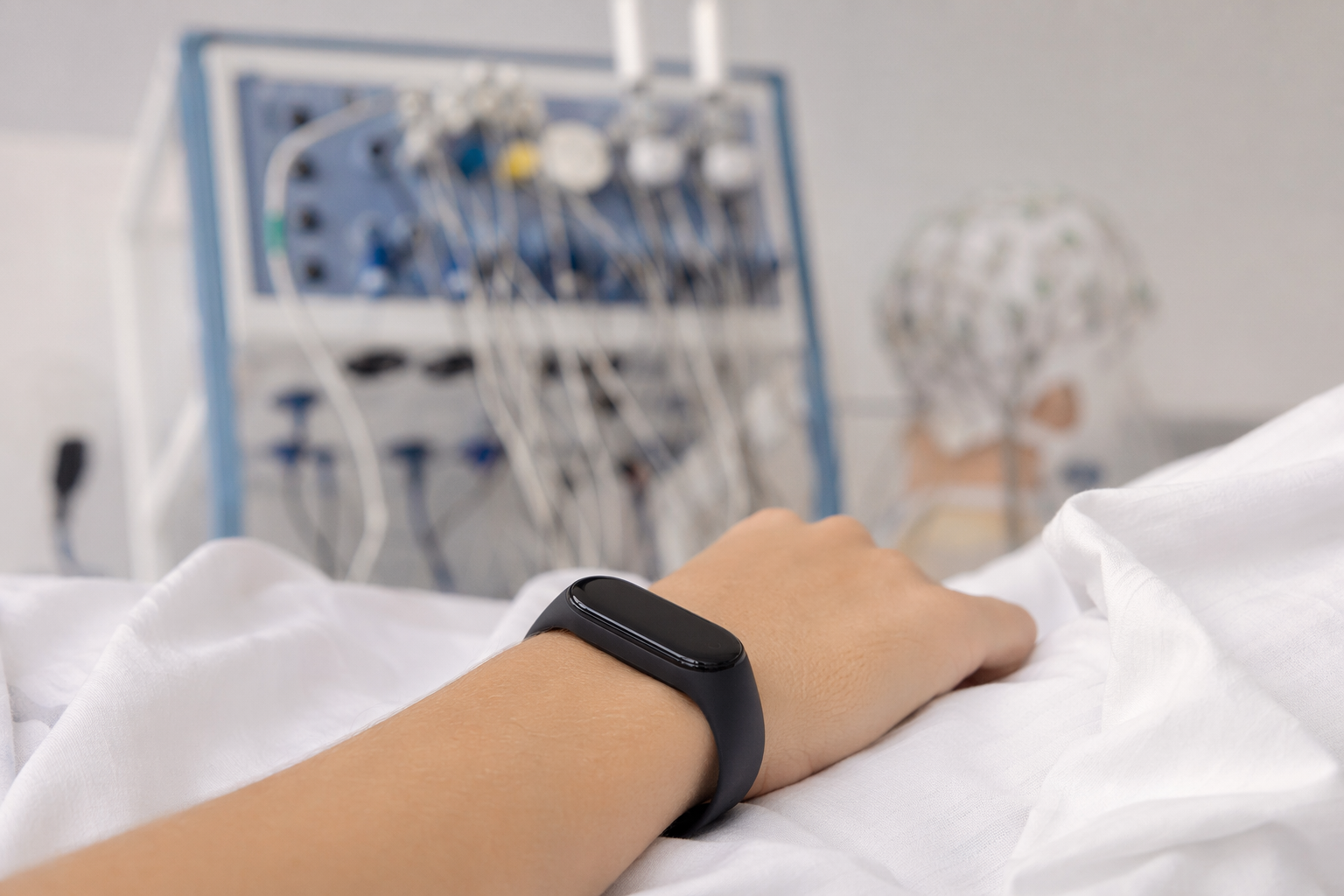
A Fitbit sleep monitor is usually better at answering “Was I asleep?” than “Exactly how much deep sleep did I get?” That distinction matters. In peer-reviewed validation studies, Fitbit devices perform strongly for sleep/wake detection and total sleep time trends, but their sleep-stage charts—light, deep, and REM—are estimates with meaningful error, especially for deep sleep.
The most useful way to read Fitbit sleep accuracy is by outcome, not by the polish of the app screen. In a 2024 Brigham and Women’s Hospital validation study of the Fitbit Sense 2 against polysomnography, the device reached 95% sensitivity for detecting sleep and 91% two-stage agreement for sleep versus wake. Once the task shifted to sleep stages, performance dropped: 78.0% sensitivity for light sleep, 61.7% for deep sleep, and 67.3% for REM sleep.[1]
| Fitbit sleep output | What the research supports | How to treat it |
|---|---|---|
| Sleep vs. wake | Strongest Fitbit sleep result; 95% sleep-detection sensitivity and 91% two-stage agreement in the Sense 2 PSG study | Reasonably useful for seeing sleep/wake patterns |
| Total sleep time | Depends on good sleep/wake detection, so it is more credible than stage-by-stage data | Useful as a trend, especially across many nights |
| Light sleep | Moderate stage sensitivity; Fitbit Sense 2 overestimated light sleep by 18 minutes versus PSG | Treat as an estimate, not a precise measurement |
| Deep sleep | Weakest and most device-dependent stage; reported sensitivity ranges include 49%, 61.7%, and 75% across different sources and models | Do not treat a low number as proof something is wrong |
| REM sleep | Better than deep sleep in some studies, but still variable; reported figures include 67.3%, 74%, and 86.5% | Look for repeated patterns, not single-night certainty |
| Sleep Score | A composite score based on duration, quality, and restoration components, not a direct clinical staging result | Use as a rough dashboard signal |
The strongest recent Fitbit validation study: Sense 2 versus polysomnography
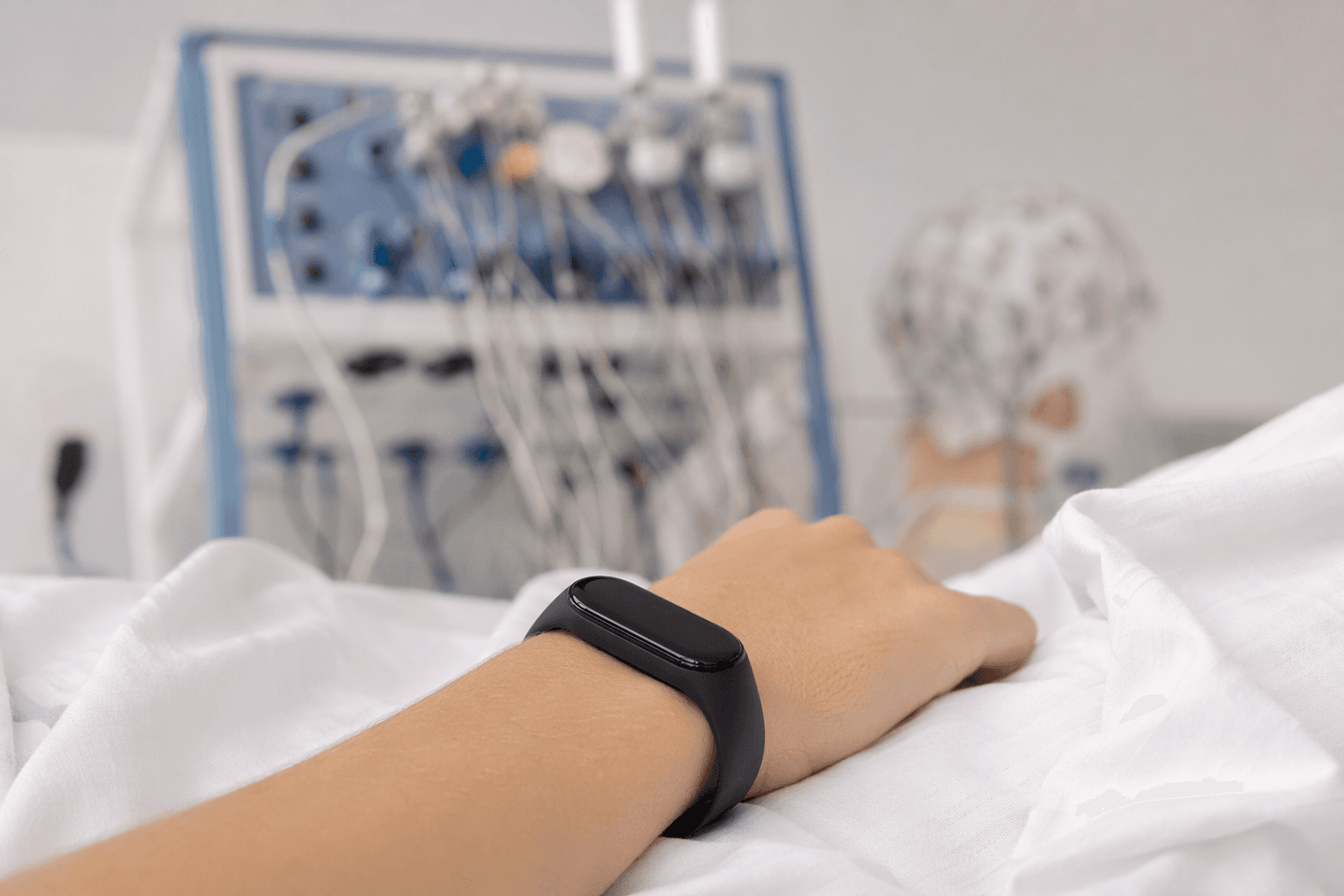
The clearest single study for a current Fitbit sleep monitor is the 2024 Brigham and Women’s Hospital paper by Robbins and colleagues. It tested 35 healthy adults using the Fitbit Sense 2 and compared the device with polysomnography, the lab method that records signals including brain activity, eye movement, muscle tone, and other physiological measures used for sleep staging.[1]
The study’s sleep/wake result is the part Fitbit owners can take most seriously. A 95% sleep-detection sensitivity means the Sense 2 was good at recognizing epochs when the PSG also showed sleep. The 91% two-stage agreement is also reassuring for the basic question of whether the device can separate sleep from wake reasonably well in a healthy adult sleep-lab sample.[1]
But the stage numbers are where the app’s confidence starts to outrun the measurement. The Sense 2 identified light sleep with 78.0% sensitivity, deep sleep with 61.7% sensitivity, and REM sleep with 67.3% sensitivity. Those are not tiny errors hidden in a rounding problem; they are the difference between a useful behavioral estimate and a sleep-lab measurement.[1]
The bias direction is just as important as the headline accuracy. In the same study, Fitbit overestimated light sleep by 18 minutes and underestimated deep sleep by 15 minutes compared with PSG, with both differences reported as statistically significant. For someone staring at a low deep-sleep bar in the morning, that is not an abstract limitation. The device may be systematically pulling some sleep architecture away from deep sleep and into lighter categories.[1]
This does not make the Fitbit useless. It means the trust should be tiered. If your Fitbit says you slept much less than usual after a late night, a noisy hotel room, or a long awake period, that is worth noticing. If it says you got 42 minutes of deep sleep instead of 68, that number is not stable enough to deserve the same emotional weight.
The Oura comparison is interesting, but not a simple winner-takes-all result
The Brigham and Women’s study also compared several consumer wearables. In four-stage classification, the Oura Ring performed better than Fitbit by Cohen’s kappa: 0.65 for Oura versus 0.55 for Fitbit. That is a real difference in this study, and it fits the broader point that not all consumer sleep trackers behave the same way.[1]
It should still be read carefully. The study was funded by Oura Ring Inc., and the lead author disclosed membership on Oura’s Medical Advisory Board. The paper states that the study was designed and conducted by Brigham and Women’s researchers, but sponsorship and disclosures matter when a competitor comes out ahead. The result is useful evidence, not a universal declaration that one ring is always more accurate than one watch in every user’s bedroom.[1]
For readers comparing devices rather than interpreting an existing Fitbit, that distinction may be enough to send them to a broader head-to-head review such as Apple Watch vs. Oura Ring vs. Fitbit. For this question—how much to trust Fitbit sleep data—the main lesson is narrower: Fitbit’s basic sleep detection is much stronger than its four-stage sleep architecture.
Systematic reviews make the deep-sleep problem harder to ignore
A single lab study can be unusually favorable or unusually harsh. The reason the Fitbit deep-sleep result deserves attention is that broader reviews point in the same direction: sleep/wake accuracy holds up better than stage-level accuracy.
Park and colleagues’ 2024 systematic review reported overall Fitbit accuracy of 86.5%–88%. For individual stages, the review reported 81% accuracy for light sleep, 49% for deep sleep, and 74% for REM sleep. The 49% deep-sleep figure is the kind of number that should change how a person reads the morning dashboard. It does not mean every Fitbit model is wrong half the time for every user; it means deep sleep is a weak point in the published evidence base and should not be treated as a precise nightly measurement.[2]
Another 2024 systematic review by Schyvens and colleagues adds an important correction: device model matters. In the studies reviewed there, the Fitbit Charge 4 showed 75% deep sleep sensitivity and 86.5% REM sensitivity, outperforming Garmin Vivosmart 4 and Whoop on those sensitivity measures. That is a better deep-sleep result than the Sense 2 figure from Robbins and much better than the 49% figure in Park’s review.[3]
That spread—49%, 61.7%, 75%—is the honest answer. Fitbit sleep-stage accuracy is not one fixed property called “Fitbit accuracy.” It varies by device generation, algorithm, study design, population, and the exact sleep outcome being scored. A Charge 4 result should not be casually pasted onto a Sense 2 user’s data, and a systematic-review average should not be used to condemn every model equally.
Why Fitbit can detect sleep better than it can stage sleep
Fitbit’s limitation is not mysterious. A clinical sleep study stages sleep partly from brainwave patterns. A Fitbit on the wrist does not measure EEG brain activity. Google’s sleep-stage documentation describes Fitbit stage estimation as using movement and heart-rate-related signals, including accelerometry and photoplethysmography-derived information, to infer whether a user is in light, deep, or REM sleep.[4]
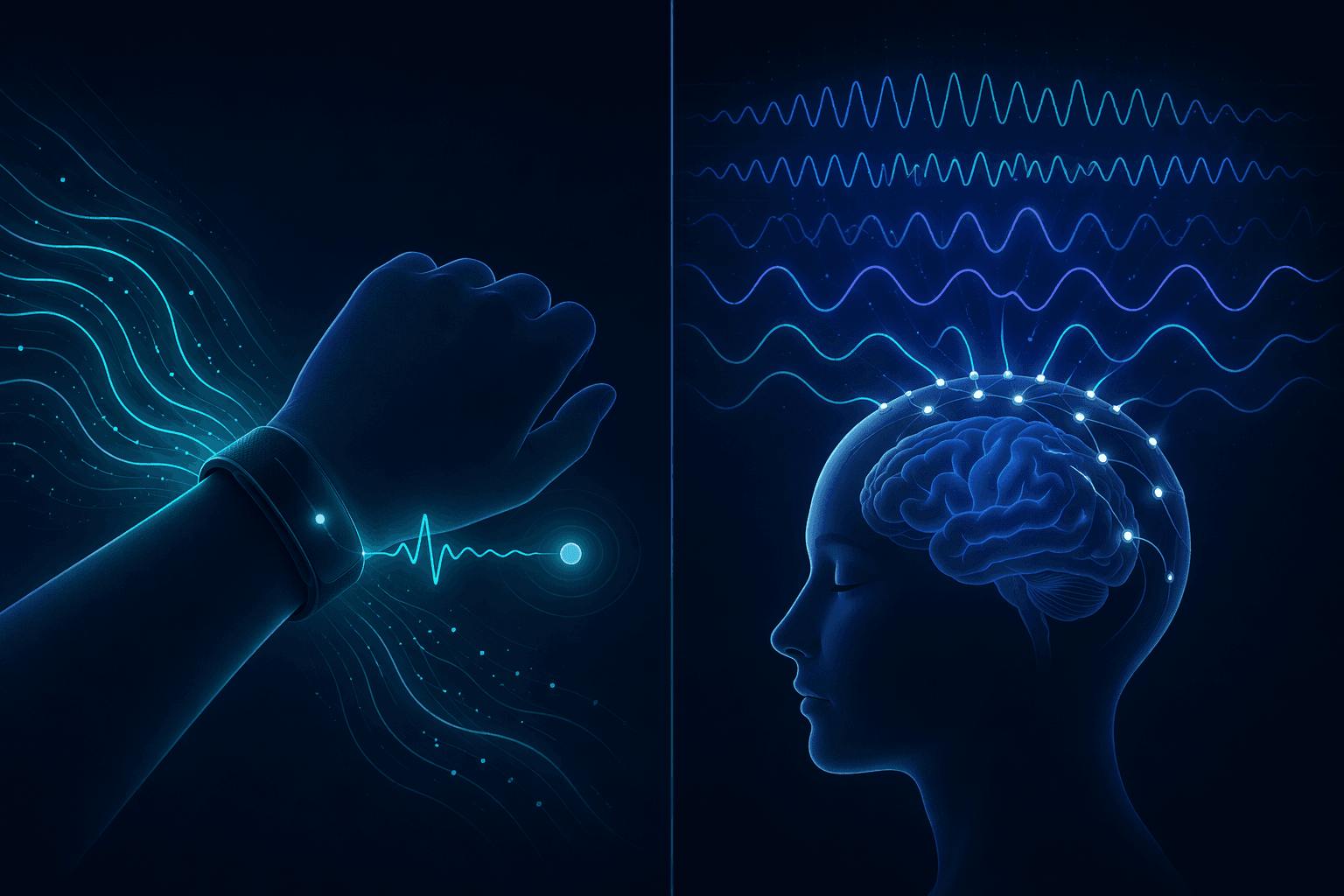
Those signals are valuable. Movement falls during sleep. Heart rate and heart-rate variability often shift across the night. REM sleep has patterns that can sometimes be inferred from autonomic signals. But inference is not the same as direct measurement. Two sleep stages can look similar from the wrist even when they are separable on EEG.
This is also why Fitbit can do a decent job with total sleep time while struggling with deep sleep. Sleep versus wake is a broader classification problem. Four-stage sleep classification asks the algorithm to divide the night into subtler physiological states using indirect signals. The first task is easier; the second is where false precision creeps in.
For readers who want the sensor-level explanation without turning this article into a hardware primer, the background is covered more fully in Fitbit Sleep Tracking Review: How It Works and How Accurate It Really Is and in the broader guide to how smartwatches track sleep.
What about the Fitbit Sleep Score?
The Fitbit Sleep Score can feel more authoritative than the stage chart because it compresses the night into one tidy number. But it is not a direct certificate of sleep quality from a lab measurement. Google describes Sleep Score as combining duration, quality, and restoration components. In other words, it is a composite consumer metric built from several signals, not an independent PSG-equivalent diagnosis of your sleep architecture.[5]
That does not make the score meaningless. A score that reliably drops after short sleep, heavy evening alcohol, an irregular schedule, or repeated awakenings may be useful as a behavioral prompt. The problem begins when a single score is treated as a medical verdict, or when a small change from one night to the next is interpreted as proof that the body recovered badly.
Google has also highlighted Fitbit validation research in its own public communication, emphasizing that Fitbit devices can accurately track sleep stages. That manufacturer-side framing is fair to include, but it should be held next to the actual stage-specific numbers: sleep/wake performance is strong, while deep and REM staging are less robust than the app interface may suggest.[6]
If your main question is how to interpret the score rather than how the validation studies were run, see Fitbit Sleep Score: How It’s Calculated and How to Actually Use It.
A lower score after an algorithm update is not the same as worse sleep
In 2025, Fitbit users reported Sleep Score drops after an apparent scoring change, and Lifehacker documented the user anxiety that followed. The important limitation is that Google/Fitbit had not published a detailed changelog explaining the mechanics of the update, so the exact cause of the score changes was not established in that report.[7]
This is one of the quieter realities of consumer sleep tracking: an algorithm can change while your physiology stays the same. A new scoring model, new weighting, or changed classification behavior can make a dashboard look worse without proving that your sleep suddenly deteriorated. That is another reason to pay more attention to durable patterns than to single-night scores or abrupt app-level changes.
How to use a Fitbit sleep monitor without overreading it
The cleanest practical rule is to match the decision to the strength of the measurement. A Fitbit sleep monitor is most useful when the question is broad and repeated over time. It is least useful when the question depends on precise staging on one particular night.
- Trust it more for sleep and wake patterns: bedtime consistency, wake time, obvious long awakenings, and whether your total sleep time is trending up or down.
- Use total sleep time as a trend, not as a perfect nightly count. If the same device shows a pattern across weeks, that is more meaningful than a single exact number.
- Treat light, deep, and REM sleep as algorithmic estimates. The published evidence does not support reading these as miniature PSG results.
- Be especially careful with deep sleep. A low deep-sleep number can reflect device limitations, staging bias, model differences, or real sleep disruption. The Fitbit number alone cannot tell you which one it is.
- Do not use Fitbit sleep stages to diagnose insomnia, sleep apnea, restless legs syndrome, or any other sleep disorder. Symptoms and clinical context matter more than a colored chart.
- If your sleep data suddenly changes after an app or algorithm update, compare how you feel, your schedule, and your longer-term trend before assuming your sleep biology changed overnight.
The lab-study caveats also matter. Much of the validation evidence comes from controlled PSG settings, often single-night tests, and often healthy adults screened for sleep disorders. That is useful for benchmarking device performance, but it is not the same as proving identical accuracy in a hot bedroom, during insomnia, after several drinks, with untreated sleep apnea, or across months of home use.
So the answer to “Is my Fitbit sleep monitor accurate?” is yes for some jobs and no for others. Use it for sleep/wake patterns, total sleep time trends, and changes over time if you are a generally healthy adult. Do not use its deep sleep number, REM number, or stage-by-stage chart as a precise measurement, a diagnosis, or proof that something is wrong with you.
References
- A Validation of Six Wearable Devices for Estimating Sleep, Heart Rate and Heart Rate Variability in Healthy Adults, Sensors, 2024.
- Sleep Tracking Wearables: Accuracy, Validation, and Clinical Applicability, Journal of Sleep Medicine, 2024.
- The Accuracy of Wearable Sleep Trackers in Detecting Sleep Stages: Systematic Review and Meta-Analysis, JMIR, 2024.
- Understand your sleep stages, Google Health.
- Understand your Sleep Score, Google Health.
- Study shows Fitbit devices accurately track sleep stages, Google Blog.
- Why Your Fitbit Sleep Score Just Got Worse, Lifehacker, 2025.
Comments
Join the discussion with an anonymous comment.