
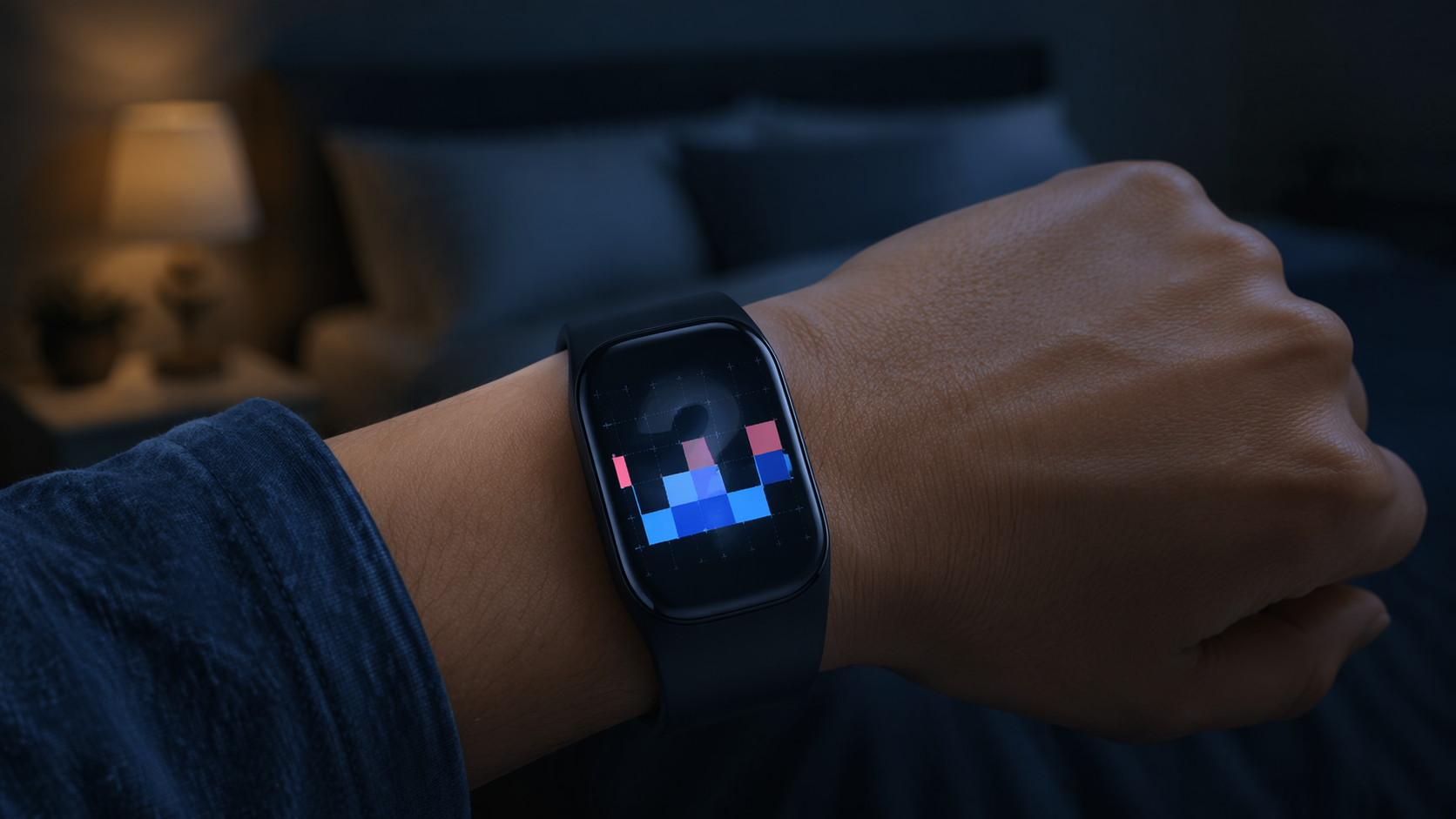
If your Fitbit sleep tracker says you had a rough night, it may be broadly right. If it says you got a precise amount of deep sleep, light sleep, and REM, that deserves more caution. The best evidence points to a split answer: Fitbit is reasonably good at detecting sleep versus wake, with a 2024 review reporting about 86.5–88% epoch-by-epoch agreement with polysomnography, the sleep-lab standard, but sleep-stage classification is a weaker layer of inference rather than a clinical measurement.[1]
That distinction matters because “asleep or awake” and “which sleep stage was this?” are not the same problem. A tracker can do a decent job recognizing the long stretch when your body is still and your heart rate follows a sleep-like pattern, while still struggling to identify quiet wakefulness or separate light sleep from deeper stages. In a Fitbit Sense 2 validation study, the device showed 95% sensitivity for detecting sleep, but its four-stage agreement with polysomnography was 70.9%; it also overestimated light sleep by about 18 minutes and underestimated deep sleep by about 15 minutes.[2] The study was funded by Oura Ring Inc., a competitor, so it should not be treated as the final word on its own. Still, its pattern fits the wider evidence: sleep detection is stronger than sleep staging.
The number to watch is wake detection
The most user-visible weakness is not always the stage chart; it is the tracker’s tendency to miss wake periods when you are lying still. A 2023 Inspire 2 study found 93.9% sensitivity for sleep but only 13.1% specificity for wake detection.[3] In plain terms, the device was very good at identifying sleep epochs, but poor at correctly identifying wake epochs. That helps explain a common mismatch: you remember being awake for a long time at 3 a.m., while the app shows a cleaner night than you experienced.
This is also why a single low deep-sleep score should not be carried around like a lab result. Deep sleep is one of the places where stage estimates can wobble, and underestimation has appeared in validation work.[2] There is some nuance by model: a 2024 systematic review found the Fitbit Charge 4 had higher sensitivity for deep sleep, at 75%, and REM, at 86.5%, compared with Garmin and WHOOP in the reviewed evidence.[4] That is useful competitive context, but it does not turn a wrist-worn stage graph into polysomnography.
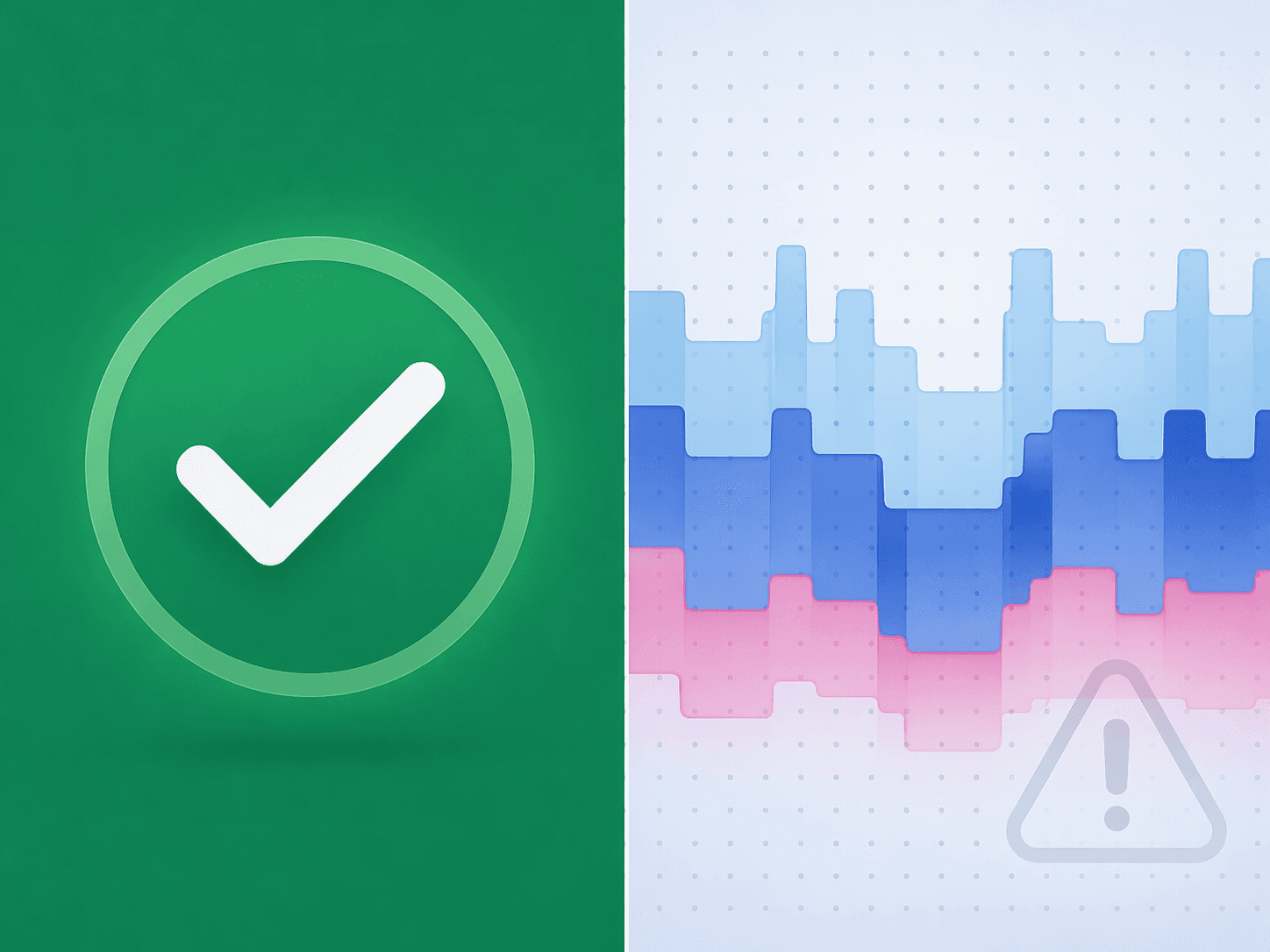
Why Fitbit can be right in one way and wrong in another
Fitbit estimates sleep from signals such as movement from the accelerometer, heart-rate patterns, and algorithms that translate those signals into sleep and stage labels.[5] That is enough to understand both the usefulness and the limitation. Stillness can resemble sleep. Restless sleep can resemble wake. Sleep stages are inferred from indirect signals, not directly read from brain activity the way they are in a sleep lab.
Google’s own framing is more confident: the company has published materials saying Fitbit devices accurately track sleep stages, and in March 2026 it announced a claimed 15% improvement in sleep-staging accuracy through newer machine-learning algorithms.[6][7] Those updates are relevant if you own a newer Fitbit or Pixel Watch, but they do not erase the need for independent validation. The March 2026 improvement was first available to Public Preview users, and full rollout timing was not confirmed in the available report.[7] Google also announced a transition to the Google Health app in May 2026, so some feature presentation or terminology may shift during the migration. Older studies tested models such as Charge 2, Charge 3, Charge 4, Alta HR, Inspire 2, and Sense 2, so their results may not map perfectly onto Charge 6 or Pixel Watch 4.
How to read your Fitbit sleep data
The safest use is trend reading. Fitbit data is more defensible when you are looking at broad sleep duration, bedtime consistency, wake-up regularity, and large changes over time than when you are interpreting last night’s exact deep-sleep or REM total. If your sleep duration drops sharply for several nights, or your schedule becomes erratic, the tracker may help you notice the pattern sooner. If one night’s chart says your deep sleep was disappointing, that may reflect algorithmic uncertainty as much as a meaningful change in your body.
Do not use Fitbit data to diagnose insomnia, sleep apnea, or another sleep disorder. A device that may miss quiet wakefulness is not the right authority for deciding whether your symptoms are clinically important. The practical answer is neither “trust every graph” nor “ignore the device.” A Fitbit sleep tracker is useful as a consumer trend tool, especially for sleep-versus-wake patterns, but its stage-specific outputs should be read as estimates, not clinical facts.
References
- Performance of Fitbit Devices as Tools for Assessing Sleep Patterns and Associated Factors, Journal of Sleep Medicine, 2024.
- Evaluating the Performance of Four Commercially Available Sleep Trackers, Sensors, 2024.
- Validation of Fitbit Inspire 2 Against Polysomnography in Adults Considering Adaptation for Use, Nature and Science of Sleep, 2023.
- Accuracy of Commercial Wearable Sleep Trackers in Adult Populations: Systematic Review and Meta-Analysis, JMIR, 2024.
- How does Fitbit track sleep?, T3.
- Study shows Fitbit devices accurately track sleep stages, Google.
- Fitbit sleep tracking getting 15% more accurate w/ advanced ML algorithms, 9to5Google, March 17, 2026.
Comments
Join the discussion with an anonymous comment.