
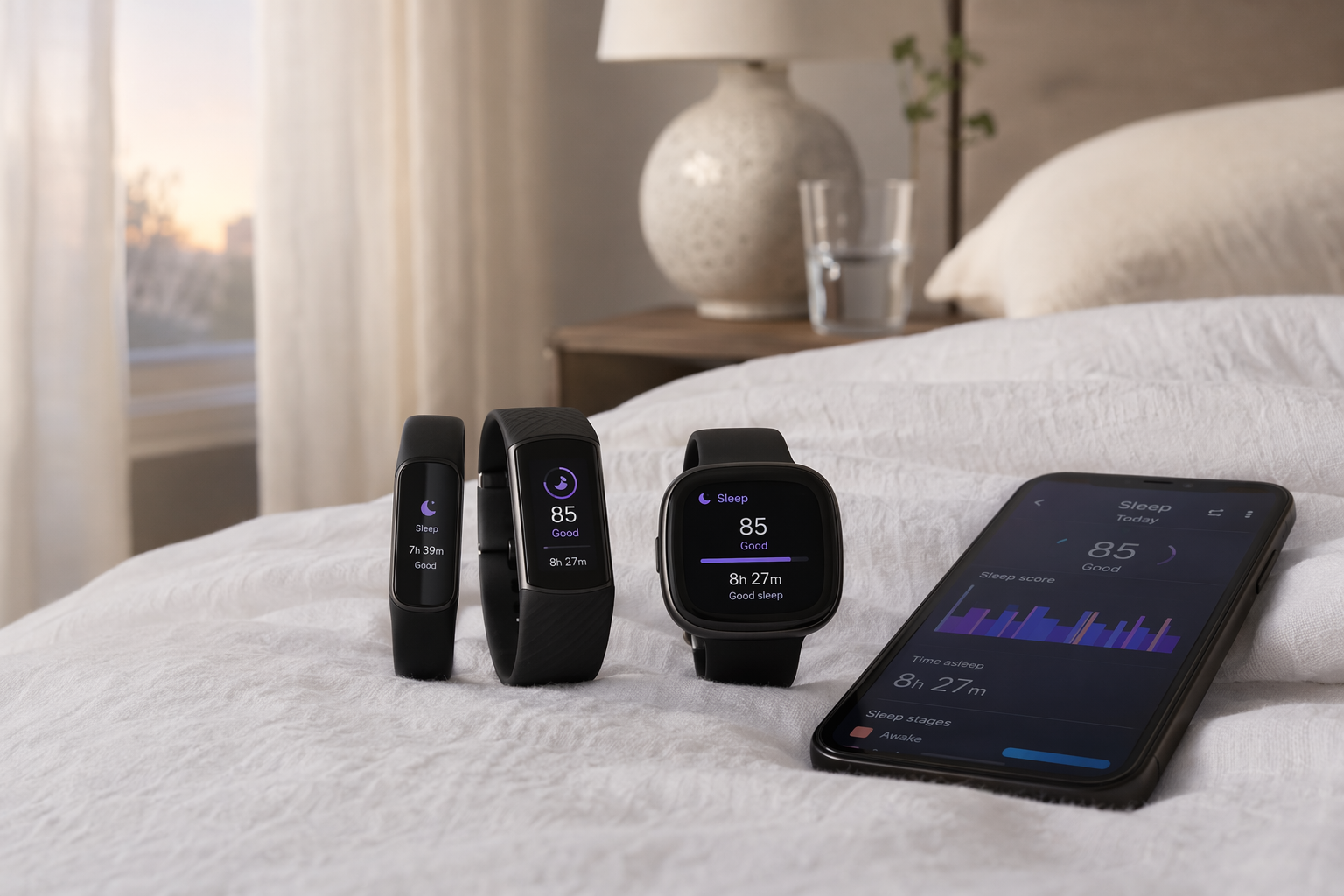
If you are shopping for Fitbits that track sleep, the most expensive Fitbit is not automatically the best sleep tracker. Inspire 3, Charge 6, Versa 4, Sense 2, and Pixel Watch 4 all use the same Google Health sleep algorithm, so the choice is less about buying a “better” sleep-stage engine and more about buying the device you will actually keep on your wrist all night, several nights in a row [1][2][3].
That matters because sleep tracking fails in boring ways. A watch feels bulky when you roll onto your side. A battery warning appears at bedtime. A subscription trial ends, and the app still shows plenty of charts, but not the ones you were using. Those details decide whether your sleep history becomes useful or patchy.
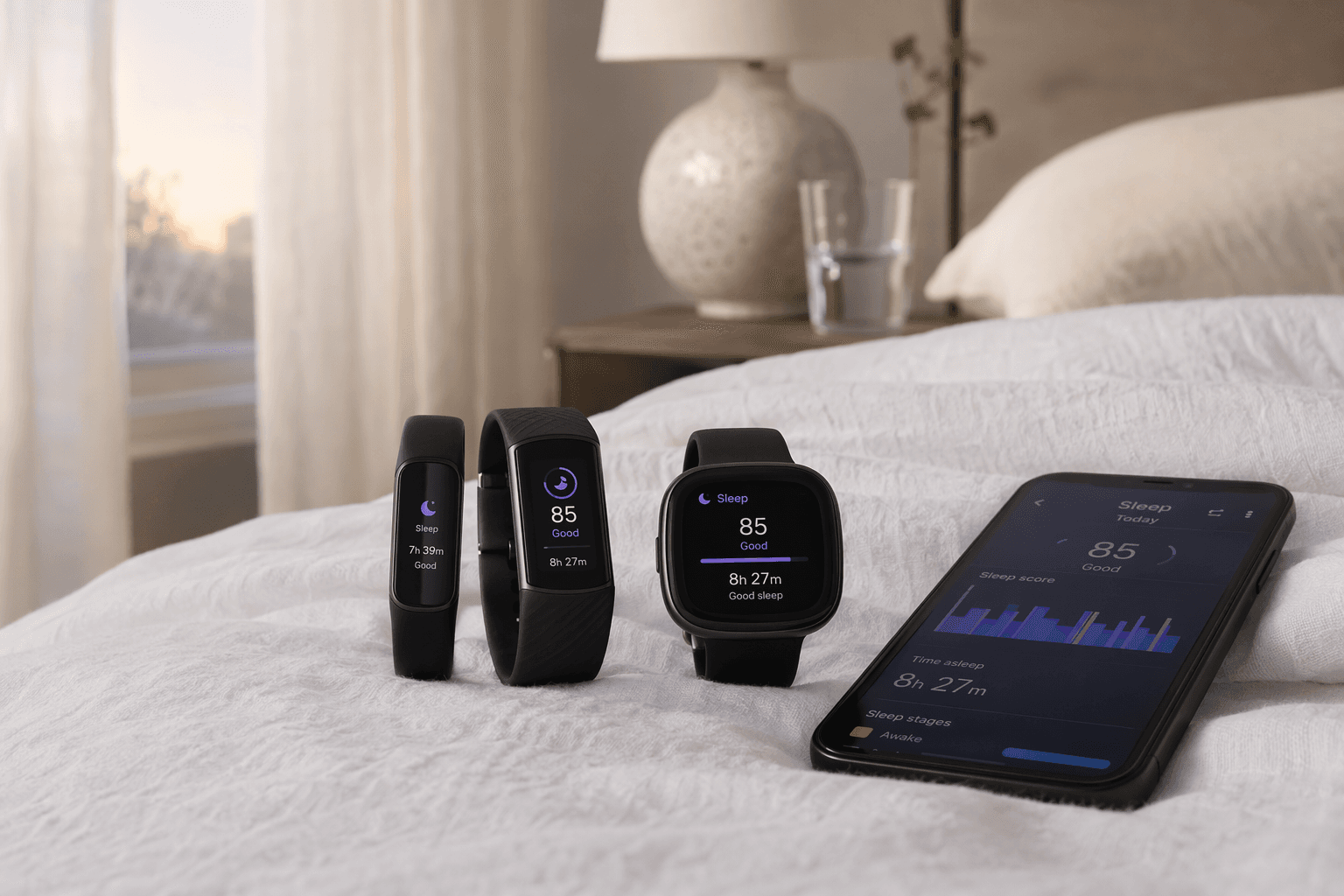
Fitbit sleep tracking comparison
| Model | Approx. price | Form factor and overnight comfort | Battery life | Sleep features included | Premium angle | Best fit |
|---|---|---|---|---|---|---|
| Fitbit Inspire 3 | $99.95 | Slim band; about 1.3 oz, making it the least intrusive option here for overnight wear [1][2] | About 10 days [1][2] | Sleep stages, Sleep Score, SpO2 / estimated oxygen variation graph [1][6] | Includes 6 months of Fitbit Premium; useful if you want to try Sleep Profile and deeper analysis before paying [1][6] | Best value if sleep tracking is the main reason you are buying |
| Fitbit Charge 6 | $159.95 | Band-style tracker; more substantial than Inspire 3 but still easier to sleep in than a watch | About 7 days; about 3–4 days with always-on display use [4][5] | Sleep stages, Sleep Score, SpO2 / estimated oxygen variation, plus Smart Wake [4][5] | No free Premium trial noted in the source set; Premium remains optional for deeper sleep and readiness features [4][6] | Best overall sleep-focused Fitbit for most people |
| Fitbit Versa 4 | Varies by retailer | Watch-style body; more screen and wrist presence than a band | Several days, depending on usage [1][2] | Same sleep engine as the current Fitbit lineup, with core sleep tracking features [1][2][3] | Premium adds interpretation rather than a different sleep-stage algorithm [6] | Good if you want a Fitbit smartwatch shape and multi-day battery |
| Fitbit Sense 2 | Varies by retailer | Watch-style body; similar overnight tradeoff to Versa 4 | Several days, depending on usage [1][2] | Same core sleep tracking, plus an EDA sensor for stress tracking [1][2] | Premium adds Sleep Profile and deeper analysis; the EDA sensor should not be treated as proof of better sleep tracking by itself [6] | Good if you want the Fitbit watch form factor and stress-tracking extras |
| Pixel Watch 4 | $349 | Round smartwatch; more capable during the day, more noticeable at night | About 24 hours, so daily charging is part of the routine [1][2] | Fitbit sleep tracking inside a full smartwatch experience [1][2] | Attractive if you use Premium-linked readiness features, but the battery routine can interrupt sleep tracking [6] | Best only if smartwatch features matter enough to accept daily charging |
The short version: Charge 6 is the most sensible pick for sleep-focused buyers because it keeps the comfortable band format, adds Smart Wake, and still lasts long enough that charging does not become a nightly negotiation. Inspire 3 is the cheaper, lighter, lower-maintenance choice if you mainly want sleep stages, Sleep Score, and long battery life. The watches are not sleep upgrades in the narrow sense; they are watches that also track sleep.
One 2026 caveat: Google Fitbit Air has appeared in roundups, but detailed sleep specifications were not available in the sourced material used here. Until those details are public, it does not belong in a sleep-buying recommendation.
Band or watch is the real first decision
For sleep, a smaller device has an unfair advantage: it disappears more easily. Band-style trackers such as Inspire 3 and Charge 6 sit closer to the wrist, weigh less than the watch-style models in this group, and are less likely to press into the bedding when you sleep on your side [1][2][4]. That is not a glamorous spec, but it is the one that decides whether you collect data on an ordinary Tuesday night.
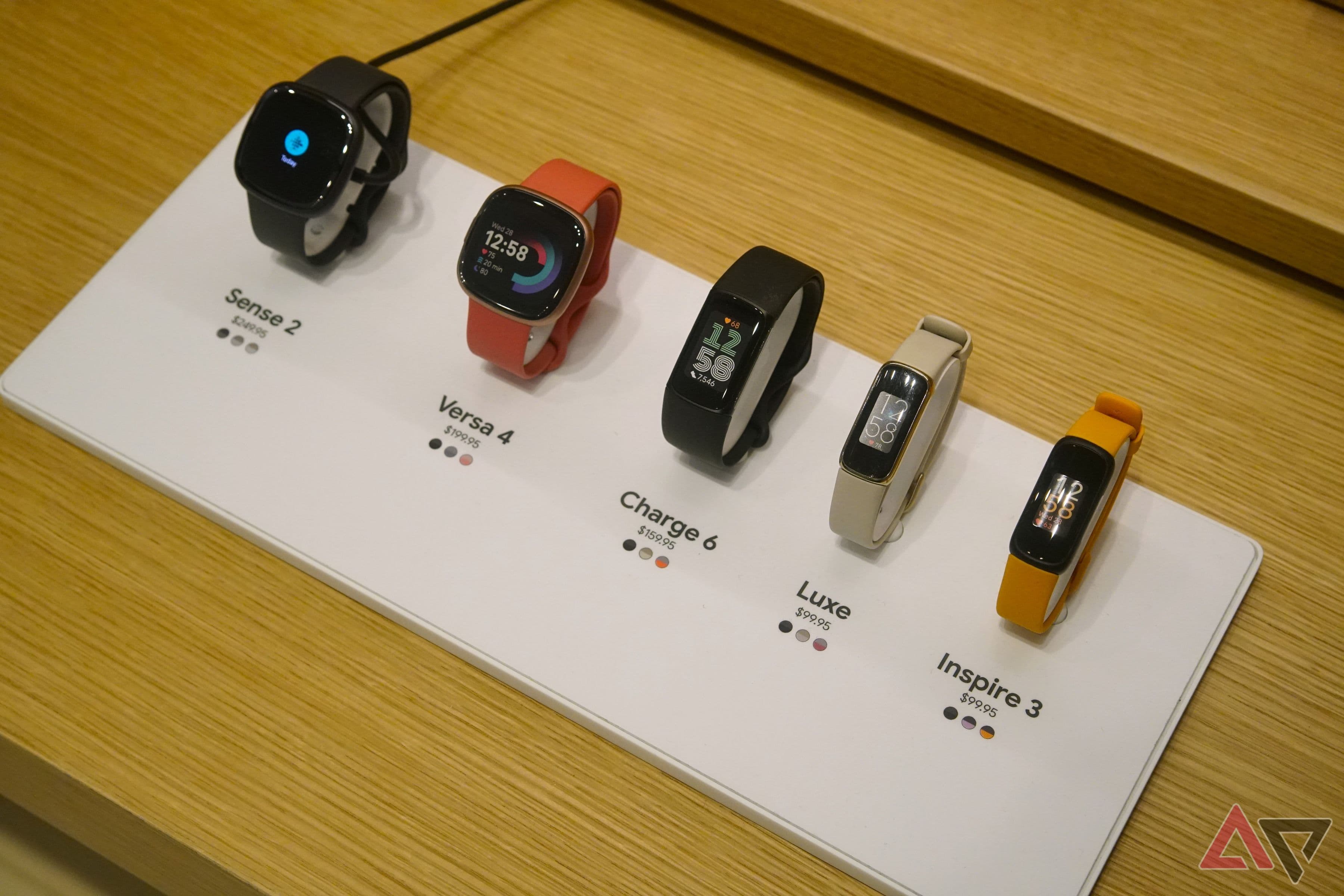
Inspire 3 is the easiest Fitbit here to recommend to someone who says, “I mostly care about sleep.” It does not have built-in GPS or ECG, and that is part of why the recommendation is clean. You are not paying for a pile of daytime features just to get the same sleep-stage algorithm at night. Its long battery life also means you can go several nights without thinking about the charger [1][2].
Charge 6 is the better all-around sleep pick because it keeps most of that band comfort while adding more useful hardware and a sleep-specific feature Inspire 3 lacks: Smart Wake, which aims to wake you during a lighter sleep phase within a set window [4][5]. It also brings built-in GPS, ECG, and Google Wallet, so it is more useful during the day without becoming as bulky as a watch [4][5].
That is the difference between “best value” and “best overall.” Inspire 3 wins if you want the cheapest, easiest overnight Fitbit. Charge 6 wins if you want a sleep-first tracker that still feels like a capable daily wearable.
What Fitbit Premium changes — and what it does not
Fitbit Premium does not buy you a different sleep-tracking algorithm. The core features most people expect from a Fitbit sleep tracker are available without Premium: sleep stages, Sleep Score, SpO2, and the estimated oxygen variation graph [1][6].
Premium is more about interpretation. It adds Sleep Profile, including the monthly sleep “animal” profile, along with deeper heart-rate analysis during sleep and Daily Readiness Score [6]. The price cited in the source material is $9.99 per month or $79.99 per year, though subscription pricing and included trials should always be checked at purchase because Fitbit’s bundles can change [1][4][6].
This is where the decision becomes less about the checkout price and more about the first year or three of ownership. A $99.95 Inspire 3 with a 6-month Premium trial can feel very different from a device that asks you to pay for Premium right away if the features you care about are gated. For a broader cost breakdown across Fitbit and other sleep-tracking ecosystems, see The Real Cost of Sleep Tracking: A Total Cost of Ownership Comparison.
If you only want to know when you slept, how your night was scored, and whether your oxygen variation looked unusual, Premium is not the deciding factor. If you like monthly pattern summaries, readiness scoring, and more app interpretation around recovery, Premium may be worth trying before you commit to paying annually.
Battery life is a sleep feature
A tracker that needs charging at bedtime is not a sleep tracker that night. That is why Inspire 3’s roughly 10-day battery and Charge 6’s roughly 7-day battery matter so much in this category [1][2][4][5]. You can charge either one while showering, reading, or sitting at a desk, then put it back on long before sleep.
The always-on display warning is worth taking seriously on Charge 6: reviewers cite roughly 3–4 days with always-on display enabled, instead of about a week under lighter use [4][5]. That is still workable, but it changes the rhythm. If you want the lowest-friction sleep tracker, turning off always-on display is not just a battery-saving tweak; it protects the habit.
Pixel Watch 4 is the hardest model here to recommend primarily for sleep because its roughly 24-hour battery pushes charging into your daily routine [1][2]. That does not make it a bad device. It makes it a device that asks more of you. If your charging habit is “drop the watch on the charger when I get into bed,” your sleep data will have holes.
Where Versa 4 and Sense 2 fit
Versa 4 and Sense 2 make sense for someone who wants a Fitbit watch rather than a narrow tracker. They give you a larger screen and a more watch-like experience while avoiding the Pixel Watch 4’s daily charging problem [1][2]. For some wrists, that is a perfectly reasonable compromise.
What they do not do is create a clear sleep-tracking advantage over Charge 6. Sense 2’s EDA sensor is useful to consider if stress tracking is part of why you are buying, but the available material does not support treating that sensor as a direct upgrade to sleep-stage tracking [1][2]. If sleep is the priority, the larger case has to earn its place on your wrist for reasons beyond the sleep algorithm.
A note on accuracy claims
It is fair to compare Fitbit models as consumer sleep trackers. It is not fair to pretend that a more expensive Fitbit has been independently proven to stage your sleep better just because it has a larger screen or more sensors. The current lineup’s shared algorithm is the useful fact for buyers; it narrows the decision to wearability, battery, and features rather than vague promises of better sleep detection [1][2][3].
There is also a difference between useful trend tracking and clinical measurement. A Fitbit can help you see patterns in bedtime, wake time, Sleep Score, and restlessness. It should not be purchased on the assumption that it replaces a lab sleep study or that every model has been separately validated against polysomnography.
Which Fitbit should you buy for sleep?
Buy Charge 6 if you want the best sleep-focused balance: comfortable band, weeklong battery, Smart Wake, and enough daytime features that it does not feel like a single-purpose device.
Buy Inspire 3 if you want the cheapest and easiest Fitbit to wear overnight. It is the strongest value if sleep stages, Sleep Score, oxygen variation, and long battery life are enough.
Buy Pixel Watch 4 only if you want a full smartwatch badly enough to manage daily charging. It can track sleep, but it is also the easiest option here to undermine through ordinary bedtime habits.
Buy Versa 4 or Sense 2 if you prefer a watch-style Fitbit and understand that you are not buying a meaningfully different sleep engine. For sleep alone, the smaller band models are the cleaner choice.
References
- Best sleep trackers of 2026: The top 9 I'd take to bed — Android Authority
- The Best Sleep Trackers of 2026: Watches, Rings and Mats — CNET
- Best Sleep Trackers of 2026: Expert-Approved Wearables — Sleep Foundation
- Fitbit Charge 6 review: Top tracker but with a flaw — Wareable
- Fitbit Charge 6 In-Depth Review — DC Rainmaker
- Improve your ZZZs with Fitbit Premium Sleep Profile — Google Blog


Comments
Join the discussion with an anonymous comment.