
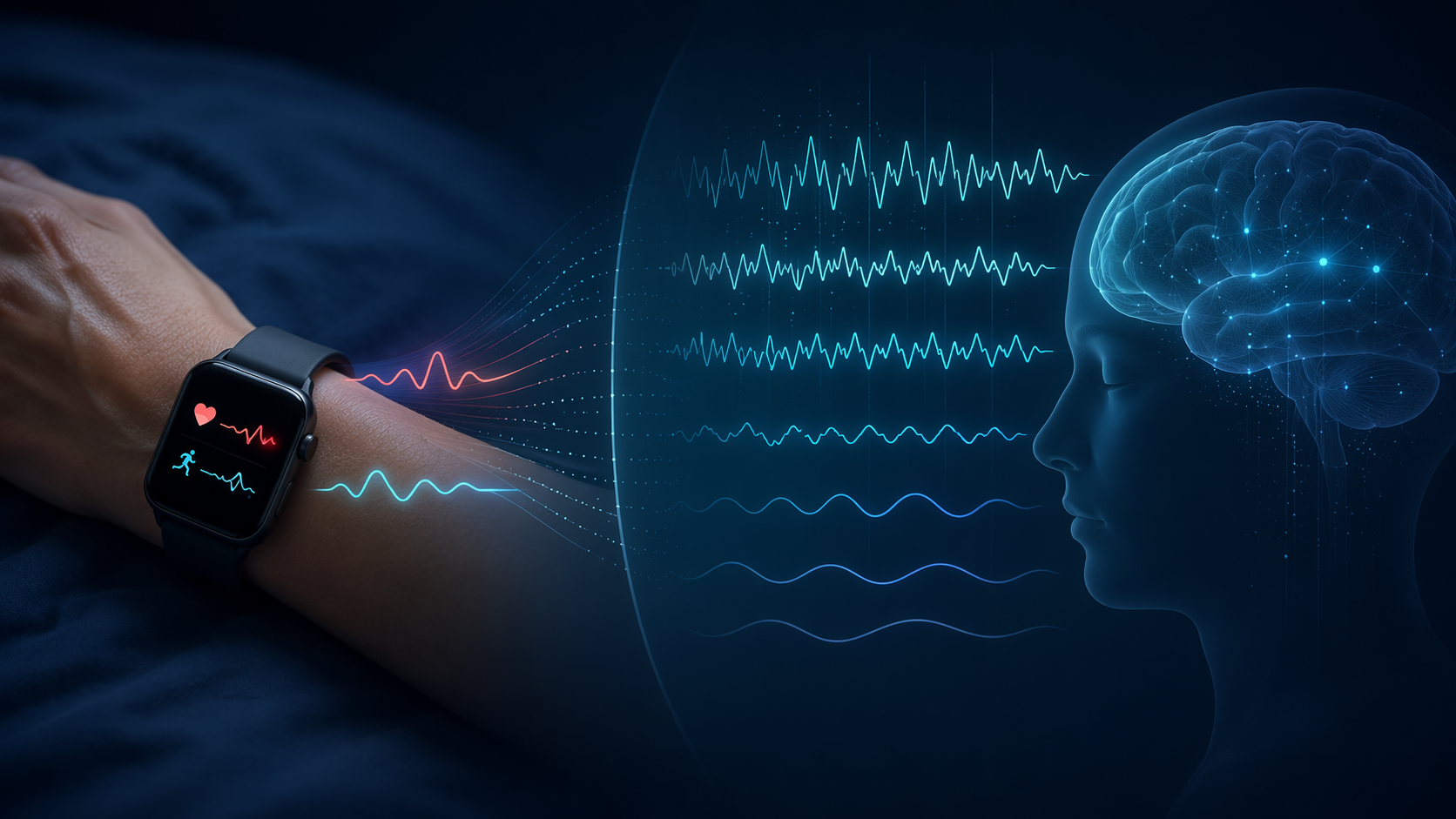
If your watch says you got 42 minutes of deep sleep, the useful question is not whether the number looks plausible but what the device actually had to observe to produce it. Smartwatches do not read brain waves. They infer sleep from wrist movement and pulse-based signals, which is why they can be helpful for spotting habits and still be too blunt for single-night sleep-stage precision. [1]
What your smartwatch is actually measuring
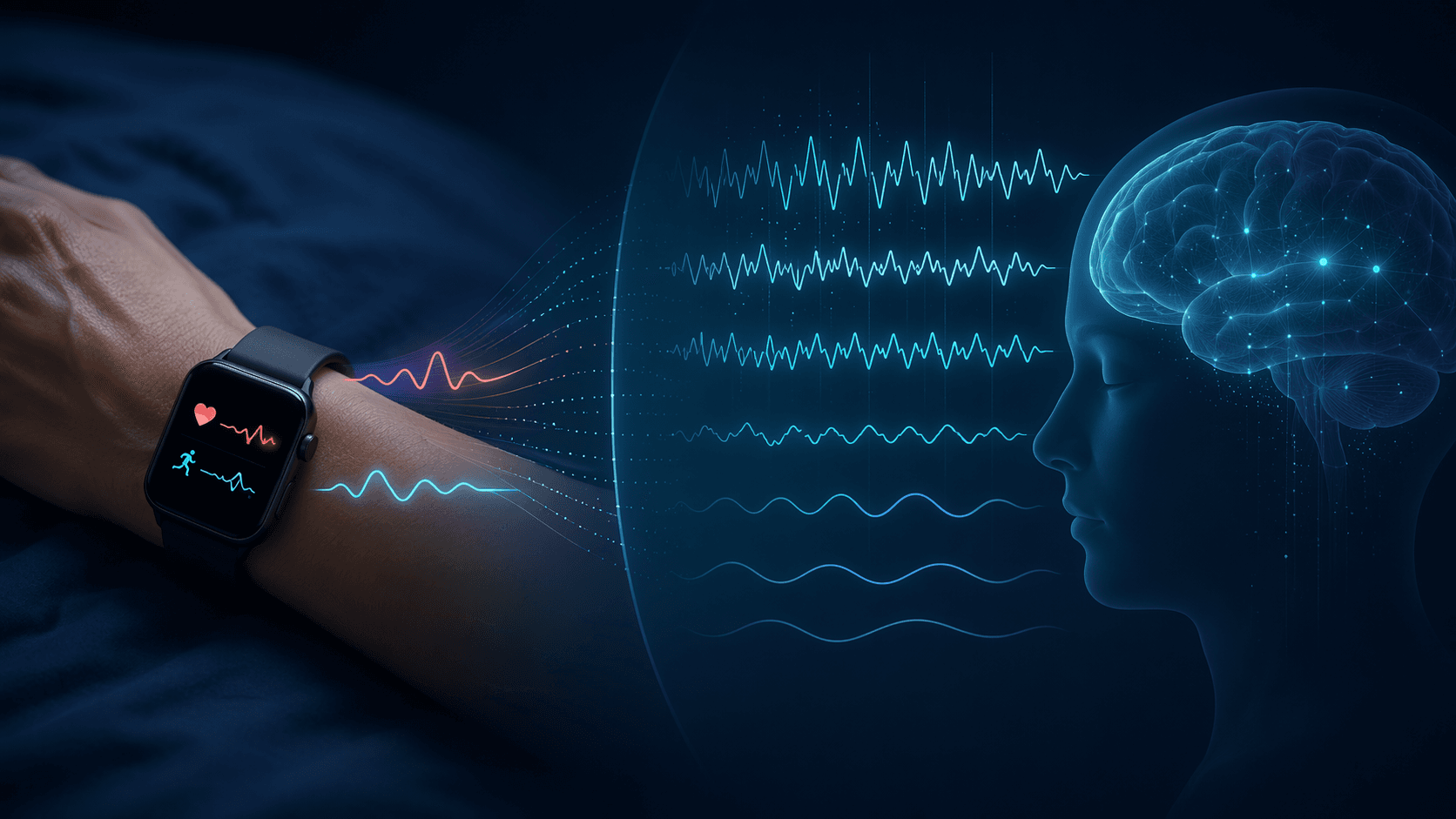
Johns Hopkins Medicine puts the core limitation plainly: sleep trackers cannot measure sleep directly, because they do not measure EEG brain activity. Instead, they infer sleep from motion and heart signals. [1] That changes the whole interpretation. An accelerometer notices how much the wrist moves and how long it stays still. A PPG sensor shines light into the skin and estimates heart rate and HRV from changes in reflected light. Software then combines those indirect signals to assign sleep, wake, and stage labels. [2]
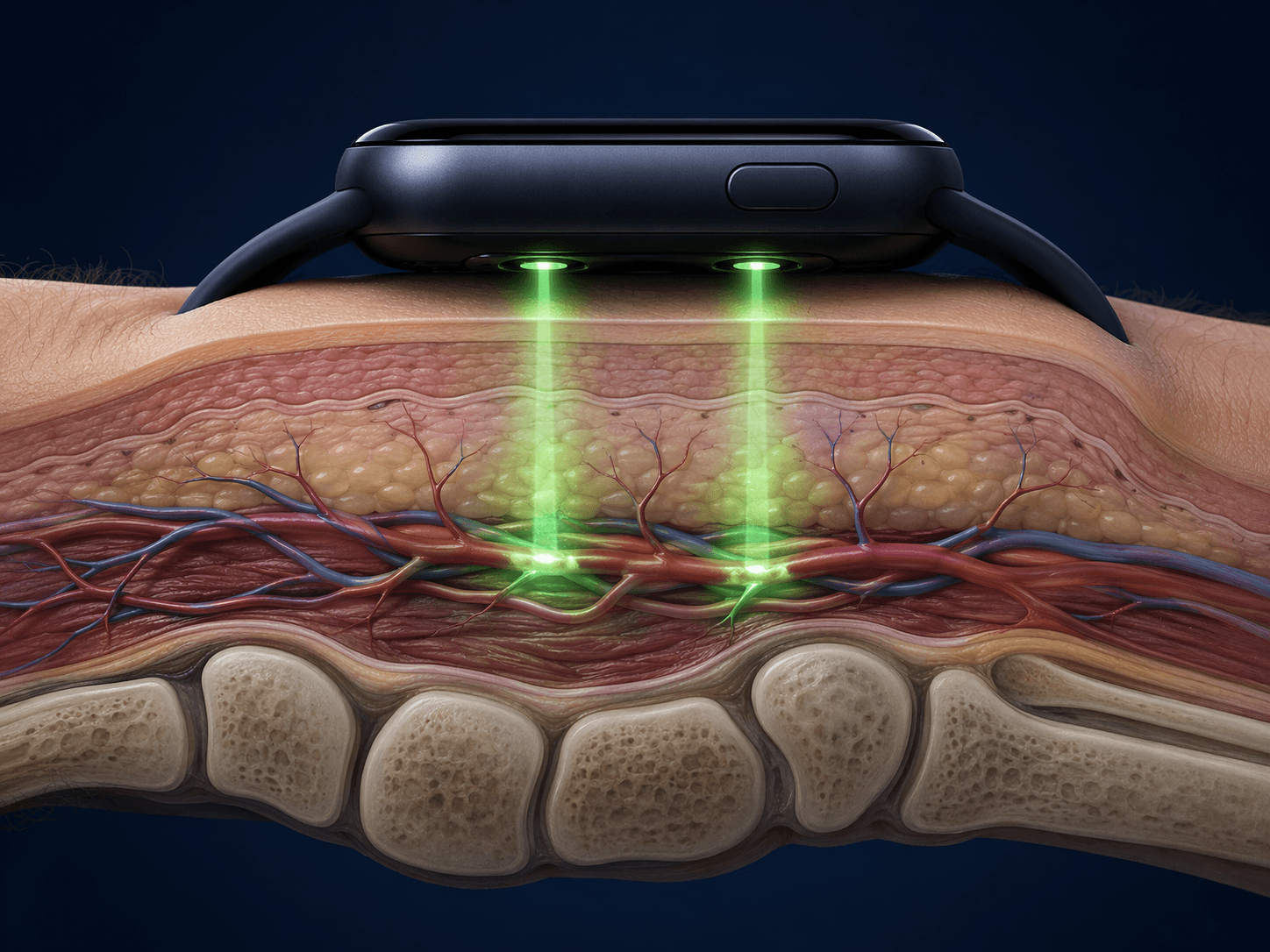
That pipeline is why a smartwatch can look confident without being clinically direct. It is not sensing consciousness or brain waves at the wrist. It is reading movement and cardiovascular patterns, then inferring what those patterns usually mean during sleep. [2]
Why the score can be good at sleep and weak at wake
The evidence is asymmetric in a way many people miss. Validation summaries cited by The Conversation report sleep-detection sensitivity above 90%, which means the device is usually good at recognizing sleep-like stillness. [3] But wake detection is much weaker, ranging from 26% to 73%, because quiet wakefulness can look very similar to sleep at the wrist. [3] A watch can therefore be broadly right about when sleep begins and ends while still missing time spent lying still awake.
That bias tends to push total sleep time upward and wake after sleep onset downward. If you were awake in bed but not moving much, the device may count that interval as sleep. If you briefly wake and settle again, it may fold the interval back into sleep rather than wake. [2]
Sleep stages are the shakiest part
Stage labels are where the illusion of precision gets strongest. The review summaries cited by The Conversation put sleep-stage classification accuracy around 53% to 60%. [3] Sleep Foundation cites deep sleep identification at about 59%. [6] That is enough to show broad patterns over time, but not enough to treat a single-night REM or deep-sleep number as a precise biological measurement.
The practical consequence is simple: a deep-sleep figure should be read as a rough estimate produced by wrist-based signals, not as proof that your brain spent exactly that long in a named sleep stage. The watch is strongest when it is asked to separate sleep from wake and weakest when it is asked to divide sleep into neat internal categories.
How to use the data without over-reading it
The most useful job for smartwatches that track sleep is trend spotting. Total sleep time across weeks, bedtime regularity, wake time consistency, and changes in sleep latency are all better fits for the sensor system than a one-night stage breakdown. If your schedule shifts later, or your nights become more fragmented, the watch can help you notice that pattern sooner than memory usually would.
What it should not do is tell you whether you have insomnia, rule out sleep apnea, or make a high-stakes judgment from one night of REM or deep sleep. A calm rule is better than a dramatic one: treat the watch as a trend tool, not a miniature sleep study.
That caution matters because more sleep data can become counterproductive when it turns into worry. Banner Health quotes sleep specialist Dr. Salma Patel saying, “More sleep data can actually be counterproductive. I've seen patients with no symptoms become anxious or preoccupied with bad sleep scores.” [4] The risk is not the tracker itself; it is letting a noisy estimate start acting like a verdict.
References
- Do Sleep Trackers Really Work? — Johns Hopkins Medicine
- Comparing sleep features of popular smartwatches — AASM, 2025
- How do sleep trackers work, and are they worth it? A sleep scientist breaks it down — The Conversation, 2025
- Are Wearables Reliable for Tracking Sleep? What You Need to Know — Banner Health, 2025
- Do Sleep Trackers Help You Achieve Better Sleep? — Cleveland Clinic, 2025
- Best Sleep Trackers 2026: Expert-Approved Wearables — Sleep Foundation, 2026
Comments
Join the discussion with an anonymous comment.