
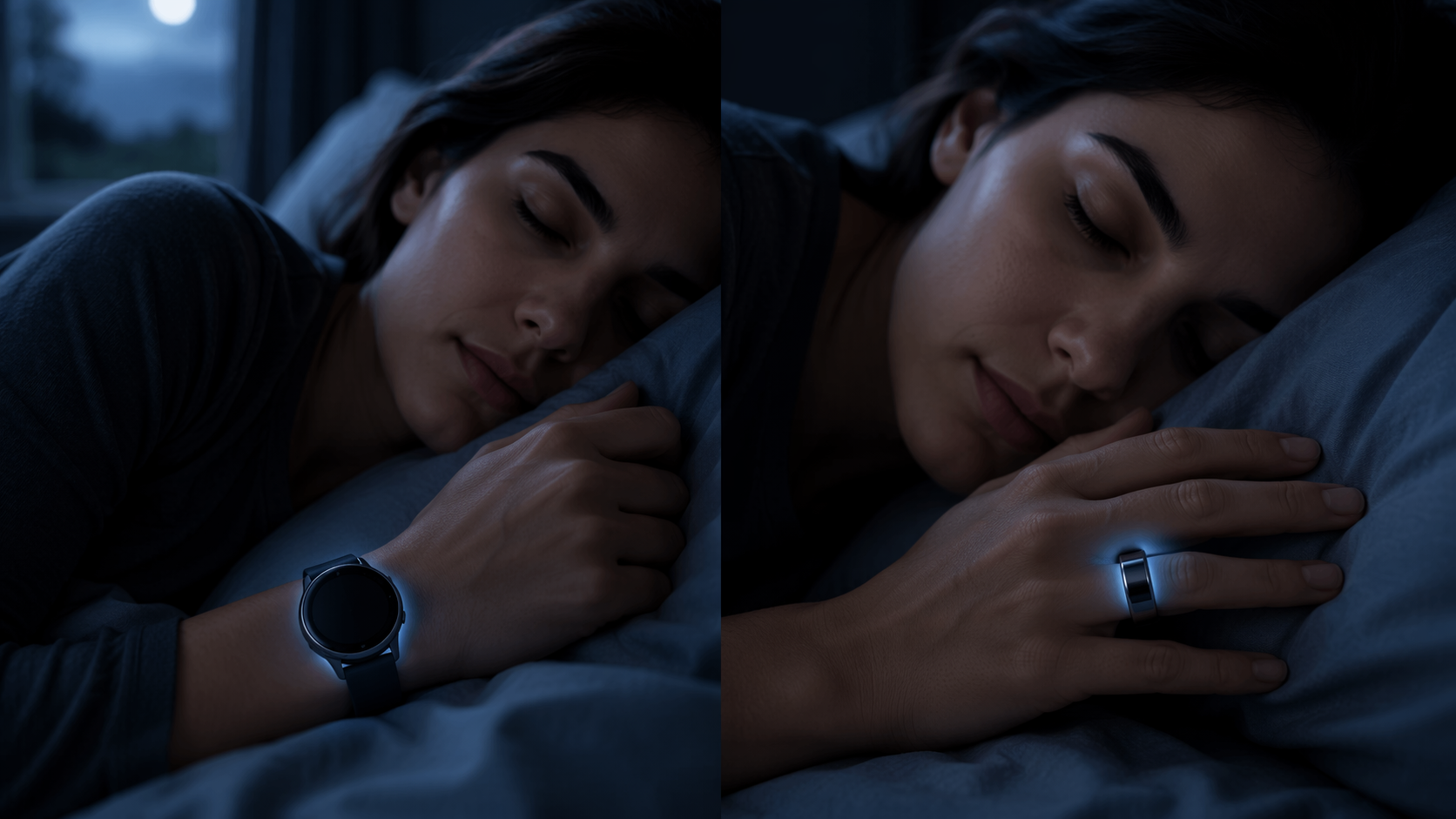
If the choice is between a smart watch sleep tracker and a smart ring, the real question is not which one can tell you that you slept. It is whether you care more about cleaner sleep-stage data or about keeping one device on your wrist all day for health, notifications, and fewer chargers.
The part of sleep tracking that both devices usually handle well
For most buyers, the first job is simple: did you sleep, or were you awake? On that narrow question, modern wearables are usually good enough to be useful, with PSG comparisons commonly showing high sensitivity for detecting sleep. The gap opens later, when the device starts trying to divide sleep into light, deep, and REM, because those labels are much easier for a consumer sensor to distort than a basic asleep-versus-awake call.
That distinction matters because a lot of product pages blur it. Broader validation work has put consumer sleep-stage classification roughly in the 60–80% accuracy range, so a watch or ring can make a night look more precise than it really is. The buyer who only wants a nightly pattern may be satisfied; the buyer ready to change behavior based on deep sleep minutes should be more cautious.
Why the ring has a structural edge
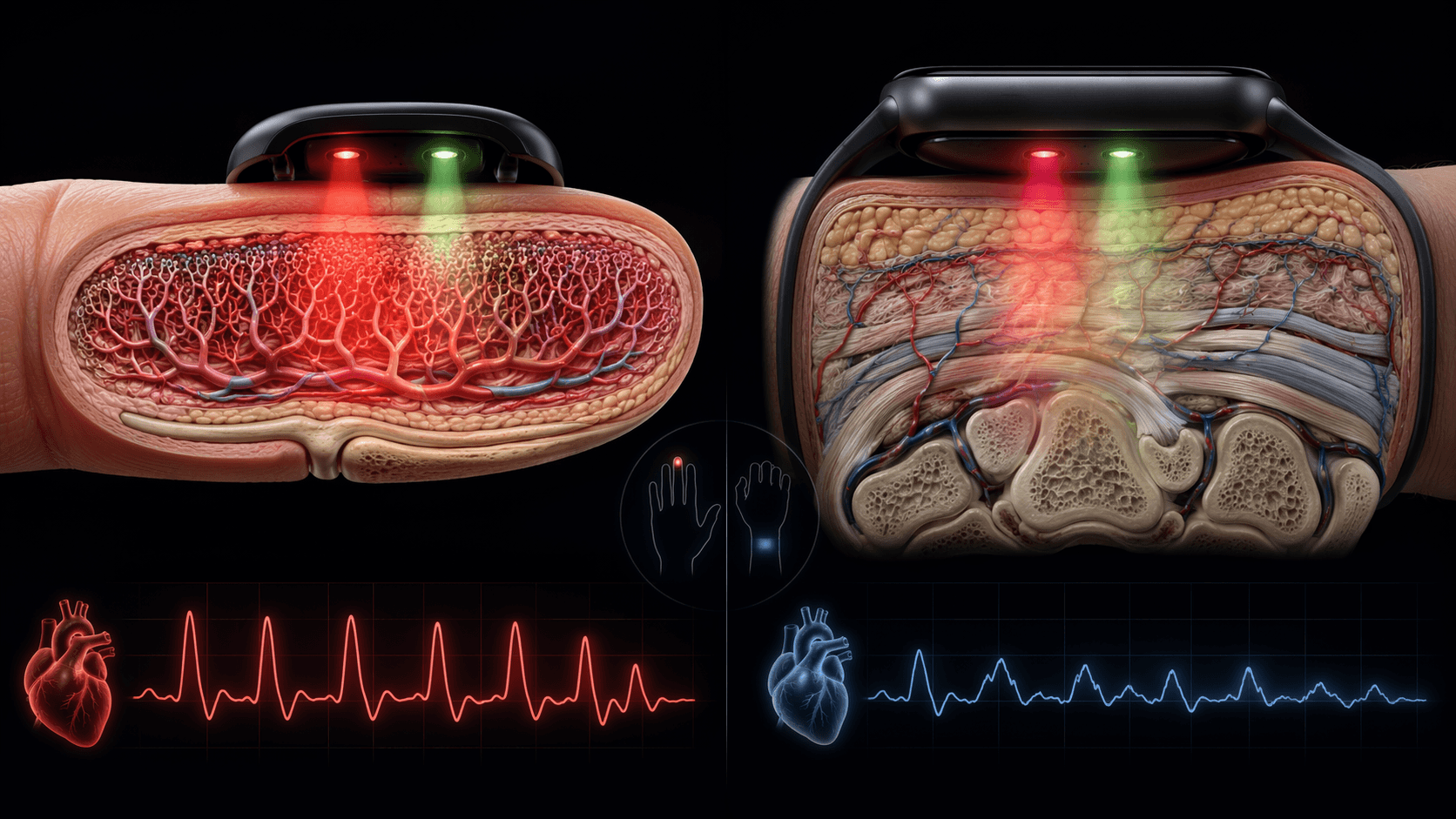
The advantage is not just that a ring sits closer to the pulse. Finger-based photoplethysmography can work from a richer capillary bed and a shorter optical path than a wrist sensor, which gives it a cleaner shot at the heart-rate and HRV signal that sleep staging depends on. That does not make rings magically clinical-grade, but it does explain why the form factor can outperform a watch even before brand-specific software enters the picture.
What the strongest validation study actually showed
The most useful anchor here is the 2024 Brigham and Women’s and Harvard comparison in Sensors, which tested Oura Ring Gen3, Apple Watch Series 8, and Fitbit Sense 2 against PSG in healthy adults. Oura was not significantly different from PSG on 7 of 8 sleep measures, while Apple Watch underestimated deep sleep by about 43 minutes and overestimated light sleep by about 45 minutes. That result is worth taking seriously, but it came from a study funded by Oura Ring Inc., and several authors disclosed consulting relationships with Oura, so the evidence should be read with the conflict in view rather than filed away as a neutral win for the category [1].
The same study should also be kept in scale. It was done in healthy adults, which means it does not automatically tell you how the devices behave for insomnia, sleep apnea, fragmented sleep, or other sleep disorders. It also evaluated specific hardware generations, so the exact numbers are a snapshot of those models and those algorithms, not a permanent verdict on every watch or ring that will ship afterward [1].
When the watch becomes the better buy
The watch pulls ahead the moment sleep is not the only thing you want from the device. Apple Watch, Garmin, Samsung, and Fitbit are doing a consolidation job that rings do not: daytime notifications, broader fitness tracking, and, on Apple Watch Series 9–11 and Samsung Galaxy Watch 7/8, FDA-authorized sleep apnea notifications. If your concern is breathing disruption rather than sleep-stage purity, that feature can matter more than whether a ring shaved a little error off deep sleep estimation [2].
Battery and cost then change the wearability calculus. Garmin watches can run for roughly 10–14 days, while Apple Watch is closer to a day and Samsung often sits around 30–40 hours, so the charging routine can decide whether the device actually makes it to bed. Oura also adds a recurring subscription after the hardware purchase, whereas many watches do not, so the cheaper-looking device is not always the cheaper ownership path [3].
The recent context is useful, but it should stay in its place
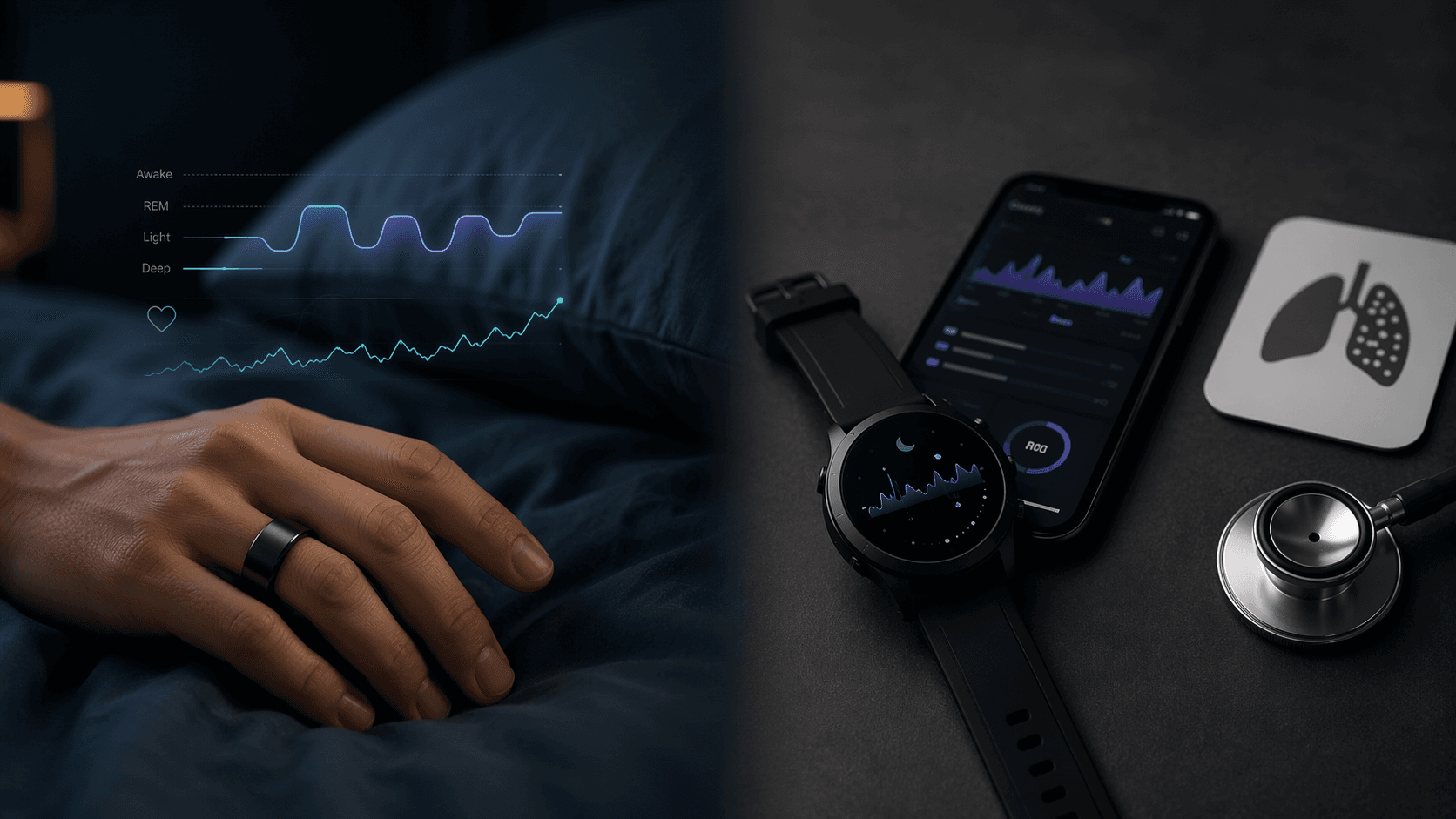
A 2026 preprint from the Quantified Scientist and the University of Salzburg comparing Garmin, Apple Watch, Oura Ring, and Whoop is useful as current context, but the sample was small at 18 participants and the work is still preprint-level rather than peer reviewed. That makes it a supporting signal, not a reason to overwrite the larger PSG comparison that already points in the same general direction: rings tend to have the cleaner overnight signal, watches tend to be more useful as all-day devices [4].
Choose a smart ring if passive overnight comfort and the best chance at cleaner sleep-stage depth matter most, especially if you plan to wear it every night and do not mind a subscription. Choose a smart watch if you want the better all-around tool, care about apnea notifications or daytime health features, and would rather avoid another device and another monthly bill. Either way, the score is a guide, not a diagnosis, and it should not become a reason to obsess over every normal fluctuation in a single night.
References
- Comparison of consumer wearable devices’ sleep estimation accuracy with polysomnography. Sensors. 2024. https://pmc.ncbi.nlm.nih.gov/articles/PMC11511193/
- Comparing sleep features of popular smartwatches. American Academy of Sleep Medicine. https://aasm.org/comparing-sleep-features-of-popular-smartwatches/
- Best Sleep Trackers. Sleep Foundation. https://www.sleepfoundation.org/best-sleep-trackers
- How do Garmin, Apple Watch, Oura Ring and Whoop compare in sleep tracking? We Love Cycling / Quantified Scientist / University of Salzburg. 2026-04-09. https://www.welovecycling.com/wide/2026/04/09/how-do-garmin-apple-watch-oura-ring-and-whoop-compare-in-sleep-tracking/

Comments
Join the discussion with an anonymous comment.