
The uncomfortable reason people are asking about natrol melatonin gummies is not that one brand suddenly became suspicious. It is that melatonin gummies, as a category, were shown to be unusually unreliable on the simplest promise a supplement label makes: the amount inside the serving.
In the 2023 JAMA analysis that made many shoppers re-check their sleep supplements, 22 of 25 melatonin gummy products were inaccurately labeled. The tested products contained anywhere from 74% to 347% of the melatonin declared on the label, meaning some delivered less than promised while others delivered several times more than a buyer reasonably expected.[1]
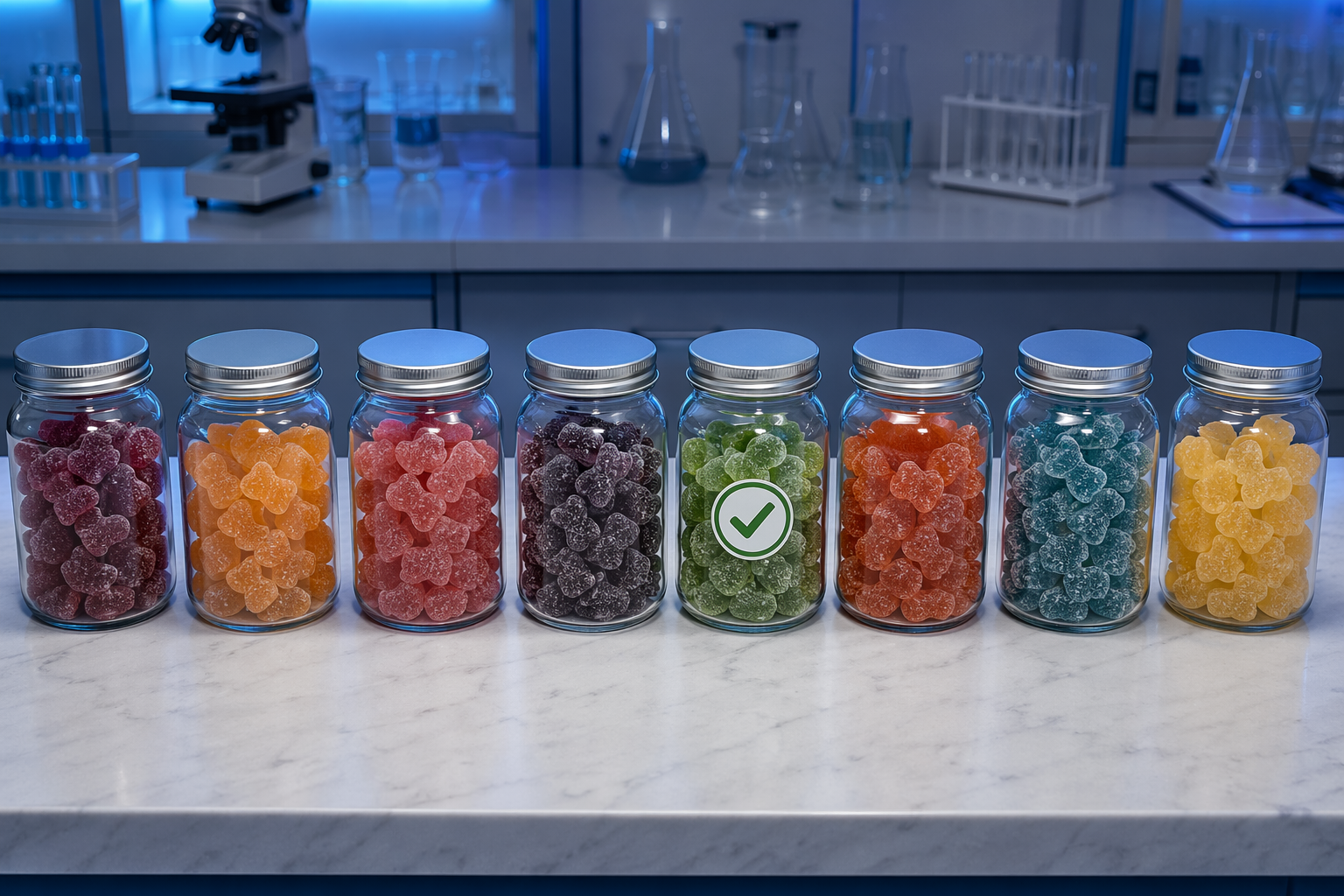
That finding changes the nature of the purchase. A melatonin gummy is not just a flavor, texture, and price decision. It becomes a verification problem. If the label says 5 mg, the first question is whether the gummy is close to 5 mg at all. Only after that does it make sense to ask whether 5 mg is a wise amount for the person taking it.
Natrol comes out better than the average gummy brand on the first question. Its publicly available quality signals are stronger than a generic marketplace listing, and ConsumerLab has publicly confirmed that tested Natrol melatonin products passed its label-accuracy review. That does not settle the dose question, and it does not turn a dietary supplement into an FDA-approved sleep drug. But it does make Natrol a different case from an unverified gummy with no visible testing trail.
What the Label-Accuracy Evidence Actually Says
The strongest support for Natrol is not its sleep marketing. It is the boring quality infrastructure that most shoppers never want to read, but should probably care about after the JAMA gummy findings.
Natrol says its products are made under NPA GMP certification, that its facilities undergo annual NSF International audits, and that products are tested at the batch level for potency, purity, and stability. The company also describes testing for contaminants such as heavy metals and microbes, with independent laboratory verification as part of its quality process.[2]
Those are not the same thing as a guarantee that every bottle in every store is perfect. They are, however, meaningful quality controls. GMP certification and facility audits address whether the manufacturing system is designed to produce consistent supplements. Batch potency testing addresses whether the active ingredient is present at the intended level. Purity testing addresses whether the product contains contaminants that should not be there. Stability testing matters because a gummy that is accurate on production day still needs to meet its label claim near the end of its shelf life.
Natrol also explains why some melatonin supplements may be formulated with overages. Under dietary supplement rules, the product must remain at or above 100% of the declared amount through the labeled shelf life. A manufacturer may therefore add more than the label amount at production so the product does not fall below its claim before expiration. Natrol presents this as a controlled practice within safe limits, not as accidental overdosing.[2]
That explanation is plausible and consistent with how shelf-life potency is usually managed. It also comes from the company. The more useful outside check is ConsumerLab, which has publicly reported that Natrol Melatonin 5 mg Strawberry and Natrol Kids Melatonin passed its melatonin supplement testing. The public summary confirms passing status within ConsumerLab’s accepted label-accuracy range; the full per-product details and exact measured amounts are behind its paywall and should not be treated as publicly known.[3]
| Quality question | What is supported | What remains limited |
|---|---|---|
| Does Natrol have visible quality systems? | Yes. Natrol cites NPA GMP certification, NSF annual facility audits, batch potency testing, purity testing, and stability testing. | These are system-level controls, not a public certificate for every bottle a shopper may buy. |
| Has an outside testing group found Natrol products acceptable? | Yes. ConsumerLab publicly lists Natrol Melatonin 5 mg Strawberry and Natrol Kids Melatonin as passing. | The exact measured margins are not available in the public summary. |
| Does Natrol carry USP verification? | No USP-verified seal is identified in the available material. | This does not mean Natrol failed USP; it means this specific seal is not one of its documented quality signals. |
| Do brand claims prove faster sleep? | Natrol markets sleep support claims, including sleep in as little as 15 minutes. | The available research brief does not include independent clinical verification of that specific claim. |
This is the cleanest way to read the evidence: Natrol’s label claims are better supported than many melatonin gummies in the post-JAMA market, but the support is not unlimited. The public evidence supports a reasonable preference for Natrol over no-name, unverified gummies. It does not support treating every front-label claim as independently proven.
A More Accurate 10 mg Gummy Can Still Be a Lot of Melatonin
Label accuracy matters because it tells you what you are actually taking. But once the label becomes more believable, the next problem becomes harder to ignore: Natrol’s common adult gummy servings are often 5 mg or 10 mg.

That is far above the range many sleep-health sources use when discussing conservative starting doses. Sleep Foundation dosing guidance commonly points adults toward starting around 0.5 mg to 1 mg, and notes that taking more does not necessarily create proportionally better sleep results.[4] NCCIH likewise cautions that melatonin can cause side effects such as headache, dizziness, nausea, and sleepiness, and that long-term safety information remains limited.[5]
UC Davis Health has also emphasized the same practical mismatch: very small doses may be enough for many people, while higher doses can raise the odds of next-day grogginess or other unwanted effects without guaranteeing better sleep.[6]
This is where a good test result can create a false sense of simplicity. If a 10 mg melatonin gummy is accurately labeled, that is a quality win. It also means the person taking it is probably getting close to a high dose, not an accidental low dose. Accuracy does not make the serving physiologic. It makes the serving knowable.
For an adult who occasionally uses melatonin for a disrupted schedule, the practical difference between 1 mg and 10 mg is not cosmetic. A larger dose may linger into the next day for some people. If the next morning feels heavy, foggy, or oddly slow, the cause may not be “bad sleep” alone. The dose may be part of the problem.
That matters even more for people who are buying gummies because they feel gentle. A strawberry gummy does not feel like a strong intervention. But the body is not responding to the format; it is responding to the amount of melatonin delivered, the timing, the person’s metabolism, other medications, and the sleep problem being treated.
Where Natrol’s Product Line Helps, and Where It Complicates the Choice
Natrol does offer more dose flexibility than a single 10 mg gummy bottle would suggest. Its gummy line includes 5 mg adult gummies, 10 mg servings, MelatoninMAX 10 mg gummies, time-release 10 mg options, and a Kids 1 mg product. That range gives a careful buyer more room to choose a lower-dose format instead of assuming the highest-dose adult product is the default.
The Kids 1 mg product is especially relevant to the broader label-accuracy question because ConsumerLab’s public summary indicates that a Natrol children’s melatonin product passed its review.[3] That does not mean a child should take melatonin without pediatric guidance. It means the verification concern and the dose concern need to be kept separate. A children’s product can be better tested and still deserve extra caution because the user is a child.
The familiar product details are less central, but not irrelevant. Natrol gummies are pectin-based rather than gelatin-based, are described as non-GMO, and are made without synthetic dyes or artificial flavors. The 5 mg gummy contains 1 gram of added sugar, while the 10 mg two-gummy serving contains 3 grams of added sugar. Those details may affect preference, dietary fit, or tolerance, but they do not answer the two main questions: whether the melatonin amount is reliable and whether the selected dose is appropriate.
Reader reports about formula changes, including limited discussion on Reddit, are worth treating as a prompt to check the current bottle rather than as evidence of a verified safety or potency defect. Formulations can vary by product, retailer, and year. The responsible move is to read the Supplement Facts panel on the exact package in hand, check the expiration date, and look for the current serving size rather than relying on memory from a prior bottle.
The Claims That Deserve Less Weight
Three types of claims should sit lower in the evidence stack.
- “#1 Drug Free Sleep-Aid Brand” may be a marketing or sales-position claim, but the available research material does not include independent market-share data verifying it.
- “Sleep in as little as 15 minutes” is a brand claim on product materials, not an independently confirmed clinical result in the available research.
- “Drug free” does not mean biologically inactive. Melatonin is a hormone sold as a dietary supplement in the United States, and dose still matters.
None of those claims need to be disproven for a cautious reader to discount them. They simply do not carry the same evidentiary weight as independent lab testing, published market studies, or clearly documented manufacturing controls.
Why 2026 Has Made Verification Feel Less Optional
The broader safety backdrop has not become calmer. In January 2026, the FDA issued a safety advisory about imported melatonin products after Australia’s Therapeutic Goods Administration warning, adding to public concern about sourcing, labeling, and supplement oversight.[7]
That advisory should not be stretched into a Natrol-specific accusation. The available evidence here does not show that Natrol was implicated. Its relevance is narrower: in a market where imported products, online listings, and gummy formats can blur together for shoppers, brand-level verification matters more than it did when melatonin felt like a low-stakes impulse buy.
Dietary supplements are not approved by the FDA for safety and effectiveness before sale in the same way prescription drugs are. That does not make every supplement suspect, but it does mean the burden shifts toward manufacturing controls, third-party testing, transparent labels, and careful use.
How to Read a Natrol Bottle Before Taking It
A cautious reading of the bottle takes less than a minute and prevents several common mistakes.
- Check the serving size first. Some products list 10 mg as two gummies; others may deliver 10 mg in one gummy.
- Separate milligrams per gummy from milligrams per serving. The front label may emphasize the serving amount.
- Look for the expiration date. Potency claims are meant to hold through shelf life, not indefinitely.
- Choose the lowest practical dose when possible, especially if you have not used melatonin before or have had next-day drowsiness.
- Be more conservative for children, pregnancy, complex medical conditions, seizure disorders, immune conditions, or use with sedatives or other medications.
The same caution applies if the reason for taking melatonin is not straightforward insomnia or jet-lag-style timing disruption. People sometimes reach for melatonin when anxiety is driving the sleep problem, but that is a different question from whether a gummy is accurately labeled. For that broader issue, see Can Melatonin Treat Anxiety? Evidence on Risks and Limits.
So, Do Natrol Melatonin Gummies Meet Their Label Claims?
The best supported answer is: Natrol appears more trustworthy on label accuracy than much of the melatonin gummy market. Its quality systems are visible, its manufacturing controls are more developed than many supplement listings, and ConsumerLab’s public results confirm that tested Natrol melatonin products passed label-accuracy review.[2][3]
The more important practical answer is slightly different: a trustworthy 5 mg or 10 mg gummy is still a 5 mg or 10 mg gummy. Those servings are high compared with the 0.5 mg to 1 mg starting range commonly discussed in sleep guidance, and higher doses may increase the chance of headache, dizziness, nausea, or daytime drowsiness without reliably producing better sleep.[4][5][6]
Natrol is not the brand that most deserves suspicion after the gummy-labeling headlines. It is one of the brands with a stronger case for being taken seriously. But the safer purchase decision is not simply “buy the verified brand.” It is to verify the brand, read the exact serving size, start lower when possible, avoid assuming nightly long-term use is harmless, and treat dose appropriateness as a separate question from product reliability.
References
- Quantity of Melatonin and CBD in Melatonin Gummies Sold in the US, JAMA, April 25, 2023.
- Quality Commitment, Natrol.
- Melatonin Supplements Review, ConsumerLab.
- Melatonin Dosage: How Much Should You Take, Sleep Foundation.
- Melatonin: What You Need To Know, National Center for Complementary and Integrative Health.
- Melatonin: How Much Should You Take?, UC Davis Health, May 2022.
- FDA Safety Advisory on Imported Melatonin Products, U.S. Food and Drug Administration, January 2026.


Comments
Join the discussion with an anonymous comment.