
A Walgreens sleep aid shelf can look like a wall of choices: caplets, softgels, liquids, gummies, “PM” pain relievers, melatonin blends, store brands, national brands, and natural-looking labels. For medicated oral sleep aids, though, the useful question is much smaller: what is the active ingredient, and what problem is it actually suited to solve?
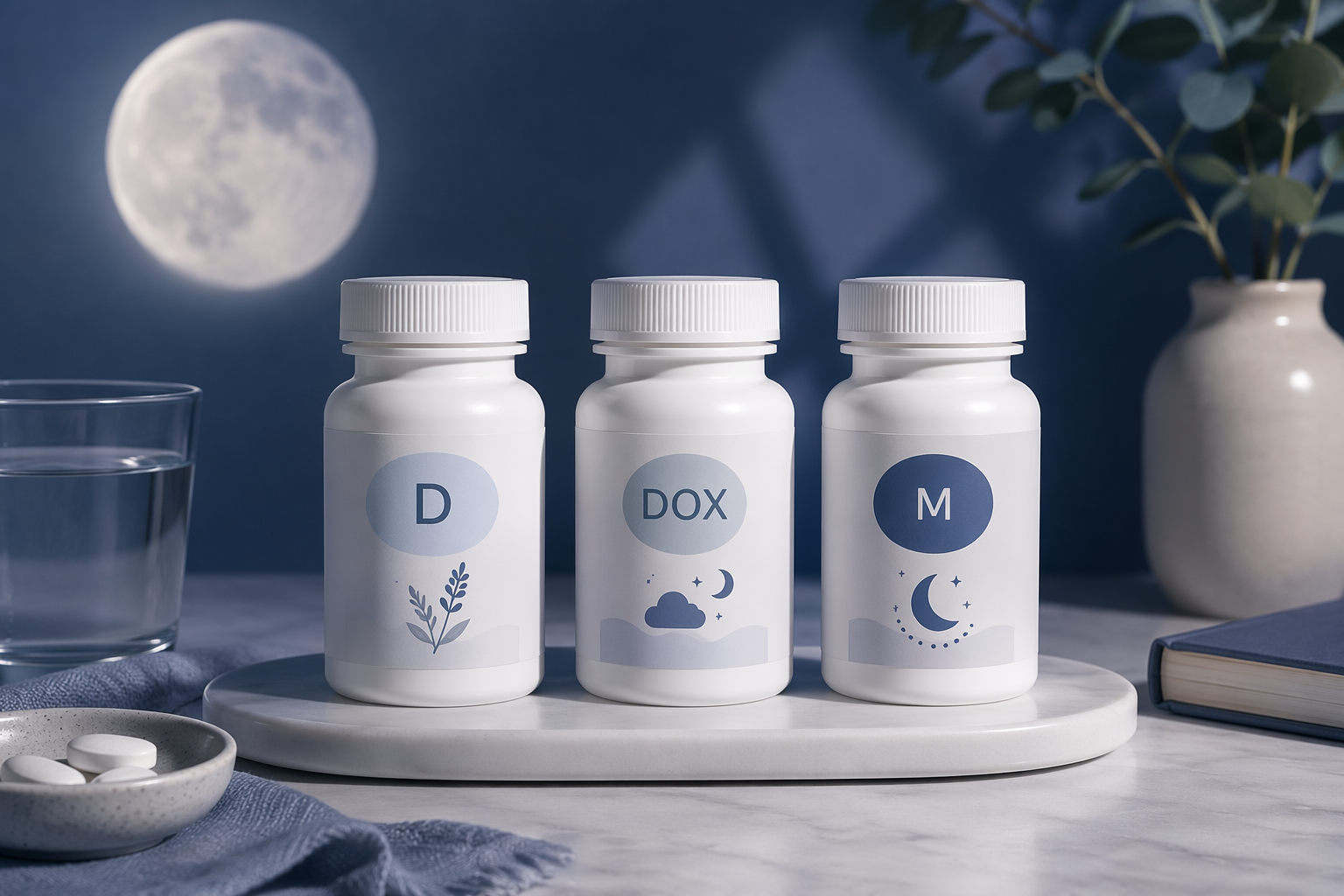
Most of the decision comes down to three ingredient families: diphenhydramine HCl, doxylamine succinate, and melatonin. The front of the box may talk about “nighttime,” “sleep,” “PM,” or “drug-free,” but the Drug Facts or Supplement Facts panel tells you what you are really buying.
Start With The Active Ingredient, Not The Brand
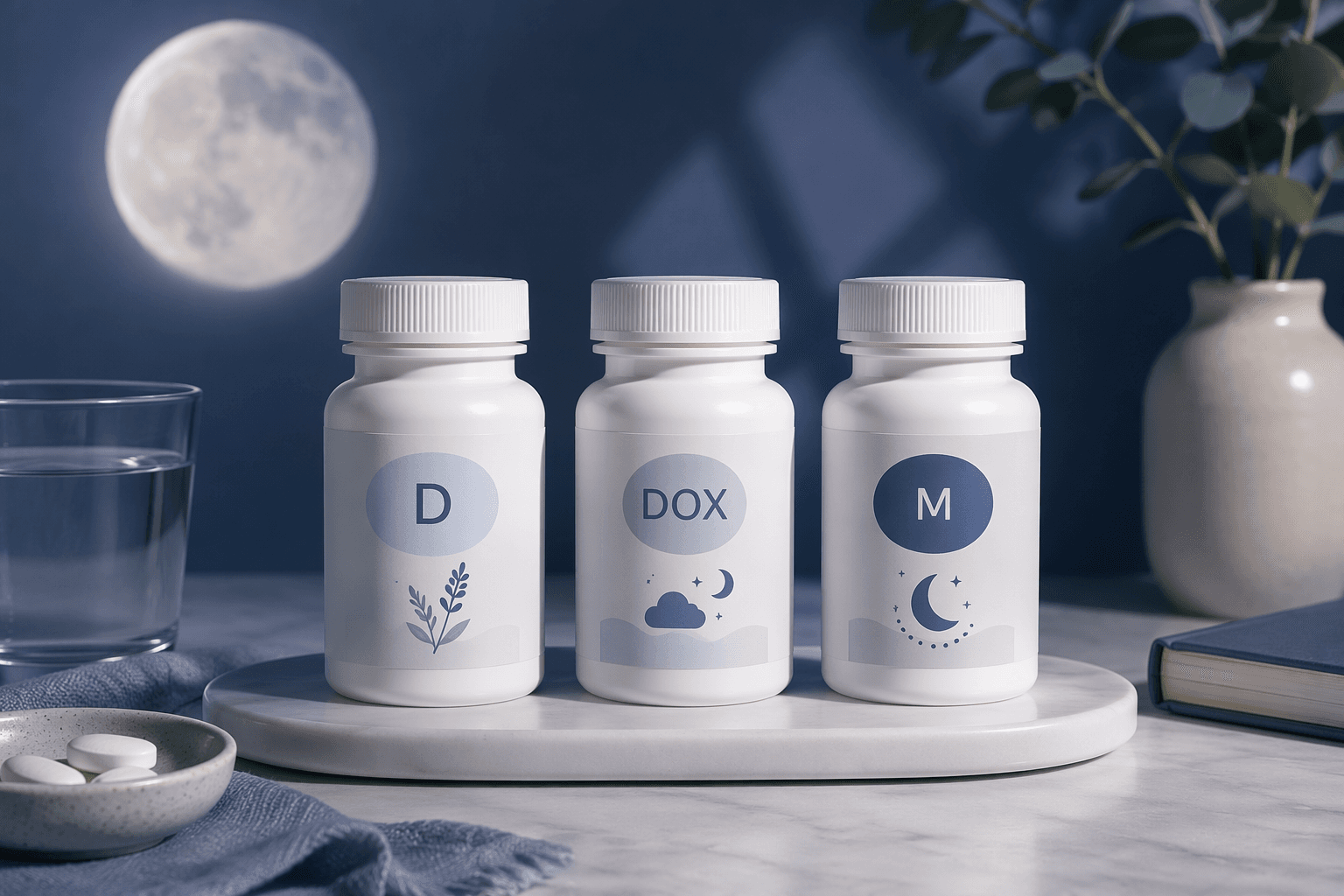
| Ingredient | Best fit | How it works | Timing details | Walgreens examples | Approx. Walgreens price per dose | Key cautions |
|---|---|---|---|---|---|---|
| Diphenhydramine HCl | Occasional trouble falling asleep | First-generation antihistamine; blocks central H1 histamine receptors and causes sedation | Onset about 30-60 minutes; half-life about 4-8 hours | Walgreens Sleep Aid Caplets 25 mg; Walgreens Nighttime Sleep Aid Softgels 50 mg; Walgreens Sleep Aid Liquid; Walgreens Sleep II Tablets 25 mg | About $0.06 per dose for Walgreens Sleep Aid Caplets 365 ct at $22.99; about $0.37 per dose for Walgreens Nighttime Sleep Aid Softgels 32 ct at $11.99, as of June 2026 [1][2] | Tolerance can develop within days to weeks of nightly use; avoid or ask a clinician first with age 65+, glaucoma, urinary retention, COPD, pregnancy, or breastfeeding [5] |
| Doxylamine succinate | Trouble staying asleep or waking during the night | First-generation antihistamine with strong H1-receptor activity | Half-life about 10-12 hours, which can help duration but increases next-day grogginess risk | Walgreens Sleep II Nighttime Sleep Aid Tablets 25 mg; Unisom SleepTabs | About $0.17 per dose for Walgreens Sleep II Nighttime Sleep Aid Tablets 96 ct at $15.99, as of June 2026 [3] | Same older-adult anticholinergic concern as diphenhydramine [9]; pregnancy use should be discussed with a doctor even though doxylamine is used in a prescription pregnancy-nausea product |
| Melatonin | Jet lag, shift work, or delayed sleep timing | Circadian signaling hormone; helps tell the brain when nighttime is arriving rather than acting like a sedating antihistamine | Often used near the target bedtime; lower doses such as 0.5-3 mg may be more sensible than high-dose products for timing problems | Natrol Melatonin; Nature Made Melatonin; Olly Sleep; Walgreens Free & Pure Melatonin | Varies widely by brand, dose, gummy/tablet form, and promotions | Not recommended as a stand-alone fix for chronic insomnia in the available sleep-medicine guidance; supplement labels may not reliably match actual melatonin content [6][8] |
That table is the aisle shortcut. If two products have the same active ingredient and dose, and both are the same kind of FDA-regulated OTC drug, the prettier label is not doing the sleeping for you. The ingredient is.
Diphenhydramine: The Common “Fall Asleep” Antihistamine
Diphenhydramine HCl is the active ingredient behind many familiar nighttime products. It is a first-generation antihistamine, the same broad class associated with older allergy medicines that make people drowsy. For sleep, that drowsiness is the point: diphenhydramine blocks histamine signaling in the central nervous system, which can make it easier to fall asleep.
Walgreens sells it in several forms, including Walgreens Sleep Aid Caplets 25 mg, Walgreens Nighttime Sleep Aid Softgels 50 mg, Walgreens Sleep Aid Liquid, and Walgreens Sleep II Tablets 25 mg. The Walgreens Sleep Aid diphenhydramine product also appears in FDA drug-labeling records through DailyMed, which is the kind of boring page that matters more than the soothing box copy when you are checking what is actually inside [4].
The fit is occasional sleep-onset trouble: you are wired after travel, stress, schedule disruption, or a bad night, and you want a short-term OTC option. It is not a good fit for building a nightly routine. Mayo Clinic notes that tolerance to OTC antihistamine sleep aids can develop within days, so the same dose may stop working as well if used repeatedly [5].
The safety part is not fine print. Diphenhydramine can cause next-day sleepiness, dry mouth, constipation, blurred vision, and urinary retention. People with glaucoma, urinary retention, COPD, pregnancy, or breastfeeding should pause and ask a clinician or pharmacist before using it, and adults 65 and older deserve a stronger warning because anticholinergic drugs such as diphenhydramine are listed as potentially inappropriate in older adults under Beers Criteria-related guidance [5][9]. For a deeper older-adult discussion, see Walgreens Sleep Aids and Older Adults: What the Beers Criteria Says.
Doxylamine: Longer Lasting, With A Groggier Tradeoff
Doxylamine succinate sits close to diphenhydramine on the family tree: it is also a first-generation antihistamine used for nighttime sedation. The practical difference is duration. Doxylamine’s half-life is commonly listed around 10-12 hours, longer than diphenhydramine’s roughly 4-8 hours [6]. That can be useful if the problem is waking at 2 or 3 a.m. and not getting back to sleep.
The same fact also explains the downside. A longer half-life means the drug may still be hanging around when your alarm goes off. U.S. News’ 2026 pharmacist sleep-aid coverage discusses doxylamine among OTC medicated sleep aids and highlights next-day grogginess as a relevant tradeoff, not a side issue [7].
At Walgreens, the store-brand example to look for is Walgreens Sleep II Nighttime Sleep Aid Tablets 25 mg doxylamine. In June 2026 pricing, the 96-count bottle at $15.99 worked out to about $0.17 per dose [3]. Unisom SleepTabs are the more recognizable national-brand comparison, but the active ingredient line is still the first line to read.
Doxylamine has one pregnancy nuance that gets flattened too often. It is the antihistamine component of Diclegis, an FDA-approved prescription product for nausea and vomiting of pregnancy, but that does not make self-selected OTC doxylamine an automatic pregnancy sleep aid. Pregnancy changes the decision; it does not remove the need to ask the treating clinician.
Melatonin: Timing Signal, Not A Knockout Pill
Melatonin belongs in a different mental bucket. It is not an antihistamine and should not be treated as a weaker or “natural” version of diphenhydramine. It is a hormone involved in circadian timing, which is why Harvard Health discusses it mainly in the context of rhythm problems such as jet lag and shift-related sleep disruption [8].
That distinction changes the buying decision. If your body clock is delayed and you are not sleepy until very late, melatonin may help nudge timing. If you are exhausted, anxious, and hoping to be forced unconscious, melatonin is often disappointing because that is not what it is designed to do.
Dose is another place where the shelf can mislead. A 10 mg gummy is not automatically “stronger” in the useful sense. Sleep Foundation’s comparison material describes melatonin as different from sedating sleep medications, and common dosing guidance notes the paradox: lower doses such as 0.5-3 mg may be more appropriate than high doses for some circadian-timing uses [6].
There is also a label-reliability problem. Sleep Foundation reports that a published study found more than 70% of melatonin supplements had meaningful discrepancies between labeled and actual melatonin content [6]. That does not mean every Walgreens melatonin product is inaccurate, and it does not prove melatonin never helps. It does mean supplement status matters: melatonin products are not FDA-monographed OTC sleep drugs in the same way diphenhydramine and doxylamine products are.
When Store Brand Is The Sensible Buy
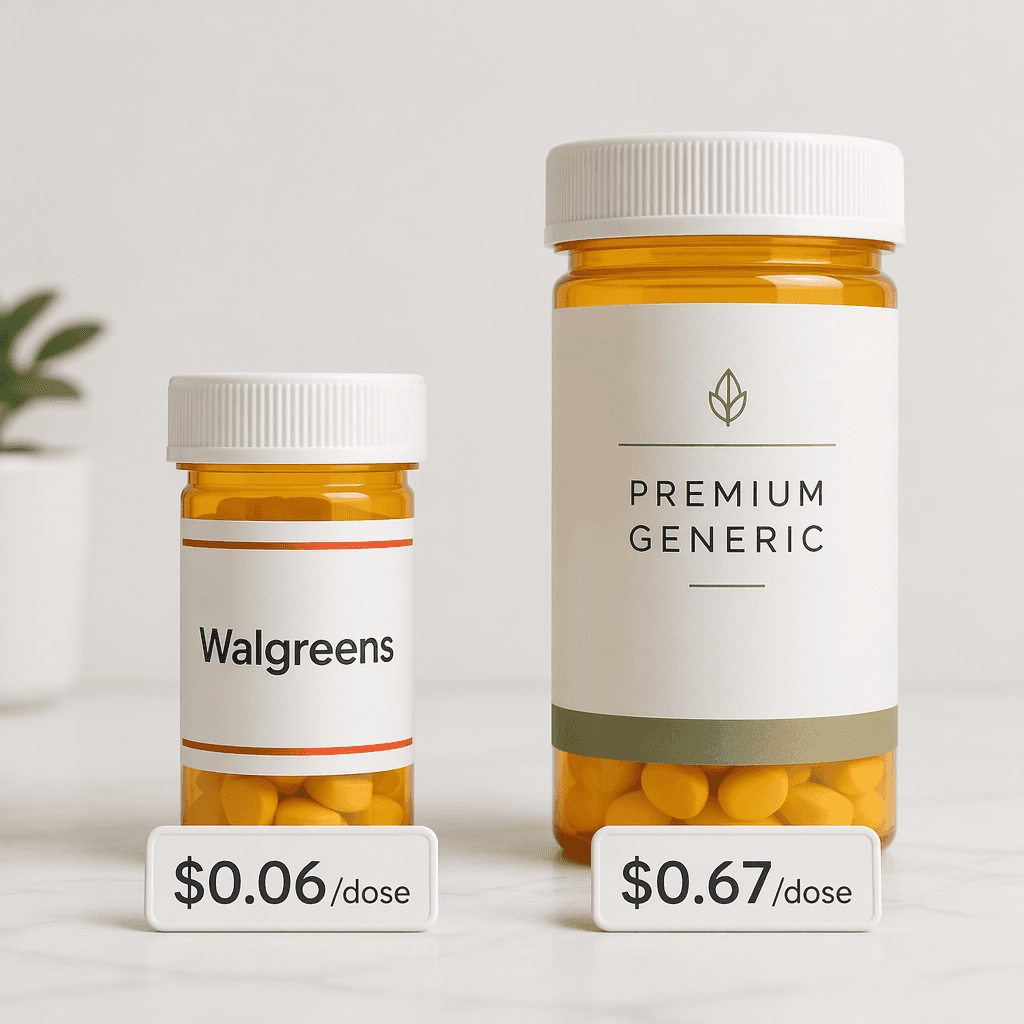
The cleanest Walgreens sleep-aid price comparison is diphenhydramine. In June 2026, Walgreens Sleep Aid Caplets 365 ct were listed at $22.99, about $0.06 per dose [1]. Walgreens Nighttime Sleep Aid Softgels 32 ct were listed at $11.99, about $0.37 per dose [2]. Branded ZzzQuil LiquiCaps were about $0.67 per dose in the same pricing snapshot from the research brief. That is the kind of spread worth noticing.
This is not a claim that every cheap product is always the right product. It is a narrower, more useful rule: when the active ingredient, dose, route, regulatory category, and intended use match, cost per dose becomes a real decision point. For FDA-regulated OTC antihistamine sleep aids, the active ingredient and dose are not decorative details; they are the medication.
Softgels, liquids, and smaller packages may still make sense for someone who has trouble swallowing tablets, wants only a few doses, or needs a specific format. But if you are comparing a 25 mg diphenhydramine caplet with another 25 mg diphenhydramine caplet, the brand name is doing much less work than the price tag suggests.
The “PM” Pain Reliever Trap
Products such as Tylenol PM, Advil PM, Aleve PM, and Walgreens PM pain-relief equivalents are not stronger sleep medicines because they say “PM.” They combine a sleep-aid ingredient, usually diphenhydramine, with a pain reliever such as acetaminophen or ibuprofen. The pain reliever helps pain; it does not add a second sleep mechanism.
That matters because accidental duplication is easy. If someone takes a PM product for sleep and also takes a separate pain medicine, they may unintentionally stack acetaminophen or NSAIDs. The maximum daily acetaminophen dose is 4,000 mg, so acetaminophen-containing PM products deserve a label check before they go into the cart.
What About Gummies, CBD, CBN, And “Natural” Blends?
Walgreens also sells products that sit outside the three main medicated sleep-aid buckets: melatonin gummies, botanical blends, magnesium products, L-theanine or GABA combinations, CBD/CBN items, nasal strips, masks, and other non-medicated sleep supports. Some may be reasonable for a specific preference or problem, but they should not be mentally grouped with FDA-monographed antihistamine sleep aids.
The most useful question is still the same: what is the active ingredient or supplement ingredient, what is it supposed to do, and does that match the sleep problem? A calming blend may be aimed at relaxation. A nasal strip may be aimed at airflow. A melatonin gummy may be aimed at timing. None of those is the same decision as choosing diphenhydramine or doxylamine for short-term sedation.
A Practical Walgreens Buying Path
- If the main problem is falling asleep once in a while, compare diphenhydramine products by dose, format, warnings, and price per dose.
- If the main problem is waking during the night, doxylamine may last longer, but plan around possible next-day grogginess.
- If the main problem is jet lag, shift work, or a delayed sleep schedule, look at melatonin as a timing tool, not as a sedative.
- If you are 65 or older, pregnant, breastfeeding, or have glaucoma, urinary retention, COPD, or complex medication use, ask a pharmacist or clinician before using antihistamine sleep aids.
- If pain is not part of the problem, skip PM pain-relief combinations and avoid adding unnecessary acetaminophen or ibuprofen.
Readers who want the longer mechanism tour can use this deeper guide to OTC sleep medicine ingredients. For the shelf decision, though, the working rule is plain: match the ingredient to the sleep problem before you compare brands.
When The Aisle Is The Wrong Place To Keep Deciding
OTC sleep aids are built for occasional, short-term use. If insomnia symptoms last more than two weeks, Mayo Clinic advises talking with a doctor rather than continuing to rely on nonprescription sleep aids [5]. If the pattern looks chronic, the decision has moved beyond which Walgreens bottle is cheapest.
At that point, the next useful step is clinical evaluation or CBT-I-oriented guidance, especially if sleep trouble is frequent, persistent, tied to mood symptoms, affected by breathing problems, or complicated by other medications. Another product comparison will not answer those questions.
References
- Walgreens Sleep Aid Caplets 365 ct. Walgreens. June 2026.
- Walgreens Nighttime Sleep Aid Softgels 32 ct. Walgreens. June 2026.
- Walgreens Sleep II Nighttime Sleep Aid Tablets 96 ct. Walgreens. June 2026.
- Walgreens Sleep Aid (diphenhydramine 25 mg). DailyMed.
- Sleep aids: Understand options sold without a prescription. Mayo Clinic.
- Compare Sleep Aids: Understanding the Differences. Sleep Foundation.
- Best OTC Sleep Aids. U.S. News. 2026.
- Are drugstore sleep aids safe?. Harvard Health.
- Beers Criteria, anticholinergic risk in older adults. PMC / NIH.

Comments
Join the discussion with an anonymous comment.