2026 Full Moon Calendar With Zodiac Signs and Sleep Impact
If you are looking up zodiac signs, full moon sleep impact, and 2026 dates, the useful answer starts with the calendar. The sign labels make each full moon easier to find and remember; the sleep value is in marking the few nights before each one, when research has found people may go to bed later and sleep less.
| 2026 full moon date | Zodiac sign | Notable label | Suggested sleep-watch window |
|---|---|---|---|
| January 3, 2026 | Cancer | December 29, 2025-January 2, 2026 | |
| February 1, 2026 | Leo | January 27-31, 2026 | |
| March 3, 2026 | Virgo | Lunar eclipse | February 26-March 2, 2026 |
| April 2, 2026 | Libra | March 28-April 1, 2026 | |
| May 1, 2026 | Scorpio | April 26-30, 2026 | |
| May 31, 2026 | Sagittarius | Blue moon | May 26-30, 2026 |
| June 29, 2026 | Capricorn | June 24-28, 2026 | |
| July 29, 2026 | Aquarius | July 24-28, 2026 | |
| August 28, 2026 | Pisces | Lunar eclipse | August 23-27, 2026 |
| September 26, 2026 | Aries | September 21-25, 2026 | |
| October 26, 2026 | Taurus | October 21-25, 2026 | |
| November 24, 2026 | Gemini | November 19-23, 2026 | |
| December 23, 2026 | Cancer | December 18-22, 2026 |
Those watch windows are deliberately earlier than many people expect. If your sleep tends to wobble around full moons, the night of the full moon is not the only night worth noticing. The more practical pattern is the buildup: dimmer evenings, steadier wake times, and less late-night sleep tracking during the three to five nights before the moon is full.
What the Zodiac Signs Mean in This Calendar
The zodiac signs here use the popular tropical zodiac convention used in many full moon calendars. That is an astrological calendar system based on the moon's position along the ecliptic, not a medical sleep category and not the International Astronomical Union constellation-boundary system.
So a Cancer full moon or Aquarius full moon may be a useful label for your calendar, but current sleep research does not show that a Cancer full moon changes sleep differently from a Leo, Virgo, or Pisces full moon. No peer-reviewed study cited here has tested whether a person's sun sign changes their lunar sleep response. If you enjoy astrology-informed framing, keep it separate from the evidence-based sleep plan.
What Research Actually Shows About Full Moons and Sleep
The strongest reason to use this 2026 calendar is not that every full moon will ruin sleep. It is that several studies have found modest changes around the full moon, and modest changes can matter if your sleep is already fragile.
A University of Washington-led field study found that, in the nights before a full moon, people went to sleep later and slept less. The reported shift in sleep onset ranged from about 30 to 80 minutes later, with shorter total sleep, and the pattern peaked before the full moon rather than only on the full-moon night itself.[3]
A controlled laboratory study by Cajochen and colleagues found a smaller but cleaner signal: around the full moon, 33 adults had about 30% lower delta EEG activity during non-REM sleep, took about 5 minutes longer to fall asleep, and slept about 20 minutes less overall.[4] That does not make the moon a dominant sleep disorder. It does make the lunar phase a reasonable planning cue for people who already know their sleep is easy to tip.
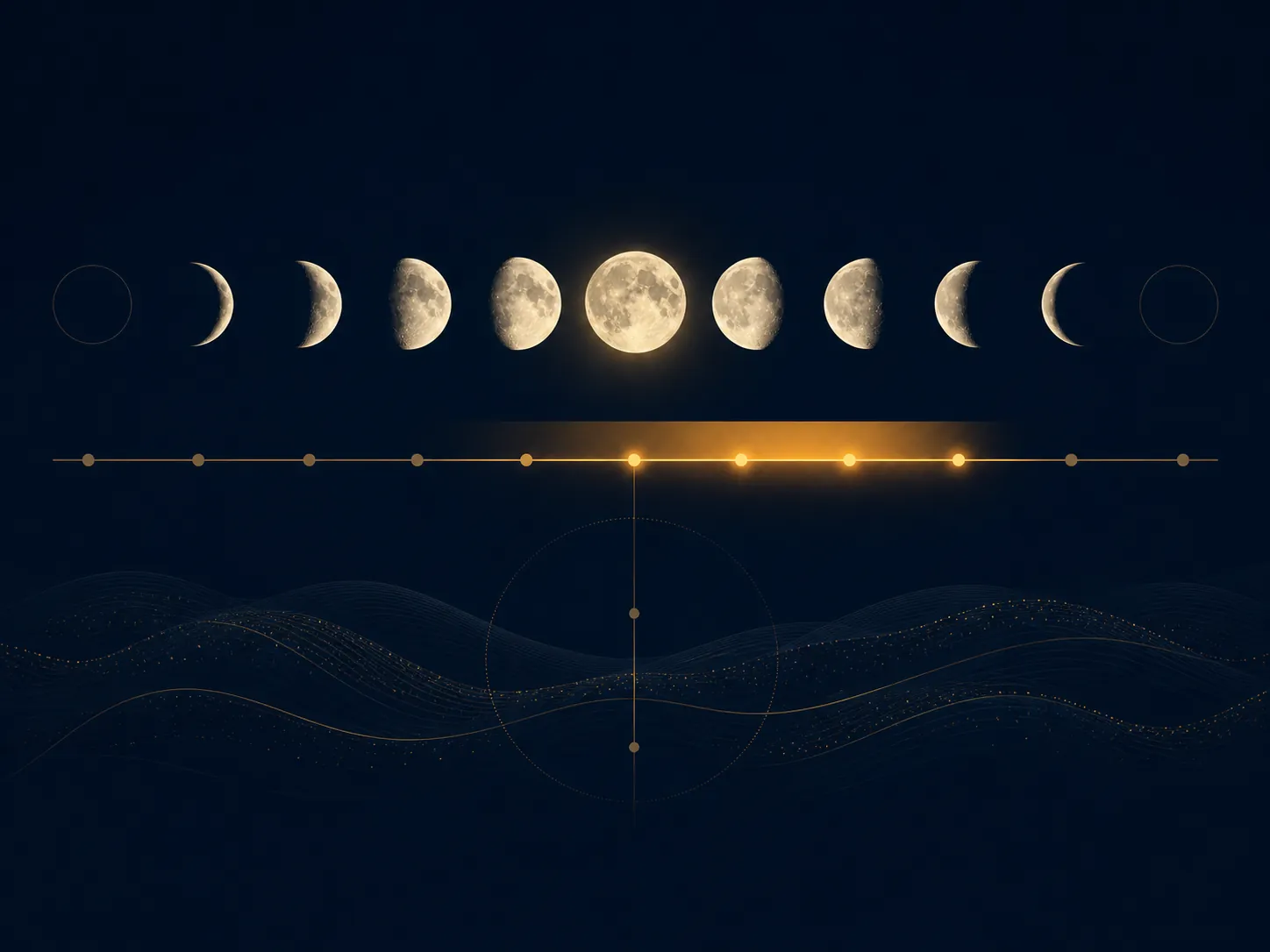
The moonlight itself is usually not the brightest light in the room. A full moon is commonly described at roughly 0.1 to 0.3 lux, while a streetlight may be about 15 lux and a phone about 40 lux.[5] That comparison matters because it keeps the response proportional: blackout curtains, phone timing, and evening light habits are more controllable than the lunar cycle.
The evidence is also not unanimous. A large Uppsala polysomnography analysis of 850 people found sleep differences across the lunar cycle, with men losing about 21 minutes of sleep during the waxing phase and women about 12 minutes, but that does not prove the same effect in every person or explain why the difference appeared.[6] Other reviews note that some studies, including a Max Planck analysis, did not find a consistent lunar-sleep correlation.[7] The fair reading is bounded: lunar timing may nudge sleep for some people, but ordinary sleep pressure, light exposure, stress, hormones, caffeine, alcohol, pain, caregiving, and work schedules usually have more leverage.
For a deeper evidence review, see Does a Full Moon Affect Sleep?. If the full moon is tonight and you are already awake, use a same-night plan rather than trying to redesign your whole routine at midnight: What to Do Tonight During a Full Moon.
How to Use the 2026 Full Moon Calendar for Sleep
Use the calendar like a weather forecast, not a verdict. Mark the sleep-watch window, make the easy adjustments early, and avoid turning every restless night into lunar evidence.
- Mark the three to five nights before each full moon, not just the full moon date.
- Keep your wake time steady during the window, even if one night runs short.
- Lower bright light exposure in the last hour before bed, especially phone and tablet light.
- Move caffeine earlier than usual if you are already sensitive to it.
- Do not over-check your sleep tracker during the window; anxiety about the data can become its own sleep disruptor.
- Use a same-night protocol only when disruption is actually happening, rather than adding rituals every month by default.
This approach is especially reasonable if you are in a season where sleep is easier to destabilize: perimenopause, pregnancy, ADHD, older adulthood, caregiving, shift work, or a high-stress stretch. The studies above do not prove special lunar effects in those groups. They do make it sensible to remove a few avoidable stressors before a predictable sleep-risk window. Perimenopausal readers can go deeper with Why Perimenopause Makes Full Moon Sleep Disruption Worse and the menopause-specific full moon guide.
Month-by-Month Sleep Notes for the 2026 Full Moons
January 3: Cancer Full Moon
The first full moon of 2026 arrives close to the holiday comedown, when travel, alcohol, late meals, and irregular wake times may already be doing more than the moon. Watch December 29 through January 2. The most useful move is boring: pick the wake time you want to keep after New Year's week and protect it for several mornings in a row.
February 1: Leo Full Moon
The February window runs January 27 through January 31. Because this one lands at the start of the month, it is easy to miss until sleep has already shifted later. Put the alert on the last week of January, not on February 1. If winter darkness makes mornings sluggish, prioritize bright morning light and keep evening light low.
March 3: Virgo Full Moon and Lunar Eclipse
The March full moon is also a lunar eclipse, which can make the night feel more charged if you follow eclipse or blood moon symbolism. For sleep, treat February 26 through March 2 as the practical window. The eclipse label does not require a stronger sleep claim; it requires a cleaner boundary between curiosity and bedtime arousal. If eclipse content tends to pull you into late scrolling, set the reading cutoff before the last hour of the night.
For readers who want the symbolic side without turning it into a medical explanation, use Blood Moon Sleep Disruption or the science-and-spirituality guide at Blood Moon Sleep Science and Spiritual Significance.
April 2: Libra Full Moon
Watch March 28 through April 1. Spring schedule changes can make sleep timing feel looser, especially if evenings are brighter and social plans stretch later. This is a good month to focus on a consistent wind-down start time rather than a perfect bedtime. If you miss the start time, do the shorter version and keep the wake time intact.
May 1: Scorpio Full Moon
The first May full moon has an April 26 through April 30 watch window. Because another full moon follows on May 31, this month is not a reason to panic; it is a reason to avoid letting one rough week become a month-long sleep story. Keep the plan light: earlier caffeine cutoff, dimmer evenings, and no dramatic changes unless insomnia is already active.
May 31: Sagittarius Blue Moon
The blue moon simply means this is the second full moon in the same calendar month. It does not mean the sleep effect is doubled. Watch May 26 through May 30, especially if the earlier May full moon already left you sleeping in, napping late, or chasing bedtime later. The main job is to stop drift: wake time first, bedtime second.
June 29: Capricorn Full Moon
The June window is June 24 through June 28. Late sunsets can make the body read the evening as earlier than it is. If you only choose one intervention this month, make it light control: sunglasses on a bright late commute if needed, warm indoor lighting after dinner, and screens out of your face when you are already sleepy.
July 29: Aquarius Full Moon
Watch July 24 through July 28. Summer sleep disruption often has several suspects at once: heat, travel, later meals, alcohol, children out of school, and brighter evenings. Before blaming the Aquarius label, check the room temperature and the last two hours of light exposure. If this is the specific moon you track, see the Aquarius full moon sleep FAQ.
Astrology-curious readers may also want How the Aquarius Full Moon Disrupts Each Zodiac Sign's Sleep; read it as astrology-informed reflection, not evidence that zodiac signs produce different sleep physiology.
August 28: Pisces Full Moon and Lunar Eclipse
The August eclipse watch window is August 23 through August 27. This is another month when the event label may increase attention more than the moon increases physiology. If you plan to watch or read about the eclipse, decide in advance what time you stop. A clear cutoff protects sleep better than trying to calm down after a long, emotionally loaded scroll.
September 26: Aries Full Moon
Watch September 21 through September 25. Back-to-school and back-to-work routines can make this full moon feel more disruptive than it is, because the calendar is already asking your sleep to tighten up. Use the window to remove friction: prep mornings the night before, stop work in a visible place, and avoid solving schedule problems from bed.
October 26: Taurus Full Moon
The October window is October 21 through October 25. Cooler nights can help sleep, but shorter days can push more bright artificial light into the evening. If you notice later sleep onset during this window, look first at indoor lighting and screen use after dinner. The fix does not need to be elaborate; make the room dim enough that your body can tell the day is ending.
November 24: Gemini Full Moon
Watch November 19 through November 23. In the United States, this full moon lands near Thanksgiving week, when travel and family schedules may be stronger sleep disruptors than lunar timing. Pick the one anchor you can keep while everything else moves. For most people, that is wake time; for caregivers or travelers, it may be morning light exposure.
December 23: Cancer Full Moon
The final 2026 full moon has a December 18 through December 22 watch window. Holiday sleep is rarely a clean experiment. If you are up late wrapping, hosting, drinking, traveling, or worrying, the moon is only one possible nudge among many. Keep the response modest: morning light, earlier caffeine, dimmer evenings, and a plan for getting back to baseline after the holiday week.
When the Calendar Is Not Enough
A full moon calendar is useful for pattern spotting. It is not enough if insomnia is frequent, severe, or starting to shape your days. If you are regularly lying awake for long stretches, dreading bedtime, relying on alcohol or sedatives to sleep, or feeling unsafe from sleep loss, the next step is not a more detailed lunar chart. It is a stronger sleep plan and, when needed, clinical support.
Start with evidence-based sleep hygiene fundamentals if your routine has become inconsistent: Sleep Hygiene Fundamentals. The zodiac labels can help you remember the 2026 full moons, but the sleep value comes from anticipating a small recurring risk window and responding before one short night turns into three.
References
- Full Moon Calendar 2026, Royal Museums Greenwich.
- July Full Moon Astrology: The Full Buck Moon In Aquarius, Farmers' Almanac.
- On nights before a full moon, people go to bed later and sleep less, UW News, January 27, 2021.
- Evidence that the lunar cycle influences human sleep, PubMed.
- Full Moon Effects: What Research Has Discovered, Healthline.
- Lunar cycle appears to affect men more strongly than women, Science News Denmark.
- Do Moon Phases Affect Your Sleep?, Sleep Foundation.
Read the full guide: How the Aquarius Full Moon Disrupts Each Zodiac Sign's Sleep