
A sugar-free drink at night can feel like the careful choice. No sugar spike, no dessert, no obvious reason it should interfere with sleep. The strange part is that the brain may not treat “sweet” as neutral just because calories never arrive. In the best-known mechanistic study behind this concern, researchers found that chronic sucralose exposure created a mismatch: sweetness signaled incoming energy, but the expected energy did not show up. In fruit flies and mice, that mismatch activated a fasting-like neural response tied to increased food intake, hyperactivity, insomnia, and reduced sleep quality.[1]
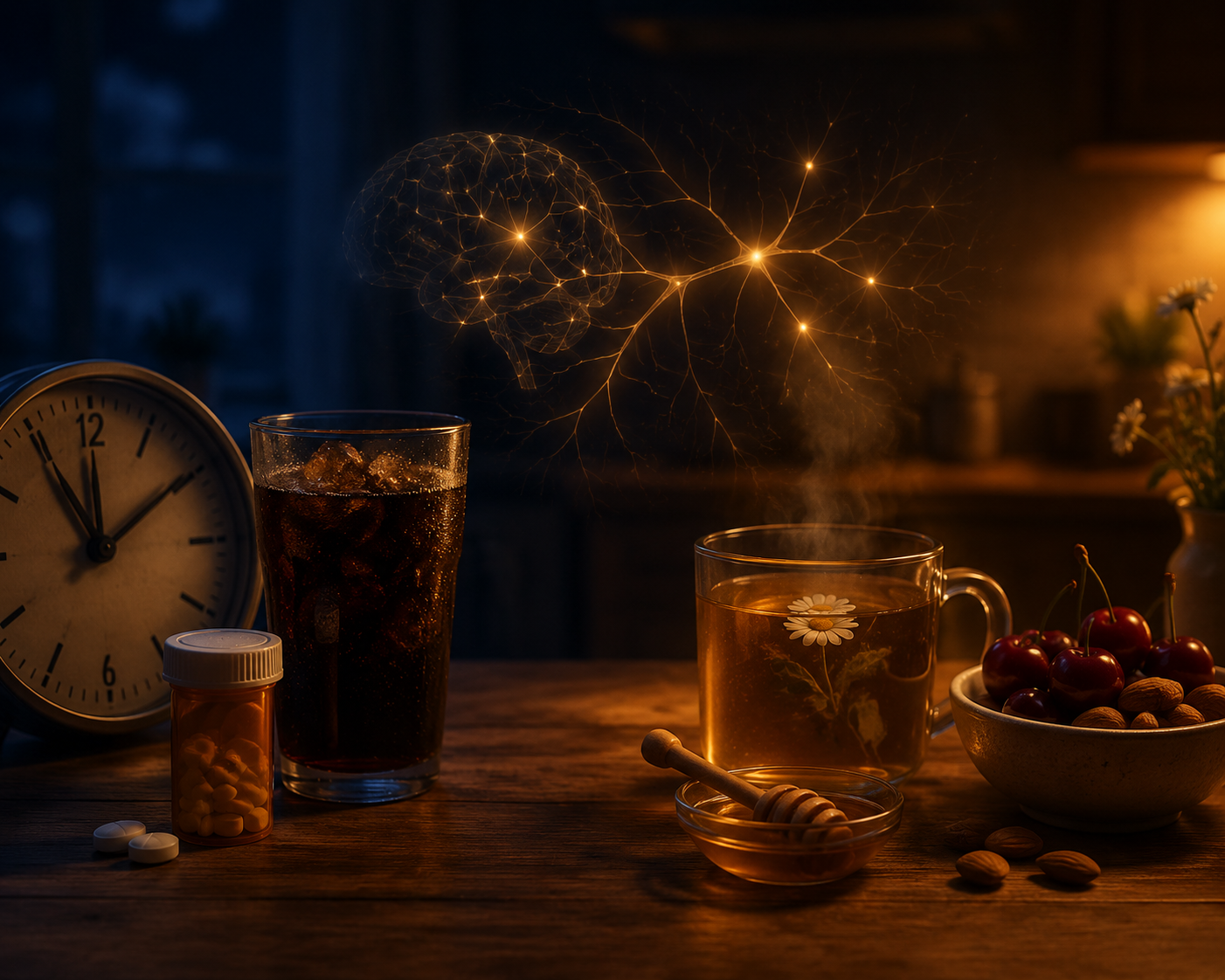
That is the useful starting point: better sleep recipes should not just swap in a different sweet taste with better branding. They should stop sending the body a confusing bedtime signal and instead use foods that provide both energy and sleep-relevant nutrients: complex carbohydrates, magnesium, tryptophan, and ingredients associated with better sleep patterns.
Why “Sweetness Without Energy” Can Be a Sleep Problem
The 2016 Cell Metabolism paper is not a generic warning about every non-sugar sweetener. It specifically tested sucralose, and its strongest sleep-related evidence came from fruit flies and mice, not from a human insomnia trial. That boundary matters. Still, the mechanism is interesting enough to take seriously, especially for people who keep using sucralose-heavy products in the evening and cannot explain why their sleep feels restless.
In the study, sucralose promoted food intake through neuropeptide Y, or NPY, pathways involved in fasting responses. The researchers described a neuronal fasting response: when sweet taste kept arriving without corresponding energy, the brain behaved more as if food was scarce. When fruit flies that had been exposed to artificial sweetener returned to natural food, they consumed 30% more calories.[1] Sleep Review’s coverage of the same work emphasized the insomnia link, noting that the response was associated with hyperactivity and reduced sleep quality in the tested animals.[2]
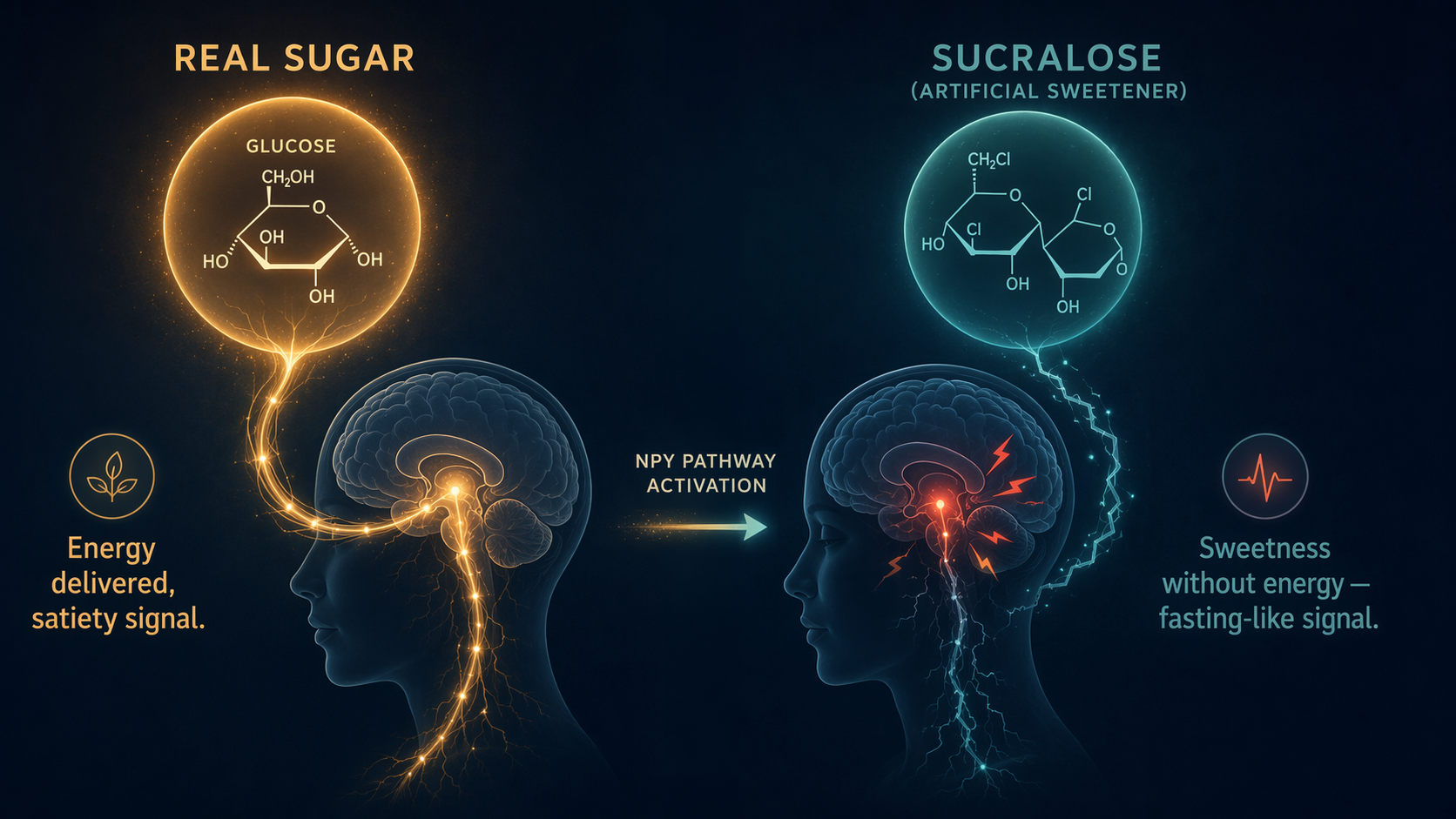
This does not prove that one diet soda at night causes insomnia in humans. It does make a more modest and practical point: if your evening routine depends on sucralose-sweetened drinks, yogurts, protein desserts, or candies, and your sleep is poor, the first experiment does not have to be complicated. Remove the “sweet signal without food” at night and replace it with something that gives the body a more coherent message.
Other sweeteners should not be collapsed into the same claim. Aspartame, saccharin, stevia, monk fruit, and natural sweeteners may differ, and some are simply less studied for sleep-specific effects. The case for changing the evening routine is strongest when sucralose is the regular habit, not when every possible sweet taste is treated as the same biological event.
What a Better Bedtime Replacement Needs to Do
A useful replacement has to solve the actual problem. If the concern is sweetness without energy, then the answer is not a “clean” zero-calorie drink with better branding. The answer is usually a small, whole-food snack or drink that provides some energy, digests comfortably, and includes nutrients plausibly connected to sleep.
Sleep Foundation identifies tart cherries, fatty fish, nuts, whole grains, and kiwifruit among foods and drinks that may promote better sleep, while also noting that nutrition and sleep research is still developing.[3] BBC Food similarly discusses foods that may help sleep alongside foods and drinks that may interfere with it.[4] A recent analysis of 26 studies concluded that there is not enough evidence to confirm that specific foods directly affect sleep, partly because much of the field relies on observational research.[4] So the recipes here are not insomnia treatments. They are better-designed replacements for a nighttime pattern that may be working against you.
| If the old habit is | Try replacing it with | Why it fits the sleep logic |
|---|---|---|
| Diet soda or sugar-free drink after dinner | Tart cherry bedtime smoothie or chamomile-spiced warm almond milk | Keeps the ritual, removes sucralose-heavy sweetness, and adds whole-food or herbal ingredients |
| Sugar-free dessert cup or sweetened yogurt | Warm oat bowl with banana and walnuts | Provides complex carbohydrates, magnesium-containing nuts, and steady satiety |
| Light dinner followed by late-night grazing | Almond-crusted salmon with roasted sweet potatoes | Builds dinner around protein, healthy fats, and complex carbohydrates |
| Low-protein vegetarian dinner that leaves you hungry | Stuffed portobello mushrooms with quinoa | Adds a more complete, satisfying dinner structure with whole grains and magnesium-rich additions |
If you want the broader routine around food timing, light, caffeine, and bedroom cues, use Sleep Hygiene Fundamentals as the larger framework. This article stays with the food substitution problem because that is where a lot of well-intended nighttime routines quietly go sideways.
Tart Cherry Bedtime Smoothie
This is the most direct replacement for a sweet evening drink. Tart cherries are one of the foods Sleep Foundation highlights in its discussion of foods and drinks that may promote sleep, and UCI Health includes tart cherry-based ideas among its “dreamy dishes” recipe templates.[3][5] The smoothie keeps the cold, sweet, end-of-day feeling, but it does not ask the brain to interpret sweetness without any food behind it.
- Blend unsweetened tart cherry juice or frozen tart cherries with plain Greek yogurt or kefir, a small banana, and a spoonful of oats.
- Add almond butter or ground flaxseed if you need it to feel more like a snack than a drink.
- Keep the portion modest and have it early enough that it does not leave you uncomfortably full in bed.
- Skip sucralose-sweetened protein powders or sugar-free syrups; they recreate the mismatch this recipe is meant to avoid.
The banana and oats matter because they make the smoothie less like flavored water and more like actual food. Complex carbohydrates can help make an evening snack feel steadier, and pairing them with protein or fat can reduce the urge to keep searching the kitchen for something else.
Warm Oat Bowl With Banana and Walnuts
A warm oat bowl is not glamorous, which is part of its charm. It is what to make when the old habit was a sugar-free pudding, a diet hot chocolate, or a sweetened “guilt-free” snack that did not actually satisfy you. Whole grains and nuts appear in Sleep Foundation’s list of sleep-supportive foods, and Northwestern Medicine also discusses bedtime-friendly eating patterns that include nutrient-dense choices rather than heavy, disruptive meals.[3][6]
- Cook rolled oats with milk or unsweetened almond milk until soft.
- Top with sliced banana, chopped walnuts, cinnamon, and a small spoonful of almond butter if you want more staying power.
- For extra texture, add pumpkin seeds or sliced almonds rather than sugar-free chocolate chips.
- If you need sweetness, use the banana first; do not turn the bowl into a delivery system for artificial sweetener packets.
This is also where magnesium naturally enters the conversation. Nuts, seeds, oats, quinoa, and leafy greens can help build a magnesium-containing diet. If you are considering magnesium as a supplement rather than a food pattern, the evidence and tradeoffs belong in a separate discussion, such as this magnesium glycinate explainer.
Almond-Crusted Salmon With Roasted Sweet Potatoes
Some sleep problems start before the bedtime snack. A dinner that is too light, too low in protein, or built around “saving calories” can make the late-night sugar-free drink feel necessary. Fatty fish is one of the foods Sleep Foundation discusses in connection with sleep, and Johns Hopkins Medicine recommends simple diet tweaks for better sleep that include paying attention to what and when you eat.[3][7]
- Brush salmon with olive oil and press chopped almonds, herbs, and a pinch of salt onto the top.
- Roast sweet potato wedges on the same pan until tender.
- Serve with spinach or another cooked green if you want more magnesium-rich foods on the plate.
- Keep the seasoning savory rather than using sugar-free glazes or artificially sweetened sauces.
The important pairing is protein and fat from the fish with complex carbohydrates from the sweet potato. This kind of dinner is not meant to sedate you. It is meant to reduce the chance that you arrive at 9 p.m. underfed, wired, and negotiating with a can of diet soda.
Stuffed Portobello Mushrooms With Quinoa
For a plant-forward dinner, stuffed portobello mushrooms with quinoa make sense because they are satisfying without being heavy. UCI Health’s sleep-oriented recipe templates include dishes built around whole foods such as grains, vegetables, nuts, and sleep-supportive ingredients.[5] Quinoa also helps this meal avoid the common “vegetables only” dinner problem: it gives the body more than volume.
- Roast portobello caps until they release moisture and soften.
- Fill with cooked quinoa, sautéed spinach, onions, herbs, and chopped walnuts or almonds.
- Add a little cheese, beans, or tofu if you need more protein.
- Serve with a simple side rather than finishing the meal with a sugar-free dessert out of habit.
This recipe is less about a single magic ingredient and more about dinner architecture. Whole grains, nuts, and greens make the plate more complete, which can make the later replacement step easier.
Chamomile-Spiced Warm Almond Milk
Sometimes the attachment is not to sweetness; it is to having something in your hand while the day shuts down. Chamomile-spiced warm almond milk works best as a ritual substitute for artificially sweetened evening beverages. It is warm, low-effort, and easy to keep unsweetened or only lightly flavored with cinnamon, vanilla, or a small amount of blended banana.
- Warm unsweetened almond milk gently with a chamomile tea bag.
- Add cinnamon, nutmeg, or vanilla extract for flavor.
- If you want it creamier, blend with a spoonful of almond butter.
- Avoid sugar-free syrups; they move the drink back toward the same artificial-sweetness habit.
The point is not that warm almond milk cures insomnia. It gives the evening routine a softer landing without asking sucralose to play the role of dessert, comfort, and calorie control all at once.
How to Test the Change Without Overreading It
If sucralose-heavy foods or drinks are part of your evening routine, remove them at night first. You do not need to redesign your whole diet or declare every sweet taste suspicious. Pick one replacement that fits the role the old product played: cold drink, warm drink, small snack, or more substantial dinner. Then watch what happens to sleep onset, nighttime waking, hunger, and next-day cravings over a routine-building period.
Be careful with the conclusion. If sleep improves, that does not prove sucralose was the only cause. You may also be eating a steadier dinner, reducing late caffeine from diet sodas, or creating a calmer bedtime cue. If nothing changes, the experiment still tells you something useful: your sleep problem may sit somewhere else in the routine.
For ongoing insomnia, food should not be asked to do the job of treatment. Use the home remedies for insomnia evidence guide to see where dietary changes fit, and read CBT-I explained if your sleep difficulties are persistent. If sleep disruption overlaps with cycle changes, hot flashes, or midlife hormone shifts, the perimenopause sleep disruption guide may be more relevant than another recipe.
For the specific person who reaches for sugar-free products at night and then sleeps badly, the most defensible experiment is simple: take sucralose-heavy evening items out of the routine and replace them with whole foods that provide energy plus sleep-relevant nutrients. That is a practical change, not a purity test.
References
- Sucralose Promotes Food Intake through NPY and a Neuronal Fasting Response, Cell Metabolism, 2016
- Research Sheds Light on Artificial Sweetener’s Impact on Brain, Including How They Promote Insomnia, Sleep Review Magazine
- Foods That Help You Sleep, Sleep Foundation
- The foods that help – and the ones to avoid, BBC Food
- Dreamy Dishes for Restful Sleep, UCI Health, 2025
- Eats to Help You Sleep, Northwestern Medicine
- Better Sleep: 3 Simple Diet Tweaks, Johns Hopkins Medicine
Comments
Join the discussion with an anonymous comment.