
If you are searching “insomnia how to cure” after months or years of trying the usual advice, the first honest answer is this: a darker room, less caffeine, a cooler bedroom, magnesium, melatonin, a stricter phone rule, and a better pillow may all be reasonable sleep habits. They are not, by themselves, a treatment for chronic insomnia.
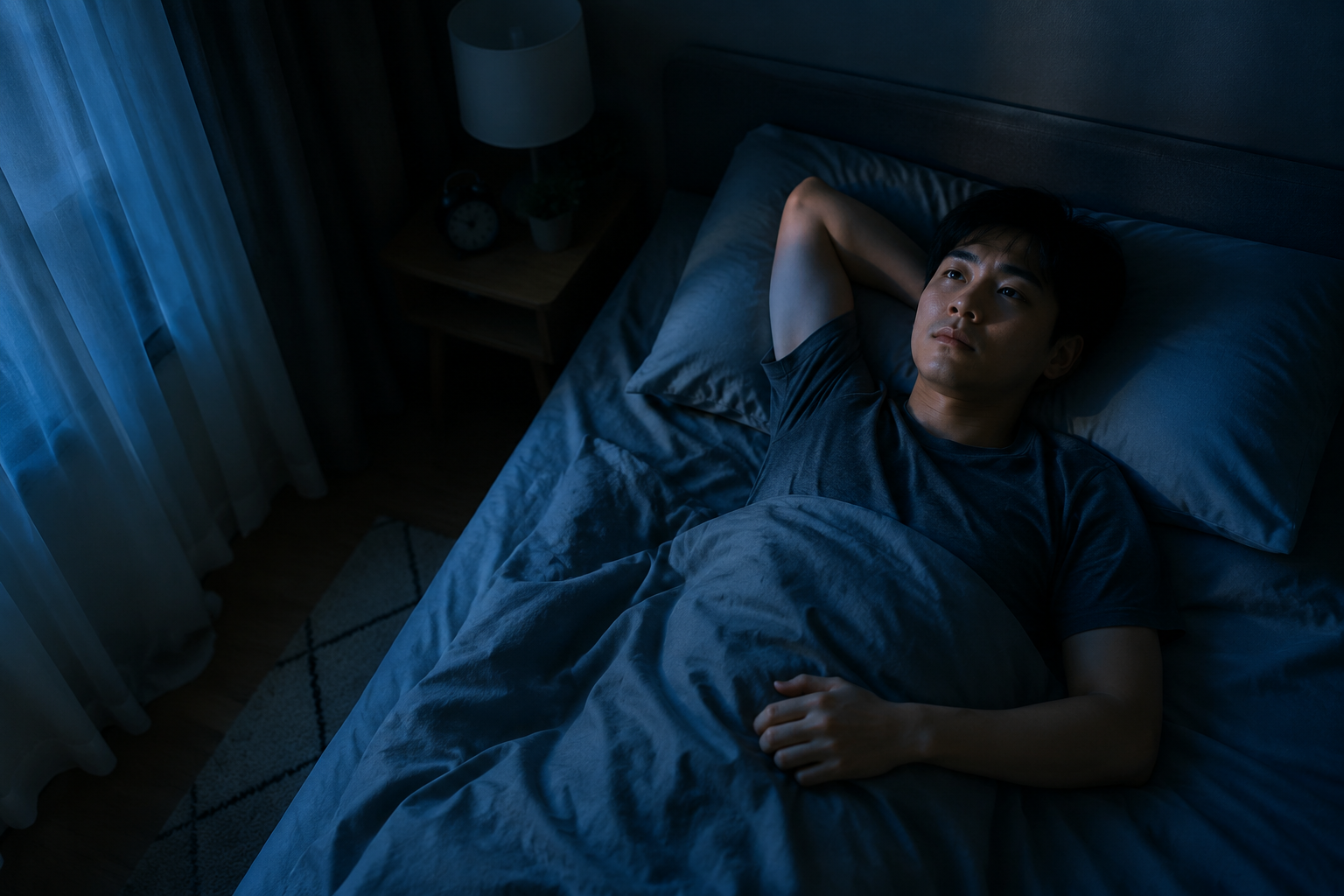
That distinction matters because many people with chronic insomnia have already done the “right” things and still end up awake at 2 a.m., watching the night become a performance review. When sleep hygiene fails, it does not prove that you are undisciplined. It often means the problem has moved beyond poor sleep habits into a learned, self-reinforcing insomnia pattern.
The treatment with the strongest clinical standing for adults with established insomnia is cognitive behavioral therapy for insomnia, usually called CBT-I. The American Academy of Sleep Medicine describes behavioral and psychological treatments as first-line care for chronic insomnia, with medication reserved for situations such as inability to participate in CBT-I, persistent symptoms after treatment, or temporary adjunctive use.[1] The National Heart, Lung, and Blood Institute also identifies CBT-I as a first-line treatment for chronic insomnia.[2]
Why Sleep Hygiene Stops Helping
Sleep hygiene is still useful. It removes obvious obstacles: late caffeine, irregular timing, bright light at the wrong hour, alcohol close to bed, a bedroom that trains the brain to stay busy. For someone whose sleep is only mildly disrupted, those changes can be enough.
Chronic insomnia behaves differently. Clinical descriptions of insomnia focus not only on trouble falling asleep or staying asleep, but also on persistence, daytime consequences, and the fact that sleep trouble can continue even when the person has adequate opportunity to sleep.[3][4] In other words, the problem is not simply that the room is wrong or the bedtime is imperfect. The sleeping system has become unstable.
A familiar loop develops. You go to bed hoping tonight will be different. The bed itself has become loaded with memory: frustration, clock-checking, calculation, dread, bargaining. Your body may be tired, but bedtime starts to trigger alertness. The longer you lie there, the more the bed becomes associated with wakefulness. Then you sleep in, nap, spend extra hours in bed to “catch up,” or go to bed earlier the next night. Those responses are understandable. They can also weaken sleep drive and make the next night harder.
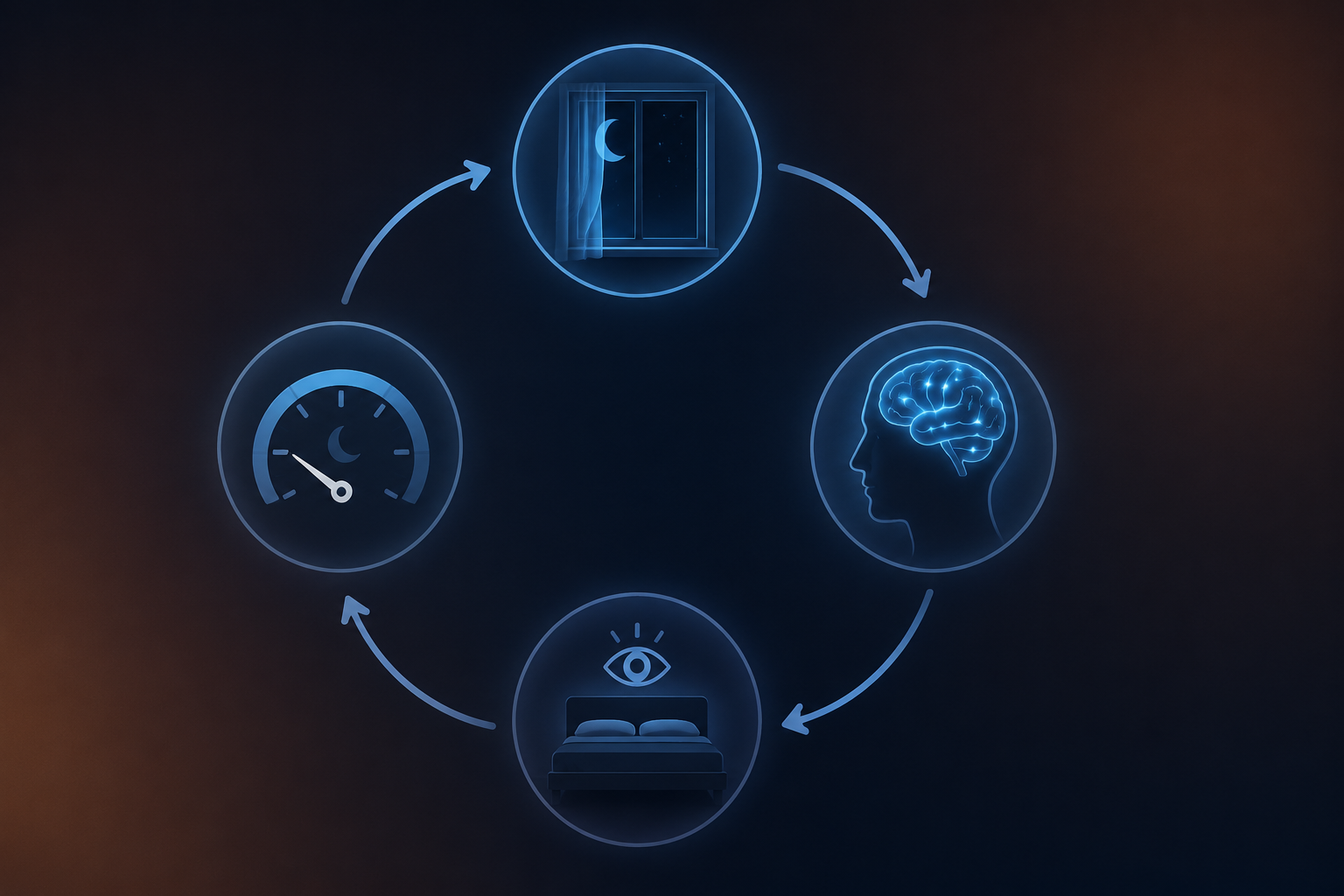
This is why more tips often feel insulting. The person with chronic insomnia is not usually missing the concept of a relaxing evening. They are stuck in a conditioned pattern where effort, monitoring, and extra time in bed keep feeding the disorder.
What CBT-I Is Actually Treating
CBT-I is not a nicer bedtime routine. It is a structured treatment that targets the mechanisms keeping insomnia alive: conditioned arousal, irregular sleep drive, unhelpful beliefs about sleep, physiological tension, and behaviors that accidentally protect the insomnia loop.
A typical CBT-I program uses several components together. The exact format varies by clinician or digital program, but the core pieces are usually stimulus control, sleep restriction or sleep compression, cognitive restructuring, relaxation training, and psychoeducation.
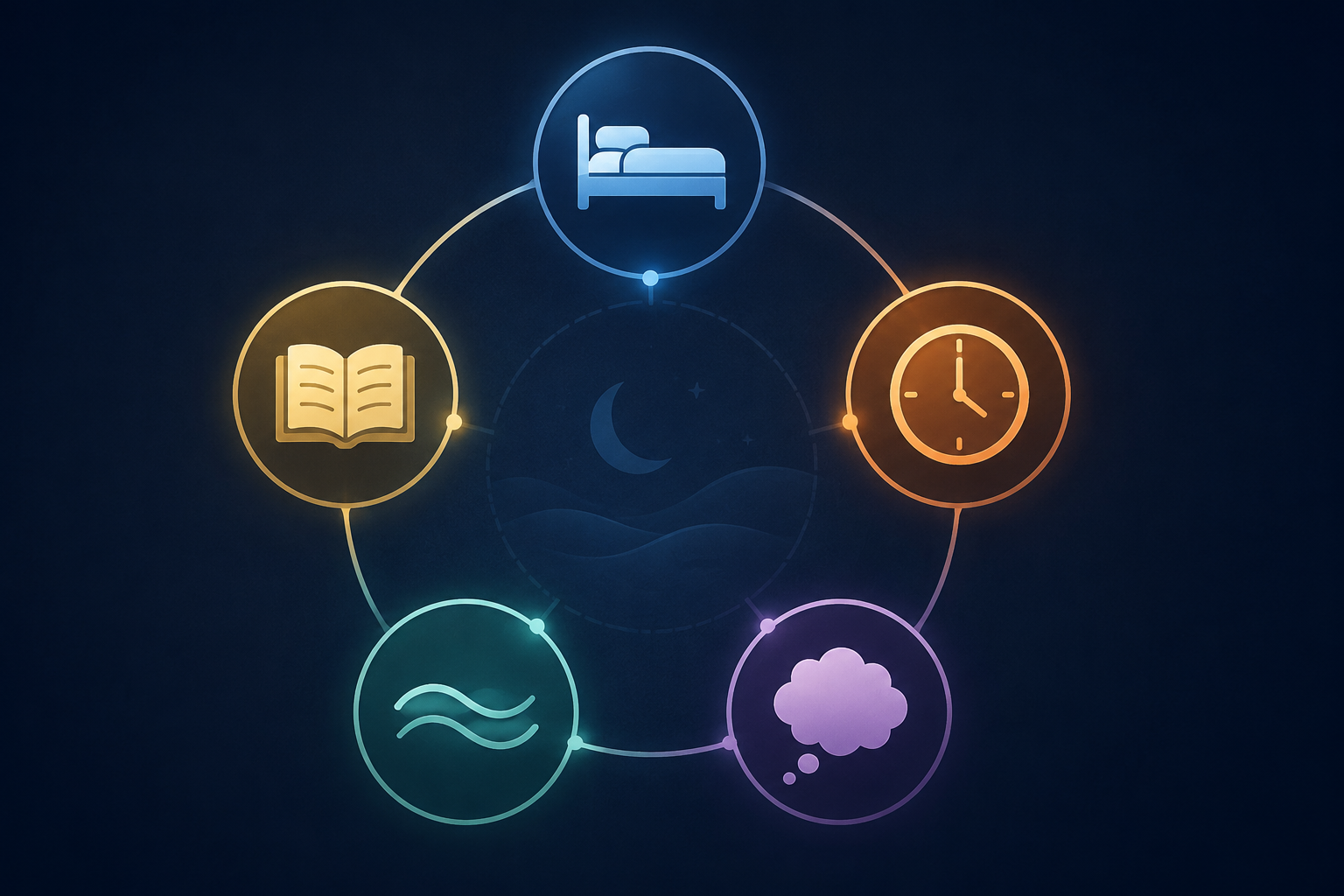
| CBT-I component | Insomnia loop it targets |
|---|---|
| Stimulus control | The bed has become a cue for wakefulness, frustration, and monitoring. |
| Sleep restriction or sleep compression | Too much time in bed weakens sleep drive and spreads sleep thinly across the night. |
| Cognitive restructuring | Fearful predictions and rigid sleep beliefs keep the brain on alert. |
| Relaxation training | Physical and mental arousal make sleep harder to enter. |
| Psychoeducation | Misunderstanding sleep can lead to well-intended behaviors that maintain insomnia. |
Stimulus Control: Rebuilding What the Bed Means
Stimulus control is aimed at one of chronic insomnia’s crueler tricks: the bed stops feeling like a place where sleep happens and starts feeling like a place where wakefulness happens. The goal is to rebuild the bed-sleep association by reducing the amount of time spent awake, frustrated, scrolling, worrying, or trying to force sleep while in bed.
In practice, this often means using the bed mainly for sleep and sex, getting out of bed when wakefulness is prolonged, returning only when sleepy, keeping a consistent wake time, and avoiding long daytime naps unless a clinician has advised otherwise. The point is not punishment. It is retraining. If the brain has learned “bed equals alert,” stimulus control gives it repeated evidence for a different association.
Sleep Restriction: Strengthening Sleep Drive
Sleep restriction may be the most misunderstood part of CBT-I because the name sounds harsh. It does not mean depriving people of sleep indefinitely. It means temporarily limiting the sleep window so that time in bed more closely matches actual sleep time, then gradually expanding the window as sleep becomes more consolidated.
This targets a specific maintenance problem. Many people with insomnia respond to a bad night by going to bed earlier, staying in bed later, or spending more total hours in bed. That response makes emotional sense. But if sleep is scattered across a long window, the bed becomes a place of light sleep, wakefulness, and calculation. A tighter window can increase sleep pressure and reduce the amount of wakeful time spent in bed.
This part of CBT-I should be handled carefully, especially for people with bipolar disorder, seizure disorders, untreated sleep apnea, severe daytime sleepiness, safety-sensitive jobs, or other medical risks. The principle is simple; applying it safely is not always simple.
Cognitive Restructuring: Lowering the Alarm Around Sleep
Insomnia is not maintained only by behavior. It is also maintained by meaning. A person starts the night with thoughts like “If I don’t sleep, tomorrow is ruined,” “I’m losing control,” or “I have to get eight hours or I won’t function.” Some of those thoughts may contain a real concern. They also raise the stakes so high that the nervous system treats bedtime like a threat.
Cognitive restructuring does not ask people to pretend sleep loss is harmless. It asks them to test catastrophic predictions, separate discomfort from danger, and replace rigid rules with more accurate ones. A more workable thought might be: “A poor night will be unpleasant, but I have gotten through poor nights before, and lying here fighting sleep is not helping.”
That shift is not cosmetic. When the brain stops treating every wakeful minute as evidence of disaster, there is less fuel for arousal. The goal is not positive thinking. It is reducing the alarm signal that keeps sleep out of reach.
Relaxation Training: Useful, But Not the Whole Treatment
Relaxation training can include breathing exercises, progressive muscle relaxation, imagery, mindfulness-based exercises, or other methods that lower physiological arousal. It is the part of CBT-I that most resembles common sleep advice, which is why it is easy to overestimate it.
Relaxation can help the body exit a state of tension. But if someone spends nine hours in bed trying relaxation techniques while checking the clock and fearing the next day, the larger insomnia loop is still intact. In CBT-I, relaxation is one tool inside a treatment system, not a cure standing alone.
Psychoeducation: Learning Which Efforts Backfire
Psychoeducation sounds minor until you watch how much insomnia is sustained by reasonable but counterproductive rescue attempts. People try to recover lost sleep by extending time in bed. They cancel morning light and movement because they are exhausted. They monitor sleep with increasing intensity. They treat one bad night as proof that the whole system is broken.
Good CBT-I education explains sleep drive, circadian timing, arousal, and the difference between feeling tired and being physiologically ready to sleep. It gives the person a working model of the problem, which makes the harder parts of treatment feel less arbitrary.
How Strong Is the Evidence?
The important evidence is not that CBT-I is fashionable. It is that major medical organizations put it ahead of medication for chronic insomnia. The AASM guideline position gives behavioral and psychological treatment first-line status, and NHLBI’s patient-facing treatment guidance points adults with chronic insomnia toward CBT-I before sleeping pills.[1][2]
One often repeated estimate is that 70% to 80% of people with primary insomnia improve with CBT-I. That figure is commonly cited in patient education materials and is usually traced to earlier clinical literature; because the source trail is indirect, it should be read as a broad estimate rather than a guarantee for any individual patient. The safer conclusion is still meaningful: CBT-I has a substantial response record, and its benefits are designed to persist because the treatment changes the behaviors and associations that maintain insomnia.
That durability is a major difference from hypnotic medication. Sleeping pills may produce sleep on the night they are taken, and sometimes that is clinically useful. CBT-I is trying to make future nights less dependent on rescue. AASM’s framing leaves room for medication when CBT-I is unavailable, incomplete, or needs temporary support, but it does not make medication the starting point for most adults with chronic insomnia.[1]
The Access Problem Is Real
First-line treatment is a frustrating phrase when the first line is hard to find. Behavioral sleep medicine specialists are not available in every community, and many primary care visits are too short to deliver a full CBT-I protocol. Meanwhile, chronic insomnia is not rare. An AASM survey reported that 12% of Americans said they had been diagnosed with chronic insomnia.[5] That figure is diagnosis-level, not the same as every person who has occasional sleep symptoms.
This is where digital CBT-I matters. It is not a second-rate wellness trend simply because it is delivered through a website or app. The better question is whether a program actually delivers CBT-I components in a structured way and whether people complete enough of it to benefit.
A 2025 systematic review and meta-analysis of fully automated digital CBT-I included 29 randomized controlled trials with 9,475 participants. It found moderate-to-large effects compared with waitlist, placebo, and online sleep education controls, with standardized mean differences of -0.88, -0.98, and -0.93 respectively.[6] Another 2025 meta-analysis covering 49 randomized controlled trials and 20,118 participants found that digital CBT-I reduced Insomnia Severity Index scores by a weighted mean difference of -3.42.[7]
Those results make digital CBT-I a serious access pathway, especially for people who cannot find or afford a specialist. They do not erase the tradeoffs. The 2025 fully automated digital CBT-I review reported an average completion rate of about 59%, and therapist-assisted CBT-I showed greater effects than fully automated treatment, with an SMD of 0.61 favoring therapist assistance.[6] That is a practical distinction, not a reason to dismiss digital care. Some people need automation to start; some need human support to finish.
A Sensible Treatment Path
For an adult with established chronic insomnia, the next serious step is usually not another supplement stack. It is a CBT-I pathway that is structured enough to change the insomnia loop.
- If a behavioral sleep medicine clinician or therapist trained in CBT-I is available, that is the most direct route.
- If specialist care is not available, a validated digital CBT-I program is a reasonable lower-barrier starting point.
- If digital treatment is hard to complete, look for clinician-supported CBT-I, group CBT-I, telehealth options, or a sleep clinic that can coordinate care.
- If insomnia is paired with loud snoring, breathing pauses, restless legs, severe depression, mania symptoms, trauma symptoms, substance use, dangerous sleepiness, or safety-sensitive work, involve a clinician before pushing through a self-guided protocol.
A primary care clinician can also help screen for medical contributors, medication effects, sleep apnea, mood disorders, pain, and other conditions that may complicate insomnia. CBT-I can still be useful when insomnia coexists with other problems, but the plan may need adjustment.
Where Medication and Supplements Fit
Medication is not morally inferior to behavioral treatment. It is just a different tool. In insomnia care, hypnotics and other sleep medications may be used short term, as an adjunct, or when CBT-I is inaccessible or insufficient. AASM’s guidance explicitly leaves space for medication in those circumstances, while keeping behavioral and psychological treatment as the first-line recommendation.[1]
A 2026 news report on updated insomnia guidance similarly highlighted behavioral therapy as the preferred starting point and described medication as a more bounded option rather than the foundation of care.[8] That hierarchy is especially important for people who have spent years cycling through melatonin, antihistamines, magnesium, cannabis products, or prescription sedatives without changing the learned insomnia pattern underneath.
Supplements deserve even less romance. Some may help specific people in specific situations, and some are relatively low risk when used appropriately. But for chronic insomnia, they do not replace stimulus control, sleep drive consolidation, cognitive work, and a plan for reducing conditioned arousal. If a supplement has become the nightly centerpiece and the insomnia remains unchanged, the treatment target is probably wrong.
What “Cure” Can Reasonably Mean
Insomnia is not cured in the way an infection may be cured by a short course of antibiotics. A better goal is remission or durable control: falling asleep more reliably, spending less of the night awake, reducing fear of the bed, functioning better during the day, and knowing what to do when a bad night happens.
CBT-I is the treatment most directly built for that job. It does not promise that every night will be perfect. It changes the conditions that make insomnia self-perpetuating. For someone who has already cleaned up the bedroom, cut the caffeine, bought the supplements, and blamed themselves long enough, that is the point at which care should become more specific.
For established chronic insomnia, the practical next step is CBT-I: therapist-delivered when possible, validated digital CBT-I when access is limited, and clinician-supported care when symptoms persist, comorbidities complicate treatment, or safety concerns are present.
References
- New guideline supports behavioral, psychological treatments for insomnia — American Academy of Sleep Medicine
- Insomnia - Treatment — NHLBI, NIH
- Insomnia — Cleveland Clinic
- Insomnia - Diagnosis and treatment — Mayo Clinic
- Survey shows 12% of Americans have been diagnosed with chronic insomnia — American Academy of Sleep Medicine
- Systematic review and meta-analysis on fully automated digital CBT for insomnia — npj Digital Medicine, 2025
- Effectiveness of Digital Cognitive Behavioral Therapy for Insomnia: A Meta-Analysis of 49 RCTs — PMC, 2025
- New Guidelines Highlight Behavioral Therapy for Insomnia — U.S. News & World Report, April 24, 2026



Comments
Join the discussion with an anonymous comment.