
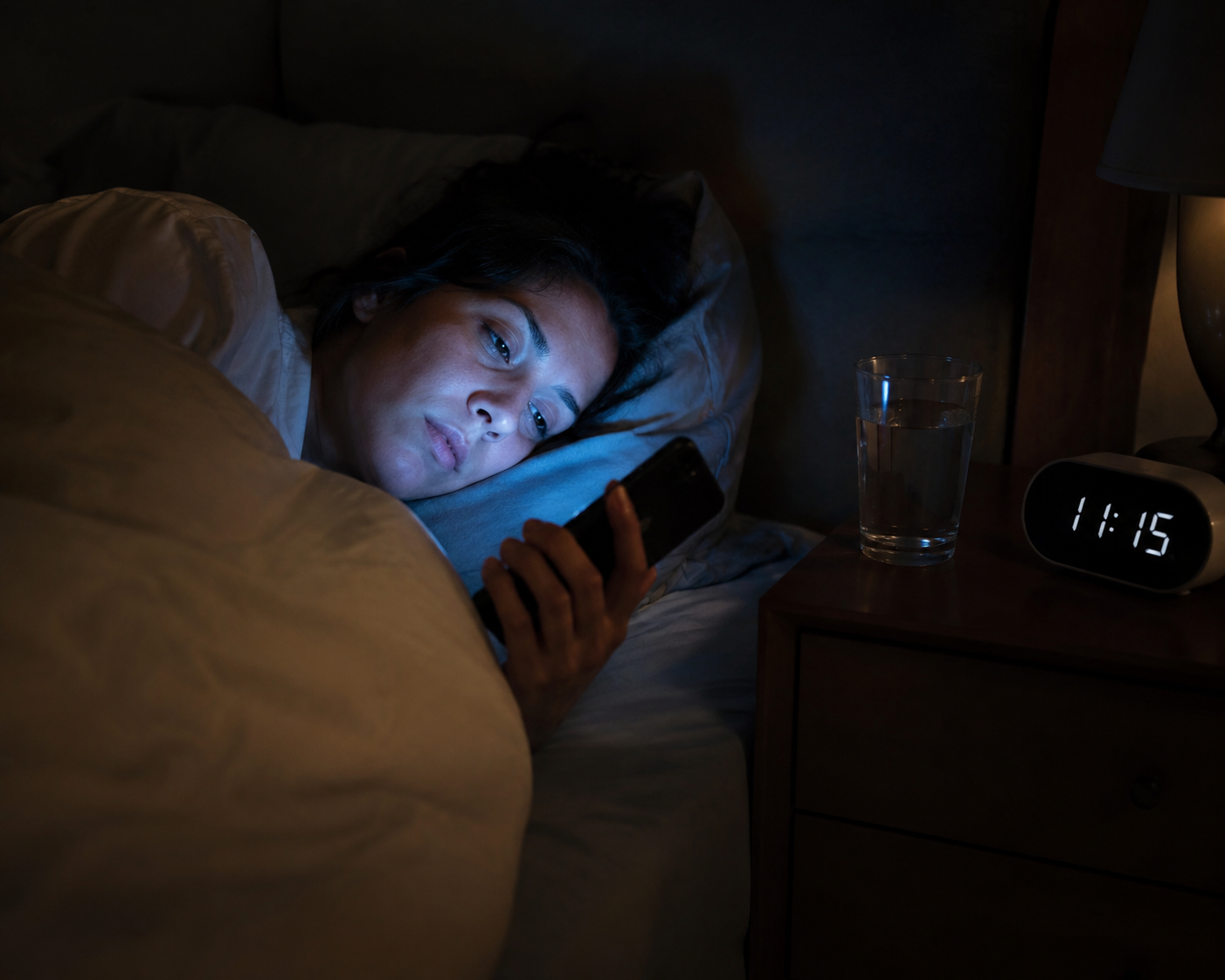
You can be genuinely exhausted and still keep scrolling. That is the maddening part. The light is off, the pillow is right there, tomorrow already looks crowded, and some quieter part of you knows that one more clip or notification check is not going to improve anything. Still, the thumb moves. The feed refreshes. The next small reward arrives just soon enough to make stopping feel strangely expensive.
That private contradiction is the center of how instant gratification affects sleep quality. It is not simply that screens are “bad,” or that adults have forgotten basic sleep hygiene. Bedtime scrolling puts a reward-rich environment inside the sleep environment, exactly when the brain is tired, self-control is worn down, and sleep can be delayed by surprisingly small jolts of interest, irritation, amusement, comparison, or anticipation.
The Problem Is Not Only Social Media
A large Norwegian study gives this familiar bedtime loop a blunt shape. Among more than 45,000 students, each additional hour of screen time in bed was associated with a 59% to 63% higher risk of insomnia, depending on the adjustment model, and with about 24 minutes less sleep. The awkward detail is that the type of screen activity did not appear to matter: social media was not clearly worse than other in-bed screen use in that analysis.[1]
That finding is useful precisely because it spoils the easy villain story. If social media alone were the whole problem, the fix would be clean: delete one app, keep the rest of the phone. But the Norwegian result points toward a broader exposure. A phone in bed can deliver news, games, messages, shopping, videos, work updates, sports scores, comment threads, or a harmless-looking search that becomes six related searches. The common denominator is not one app category. It is interactive, rewarding, cognitively activating screen time occurring where sleep is supposed to begin.
That does not mean all screen experiences feel the same. A quiet e-book, a work email, and a short-video feed can differ dramatically in emotional charge. It means the sleep-relevant question has to widen from “Which app is guilty?” to “What is this device asking my brain to do at the moment I need it to stand down?”
Why Stopping Feels So Hard When You Are Already Tired
The reward loop is simple to describe and hard to interrupt. You do something tiny: tap, swipe, refresh, open a notification. The result is unpredictable. Maybe there is nothing. Maybe there is a funny clip, a message, a headline, a like, a new argument, a discount, a piece of gossip, a beautiful room you suddenly want to redesign your life around. The next reward is uncertain, and that uncertainty is part of the pull.
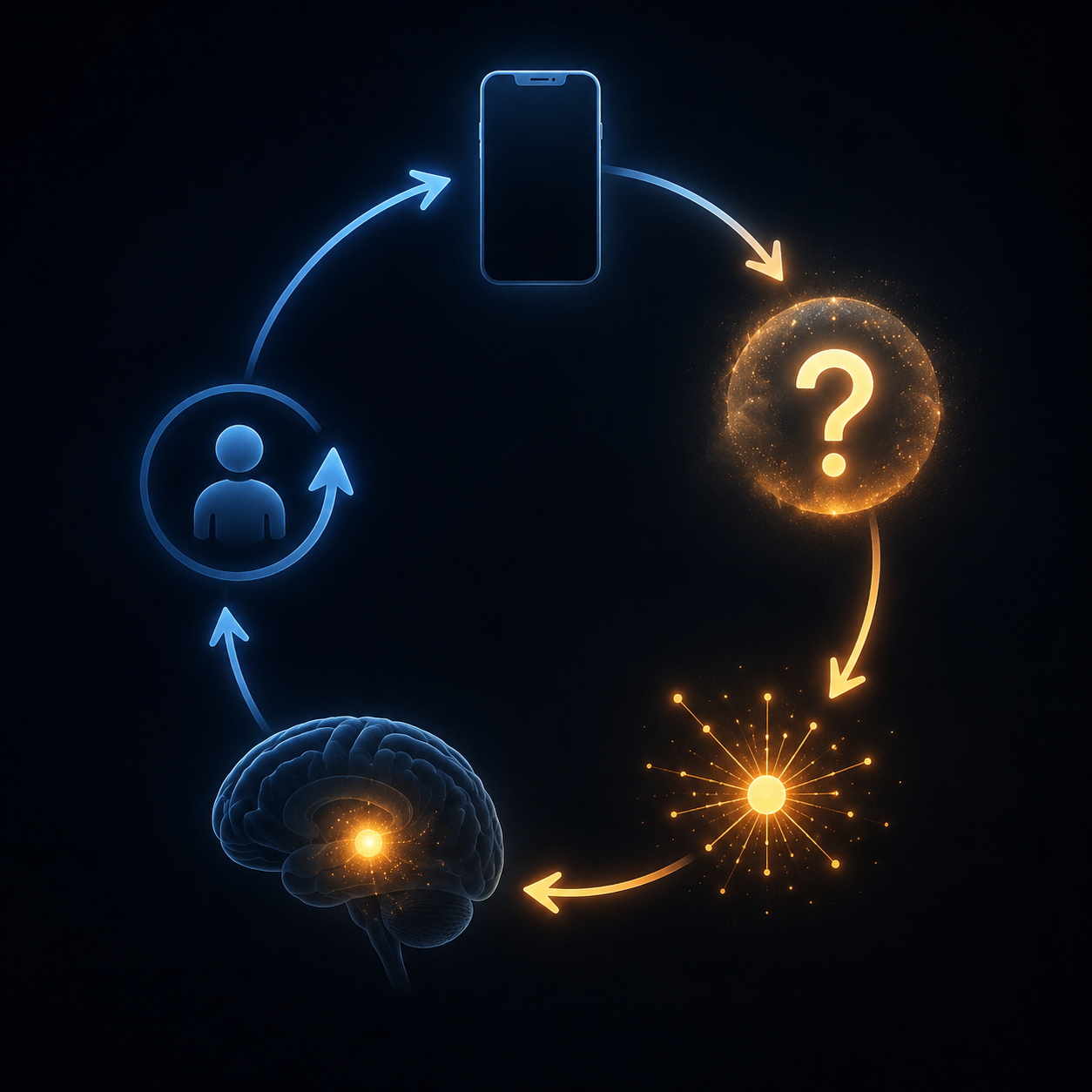
This is where dopamine language can be helpful, as long as it is not treated like a magic explanation for everything. Dopamine is heavily involved in motivation, learning, and reward prediction. In the bedtime phone loop, the important point is not that every scroll produces some neat, measurable “dopamine hit” that directly causes insomnia. The evidence in these sleep studies does not measure instant gratification as one clean variable. The better-supported interpretation is narrower: reward-seeking design, emotional content, and easy repetition can keep the brain engaged when sleep needs disengagement.
That matters because bedtime is not a neutral decision-making hour. By late evening, many adults have already spent the day inhibiting impulses, switching tasks, managing other people’s needs, making food choices, answering messages, behaving professionally, commuting, caregiving, and trying not to say the thing they wanted to say in a meeting. Then the phone offers the opposite of effort: immediate novelty with almost no physical movement. The tired brain does not need to believe the phone is important. It only needs the next cue to feel slightly more rewarding than the dull transition into sleep.
This is why “just put it down” often fails as advice. It asks the weakest version of you to make the cleanest decision in the most tempting environment. The person setting the bedtime rule at 9:00 a.m. and the person holding the phone at 10:47 p.m. are living in different conditions.
The Bedtime Loop Has Several Moving Parts
Instant gratification affects sleep quality through more than one route. The most obvious route is sleep displacement: time spent scrolling is time not spent sleeping. This sounds almost too plain to mention, but it is often the largest practical effect. If sleep opportunity starts at 10:30 p.m. and the phone quietly moves the real attempt to 11:20 p.m., the body has not been persuaded out of needing sleep. The sleep window has just been spent elsewhere.
The second route is cognitive arousal. Emotionally charged content gives the mind something to keep processing after the screen goes dark. A work message invites planning. A news feed invites threat monitoring. Social comparison invites self-evaluation. A comment thread invites imaginary replies. The body may be still, but the mind has been given unfinished business.
A 2024 study of 830 young adults helps refine this part of the picture. In that study, emotional investment in social media and frequency of visits were stronger predictors of poor sleep than total screen time, with pre-sleep cognitive arousal and social comparison described as mediating mechanisms.[2] That is not a universal law for every adult; it is one study in young adults and needs replication in broader populations. But it matches what many people recognize: the post that bothers you, flatters you, worries you, or makes you measure your life against someone else’s does not end when you close the app.
The third route is physiological alerting from light exposure. Blue-enriched screen light can contribute to melatonin suppression and alertness, especially when used close to bedtime. This is one reason broader technology-and-sleep advice often emphasizes dimming, night modes, and reducing evening light. Those tools can help, and readers who want the wider breakdown can read more about how technology affects sleep. But light is not the whole bedtime problem. A dimmed phone can still contain a reward machine.
| Part of the Loop | What Changes at Bedtime | Sleep Consequence |
|---|---|---|
| Variable rewards | The next swipe might bring something interesting, affirming, alarming, or funny | Stopping feels less rewarding than continuing |
| Cognitive arousal | Emotionally loaded content gives the mind material to process | The brain stays busy after the phone is put down |
| Sleep displacement | A planned sleep window becomes a scrolling window | Total sleep opportunity shrinks |
| Light exposure | Screen light can add alerting signals close to bedtime | The body receives less support for biological night |
Adult Bedtime Phone Use Shows the Same Pattern
The Norwegian student study is large and memorable, but adults do not get a pass. In a study of 10,106 adults, regular smartphone use at bedtime was associated with approximately twice the odds of taking more than 30 minutes to fall asleep.[3] The study was conducted in Saudi Arabia, and its authors noted that cultural and geographic factors may limit how broadly the findings generalize. Still, the result supports the same practical concern: using a smartphone at bedtime is linked with longer sleep latency in adults, not only with college-student habits.
Notice what that measure captures. Taking more than 30 minutes to fall asleep is not just a number on a sleep chart. It is the lived experience of getting into bed, delaying the first real attempt at sleep, then asking the nervous system to downshift after it has been fed novelty, light, and emotional cues. Some people then blame themselves for “not being tired enough,” even though they were tired before the phone extended the runway.
Why Blue-Light Advice Alone Often Disappoints
Blue-light warnings became popular because they are concrete. You can dim a screen, shift color temperature, wear glasses, or buy a different bulb. Those changes may reduce one source of alerting, and they are not foolish. The trouble starts when light becomes the whole explanation. Many people use night mode and still lose 45 minutes to a feed. The problem is not only what enters the eyes. It is what the device asks the reward system and attention system to keep doing.
A softened screen can still deliver an argument. A dark-mode app can still show an ex’s update, a medical worry, a work request, a political clip, or one more short video that ends before the brain has time to feel satisfied. The interface is designed to make continuation frictionless. Sleep, by comparison, requires a small surrender: stop seeking, stop checking, stop optimizing, stop responding.
That surrender is harder when the phone is already in bed. The bed stops being a strong cue for sleep and becomes a mixed cue: sometimes rest, sometimes entertainment, sometimes work, sometimes social monitoring. The decisive problem is not that you own a device. It is that an engineered reward environment has been allowed to operate inside the sleep environment.
Willpower Is the Wrong Tool for the Vulnerable Moment
Most bedtime phone plans fail because they are scheduled for the exact moment they are least likely to work. “I’ll stop at 10:30” sounds reasonable at lunch. At 10:30, the decision has to compete with a half-finished video, a message badge, a stressful thought, and the small relief of not yet being alone with tomorrow.
This is also where the knowledge-action gap becomes obvious. The person scrolling is often not uninformed. They may know about sleep duration, melatonin, morning grogginess, and the regret that arrives when the alarm goes off. Knowledge is present. The environment is stronger. If that pattern sounds familiar outside phone use too, the broader problem is explored in why knowing is not the same as doing.
Treating the loop as a willpower failure leads to shame and repetition. Treating it as a design problem opens better options. You do not need to become a person who never wants instant reward at night. You need fewer reward cues within arm’s reach after the day’s defenses are down.
Redesign the Bedtime Environment Before You Are in It
The most useful changes happen earlier than the temptation. They are precommitments: small arrangements made by the clearer version of you to protect the tired version of you. The goal is not digital purity. The goal is to make the sleep-supporting action easier than the reward-seeking action at the point of use.
- Move the phone out of reach before you get into bed. Across the room is better than beside the pillow; outside the bedroom is better if you can manage it.
- Charge it somewhere that requires standing up to retrieve it. Physical distance adds a pause that the thumb alone does not provide.
- Remove notification cues before the wind-down period. Badges, banners, and lock-screen previews are invitations to re-enter the loop.
- Add friction to high-reward apps. App limits, logged-out sessions, grayscale settings, or removing apps from the home screen are useful because they interrupt automatic opening.
- Separate necessary phone functions from feed access. If you use the phone as an alarm, consider a separate alarm clock; if you need emergency access, allow calls while blocking entertainment apps.
- Replace the reward slot with a lower-arousal cue. A paper book, audio with a sleep timer, stretching, a warm shower, or a short written plan for tomorrow gives the brain something to do without reopening the feed.
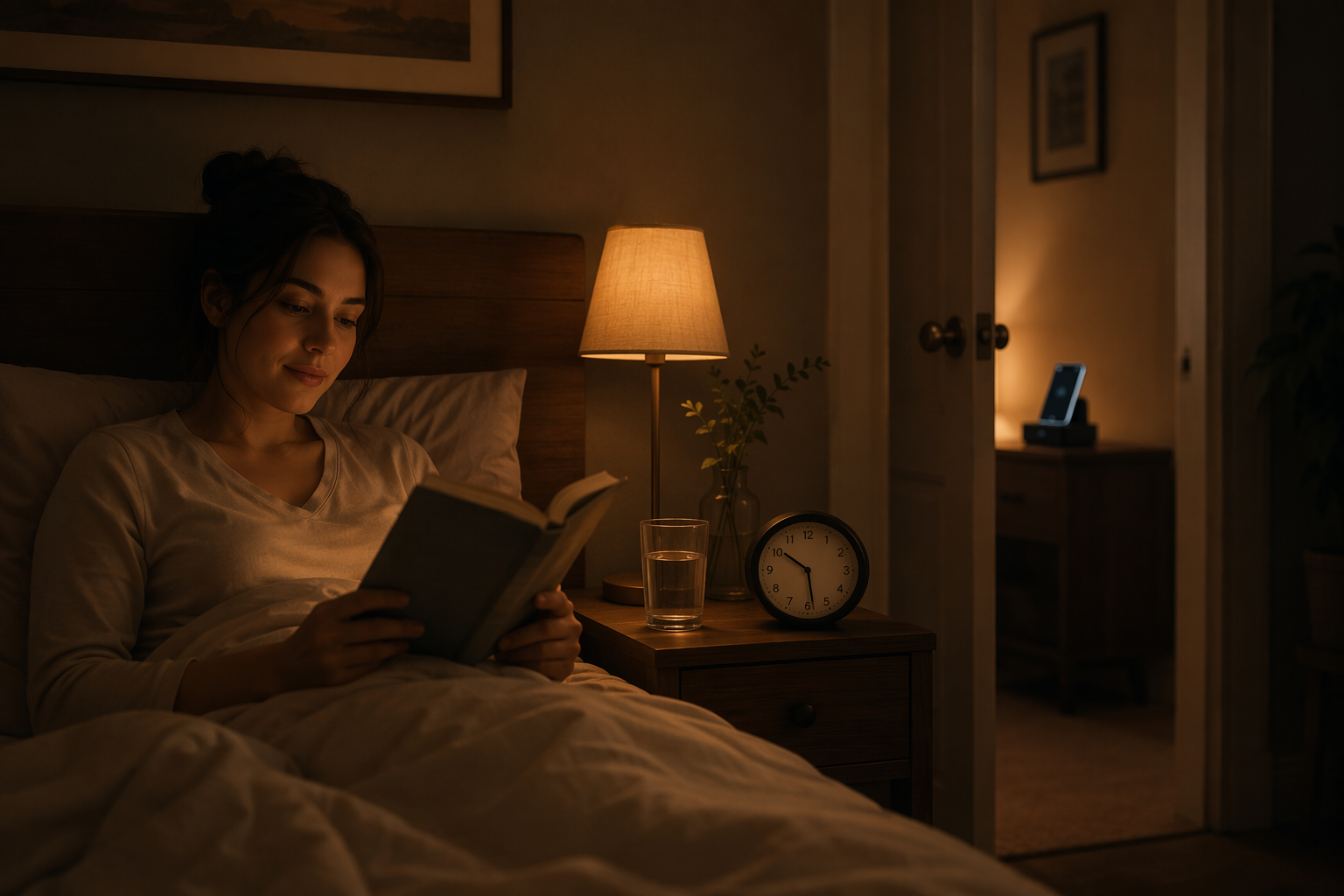
The replacement matters. If the phone has been providing relief, stimulation, avoidance, or a sense of control, removing it without offering the brain another landing place can feel like punishment. The substitute does not need to be noble. It needs to be less arousing and easier to stop. A mildly interesting book often beats an inspiring one. A familiar audio track often beats a new investigative series. The point is to give the mind a ramp, not another doorway.
If the Delay Feels Like Revenge
For some adults, bedtime scrolling is not only reward seeking. It is the first self-directed time of the day. The phone becomes a small rebellion against obligations that consumed every earlier hour. That pattern is close to revenge bedtime procrastination: voluntarily delaying sleep despite expecting consequences, often because the day felt too crowded or controlled. If that is the stronger fit, use the specific guide to break revenge bedtime procrastination. The environmental redesign still matters, but the day may also need a protected pocket of autonomy earlier than bedtime.
A More Honest Bedtime Rule
A rule like “no phone before bed” is clean, but many people already know it and still break it. A more honest rule is: do not negotiate with a reward feed from inside the bed. Negotiation is the trap. Once the device is in hand, every choice is made inside the environment designed to keep the next choice alive.
So the practical question changes. Not “Will I be disciplined tonight?” but “What will my bedroom make easy tonight?” If the phone is beside the pillow, notifications are visible, and the feed is one tap away, the sleepy brain has to win several fights in a row. If the phone is charging elsewhere, alerts are quiet, high-reward apps are harder to open, and a low-arousal routine is already waiting, there are fewer fights to win.
That is the credible promise. Not perfect sleep. Not a life without phones. Just a bedtime environment arranged so instant gratification has less direct access to the weakest part of the day.
Comments
Join the discussion with an anonymous comment.