
Introduction: Why the Fan Question Is More Complex Than It Seems
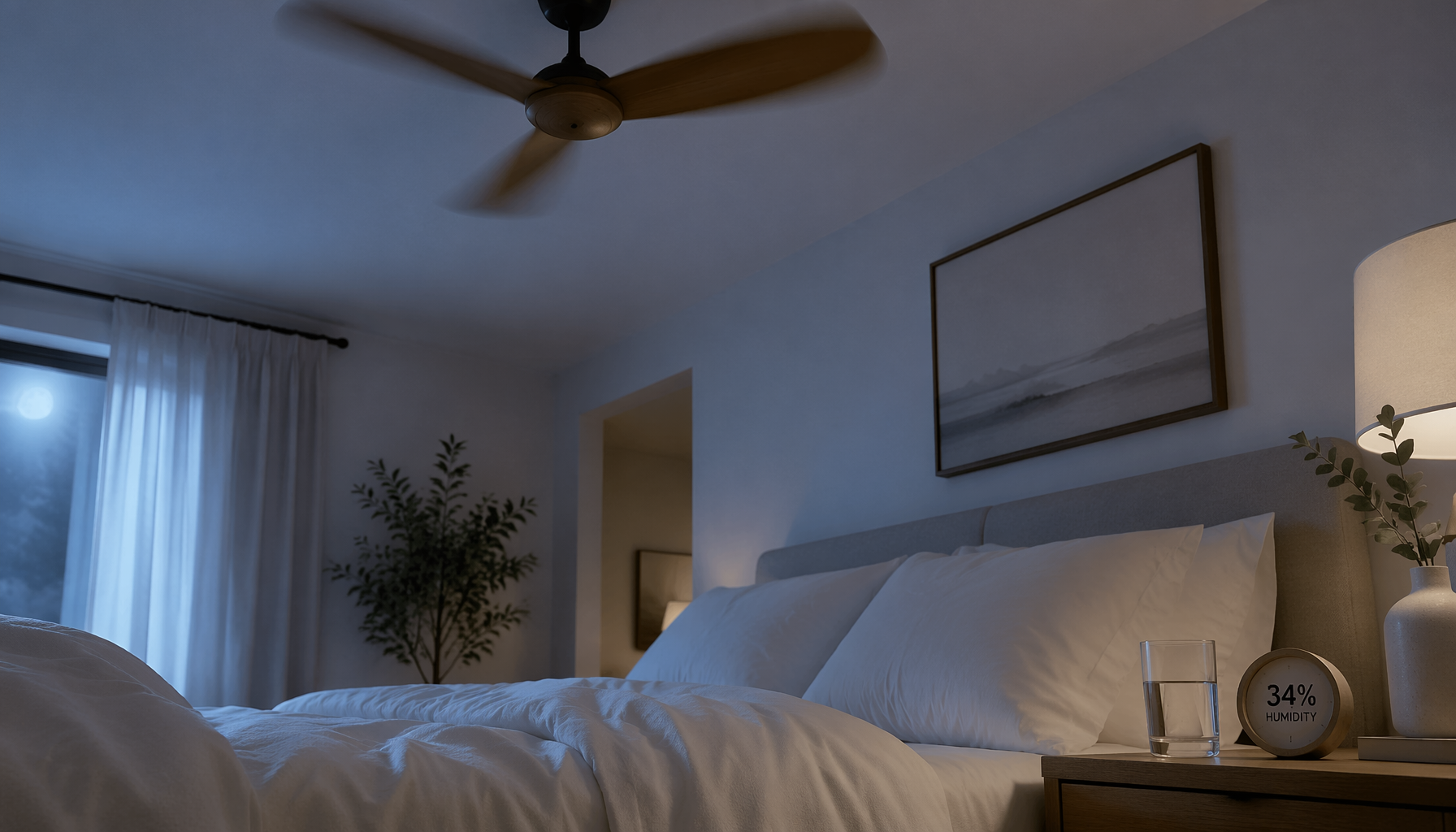
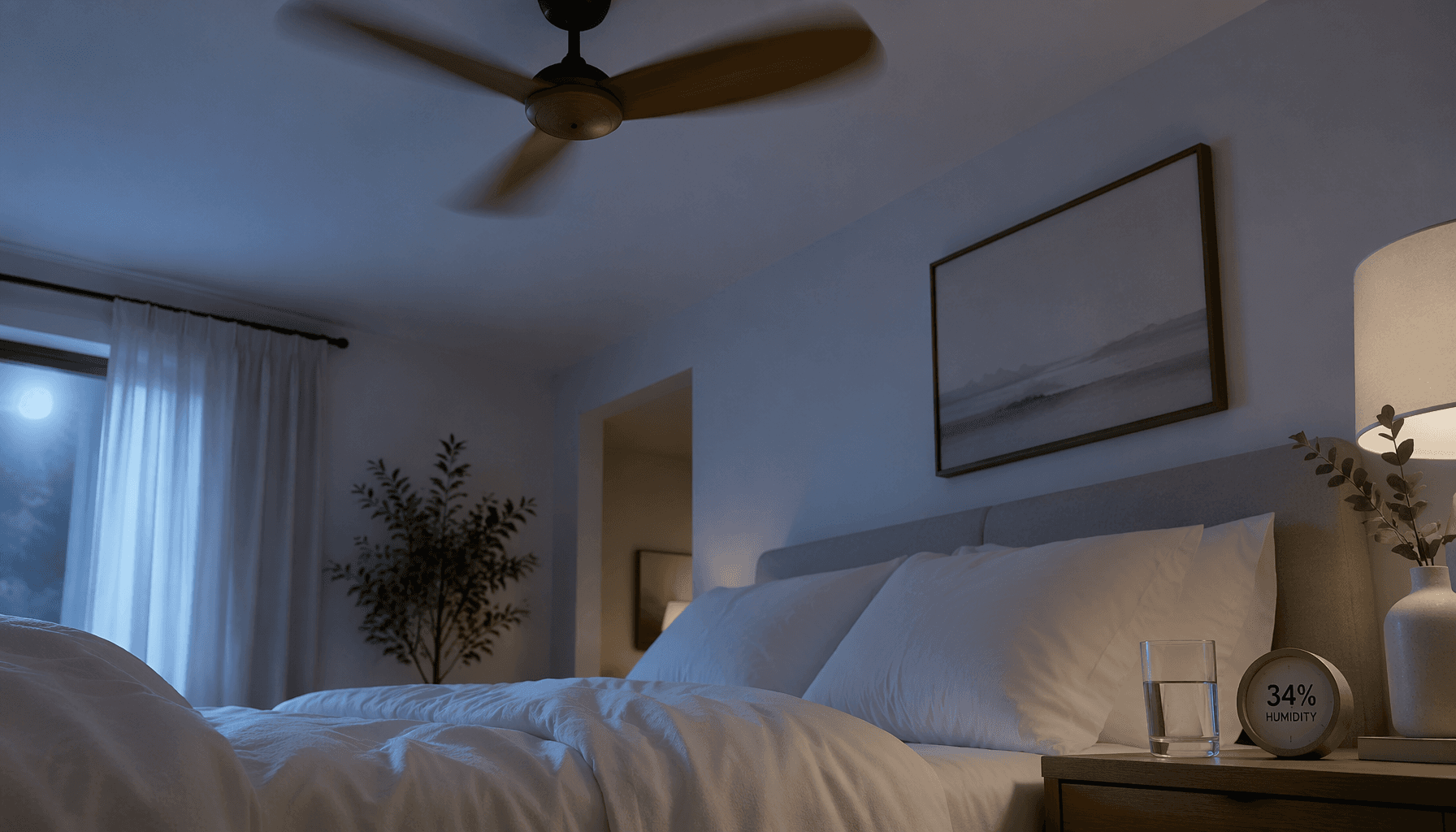
For millions of adults, the ceiling fan or oscillating pedestal fan is an essential sleep companion — a source of white noise, a cooling breeze, and a psychological cue that it is time to rest. The Better Sleep Council reports that 27% of people who consider themselves excellent sleepers regularly sleep with a fan in their bedroom. Yet the same habit that delivers comfort can also produce a predictable set of morning symptoms: a dry throat, a stuffy nose, scratchy eyes, and sometimes a cough that was not there the night before.
The question of whether sleeping with a fan on is "bad for you" is not answerable with a simple yes or no. The fan itself is not harmful. But the continuous airflow it creates triggers a cascade of physiological responses in the upper airway — responses that explain the symptoms many people experience but rarely connect to the fan. Understanding these mechanisms is the difference between a generic pros-and-cons list and a genuine evidence-based decision.
This article traces the path of that airflow from the moment it enters your nose to the morning after, explaining the evaporative drying, the paradoxical mucus rebound, the allergen circulation, and the mixed evidence on white noise. If you are in the evidence-verification stage — you have heard conflicting advice and want to understand the underlying physiology — this is the mechanistic breakdown you have been looking for.
For a broader framework on how sleep problems develop and how to approach them systematically, see our guide on the two-system model of sleep.
What Your Nose Does at Night: Nasal Cycle, Humidification, and Mucociliary Clearance
To understand what a fan does to your respiratory system, you first need to understand what your nose does when you sleep — and it does a great deal more than simply let air pass through.
The nose is the body's primary air conditioner and humidifier. As you inhale, the nasal passages warm and humidify the air, bringing it to approximately 95% relative humidity before it reaches the lungs, according to ENT surgeon Dr. Julius Goh. This process protects the delicate tissues of the lower airway from the drying effects of ambient air, which typically has far lower humidity, especially in air-conditioned or heated bedrooms.
The nose also operates on a cycle. Throughout the night, the nasal passages alternate which side is more congested — a phenomenon called the nasal cycle. This cycle ensures that one side can rest and recover while the other handles airflow. The mucosal lining of the nose is covered in a thin layer of mucus that traps particles, bacteria, and viruses. Tiny hair-like structures called cilia then sweep this mucus toward the throat, where it is swallowed and neutralized by stomach acid. This process is known as mucociliary clearance, and it is a primary component of the immune defense of the airway.
For mucociliary clearance to work effectively, the mucus layer must remain sufficiently hydrated. When the mucosal surface dries out, the cilia cannot move efficiently, and the protective mucus blanket becomes thick and sticky. This is the baseline state that a fan disrupts.
The Evaporative Drying Mechanism: How Moving Air Accelerates Moisture Loss
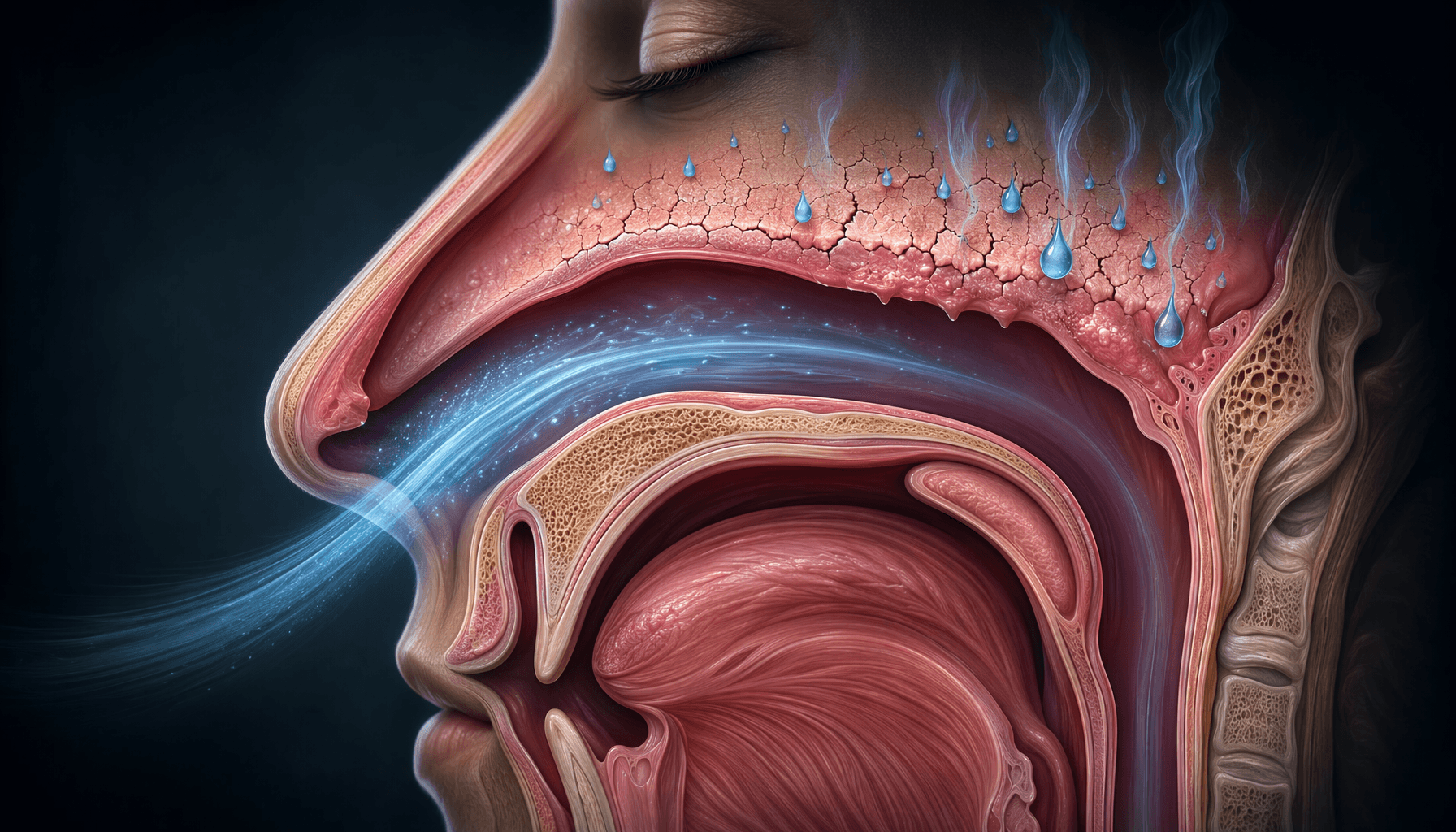
A fan does not cool the air in a room. It creates a wind-chill effect by accelerating the evaporation of moisture from the skin. The same principle applies to the mucosal surfaces inside your nose and mouth.
When a fan blows air directly toward your face or even across the room, it increases the rate of airflow over the nasal and oral mucosa. This accelerates evaporative water loss from the mucus layer. Under normal conditions, the nose can keep up with the demand — it humidifies the air you breathe to ~95% relative humidity before it reaches the lungs. But when the airflow rate is artificially elevated by a fan, the rate of moisture loss can exceed the nose's capacity to replenish it.
The result is a drying effect that can be felt within hours. The mucosal surfaces become less elastic, the protective mucus layer thins in some areas and thickens in others, and the throat feels scratchy. This is not a sign of illness — it is a direct physical consequence of accelerated evaporation. The same mechanism explains why contact lens wearers often wake up with dry, irritated eyes when a fan is running.
The Compensatory Mucus Rebound: Why Dryness Triggers Congestion
Here is where the physiology becomes counterintuitive. The initial effect of fan airflow is drying. But the body's response to that drying can produce the opposite sensation: congestion.
When the nasal mucosa detects excessive drying, it triggers a protective response. The mucous glands in the nasal lining ramp up production, flooding the nasal passages with additional mucus in an attempt to rehydrate the surface and restore the protective barrier. This is the same mechanism that causes a runny nose in cold, dry air — the nose is overcompensating for moisture loss.
The problem is that this compensatory mucus is often thicker and more viscous than normal mucus because it is being produced under duress. It does not flow as easily, and the cilia — already impaired by the drying — cannot clear it efficiently. The result is a sensation of stuffiness, a feeling of pressure in the sinuses, and a tendency to breathe through the mouth, which further dries the throat.
This explains the common morning complaint: "I woke up with a stuffy nose, but I wasn't sick." The congestion is not an infection. It is a physiological rebound from overnight drying. For most people, it resolves within an hour or two of waking as normal airflow and hydration restore the mucosal balance. But for those with underlying conditions, the effect can be more persistent.
Allergen Circulation: How Fans Become Dust and Pollen Distribution Systems
Beyond the drying effect, fans have a second mechanism for disrupting sleep: they physically move particles through the air. A ceiling fan or pedestal fan does not filter the air — it circulates whatever is already in the room, including dust mites, pet dander, pollen, and mold spores that have settled on floors, bedding, furniture, and fan blades themselves.
The Sleep Foundation notes that fans can spread dust and other allergens, aggravating allergies, and recommends cleaning fan blades regularly. When a fan is running all night, it continuously lifts these particles from surfaces and keeps them suspended in the breathing zone. For someone with allergic rhinitis or asthma, this can mean hours of exposure to concentrated allergens.
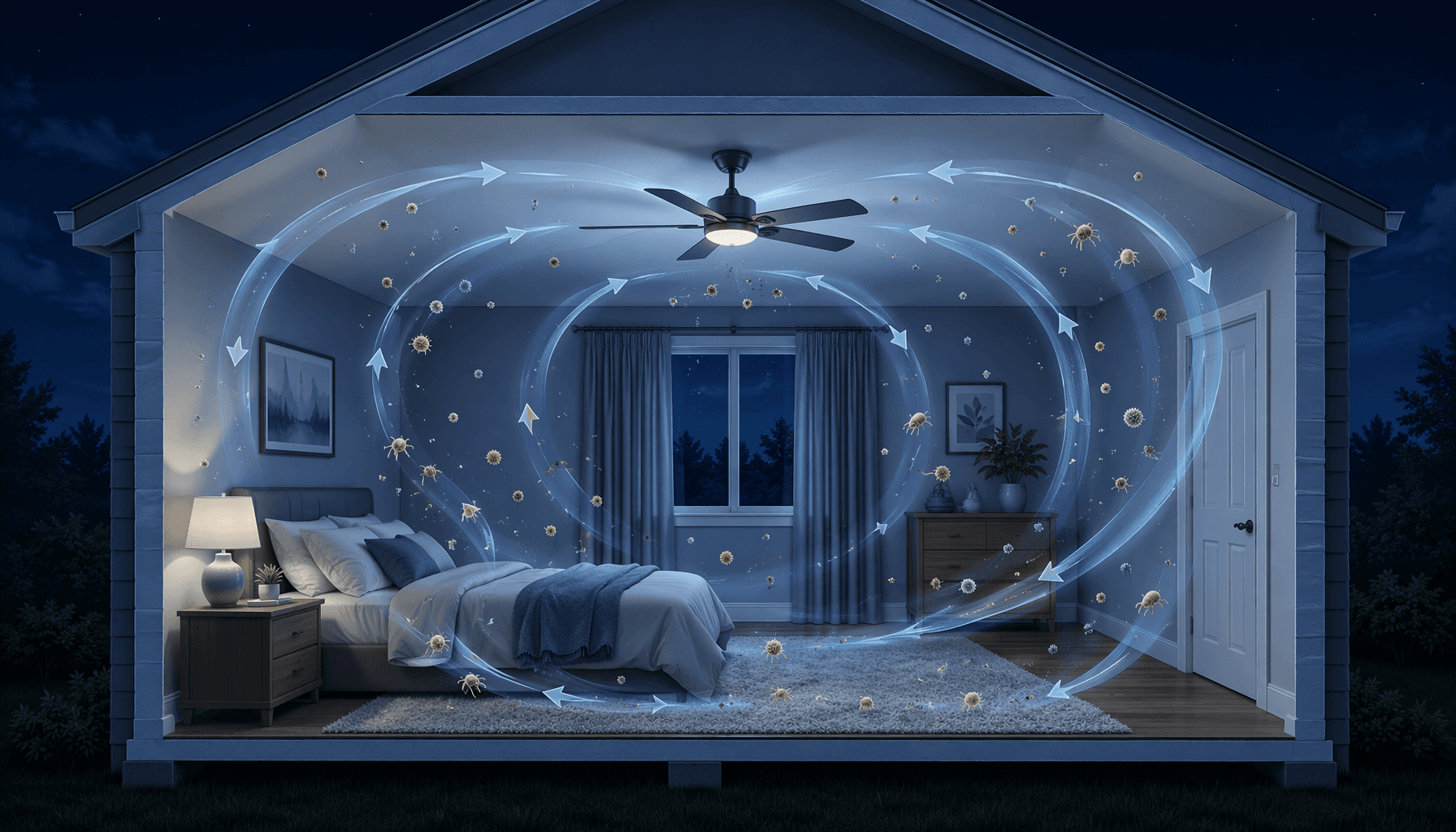
The combination of allergen exposure and impaired mucociliary clearance is particularly problematic. Normally, the nose can trap and remove inhaled allergens before they cause a reaction. But when the mucosal surface is dried and the cilia are sluggish, allergens may remain in contact with the nasal lining longer, increasing the likelihood of an inflammatory response.
Key sources of fan-circulated allergens include:
- Dust mites and their waste particles, which accumulate in bedding and carpet
- Pet dander from dogs and cats, which settles on floors and furniture
- Pollen that enters through open windows and settles on surfaces
- Mold spores from damp areas, which can be lifted from floors or walls
- Dust and debris that accumulate on fan blades themselves, which are then flung into the air when the fan is turned on
The White Noise Trade-Off: Auditory Masking Benefits vs. Potential Sleep Disruption
For many people, the primary reason for sleeping with a fan on is not the breeze — it is the sound. The steady hum of a fan provides auditory masking that can drown out disruptive environmental noises like traffic, neighbors, or a partner's snoring. This is a legitimate sleep benefit, but the evidence on white noise is more mixed than most articles acknowledge.
A 2022 systematic review published in the Journal of Clinical Sleep Medicine examined 34 studies involving 1,103 participants and found that only 33% of white noise intervention studies showed positive sleep outcomes. By contrast, 81.9% of pink noise studies showed positive outcomes. Pink noise — which has a more balanced frequency spectrum with lower frequencies at higher power — appears to be more consistently beneficial for sleep than the broad-spectrum hiss of white noise.
However, the picture is not entirely negative for white noise. A 2021 study conducted in New York City (N=10) used a within-subject ABA design and found that white noise significantly improved wake after sleep onset (WASO) as measured by actigraphy (p=0.007) and subjective sleep latency (p=0.016) in individuals living in high-noise environments. There was also a trend toward significance in the number of awakenings (p=0.028) and sleep efficiency (p=0.063).
| Study | Sample Size | Key Finding | Caveat |
|---|---|---|---|
| JCSM Systematic Review (2022) | 34 studies, 1,103 participants | 33% of white noise studies showed positive sleep outcomes; 81.9% for pink noise | Review excluded music, binaural tones, and synchronization |
| NYC White Noise Study (2021) | 10 participants | Significant improvement in WASO (p=0.007) and sleep latency (p=0.016) | Small sample; within-subject design; high-noise environment context |
Harvard Health adds a cautionary note: white noise may interrupt REM sleep and deep sleep, and can affect hearing if played too loudly. The recommendation is to place the noise source in a corner of the bedroom and keep the volume no louder than a background conversation. The Sleep Foundation, citing NIH sources, notes that noise levels as low as 33–48 decibels can have noticeable effects on sleep.
Who Should Be Careful: Allergic Rhinitis, Snorers, Dry Eye Sufferers, and Children
While sleeping with a fan on is generally safe for most adults, certain populations experience disproportionate effects and may want to reconsider the habit or take extra precautions.
People with Allergic Rhinitis or Asthma
For individuals with allergic rhinitis, the fan presents a double burden. The mucociliary clearance system — already compromised by chronic inflammation — needs moisture to function properly. Drying it out further impairs nasal immune defense, as Dr. Julius Goh explains. Simultaneously, the fan circulates allergens that trigger the underlying condition. The combination of impaired clearance and increased allergen exposure can turn a manageable condition into a source of significant sleep disruption.
Snorers and Those at Risk for Obstructive Sleep Apnea
Snoring occurs when the tissues of the upper airway vibrate during breathing. Dehydrated mucosal tissues are less elastic and more prone to the partial collapse that generates snoring, according to the ENT surgeon source. For someone who already snores or has mild obstructive sleep apnea (OSA), the drying effect of a fan could theoretically worsen airway collapsibility. While no direct studies have tested this, the physiological reasoning is sound: drier, stiffer tissues are less able to maintain airway patency during sleep.
If you are concerned about sleep apnea, our guide on Apple Watch sleep apnea detection explains how consumer wearables are approaching this issue.
Contact Lens Wearers and Dry Eye Sufferers
The evaporative drying effect is not limited to the nose and throat. The eyes are also vulnerable. For contact lens wearers, the combination of overnight lens use (which already reduces oxygen delivery to the cornea) and accelerated tear evaporation from fan airflow can produce significant morning dryness, irritation, and redness. Even for non-lens wearers, the effect can exacerbate dry eye symptoms.
Infants and Children
A 2008 study published in the Archives of Pediatric Adolescent Medicine found that fan use during sleep was associated with a 72% reduction in SIDS risk. This is often cited as a benefit of fan use, but it is important to note that this is pediatric data — it applies to infants, not adults. The mechanism is thought to be improved air circulation reducing the rebreathing of exhaled carbon dioxide. For adults, this finding is not directly applicable, though it does suggest that air circulation can have meaningful physiological effects during sleep.
Practical Mitigation Strategies: Positioning, Humidification, Cleaning, and Timing
If you enjoy sleeping with a fan on and do not want to give it up, you do not have to. The negative effects can be substantially reduced with a few evidence-informed adjustments.
- Keep the fan 2–3 feet away from the bed. Healthline recommends this distance to reduce concentrated airflow on the face and body.
- Use an oscillating model. An oscillating fan distributes airflow across a wider area rather than blasting a single stream at your face, reducing localized drying.
- Aim the fan away from your face. Even a slight angle can significantly reduce the evaporative load on the nasal and oral mucosa.
- Maintain bedroom humidity at 50–60%. Dr. Julius Goh recommends this range to counteract the drying effect of the fan. A simple hygrometer can help you monitor levels.
- Use a saline nasal spray before bed. This provides a moisture reservoir that can help the nasal mucosa withstand overnight drying.
- Clean fan blades regularly. The Sleep Foundation emphasizes this to prevent the fan from circulating accumulated dust and allergens.
- Drink water before bed. Systemic hydration supports mucosal moisture, though it will not fully counteract localized evaporative loss.
- Consider alternatives for white noise. If the fan's sound is the primary benefit, a pink noise machine or app may provide more consistent sleep benefits without the airflow.
These strategies are part of a broader approach to sleep hygiene. For a complete framework, see our guide on evidence-based sleep hygiene fundamentals.
Summary: An Evidence-Based Decision Framework
Sleeping with a fan on is not inherently dangerous, but it is not physiologically neutral either. The continuous airflow creates a predictable sequence: evaporative drying of the nasal and oral mucosa, compensatory mucus overproduction, impaired mucociliary clearance, and — for some — increased allergen exposure. These mechanisms explain the constellation of morning symptoms — dry throat, stuffy nose, scratchy eyes — that many people experience but rarely connect to the fan.
The decision to use a fan comes down to individual trade-offs. For most adults, the comfort and white noise benefits outweigh the mild drying effects, especially with simple mitigation strategies. For those with allergic rhinitis, chronic snoring, dry eye conditions, or OSA risk, the balance may tip the other way — or at least warrant extra precautions like humidification and fan positioning.
If you are looking to improve your sleep quality more broadly, the fan is just one variable among many. For a structured approach to prioritizing sleep improvements, see our evidence-based sleep improvement hierarchy. And for a deeper understanding of how environmental factors like light and sound affect your sleep, our guide on circadian rhythm and light exposure provides the mechanistic background.
Comments
Join the discussion with an anonymous comment.