
The usual sleep hygiene advice starts to sound thin when you are already doing it. You keep a regular bedtime. You avoid late coffee. You dim the room. Then you wake at 3:30 a.m., alert enough to know the day has not begun, tired enough to know the night did not do its job.
That is not proof that sleep no longer matters with age. It is also not proof that you have become bad at sleeping. Older adults are still generally advised to aim for 7–8 hours of sleep, yet many average closer to 6.5–7 hours a night.[1][2] The gap matters because aging changes the machinery that produces sleep: the body clock tends to move earlier, the night becomes lighter and more interrupted, melatonin signaling weakens, and daytime sleep pressure does not build in quite the same way.
Basic sleep hygiene is still a useful starting point. If you need the foundation, our sleep hygiene fundamentals guide covers the standard routine. This article is the age-adapted companion: what changes when the advice was written as if your sleep system were still 35.

The problem may be timing, not effort
One of the most common age-related sleep changes is a circadian phase advance. In plain language, the body clock shifts earlier. Sleep Foundation describes this shift as beginning around ages 60–65, with many older adults naturally feeling sleepy around 7–8 p.m. and waking around 3–4 a.m.[3]
That creates a very ordinary trap. A person feels sleepy after dinner but stays up until 10:30 or 11 because the household is still awake, the evening news is on, or going to bed at 8 feels socially embarrassing. The body clock may still open its morning gate around 3:30 or 4. The result is not a full night shifted later. It is a shortened night.
This is why “keep a consistent bedtime” can fail older adults when the chosen bedtime is mostly a performance of normalcy. Consistency helps when the schedule matches the clock. It punishes when it repeatedly delays sleep past the body’s stronger natural window.

The practical question is not whether every older adult must go to bed at 8 p.m. The question is whether your actual sleepy window has moved earlier than the schedule you are trying to defend. If you are repeatedly drowsy in the evening, wake early without an alarm, and cannot recover the missed sleep in the morning, the schedule deserves suspicion before your willpower does.
Why the night feels lighter
Aging also changes sleep architecture. Older adults tend to spend more of the night in lighter N1 and N2 sleep and less in slow-wave and REM sleep; 3–4 awakenings per night can be part of a normal age-related pattern.[4][3] That does not make every long awakening harmless, but it does mean that brief awakenings are not automatically a sign that the night has failed.
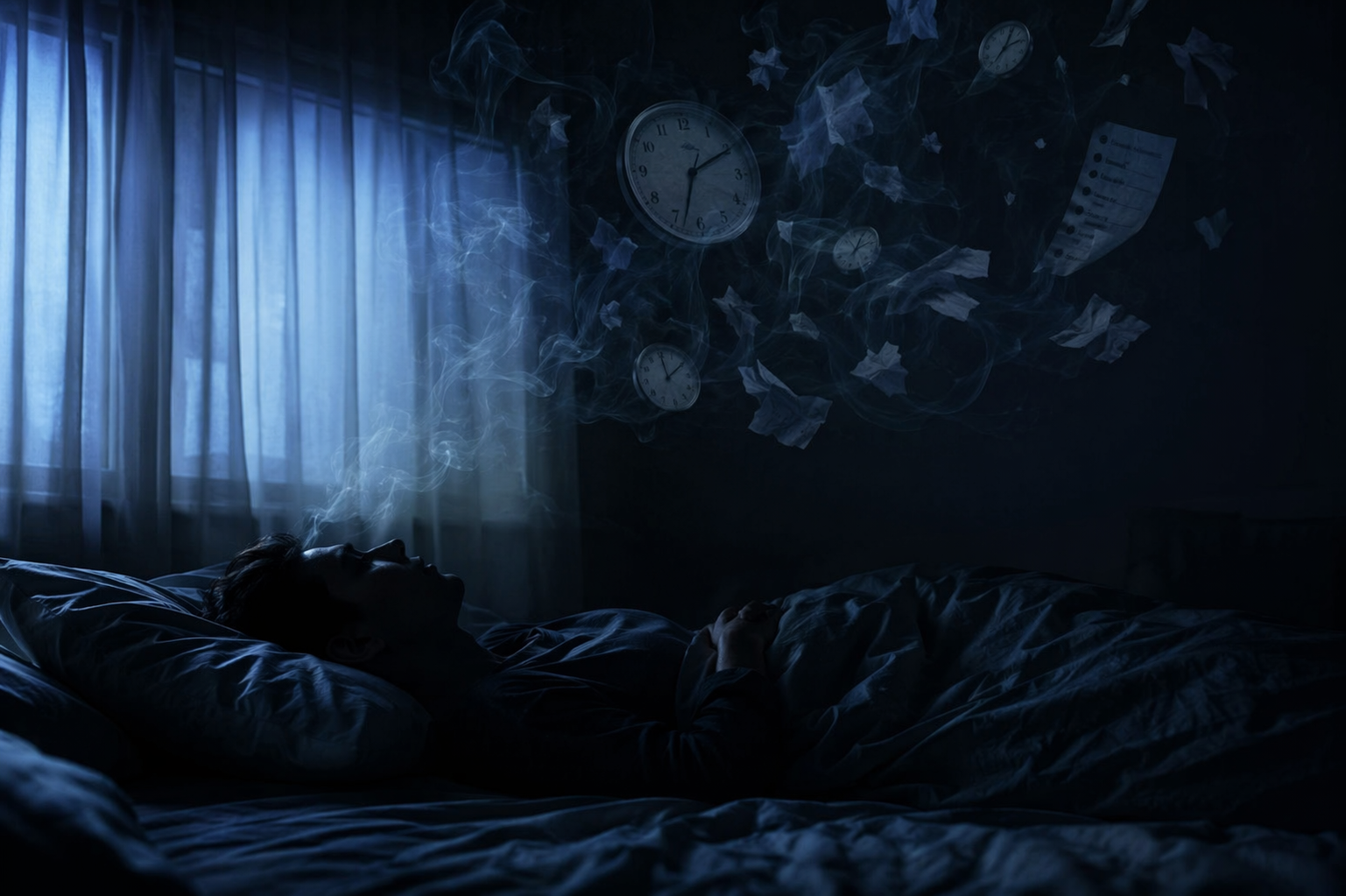
This is where perfectionist sleep advice does real damage. A younger adult may sleep through a dog shifting in the hallway, a furnace clicking on, or a partner turning over. An older adult may surface. If the first thought is “I am awake again; something is wrong,” the awakening becomes an event. The clock gets checked. The arithmetic begins. Sleep becomes a performance review at 3:17 a.m.
The better standard is more practical: can you return to rest without turning the awakening into a second evening? A quiet bathroom trip, a sip of water, or a few minutes of lying calmly in the dark may belong to a normal night. Turning on bright lights, reading distressing news, or lying in bed for an hour rehearsing tomorrow’s obligations is different.
Light has to work harder now
The aging body often receives weaker circadian signals. Melatonin secretion diminishes with age, which can soften the body’s natural sleep-onset cue.[2] Age-related changes in the eye, including reduced transmission of short-wavelength light, can also weaken the light signal that helps anchor the body clock; research cited by Sleep Foundation notes that cataract surgery has been associated with improved sleep quality by restoring light input.[3]
This is why morning light is not just a cheerful wellness suggestion for older adults. It is a timing tool. The National Sleep Foundation’s Sleep Health and Aging recommendations identify regular morning light exposure as one of the core daytime targets for promoting healthy sleep among older adults.[2]
The useful version is simple: get bright light early in the day, preferably outdoors when weather and mobility allow. Sit near a bright window if outdoor light is not realistic. Pair it with breakfast, medication routines, a short walk, or opening curtains throughout the home. The point is not to buy a device first. The point is to give the brain a stronger morning signal, repeatedly, so the night has a clearer edge.
Evening light still matters, but it deserves less drama than it often gets. Screens, lamps, and television can push timing later, especially when the light is bright and close to the face. For many older adults, though, the bigger missed opportunity is not a perfect dark-room ritual at 10 p.m.; it is too little strong light and activity in the first half of the day.
A better daily routine for older sleep
Age-adapted sleep hygiene begins during the day. The NSF Sleep Health and Aging recommendations emphasize regular morning light, physical activity, consistent meal timing, prioritizing 7–8 hours in bed, and a cool, dark, quiet sleep environment; the recommended bedroom temperature range cited in the report is 60–67°F.[2]
| Part of the day | What changes for older adults | Useful adjustment |
|---|---|---|
| Morning | The body clock needs a stronger time cue | Get bright light soon after waking; pair it with breakfast or a short walk |
| Midday | Sleep pressure may build unevenly | Schedule movement, errands, social contact, and meals deliberately |
| Early afternoon | Sleepiness may be real, not laziness | Use a short nap only when needed, and keep it early |
| Evening | The natural sleep window may arrive earlier | Allow an earlier bedtime when sleepiness is consistent |
| Night | Brief awakenings are more common | Keep the room cool, dark, and quiet; avoid turning awakenings into alert activity |
Let the sleep window move earlier if it has already moved
An earlier bedtime can feel like surrender. It may interfere with family calls, evening programs, or the wish to live by the same clock as younger adults. Still, if the body is reliably ready for sleep at 8:30 and reliably awake before 5, forcing an 11 p.m. bedtime is not preserving independence. It may be borrowing alertness from tomorrow.
Try moving the protected sleep opportunity earlier rather than simply trying to sleep later in the morning. That may mean setting up the evening so the important things are finished sooner: dishes, medications, pet care, messages, tomorrow’s clothes. A person who needs help at bedtime may need the helper’s schedule adjusted too. Sleep hygiene advice often forgets that older adults do not always control every step of the evening.
Put activity where it can support the night
Daytime activity is not a moral test. It is one of the signals that helps consolidate sleep. A quiet day in a dim house, with meals drifting later and movement postponed until “maybe tomorrow,” gives the sleep system very little to organize around. The night then has to carry the whole burden.
The realistic target is a shaped day, not an athletic one. Morning light. Some physical activity matched to ability. Meals at roughly consistent times. Social or mental engagement before the late-evening slump. For someone with pain, limited mobility, caregiving duties, or medical appointments, this may need to be modest. Modest still counts if it is repeatable.
Make the bedroom easier to stay asleep in
The familiar bedroom advice still applies, but the reason becomes sharper with age. Lighter sleep means small disturbances are more likely to break through. A cooler room, darkness, and quiet are not decorative touches; they reduce the number of things the sleeping brain has to ignore. The 60–67°F range is a useful reference point, though comfort, medical needs, and safe heating or cooling matter too.[2]
If nighttime bathroom trips are common, safety belongs inside sleep hygiene. A dim, low pathway light is usually better than switching on a bright overhead light. Keep glasses, mobility aids, water, and necessary medications where they do not require searching. A bedroom can be dark enough for sleep without becoming a fall hazard.
The nap rule needs more nuance after 60
Generic sleep hygiene often treats naps as the enemy. That can be too blunt for older adults. If nighttime sleep has shortened and early-afternoon sleepiness is strong, a brief planned nap may be less disruptive than dozing unpredictably in a chair at 6 p.m.
The useful nap has boundaries: short, early, and intentional. A practical limit is 30 minutes or less, before 2 p.m. Longer or later naps are more likely to drain sleep pressure from the coming night. A planned early-afternoon nap is a tool; repeated long daytime sleep is information that the night, the schedule, or health status needs another look.
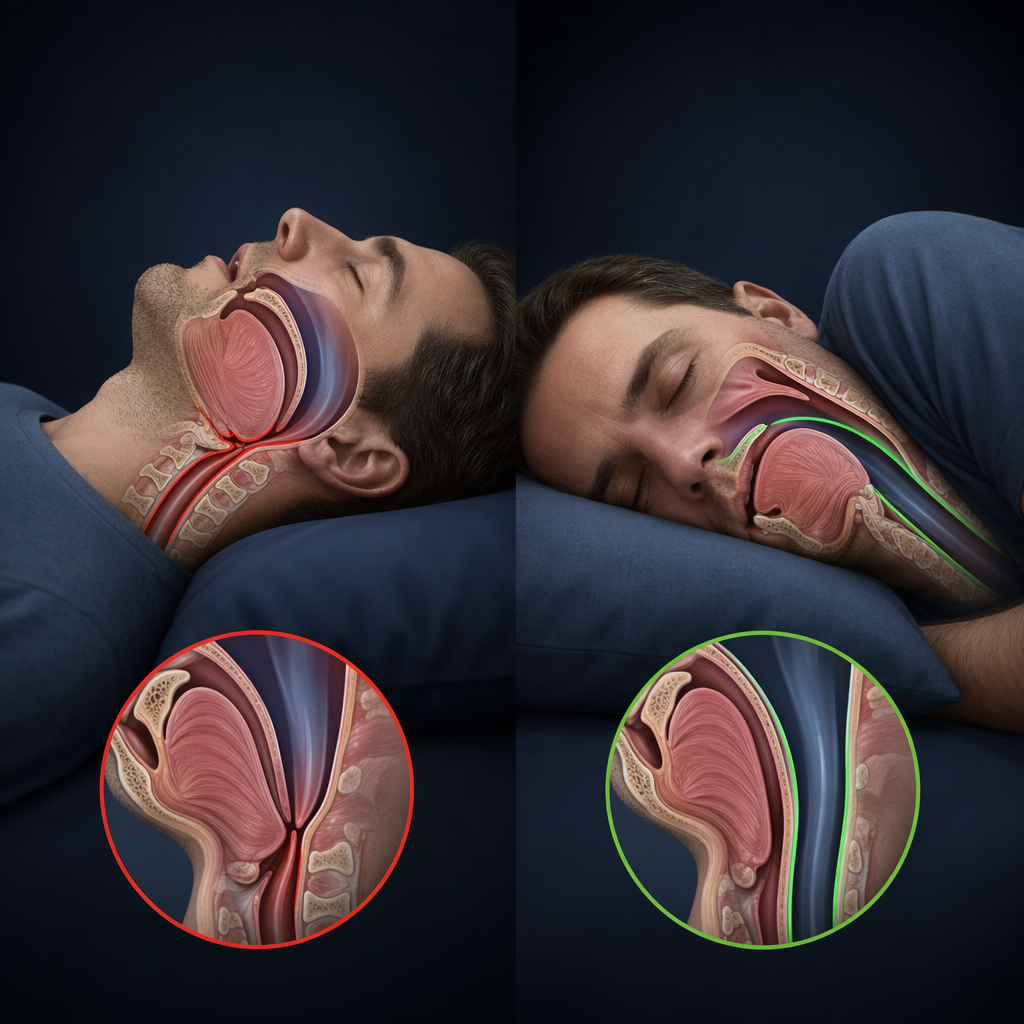
A simple test is to ask what the nap does to the next night. If a 20-minute early nap leaves the evening intact and prevents accidental dozing, it may belong in the routine. If a nap becomes two hours, pushes bedtime later, or follows a night of loud snoring and gasping, it is no longer just a hygiene question.
What to do during a 3:30 a.m. awakening
First, do not negotiate with the clock. If checking the time makes you calculate, worry, or brace for the day, turn the clock face away. A normal brief awakening needs very little from you. Keep the room dim. Keep the body warm enough and the air cool enough. Use the bathroom if needed, then return without adding stimulation.
If you are awake long enough to become frustrated, use a modified stimulus-control approach: leave the bed for a quiet, low-light activity, then return when sleepy. For older adults, this has to be safe. No dark staircases. No bright kitchen lights. No phone news. A chair near the bedroom, a dull book, soft light, and a blanket are often enough.
The aim is not to force sleep by effort. It is to keep wakefulness from becoming trained into the bed. That distinction matters. Trying harder to sleep usually wakes people up.
About melatonin and sleep aids
Because melatonin signaling declines with age, it is tempting to make melatonin the centerpiece. It should not be the first or only answer here. Timing, light, activity, and schedule are still the main levers of sleep hygiene for older adults. Supplements and over-the-counter sleep aids also carry medication-interaction and next-day impairment concerns that deserve individualized advice, especially when someone already takes several prescriptions.
If you are considering melatonin, herbs, antihistamine sleep aids, or other home approaches, treat that as a separate safety question rather than a casual add-on. Our guide to home remedies for insomnia with scientific backing is a better place for that discussion.
When sleep hygiene is not enough
Early waking can be age-related. It can also be a symptom. The line is especially important when awakenings are distressing, worsening, or paired with daytime impairment: unplanned sleep during the day, trouble driving, memory changes beyond your usual, irritability, or loss of interest in normal activities.
Ask for clinical help if early-morning waking arrives with persistent low mood, anxiety, appetite changes, or hopelessness. Depression in later life can show up in the sleep schedule before anyone names it. Also ask about sleep apnea evaluation if there is loud snoring, witnessed pauses in breathing, gasping, morning headaches, high blood pressure that is hard to control, or heavy daytime sleepiness.
If the pattern is chronic insomnia—difficulty falling asleep, staying asleep, or returning to sleep despite adequate opportunity—sleep hygiene alone is usually too weak. Cognitive behavioral therapy for insomnia is the more appropriate treatment path; our guide to what actually cures insomnia explains how CBT-I works. Access can be uneven, which is why we also cover why CBT-I can be hard to get.
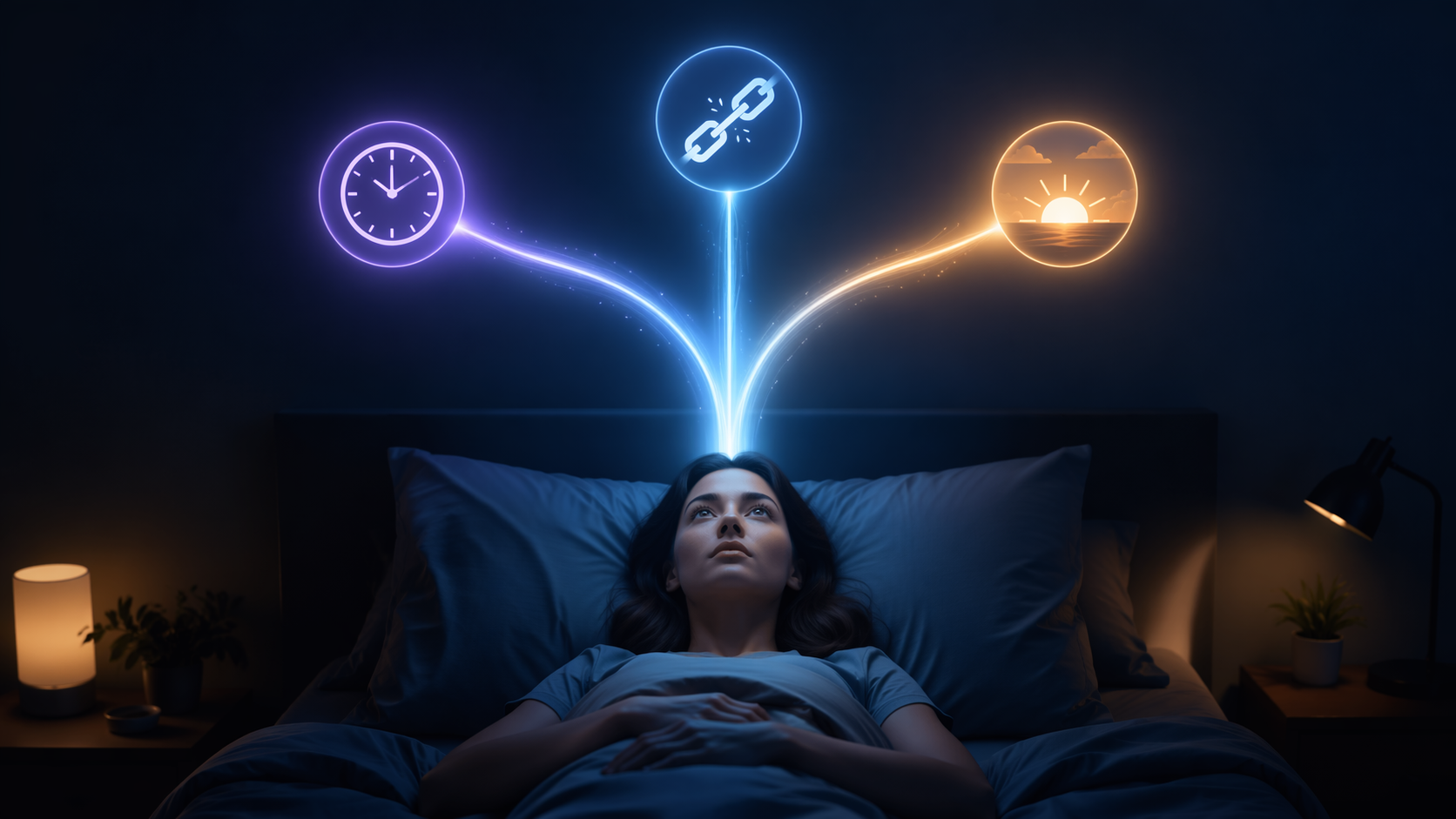
Older adults do not need to be scolded into younger-adult sleep hygiene. They need a routine that respects an earlier circadian window, stronger morning time cues, purposeful daytime activity, a safer and quieter night environment, and realistic expectations about lighter sleep. If those changes do not reduce distress or daytime consequences, the next step is not more blame. It is evaluation.
References
- Sleep Statistics for Older Adults in 2026, NCOA
- Sleep Health and Aging: Recommendations for Promoting Healthy Sleep Among Older Adults, Sleep Health Journal, 2023
- How Circadian Rhythms Change as We Age, Sleep Foundation
- Sleep in the Elderly, Missouri Medicine


Comments
Join the discussion with an anonymous comment.