
The most confusing data center noise effects on sleep often begin with a sentence that sounds almost self-contradictory: I can barely hear it, but I keep waking up tired. That confusion is reasonable. Most people have been taught to think about nighttime sound as volume. If the number on a meter is legal, and if the sound is not obviously loud, the bedroom is supposed to be quiet enough.
Sleep is less tidy than that. The World Health Organization’s night-noise guidance recommends less than 30 dBA indoors for uninterrupted sleep and an annual average outdoor night level below 40 dBA outside bedrooms.[1] Those numbers are not magic thresholds; they are reference points. They matter because they are aimed at sleep, not just at whether a sound is annoying, audible, or compliant with a local ordinance.
Near data centers, the harder question is not simply whether the facility is “too loud.” It is whether the usual noise number is measuring the part of the sound that the sleeping body is responding to. Data center cooling systems, fans, chillers, electrical equipment, and backup generators can produce sound with substantial low-frequency energy. That sound can be steady, can run through the night, and can sometimes reach a bedroom through the structure of the house rather than only through the air.
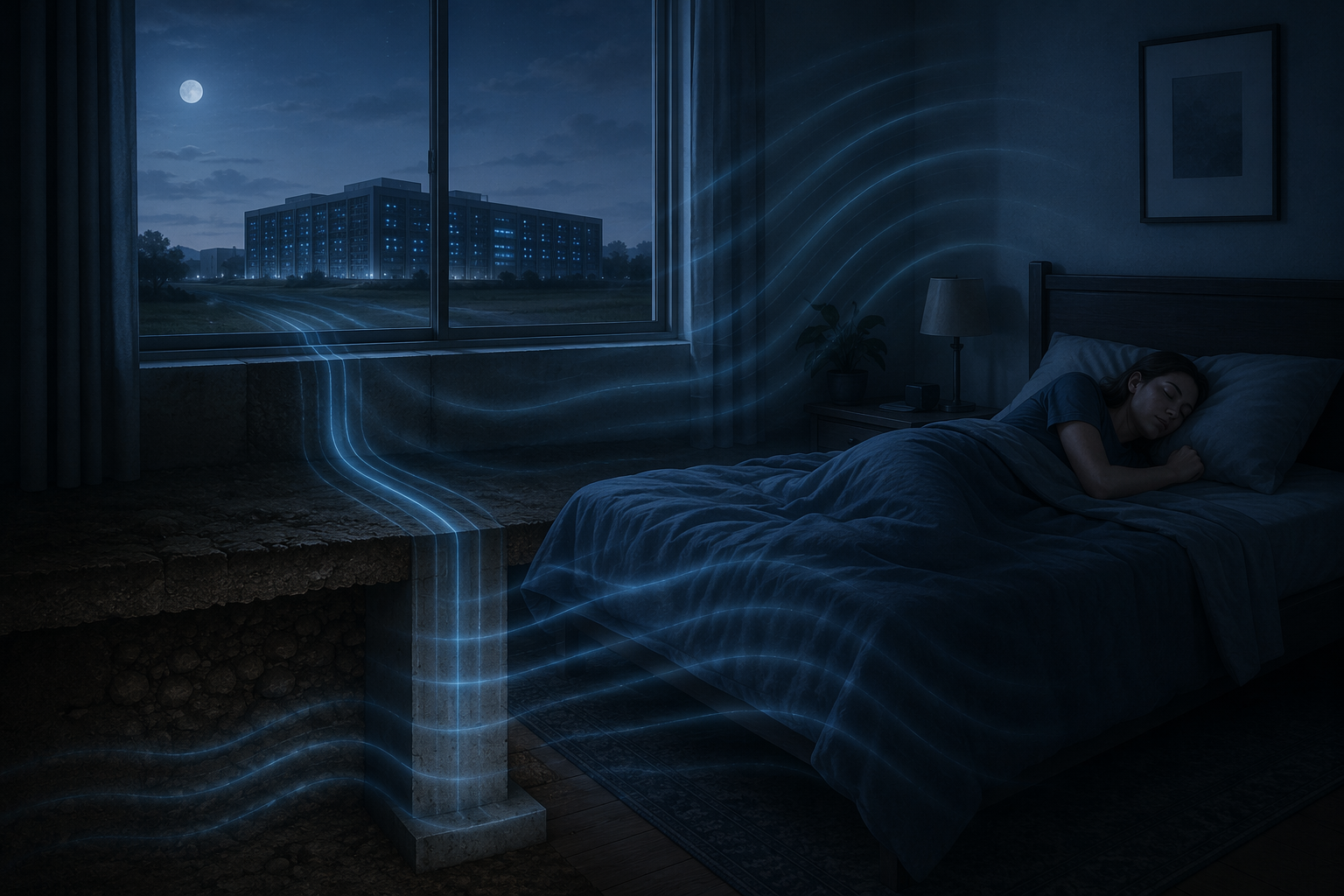
The Number on the Meter May Not Be the Number Your Body Is Living With
Most community noise rules lean heavily on A-weighted decibels, written as dBA. A-weighting adjusts sound measurements to reflect the frequencies the human ear hears most readily. That makes sense for many ordinary noise questions. A barking dog, a leaf blower, a construction saw, or a party across the street is usually dominated by frequencies that A-weighting captures reasonably well.
Low-frequency sound is different. A-weighting deliberately discounts much of the low end, including the range where mechanical hum, rumble, and some vibration-heavy industrial noise live. The Environmental and Energy Study Institute notes that low-frequency data center noise may be underrepresented by standard A-weighted measurements, and that nearby residential measurements have been reported in the 40–59 dB range while still generating complaints.[2] In some low-frequency exposures, A-weighted readings can understate impact by 10 dB or more compared with C- or Z-weighted measurements.
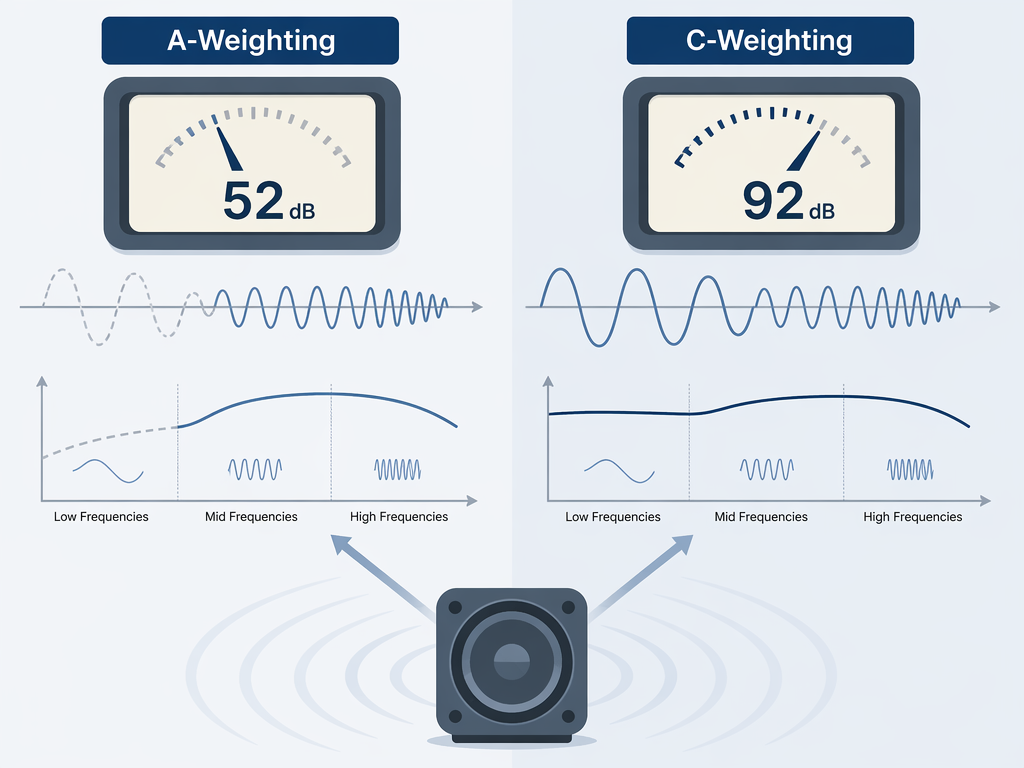
C-weighted measurements give more weight to lower frequencies. Z-weighted measurements are flatter still. Neither one automatically proves harm, and none is a complete sleep study. But if a resident is describing a throb, pressure, vibration, or hum that seems out of proportion to an A-weighted reading, the first scientific move is not to dismiss the report. It is to ask whether the measurement matched the exposure.
That mismatch helps explain why two sounds with similar dBA levels can feel different at night. A mid-frequency sound may be clearly audible and irritating, then stop. A lower-frequency mechanical sound may be less “loud” in the everyday sense while still carrying through walls, windows, soil, or framing. The meter can report a modest number while the sleeper experiences a bedroom that never quite settles.
Why Data Center Sound Is Not Just Ordinary Background Noise
Data centers are built to keep servers cool and running. That means large volumes of air movement, cooling infrastructure, power equipment, and, in some cases, diesel generators for backup. Acoustical Solutions describes interior data center cooling equipment in the 75–96 dBA range, exterior equipment in the 55–100 dBA range, and diesel generators in the 85–105 dBA range.[3] Those figures are not bedroom exposure levels; distance, barriers, topography, equipment placement, and building design all change what reaches a home. But they show why the source is not comparable to a single household appliance humming across the street.
The character of the sound matters as much as the peak level. Residents often describe a tonal hum, a droning layer, or a vibration that is hard to locate. Those descriptions are not clinical proof of injury, but they are useful exposure clues. Low-frequency sound is less easily blocked by ordinary building materials than higher-frequency sound. It also tends to bend around barriers and travel farther than sharper, higher-pitched noise.
Infrasound adds another layer of confusion. Infrasound refers to sound below 20 Hz, below the conventional lower limit of human hearing. It should not be treated as mysterious or automatically dangerous. The evidence base does not support every dramatic claim attached to inaudible sound. The more careful point is narrower: when a noise source contains strong low-frequency or near-infrasonic components, conventional A-weighted readings may not describe the full exposure, and some people may experience the result as pressure, vibration, or disturbed rest rather than as a clearly heard noise.
Sleep Can Be Disturbed Without a Full Awakening
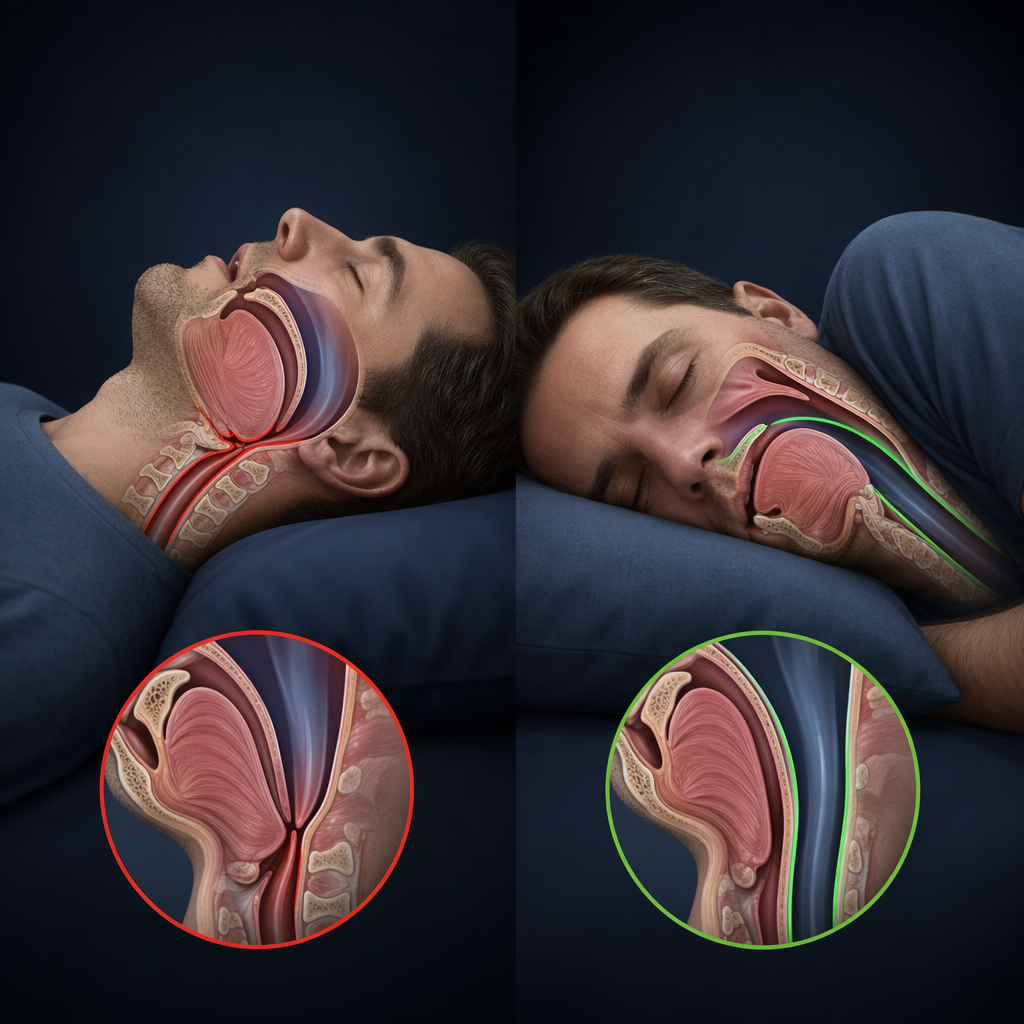
A person does not have to sit upright at 3:12 a.m. and remember the sound for sleep to be affected. Sleep is organized into stages, and the body can shift toward lighter sleep in response to environmental noise without leaving a neat memory of the event. The Sleep Foundation describes environmental noise as a factor that can fragment sleep, increase lighter stage 1 sleep, and reduce slow-wave and REM sleep.[4]
That distinction matters because slow-wave sleep and REM sleep are not decorative parts of the night. Slow-wave sleep is tied to physical restoration and metabolic housekeeping. REM sleep is involved in emotional processing and memory functions. If a bedroom noise repeatedly nudges the sleeper upward into lighter sleep, the morning complaint may not be “I woke up ten times.” It may be “I slept, but it did not feel like sleep.”
The body also reacts to sound through autonomic pathways. Harvard T.H. Chan School of Public Health summarizes evidence that noise exposure can contribute to sleep problems and chronic health risks through stress responses, including activation that affects heart rate and blood pressure.[5] At night, that means the relevant event may be a small physiological arousal: a change in heart rate, a stress-hormone response, a blood-pressure fluctuation, a movement into lighter sleep. None of those requires the sleeper to consciously identify the sound.
This is where the phrase “barely audible” can mislead. Audibility is not the same as biological irrelevance. A sleeping brain continues to monitor the environment. It sorts sounds for possible significance, and it can react before the waking mind forms a story. A baby crying, a smoke alarm chirping, a truck braking outside, and a mechanical thrum do not carry the same meaning, but they all remind us that the night brain is not switched off.
It would be too strong to say that every data center-adjacent sleep complaint has been clinically proven to result from data center noise. The better-supported claim is that the mechanisms are plausible and consistent with what sleep research already knows about environmental noise: sleep can be fragmented, lighter, and less restorative even when the person does not recall being fully awake.
The 24/7 Problem: A Night Without a Reset
Many neighborhood noises are intermittent. A motorcycle passes. A dog barks and stops. A garbage truck comes in the morning. Even when those sounds are irritating, the night often gives the nervous system gaps of relative quiet. Data centers are different because their essential function is continuous operation. Servers do not sleep, and the cooling systems that protect them cannot simply shut down at 10 p.m.
Continuous sound changes the exposure question. A single peak may look acceptable, but a steady tonal hum can occupy the whole sleep period. It can also become more noticeable at night because competing daytime sounds disappear. The same source that blends into traffic and household activity at 2 p.m. may define the room at 2 a.m.
This is one reason ordinance compliance can feel so unsatisfying to residents. Many local noise rules were not designed around a low-frequency industrial source running all night beside bedrooms. EESI describes a regulatory gap in which local ordinances often rely on conventional measurements and nuisance categories better suited to intermittent sources such as construction, parties, or barking dogs.[2] A rule can be enforceable and still incomplete for sleep.
The absence of a nightly reset may be the part residents feel most directly. People can adapt to many sounds, but adaptation is not guaranteed, and it is not evenly distributed. A person already vulnerable because of insomnia, shift work, caregiving, illness, age, anxiety, or a demanding morning schedule has less margin. The cost is not only the minutes awake. It is the way the whole night becomes a place of monitoring.
Why Curtains, Foam, and White Noise May Disappoint
The first things people try are usually sensible: close the windows, add heavy curtains, move the bed, run a fan, play white noise, seal a vent, hang acoustic foam. Those steps can help with some higher-frequency sounds. They are much less reliable against low-frequency noise and vibration.

There are two reasons. First, long low-frequency wavelengths are harder to absorb with lightweight materials. A foam panel that softens echo in a room is not the same thing as a barrier against mechanical rumble. Second, some of the disturbance may arrive as vibration conducted through the ground, foundation, studs, joists, or wall assemblies. If the house itself is participating in the transmission path, treating only the air inside the bedroom can miss the route the energy is taking.
Masking has limits too. A fan or white-noise machine can cover irregular sound for some sleepers, but it does not erase low-frequency energy, and adding continuous sound is not automatically neutral for sleep architecture. For readers weighing that tradeoff, our evidence review on sleeping with a fan on discusses why masking noise can be more complicated than it feels at bedtime.
This is not a failure of the resident. It is a mismatch between a household remedy and an industrial exposure path. If a person keeps buying softer, thicker, heavier things for the bedroom and still wakes unrefreshed, the lesson may not be that the complaint is imaginary. The lesson may be that the bedroom is being reached by sound and vibration in ways those materials were never built to control.
Community Reports Show a Pattern, Not a Completed Health Verdict
The issue is no longer confined to one frustrated block. EESI reports that more than 3,000 data centers operate in the United States and more than 1,500 are in development.[2] In Northern Virginia, nearly one-third of data centers sit within 200 feet of residentially zoned properties.[2] Noise complaints have been documented in communities including Chandler, Arizona; Prince William County, Virginia; Granbury, Texas; Dowagiac, Michigan; and Vineland, New Jersey.[2]
The national scale is important, but it should not be used to flatten the evidence. A complaint cluster is not the same as a controlled epidemiological study. Reported symptoms such as poor sleep, headaches, vertigo, or stress deserve attention, especially when many people describe similar exposures, but the causal chain still has to be studied carefully.
That caution is not a loophole for ignoring the problem. A 2025 article in PMC on global data center expansion and human health states plainly that little is known about long-term health outcomes in data center host communities and calls for empirical research.[6] That is the right boundary: environmental noise and sleep disruption are well supported; data center exposure pathways are credible and increasingly documented; long-term community health outcomes remain under-studied.
Lawsuits are beginning to follow the complaints. Consumer Notice describes data center lawsuits involving allegations such as nuisance, sleep disturbance, property-value loss, and health harms.[7] WilmerHale has also described an emerging wave of nuisance, environmental, and land-use litigation around data centers.[8] Those cases may shape disclosure, siting, mitigation, and local governance, but litigation should not be mistaken for a scientific conclusion. Courts answer legal questions. Sleep science answers exposure and physiology questions. Communities need both to be more precise than they have been.
What “Within Limits” Leaves Out
When a facility meets an ordinance limit, that fact matters. It may mean the operator is complying with the rule as written. It may mean an inspector used the accepted method. It may also mean the rule was not built for the sound that is now entering bedrooms.
A complete sleep-relevant assessment would ask different questions from a basic nuisance reading. What are the indoor nighttime levels in bedrooms? How much low-frequency energy is present? How do A-, C-, and Z-weighted readings compare? Is the sound tonal? Does it fluctuate with cooling load or weather? Are there vibration measurements at the foundation or inside the house? Does the exposure persist across the full sleep window?
Those questions do not presume that every data center is harming every neighbor. They simply match the measurement to the complaint. If the complaint is “I cannot sleep,” a daytime property-line dBA reading may be a poor proxy. If the complaint is “I feel it more than I hear it,” a measurement system that discounts low frequencies may miss the most relevant part. If the complaint is “nothing helps,” a focus on airborne sound alone may ignore structural vibration.
This is the practical unfairness residents run into. They are asked to prove a nighttime biological effect with tools designed to answer a narrower acoustical question. The body, meanwhile, is not waiting for the ordinance language to catch up. It is sleeping more lightly, waking without a clear memory, or starting the day already depleted.
The Plausible Chain From Hum to Unrested Morning
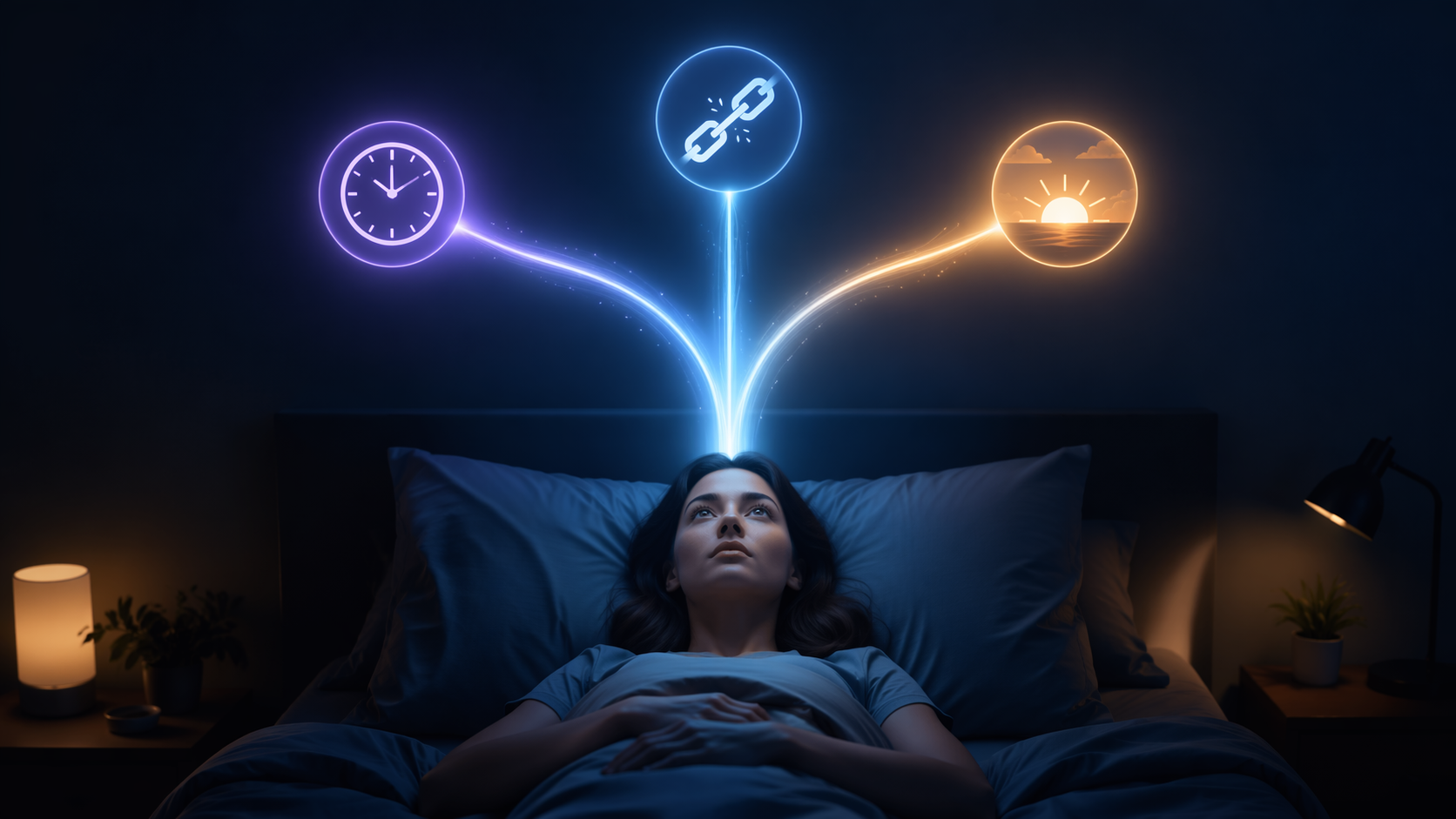
The clearest way to understand data center noise near homes is as a chain, not a single number. Equipment produces sound with low-frequency components. A-weighted measurements may understate that part of the exposure. The sound runs continuously through the sleep period. Some of it may travel through structures as vibration. The sleeping brain and body respond with micro-arousals, lighter sleep, stress activation, heart-rate changes, or nighttime blood-pressure effects. The person wakes with the sense that sleep happened, but restoration did not.
Parts of that chain are already well established in sleep and environmental-noise research. Parts are increasingly documented in data center communities. The long-term health picture for host communities is still not strong enough to state as settled fact. That boundary should stay visible, because overclaiming makes it easier for real complaints to be dismissed.
Still, the opening puzzle has a scientifically credible answer. A resident may be disrupted “without hearing it” because hearing is not the only route into sleep. Low-frequency content can be poorly represented by the most common decibel measurement. Continuous operation can remove the quiet period the night normally provides. Structural vibration can bypass the fixes people reasonably try inside their bedrooms. Compliance with ordinary noise limits may describe the rule, while failing to describe the night.
References
- Night noise guidelines fact sheet — WHO Regional Office for Europe
- Communities Are Raising Noise Pollution Concerns About Data Centers — Environmental and Energy Study Institute
- Why Data Centers Are Noisy and How to Reduce the Sound Levels — Acoustical Solutions
- How Noise Can Affect Your Sleep Satisfaction — Sleep Foundation
- Noise pollution can lead to sleep issues, chronic health problems — Harvard T.H. Chan School of Public Health
- Global data center expansion and human health: A call for empirical research — PMC
- Data center lawsuits — Consumer Notice, 2026
- Data Centers in Court: The Emerging Wave of Nuisance, Environmental, and Land-Use Litigation — WilmerHale, July 13, 2026

Comments
Join the discussion with an anonymous comment.