
The best melatonin for adults is not automatically the highest-dose bottle, the prettiest gummy, or the brand with the calmest bedtime branding. It is the product least likely to surprise you after you swallow it. With melatonin, that distinction matters because two bottles can promise the same amount on the front label while delivering meaningfully different amounts in the dose itself.
That is not a small-print technicality. In the United States, melatonin is sold as a dietary supplement, not as an FDA-approved sleep drug. The FDA does not review dietary supplements for safety or effectiveness before they are sold; manufacturers are responsible for making sure their products are safe and their labels are truthful.[1]
So the useful shopping question is narrower than “Which melatonin works best?” It is: which product gives you independent evidence that the dose and quality claim on the label are true? If you need a broader primer on when melatonin makes sense as a sleep aid, start with melatonin for adults. This guide stays with the bottle in your hand.
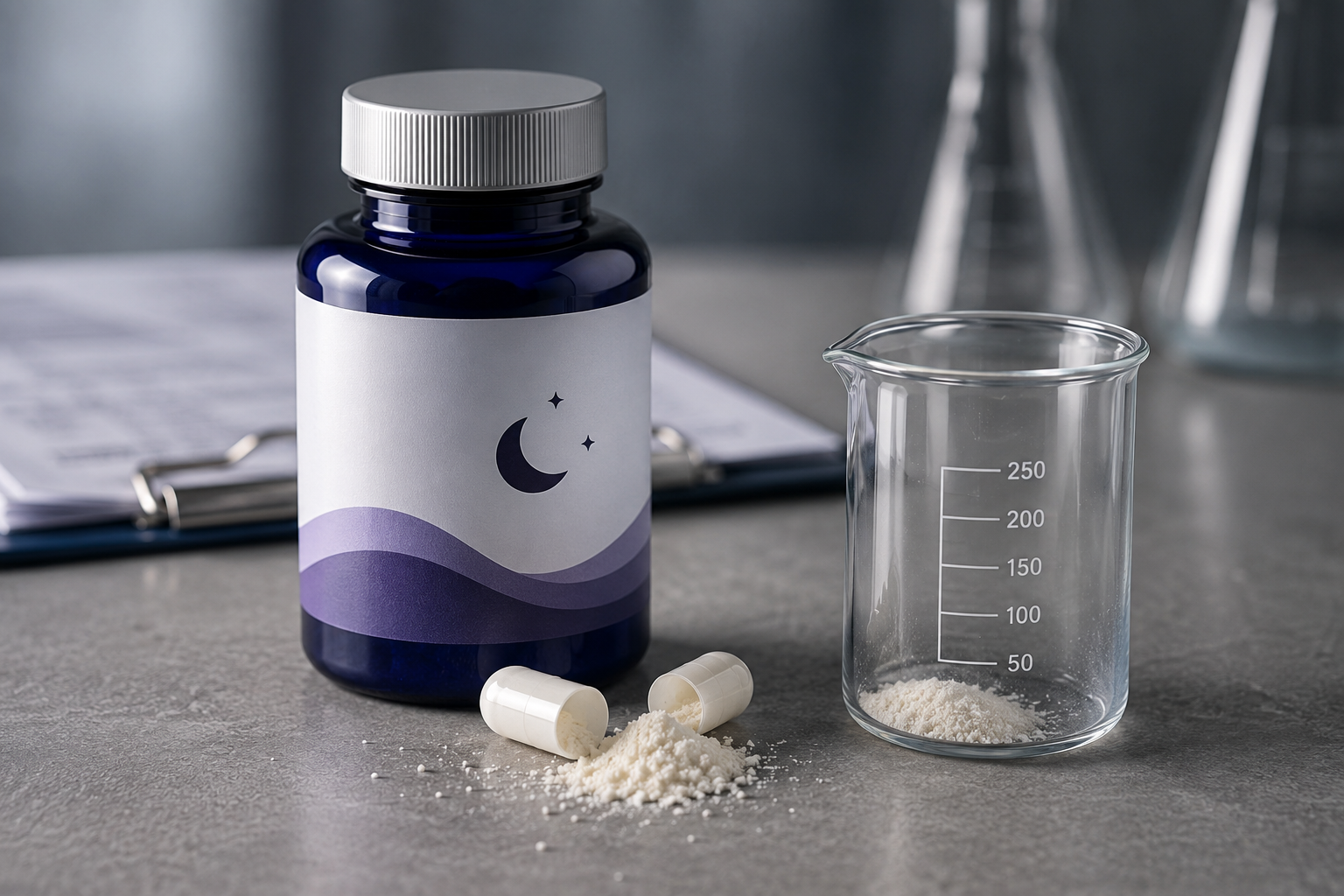
Why Label Accuracy Comes Before Brand Preference
Melatonin is often marketed in the language of gentleness: natural, drug-free, bedtime support. None of those phrases tells you whether the tablet or gummy contains what it says it contains.
The sharpest warning came from a 2017 analysis of 31 melatonin supplements. Actual melatonin content ranged from 83 percent below the labeled amount to 478 percent above it. The same study found unlabeled serotonin in 26 percent of products tested.[2]
That range changes the meaning of a familiar dose claim. A person choosing a low-dose product to avoid morning grogginess may not be getting a low dose. A person comparing a 1 mg product with a 3 mg product may be comparing labels rather than actual contents. A parent buying gummies for a household may be placing something candy-like in a cabinet without reliable information about how much active ingredient is in each piece.
The serotonin finding deserves its own attention because it turns quality control into a medication-safety issue. Adults taking SSRIs or SNRIs should be especially cautious about products without independent testing, because unlabeled serotonin creates a possible interaction concern rather than just a mislabeled supplement problem.[2]
Gummies have not earned a pass. A 2023 JAMA study of melatonin gummy products found that 22 of 25 were inaccurately labeled; actual melatonin content ranged from 74 percent to 347 percent of the stated amount, and one product had no detectable melatonin.[1] For a closer look at that study and why gummies are a recurring trouble spot, see How Accurate Is Your Melatonin Gummy?.
This does not mean every melatonin product is badly made. It means the front label is not enough evidence. A dose statement is a claim; independent verification is the part that makes the claim more checkable.
What Third-Party Testing Can Actually Tell You
A third-party mark is useful only if you know what uncertainty it reduces. Some programs focus on whether the product contains the labeled ingredient at the stated amount. Some look for contaminants. Some are designed around banned substances for athletes. A logo can be meaningful and still answer the wrong question for your situation.
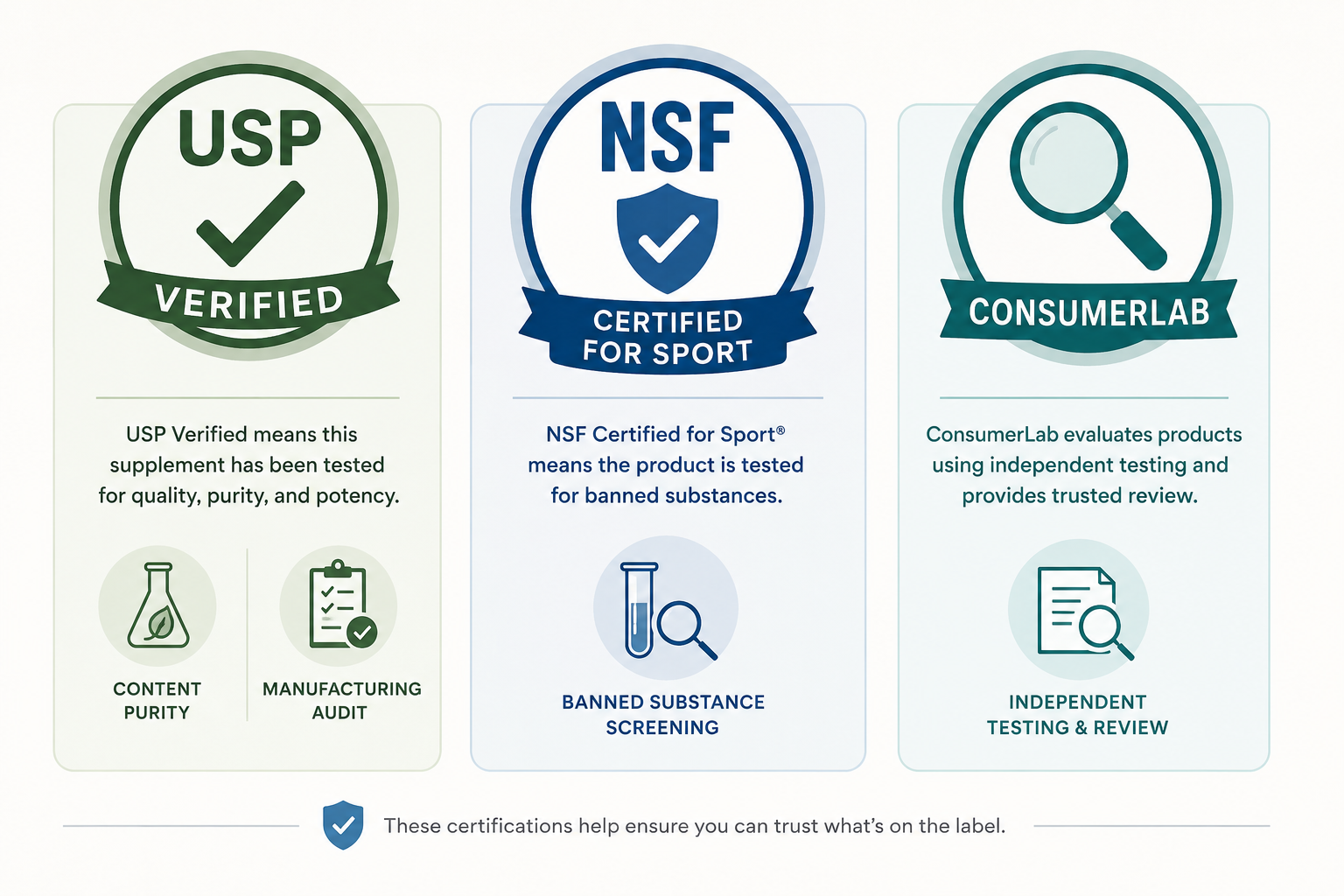
| Quality signal | Best used for | What it does not settle |
|---|---|---|
| USP Verified | A strong shortcut for ingredient identity, potency, purity, and manufacturing quality review | It does not mean melatonin is the right sleep aid for your problem |
| NSF Certified for Sport | Reducing banned-substance risk, especially for competitive athletes | It is not the same thing as a universal guarantee of every purity or dosing concern |
| ConsumerLab | Independent product testing and price/value comparisons | Full details may be subscription-gated, and tested products do not represent the entire market |
USP Verified: The Most Useful Single Shortcut for Most Adults
For an adult mainly worried about taking the wrong amount, USP Verified is the mark most worth looking for first. The program is designed to verify that a supplement contains the ingredients listed on the label, in the declared amount and strength, and that it does not contain harmful levels of specified contaminants. It also includes review of manufacturing practices.[2]
That combination matters because melatonin quality is not just a question of whether melatonin is present. The more practical question is whether the labeled dose, the contents, and the manufacturing controls line up well enough that an ordinary buyer can make a decision without running a chemistry lab at home.
USP verification still does not turn melatonin into an FDA-approved insomnia treatment. It does not prove that a product will fix your sleep, or that a higher dose is better, or that you should use it nightly. It is a product-quality signal, not a personal medical clearance.
NSF Certified for Sport: Important, But for a Different Risk
NSF Certified for Sport is especially relevant for athletes who may face drug testing or league rules. Its value is banned-substance screening. If your main concern is a prohibited contaminant that could create professional or eligibility consequences, this mark may matter more than a general wellness claim.
For a non-athlete trying to avoid accidental over-dosing, however, NSF Certified for Sport should not be treated as a magic replacement for understanding potency and purity claims. It answers an important question, but not every question a melatonin buyer has.
ConsumerLab: Useful Testing, With a Visibility Limit
ConsumerLab is different from a seal you simply spot on a shelf. It buys and tests supplements and publishes product reviews for members. Its visible 2024 melatonin review summary reported that all tested products met label claims within a reasonable margin, a less alarming result than the 2017 supplement study and the 2023 gummy study.[3]
That is encouraging, but it should not be inflated into “the market is fixed.” The detailed product-level findings are behind a paywall, and the tested set is not proof that every melatonin product on every shelf is accurate. It is a useful independent data point, not a market-wide guarantee.
ConsumerLab also reported large price differences among melatonin products, with costs ranging from about $0.01 to more than $0.60 per milligram in its review.[3] That is a helpful reminder that expensive does not automatically mean more accurate, and cheap does not automatically mean mislabeled. Price is not a substitute for verification.
A Practical Way to Choose
Start with the risk you are trying hardest to reduce. That choice will do more for you than sorting products by flavor, influencer popularity, or “extra strength” language.
- If your main concern is the dose being wrong, look first for a named third-party verifier that checks potency and label accuracy, with USP Verified as the strongest simple shortcut when available.
- If your main concern is banned substances, especially as an athlete, prioritize NSF Certified for Sport rather than a general “lab tested” claim.
- If your main concern is value, use independent testing sources such as ConsumerLab when accessible, but do not assume price alone predicts quality.
- If you take SSRIs, SNRIs, or other medications that affect serotonin, avoid unverified products and ask a clinician or pharmacist before using melatonin.
- If you are an older adult or managing several medications, treat supplement choice as a medication-safety decision, not a casual wellness purchase.
Older adults have more reasons to be cautious: medication interactions, fall risk from nighttime grogginess, and the simple reality that “natural” does not mean low consequence. For a broader look at supplement choices in that group, see which sleep supplements are safe for older adults.
The Red Flags Are Usually on the Front Label
The back panel and certification details tell you more than the front. Still, the front label often gives away the product’s priorities.
- No named third-party testing: “Lab tested” is weak if the company does not name the lab, standard, or certifier.
- Heavy “extra strength” marketing: higher-dose positioning can encourage more melatonin than the buyer intended to take.
- Gummy-first appeal: gummies may be convenient, but the 2023 gummy findings make dose precision a fair concern.
- Price-as-quality framing: a premium-looking bottle is not evidence that the dose is accurate.
- Vague natural-language claims: “clean,” “calming,” and “drug-free” do not verify contents.
Dose inflation deserves special caution with gummies because the product form can make repeat dosing feel casual. If your concern is taking too much, especially from a gummy product, read Can You Overdose on Melatonin Gummies? before treating a serving size as harmless just because it is chewable.
Flavor, texture, and whether a tablet is easy to split are not irrelevant. They matter after the quality question is answered. A pleasant gummy with no clear third-party verification is still asking you to trust the marketing department.
What “Best” Can Honestly Mean
For most adults, the best melatonin product is one that uses a modest, clearly labeled dose and gives you a named, independent reason to believe the label. USP Verified is the cleanest shortcut when the main worry is content accuracy and purity. NSF Certified for Sport is the better match when banned-substance exposure is the risk that matters most. ConsumerLab can be useful when you want independent testing and cost comparisons, as long as you recognize the limits of what its public summary can show.
That answer may feel less satisfying than a single product name, but it is more durable. Product lines change. Formulas change. Labels change. The habit that carries over is knowing which claim has been checked by someone other than the seller.
Once the label question is settled, the next decision is whether melatonin fits the sleep problem you are trying to solve. For that step, move from product quality to mechanism with how to choose a sleep supplement based on your specific sleep problem.
References
- Melatonin: What You Need To Know, NCCIH
- Melatonin, StatPearls
- Melatonin Supplements Review, ConsumerLab


Comments
Join the discussion with an anonymous comment.