
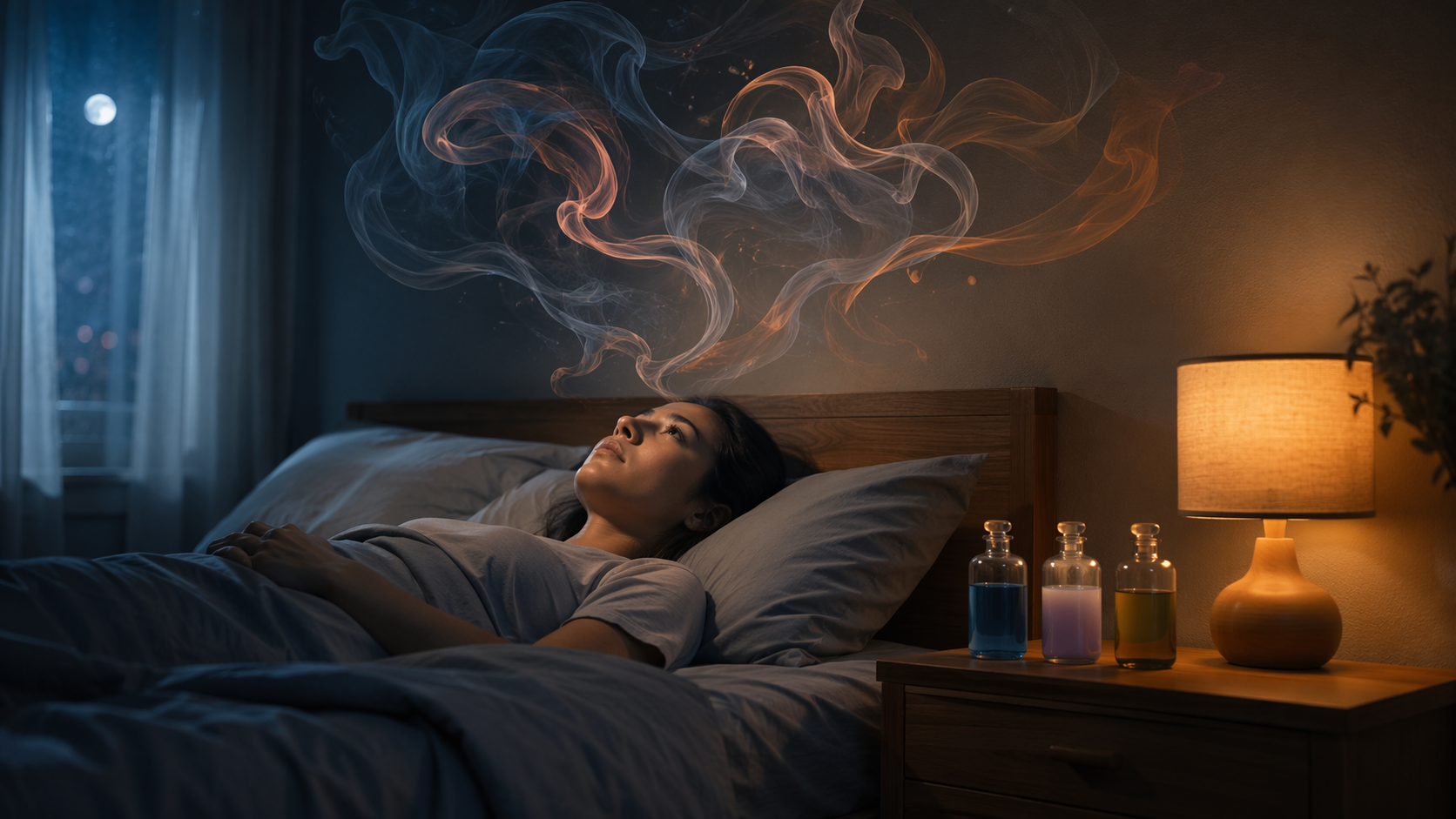
If anxiety is what keeps you awake, the best sleep aid for adults with anxiety over the counter is not automatically the strongest sedative on the shelf. The better first question is plainer: are you unable to fall asleep, waking up and staying awake, or lying there with your mind running even though your body is tired?
Those three patterns point to different ingredients. Diphenhydramine or doxylamine may help an otherwise healthy adult through a short, acute stretch of sleep-onset insomnia. Melatonin fits timing problems better than chronic worry. Magnesium glycinate is usually discussed when night waking is the main complaint. L-theanine and lavender oil extract are more interesting when anxious arousal—not simple wakefulness—is the problem. None of these has been proven superior in head-to-head trials specifically for anxiety-related insomnia, so the practical choice comes from matching the symptom to the job.
Start with the symptom pattern, not the brand name
| Primary sleep problem | OTC option that may fit | Evidence strength for this use | Likely benefit | Main drawback | Best avoided when |
|---|---|---|---|---|---|
| Can’t fall asleep during an acute stressful patch | Diphenhydramine 25–50 mg or doxylamine 25 mg | Moderate for short-term adult sleep-onset use; 2025 expert consensus reported 100% agreement that diphenhydramine is effective for acute insomnia in adults 18–65, with a maximum recommended use of 4 weeks [1] | Stronger sedation; may shorten the time it takes to fall asleep | Tolerance can appear within days; next-day psychomotor impairment can matter for driving, work, caregiving, and decision-making [2][3] | Age 65+, glaucoma, urinary retention, high anticholinergic burden, need to be fully alert early, chronic nightly insomnia |
| Sleep schedule is shifted, jet lagged, or delayed | Melatonin, often 2–6 mg in studies and products | Better supported for circadian-timing problems than for chronic insomnia; AASM does not recommend melatonin for chronic insomnia treatment [4] | May help move sleep timing rather than force sedation | Supplement labels can be unreliable; one analysis found 71% of tested melatonin supplements had inaccurate labeling [5] | Expecting it to quiet severe anxiety tonight, combining casually with other sedatives, using unknown-dose products |
| Wake up during the night and can’t return to sleep | Magnesium glycinate, commonly discussed around 300–420 mg/day | Promising but limited; reviews note small trials and the need for stronger evidence [6] | May support relaxation and sleep continuity in some people | Effects are usually modest; not a same-night knockout option | Kidney disease, medication interactions, or expecting it to treat untreated anxiety by itself |
| Racing thoughts, physical tension, bedtime worry | L-theanine 200–400 mg/day | Early supportive evidence for anxiety reduction, with few side effects reported in available studies [7] | May reduce anxious arousal without the same next-day grogginess concern as sedating antihistamines | Not a forceful sedative; may not be enough for severe insomnia | Expecting immediate unconsciousness or using it as a substitute for anxiety treatment when symptoms are persistent |
| Ongoing anxiety with sleep disruption | Lavender oil extract/Silexan 80 mg/day | Systematic-review evidence supports anxiety reduction and sleep improvement, but the time horizon is measured in weeks, not one night [8] | Targets anxiety symptoms that can feed insomnia | Not a same-night rescue; gastrointestinal lavender burps can occur | Needing tonight-only sedation or taking medications where interaction questions need clinician review |
| Preference for an herbal sleep option, with uncertain personal response | Valerian root 300–600 mg | A 2025 scoping review of 51 RCTs found valerian and melatonin had the largest evidence base among OTC products for adult insomnia, though individual trial results remain mixed [9] | May help some adults with sleep, especially when expectations are modest | Variable response and product quality; not the cleanest anxiety-specific match | Pregnancy, liver concerns, combining with alcohol or sedatives, needing predictable next-day clarity |
This table is intentionally organized by active ingredient rather than by product line. Brand names change, combination products blur the picture, and “PM” labels often hide the same sedating antihistamine under a friendlier front panel. The ingredient is what determines the likely benefit and the next-morning consequence.
When the problem is falling asleep: antihistamines can work, but the window is narrow
Diphenhydramine and doxylamine are the classic OTC sleep-aid ingredients for a reason: they are sedating. For an adult who is otherwise low-risk, acutely stressed, and staring down a few bad nights, that sedation can be useful. The 2025 diphenhydramine expert consensus reported unanimous agreement that diphenhydramine is effective for acute insomnia in adults ages 18–65, and it unanimously recommended limiting use to a maximum of 4 weeks [1]. That consensus was funded by Procter & Gamble, the maker of Vicks ZzzQuil, while the authors stated they retained editorial control; that funding does not make the findings unusable, but it is exactly the kind of detail that belongs next to the claim.
The narrow claim is the important one: acute adult insomnia, not chronic anxiety insomnia. If a person is using diphenhydramine because a job loss, grief period, travel disruption, or short-lived stressor has made sleep onset miserable, that is a different situation from taking it every night because the bed has become the place where worry shows up.
Tolerance is one reason the nightly routine becomes disappointing fast. Research cited in the available evidence found diphenhydramine tolerance by day 3–4 [2]. People often respond by assuming they need a higher dose, a second product, or a rotation of sleep aids. That is usually the moment to step back, not escalate.
The other reason is tomorrow morning. Next-day impairment is not just “a little groggy.” A study of diphenhydramine found clinically significant next-day psychomotor impairment [3]. That matters if the morning includes driving, operating equipment, caring for children, making medication decisions, or trying to function in a job where reaction time and judgment count. For a deeper look at this tradeoff, the guide to OTC sleep aid grogginess alternatives is worth reading before making antihistamines a default.
Doxylamine sits in the same practical category: useful for short-term sedation, more consequential than its packaging sometimes suggests. It may feel stronger or last longer for some people, which can be either the desired effect or the next-day problem. Anyone considering it regularly should review dosing and avoidance criteria carefully; the doxylamine safety and dosage guide covers that ingredient more specifically.
Age changes the risk calculation. First-generation antihistamines such as diphenhydramine and doxylamine are flagged as potentially inappropriate for many older adults in the 2023 AGS Beers Criteria because of anticholinergic effects, including confusion, constipation, urinary retention, and fall-related concerns [10]. A Gerontological Society of America workgroup paper reported that, in 2013 data, 47% of adults 75 and older who used OTC sleep aids used them at least 15 days per month, far beyond the typical 2-week label direction [11]. A 2015 prospective cohort study also found higher cumulative anticholinergic use, including medications such as diphenhydramine, was associated with increased dementia risk [12]. Association is not proof that one occasional tablet causes dementia, but it is enough reason not to treat these drugs as harmless nightly sleep vitamins.
For older adults or caregivers helping an older parent choose a sleep product, the better starting point is sleep aid safety for elderly adults, not the strongest OTC option on the shelf.
Where melatonin fits—and where it usually does not
Melatonin is often placed beside antihistamines as if both are general-purpose sleep aids. They are not doing the same job. Melatonin is a timing signal. It is more logically matched to circadian problems: delayed sleep timing, jet lag, shift changes, or a body clock that is not lining up with the desired bedtime.
For chronic insomnia, the American Academy of Sleep Medicine guideline does not recommend melatonin as a treatment [4]. That does not mean no one ever benefits from it. It means the evidence does not support treating it as the answer for ongoing insomnia, especially when anxiety and conditioned arousal are the real drivers.
There is also the supplement-label problem. A 2017 Journal of Clinical Sleep Medicine analysis found that 71% of tested melatonin supplements did not contain the amount of melatonin stated on the label [5]. That matters with a hormone-like timing product because “a little more” is not automatically better. A person may think they tried 3 mg when they did not, or they may be taking much more than intended.
If the choice is between magnesium and melatonin, the comparison depends on whether the problem is timing or sleep continuity. The site’s magnesium glycinate vs. melatonin comparison walks through that fork more directly.
When the real problem is racing thoughts
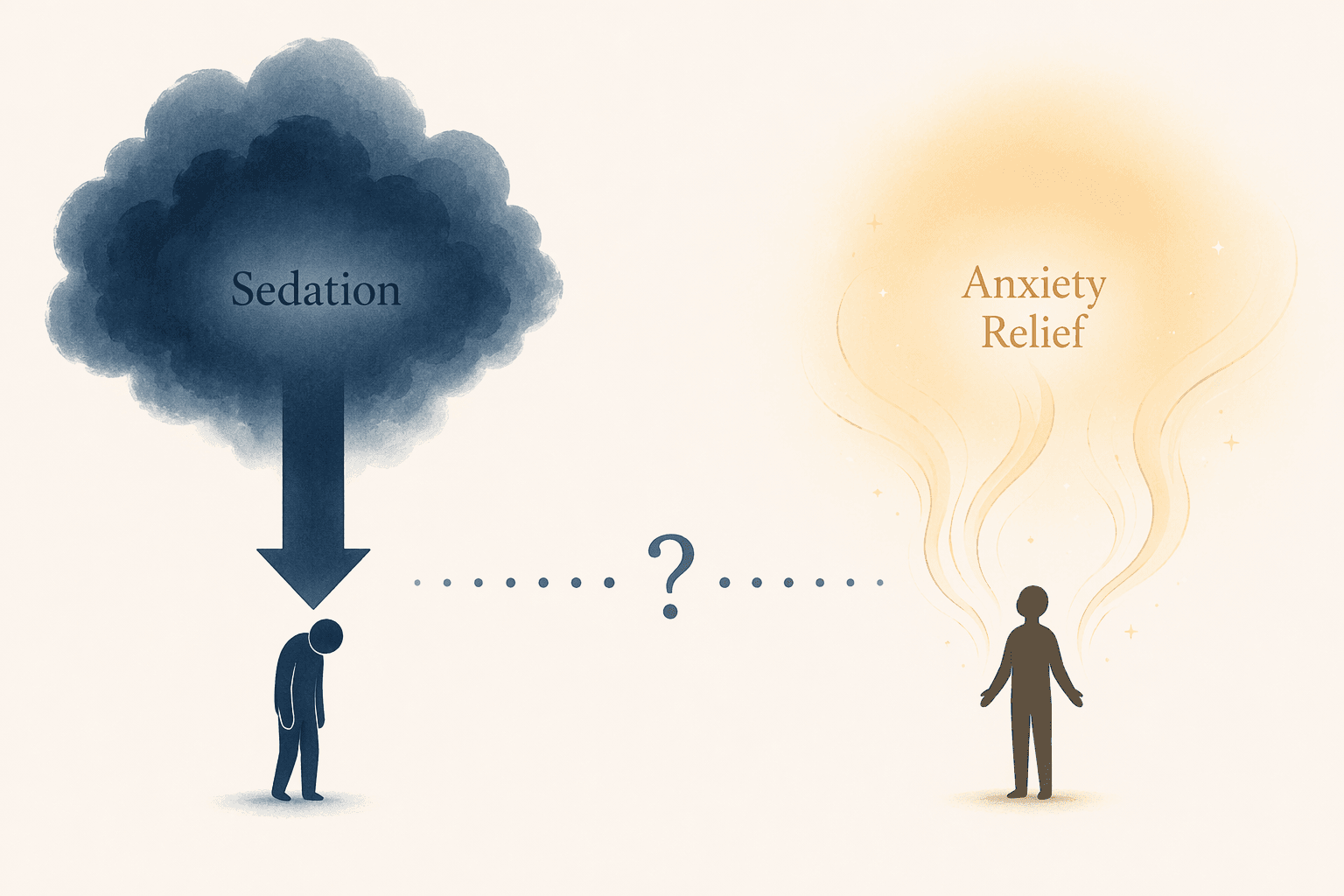
Anxious rumination is easy to misread as a need for heavier sedation. Sometimes sedation is the fastest relief available, especially during a short acute patch. But if the recurring pattern is “I get into bed and my mind starts reviewing everything,” overpowering wakefulness does not address the arousal loop that keeps returning.
L-theanine is appealing here because it is discussed more as a calming amino acid than as a knockout sedative. Available evidence supports L-theanine at 200–400 mg daily over 4–8 weeks for anxiety reduction, with few side effects reported [7]. The practical expectation should be modest and specific: less anxious arousal for some people, not guaranteed sleep on command.
That distinction is useful for adults who cannot afford a foggy morning. L-theanine does not carry the same antihistamine-style next-day psychomotor impairment concern in the available evidence, although individual responses still vary. The dedicated L-theanine for sleep review is the better place to look at dosing, timing, and study-level details.
Lavender oil extract, often studied as Silexan, belongs in the same anxiety-pathway conversation but with a different timeline. A 2019 systematic review found that Silexan reduced anxiety and improved sleep, and later research continued to support sleep benefits, but the typical dose and horizon are 80 mg daily for at least 6 weeks [8]. That makes it a poor answer to “what can I take at 11 p.m. tonight?” and a more reasonable option when bedtime anxiety is part of a longer pattern.
The useful dividing line is not “drug versus natural.” It is whether the ingredient is mainly sedating the brain for a night or trying to reduce the anxious arousal that is interfering with sleep. Natural products can still have side effects, variable quality, and interaction concerns. FDA-regulated OTC antihistamines can still be the wrong fit if the main issue is chronic worry rather than an acute sleep-onset crisis. For a broader evidence map, see natural sleep remedies evidence and the guide to non-habit-forming sleep aids.
When you wake up and cannot get back to sleep
Sleep-maintenance insomnia has a different feel from lying awake at bedtime. The person may fall asleep reasonably well, then wake at 2:30 or 3:40 a.m. with a tight chest, a problem list, or no obvious reason at all. Taking a sedating antihistamine in the middle of the night is especially risky because there may not be enough hours left to clear the grogginess before morning.
Magnesium glycinate is often considered here because it is not trying to force sleep in the same way. The evidence is still limited. A 2024 review summarized magnesium as promising but constrained by small trials and the need for better research [6]. For some adults, especially those with low intake or muscle tension, it may be a reasonable adjunct. It should not be sold as a reliable cure for anxiety-related night waking.
Anyone choosing magnesium should be more careful if they have kidney disease, take medications that interact with minerals, or are already using multiple supplements. For trial-level detail, dosing ranges, and formulation questions, start with magnesium glycinate for sleep or the magnesium glycinate sleep review.
Valerian has more evidence than its reputation suggests, but it is still unpredictable
Valerian often gets treated either as old-fashioned folklore or as a gentle herbal equivalent of a sleeping pill. The evidence sits in a less tidy middle. A 2025 scoping review in Sleep Medicine reviewed 51 randomized controlled trials and found that valerian and melatonin had the most evidence among OTC products for adult insomnia; the review covered literature through December 2022 [9].
That does not make valerian the first choice for anxiety-related insomnia. Individual trials have been mixed, products vary, and response can be hard to predict. It may be reasonable for an adult who prefers an herbal option and has checked interaction risks, but it is not as cleanly matched to anxious rumination as L-theanine or lavender, and it is not as predictably sedating as antihistamines.
When OTC sleep aids stop being the main question
A short bad run of sleep and chronic anxiety-related insomnia are not the same problem. If insomnia is happening most nights, the most important treatment question is no longer which bottle is strongest. It is whether the bed has become a conditioned anxiety cue, whether worry is being postponed until lights-out, and whether sleep loss is now feeding the anxiety that started it.
That cycle is not just frustrating; it can become self-reinforcing. The site’s review on how to improve sleep quality for mental health discusses evidence that improving sleep can reduce anxiety symptoms, which is one reason treating insomnia directly matters.
For chronic insomnia, cognitive behavioral therapy for insomnia remains the first-line recommendation from the American Academy of Sleep Medicine [4]. OTC drugs and supplements may still have a role, but that role is usually adjunctive: a bridge during an acute patch, a circadian tool, a modest support for sleep continuity, or an anxiety-pathway supplement with realistic expectations.
So the narrowed answer is this: antihistamines fit short acute sleep-onset crises when next-day impairment and age-related risks are acceptable; melatonin fits timing problems more than worry; magnesium glycinate may be worth considering when sleep maintenance is the main complaint; L-theanine or lavender/Silexan make more sense when anxious rumination is the driver; valerian is a possible but less predictable herbal option. If the pattern is most nights, the better next step is treating the insomnia-anxiety loop itself rather than adding another nightly product.
References
- Expert Consensus on the Use of Diphenhydramine for the Management of Occasional Sleeplessness in Adults, PubMed Central, 2025.
- Comparative Tolerance to the Daytime Sedative Effects of H1 Antihistamines, PubMed.
- Carryover Effect on Next-Day Sleepiness and Psychomotor Performance of Nighttime Administered Antihistaminic Drugs, PubMed, 2012.
- Clinical Practice Guideline for the Pharmacologic Treatment of Chronic Insomnia in Adults, American Academy of Sleep Medicine.
- Melatonin Natural Health Products and Supplements: Presence of Serotonin and Significant Variability of Melatonin Content, Journal of Clinical Sleep Medicine, 2017.
- Magnesium for Sleep, Sleep Foundation, 2024.
- L-Theanine for Sleep, Sleep Foundation.
- Efficacy of Silexan in Patients with Anxiety Disorders: A Systematic Review and Meta-Analysis, PubMed, 2019.
- Non-prescription and Non-pharmacological Interventions for Insomnia: A Scoping Review of Randomized Controlled Trials, Sleep Medicine, May 2025.
- Learn More: Alternatives for Medications Listed in the AGS Beers Criteria for Potentially Inappropriate Medication Use in Older Adults, Harvard Health Publishing.
- Sleep Health and Appropriate Use of OTC Sleep Aids in Older Adults—Recommendations of a Gerontological Society of America Workgroup, PubMed Central.
- Cumulative Use of Strong Anticholinergics and Incident Dementia: A Prospective Cohort Study, JAMA Internal Medicine, 2015.
Comments
Join the discussion with an anonymous comment.