
How Common Is It to Have a Sleeping Problem at Night?
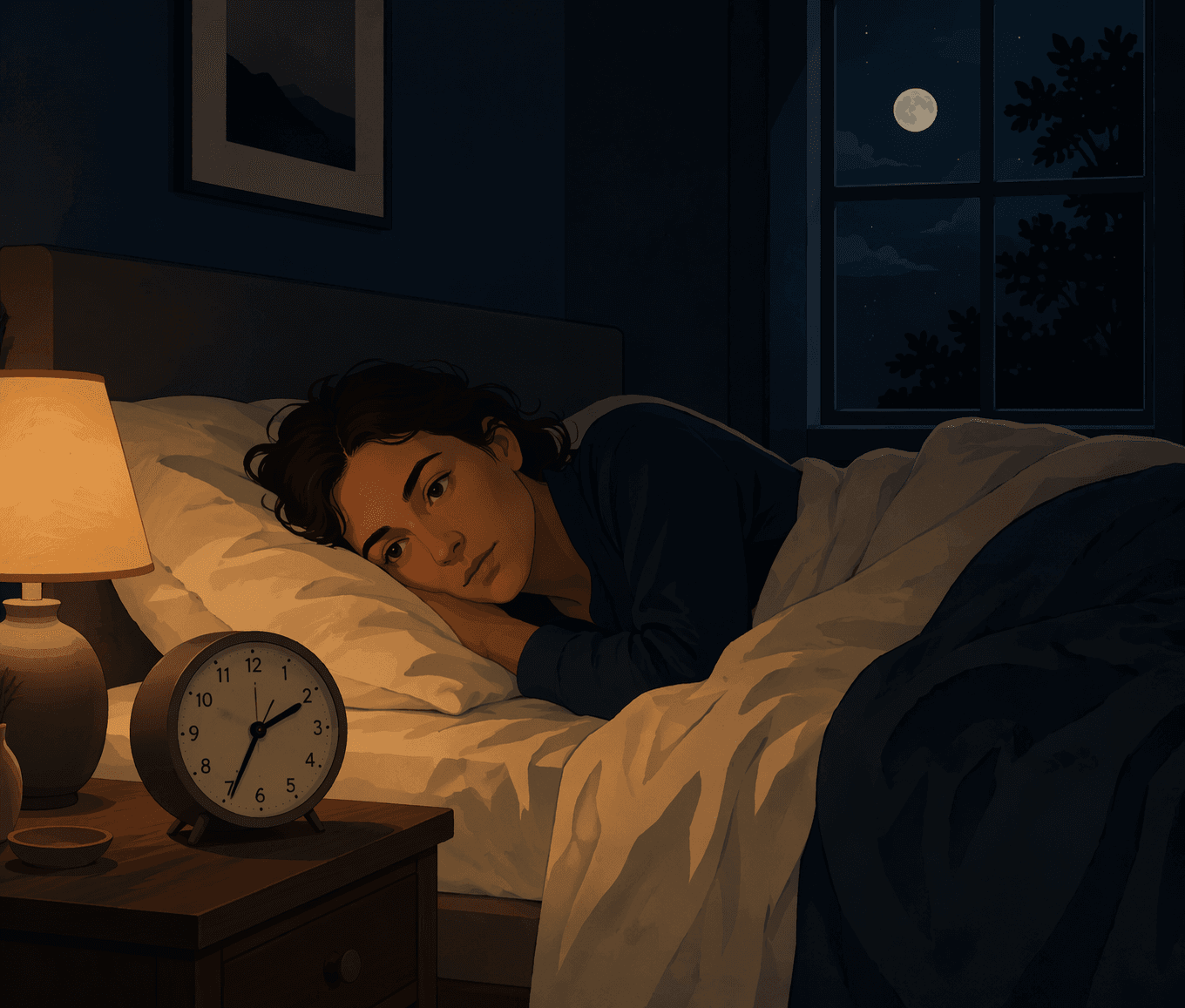
If you have ever lain awake at 2 a.m. wondering whether anyone else is having the same experience, the data offers a clear answer: you are in substantial company. According to the CDC's National Health Interview Survey (2020), 14.5% of U.S. adults reported trouble falling asleep most days or every day in the prior month, and 17.8% reported trouble staying asleep. These figures come from a sample collected during the COVID-19 pandemic, a period of elevated stress and disrupted routines, so they may be higher than a typical year. Still, even in non-pandemic contexts, roughly one in three adults worldwide experiences insomnia symptoms at some point, according to the Cleveland Clinic.
The prevalence varies by age and sex. Younger adults (ages 18–44) report more difficulty falling asleep (15.5%), while middle-aged adults (45–64) report the highest rates of trouble staying asleep (21.8%). Women are more likely than men to experience both types of sleep difficulty: 17.1% of women versus 11.7% of men have trouble falling asleep, and 20.7% versus 14.7% have trouble staying asleep. These patterns are consistent across multiple national surveys.
What Does Healthy Sleep Actually Look Like?
Before you can decide whether your sleep is problematic, it helps to have a realistic benchmark. Many people assume that healthy sleep means falling asleep the moment their head hits the pillow and never waking until morning. That is not how human sleep works.
A healthy sleep pattern for most adults includes the following characteristics:
- Falling asleep within 20 to 30 minutes of getting into bed
- Waking up no more than once per night, and returning to sleep within 20 minutes
- Sleeping a total of 7 to 9 hours per night (the range recommended by the Mayo Clinic for most adults)
- Waking up feeling reasonably rested, even if not perfectly refreshed every morning
- Not relying on caffeine, naps, or alarm-battery backups to get through the day
Notice that this benchmark allows for brief awakenings. The brain cycles through sleep stages approximately every 90 minutes, and brief arousals between cycles are normal. The problem is not waking up — it is being unable to fall back asleep, or waking up and staying awake for extended periods.
The Three-Dimensional Triage: Frequency, Duration, and Daytime Impact
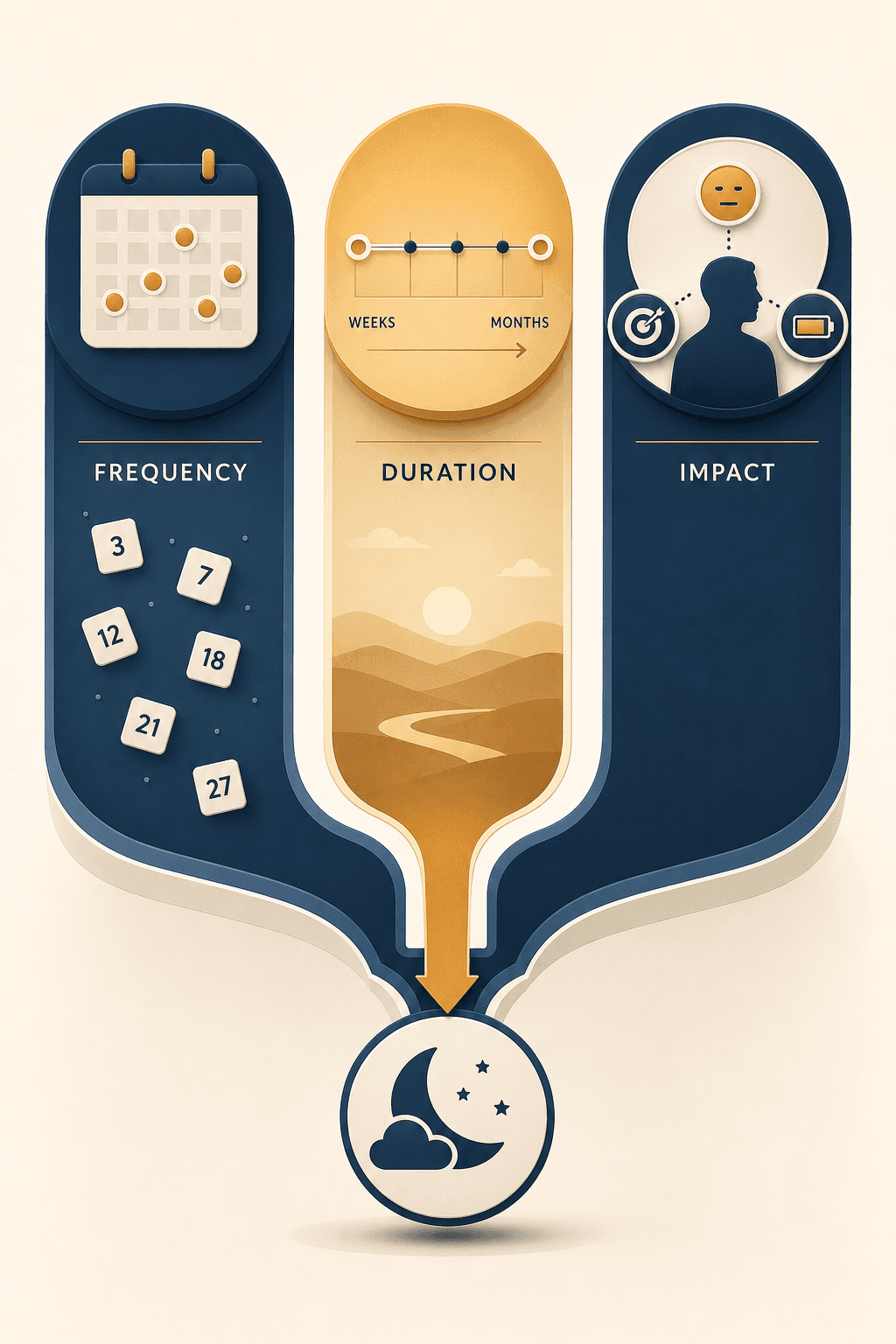
The single most useful tool for distinguishing a temporary sleeping problem from clinical insomnia is a three-dimensional framework. Clinical insomnia is not defined by how bad a single night feels. It is defined by three measurable dimensions: how often it happens, how long it has been happening, and whether it affects your daytime function.
| Dimension | Normal / Occasional | Acute Insomnia | Chronic Insomnia |
|---|---|---|---|
| Frequency | Fewer than 3 nights per week | 3 or more nights per week | 3 or more nights per week |
| Duration | A few days to a few weeks | Less than 3 months | 3 months or longer |
| Daytime Impact | Minimal or none | Noticeable fatigue, mood changes, or concentration issues | Consistent impairment in mood, cognition, energy, or daily function |
The Cleveland Clinic defines chronic insomnia as sleep difficulty occurring at least three times per week for at least three months, where the problem is not fully explained by another medical condition, substance use, or medication. The National Council on Aging (NCOA) uses a similar threshold: acute insomnia lasts less than three months or occurs fewer than three times per week, while chronic insomnia exceeds both thresholds.
The daytime impact dimension is the one most people overlook. You can have poor sleep for weeks and still not meet the criteria for insomnia if your daytime function remains intact. Conversely, you can sleep a full eight hours and still have insomnia if you wake unrefreshed and struggle through the day. The diagnostic criteria require that the sleep problem causes clinically significant distress or impairment in social, occupational, or other important areas of functioning.
Red-Flag Conditions: When the Problem Isn't Insomnia
Not every sleeping problem at night is insomnia. Several common medical conditions can fragment sleep in ways that mimic insomnia but require entirely different treatment approaches. If any of the following sound familiar, the first step is not sleep hygiene — it is discussing these specific symptoms with a doctor.
- Sleep apnea: Loud, persistent snoring, gasping, or choking sounds during sleep, often reported by a bed partner. Daytime sleepiness is usually the dominant symptom. An estimated 5–10% of adults have undiagnosed sleep apnea, and it is more common in men and postmenopausal women.
- Restless legs syndrome (RLS): An irresistible urge to move the legs, especially in the evening or when lying down. The sensation is often described as crawling, tingling, or aching. RLS affects 5–10% of adults and 2–4% of children, according to the Sleep Foundation.
- Nocturia (frequent nighttime urination): Waking two or more times per night to use the bathroom. Among adults aged 40 and older, 69% of men and 76% of women get up at least once per night. If the urge to urinate is the primary reason you wake, the root cause may be an enlarged prostate, overactive bladder, or excessive fluid intake before bed — not insomnia.
- Chronic pain: Pain from arthritis, neuropathy, back problems, or other conditions can prevent sleep onset and cause frequent awakenings. The Sleep Foundation reports that 95% of adults lose at least one hour of sleep to pain in a given week.
- Gastroesophageal reflux disease (GERD): Heartburn that worsens when lying down can wake you repeatedly. The Sleep Foundation notes that 63% of adults with heartburn say it has affected their sleep.
If you suspect any of these conditions, a sleep specialist or primary care provider can perform targeted evaluations. For readers who identify with the sleep apnea pattern, our Sleep Apnea in Women FAQ provides more detail, though the condition affects men as well.
Quick Self-Assessment Checklist
Use the following checklist to evaluate your own situation. Answer each question honestly based on your experience over the past month. This is not a diagnostic tool — it is a structured way to organize your observations before deciding what to do next.
| Question | Yes / No | What It Suggests |
|---|---|---|
| Do you have trouble falling asleep or staying asleep at least 3 nights per week? | ___ | If yes, your frequency meets the insomnia threshold |
| Has this pattern lasted 3 months or longer? | ___ | If yes, your duration meets the chronic insomnia threshold |
| Does your sleep problem cause noticeable fatigue, irritability, difficulty concentrating, or low energy during the day? | ___ | If yes, you have daytime impairment — a required component of an insomnia diagnosis |
| Do you snore loudly, gasp, or choke during sleep (or has a partner told you that you do)? | ___ | If yes, sleep apnea may be the underlying cause |
| Do you feel an irresistible urge to move your legs when lying down, especially in the evening? | ___ | If yes, restless legs syndrome may be the cause |
| Do you wake up 2 or more times per night needing to urinate? | ___ | If yes, nocturia may be fragmenting your sleep |
| Do you take any medications that could affect sleep (certain antidepressants, beta blockers, corticosteroids, or cold remedies)? | ___ | If yes, medication timing or choice may need review |
| Do you consume caffeine after 2 p.m., or alcohol within 4 hours of bedtime? | ___ | If yes, substance timing may be disrupting sleep |
If you answered "yes" to the first three questions, your pattern is consistent with chronic insomnia. If you answered "yes" to questions 4, 5, or 6, a non-insomnia condition may be driving your sleep disruption. If you answered "yes" primarily to questions 7 or 8, lifestyle and medication adjustments may resolve the problem without clinical intervention.
When to Try Self-Management vs. See a Doctor
The decision point between self-management and professional evaluation depends on which category your sleep problem falls into.
If your pattern is acute (fewer than 3 months, fewer than 3 nights per week, minimal daytime impact), self-management is a reasonable first step. Start with consistent sleep and wake times, reduce caffeine after early afternoon, limit alcohol before bed, and create a cool, dark, quiet bedroom environment. Many acute sleep problems resolve on their own once the triggering stressor passes or the behavioral pattern is corrected.
If your pattern meets the chronic insomnia threshold (3+ nights per week, 3+ months, with daytime impairment), self-management alone is unlikely to be sufficient. The American Academy of Sleep Medicine (AASM) recommends cognitive behavioral therapy for insomnia (CBT-I) as the first-line treatment. A 2024 AASM survey found that 12% of Americans report having been diagnosed with chronic insomnia, and the organization emphasizes that CBT-I typically involves 6 to 8 sessions with a trained provider.
If you identified any red-flag symptoms (loud snoring, gasping, leg urges, frequent urination, chronic pain), see a doctor regardless of how long the problem has lasted. These conditions require specific diagnostic testing and treatment that sleep hygiene alone cannot address.
First-Line Treatments Overview: Sleep Hygiene, CBT-I, and When Medications Are Appropriate
The treatment hierarchy for insomnia is well established by clinical guidelines from the AASM, the American College of Physicians, and the Cleveland Clinic. The order matters: start with the least invasive, most evidence-supported approaches before considering medications.
- Sleep hygiene: This is the foundation. Consistent bed and wake times, morning light exposure, limited caffeine and alcohol, and a comfortable sleep environment form the baseline for all other treatments. Our Sleep Hygiene Fundamentals guide provides a detailed, evidence-based routine. For many people with mild or acute sleep problems, these changes alone are sufficient.
- CBT-I (Cognitive Behavioral Therapy for Insomnia): This is the first-line treatment for chronic insomnia, endorsed by the AASM, the Cleveland Clinic, and Harvard Health. CBT-I addresses the thoughts and behaviors that perpetuate insomnia through stimulus control, sleep restriction, cognitive restructuring, and relaxation techniques. It typically produces durable improvement without the side effects or dependency risks of sleep medications. Our CBT-I FAQ explains how it works and who it helps, and the Complete Protocol Guide provides the full protocol for readers ready to implement it.
- Medications: Prescription and over-the-counter sleep aids are appropriate only in specific, short-term contexts — such as acute insomnia triggered by a major life event, or when CBT-I is not immediately available. The Cleveland Clinic notes that medications should not be the first or only treatment for chronic insomnia. They carry risks of tolerance, dependence, and next-day grogginess, especially in older adults. If you and your doctor decide medication is appropriate, it should be used at the lowest effective dose for the shortest necessary duration.
For readers who are still in the diagnostic uncertainty zone, the most important takeaway is this: a sleeping problem at night is not automatically insomnia, and insomnia is not automatically a medication problem. Use the three-dimensional triage framework to clarify your situation, rule out red-flag conditions, and then match your approach to the severity and duration of your symptoms. If you are unsure, a sleep diary and a conversation with your primary care provider are the two most effective next steps you can take.
Comments
Join the discussion with an anonymous comment.