
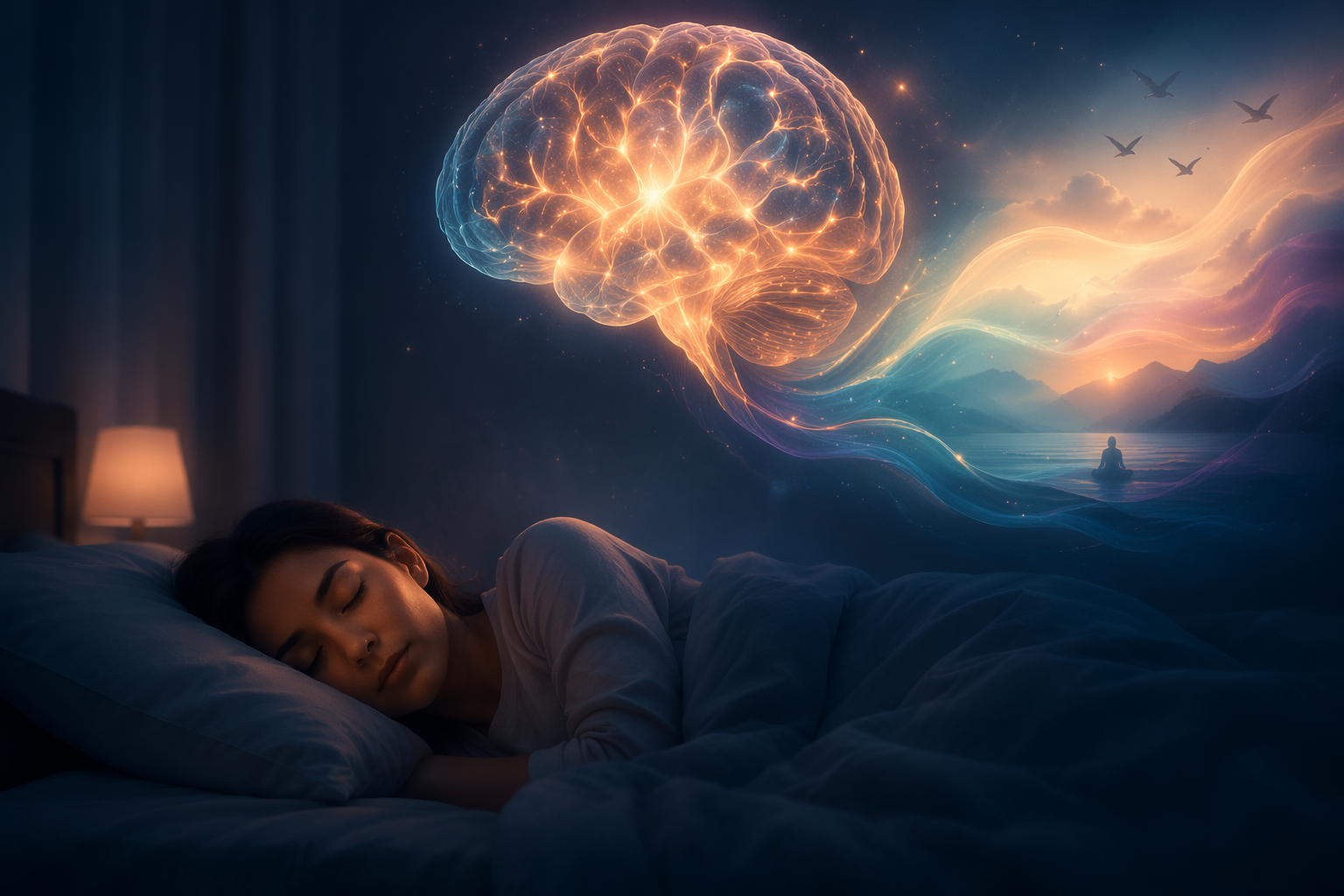
If sleep is part of the problem, improving it can also be part of the treatment. In Scott et al.'s meta-analysis of 65 randomized controlled trials with 8,608 participants, sleep-focused interventions produced medium-to-large reductions in depression, anxiety, and stress, and the people who improved sleep more tended to improve more in mental health too [1].
What the randomized trials actually show
Randomized trials matter here because they test intervention, not just correlation. That is why this meta-analysis carries more weight than the usual sleep-and-mood advice: it asks whether changing sleep changes symptoms. The pooled effects were not tiny. They were large enough to matter in real life, especially for people whose low mood, anxiety, or stress has been riding on poor sleep for weeks or months [1].
| Outcome | Average effect |
|---|---|
| Composite mental health | g = -0.53 [1] |
| Depression | g = -0.63 [1] |
| Anxiety | g = -0.51 [1] |
| Stress | g = -0.42 [1] |
The pattern matters as much as the averages. Better sleep was linked to better mental health in a dose-response way, which means greater sleep improvement tended to bring greater symptom improvement. That is a stronger claim than "sleep is nice for mood" and a more careful one than "fix your bedtime and everything else will follow." It says sleep intervention can move symptoms, but the size of the move depends on how much sleep actually changes [1].
That also helps explain why the findings stayed useful across people with different starting points. The effect was not limited to one narrow subgroup, and it did not depend on a person arriving with a particular level of distress. For readers who have already tried generic sleep tips and found them too thin, that is the more relevant question: does a structured sleep intervention do anything beyond making bedtime feel more disciplined? The answer from the trials is yes [1].
Why a bad night can feel emotionally bigger than it should
One reason poor sleep hits so hard is that it changes how the brain handles emotion. Sleep loss weakens prefrontal control, the part of the brain that helps keep thoughts organized and responses restrained, while making the amygdala more reactive to threat and frustration. That combination makes ordinary stressors feel louder, more personal, and harder to regulate. A small conflict at 8 a.m. can feel like proof that the whole day is already ruined. The brain is doing less braking and more alarm.
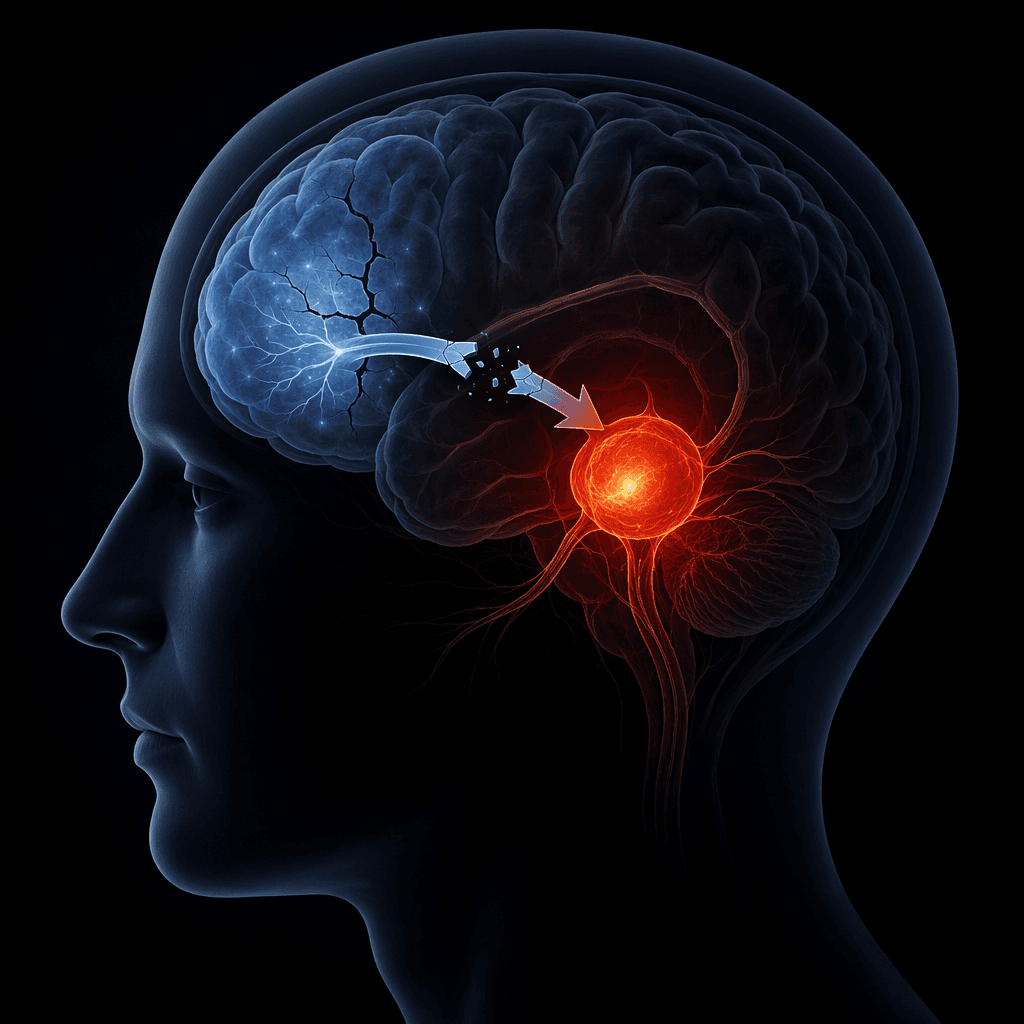
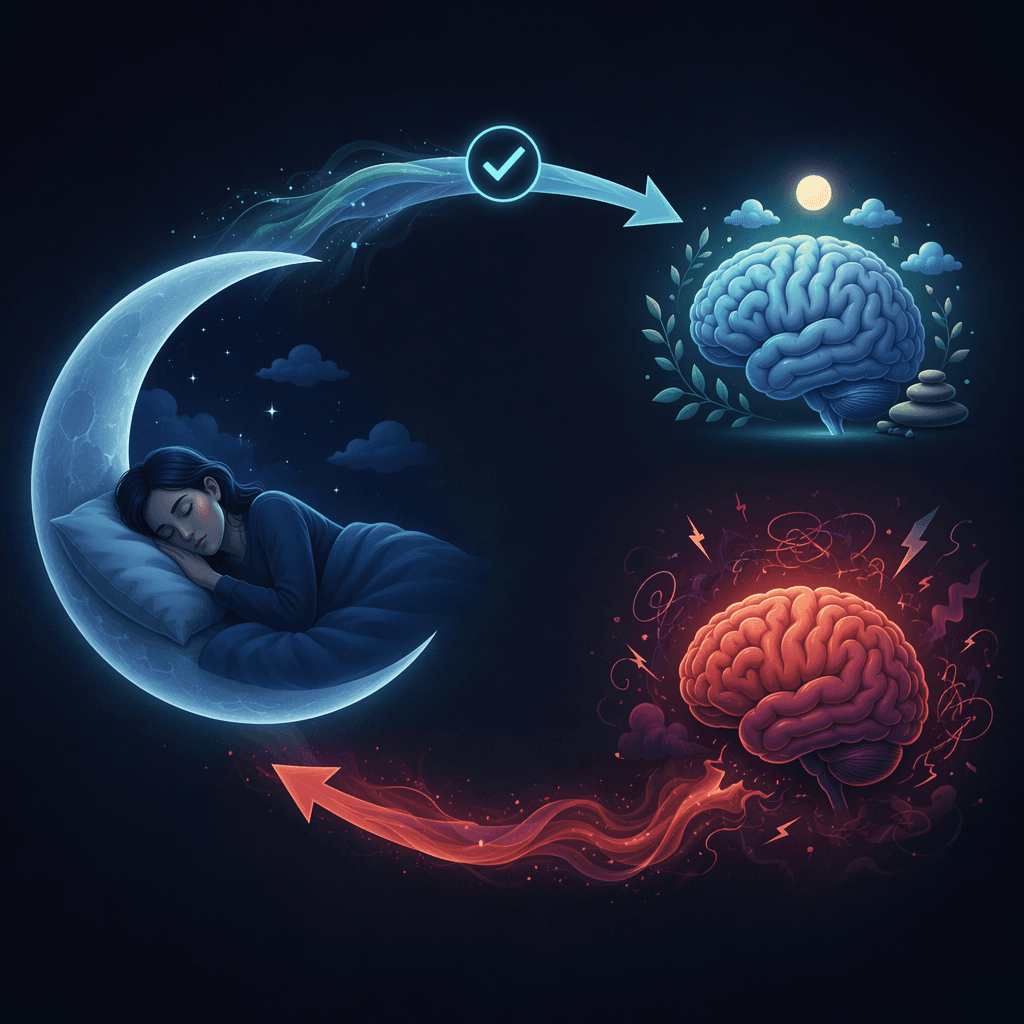
That helps explain the two-way loop. Poor sleep can raise vulnerability to depression and anxiety, but depression, anxiety, and stress can also keep the nervous system keyed up at night, making sleep harder to start and easier to break. Observational studies have reported very large future-risk differences for insomnia, including roughly 10-fold higher risk of later depression and about 17-fold higher risk of later anxiety, but those figures are associations, not proof that sleep treatment alone will prevent either condition. They show the stakes; they do not replace the randomized evidence [2].
If you want the brain-level explanation in more detail, the mechanism is laid out in the companion piece on sleep deprivation and brain function.
There is also a quieter restorative mechanism worth knowing about. During deep sleep, the brain's glymphatic system appears to help clear metabolic waste more efficiently, which is one reason sleep is not just rest but housekeeping. That does not turn sleep into an Alzheimer's article, and it does not explain mood symptoms by itself. It simply reminds you that poor sleep is not only a feeling problem; it is a biological maintenance problem too.
Ways to improve sleep when mood is part of the picture
The most useful steps are the ones that reduce both conditioned wakefulness and nighttime threat monitoring. That is why CBT-I keeps showing up as the practical center of gravity. It is not a motivational slogan or a perfection project; it is a structured way to make bed feel like sleep again and to make the mind stop treating bedtime as a problem-solving hour.
- Stimulus control: use the bed for sleep, not for long stretches of wakefulness, scrolling, or worry. If you are clearly awake for a while, get up and return only when sleepy.
- Sleep restriction: temporarily limit time in bed so sleep pressure builds more reliably. This can feel counterintuitive, but it is designed to reduce fragmented, half-awake nights.
- Cognitive restructuring: notice catastrophic thoughts such as "If I do not sleep, tomorrow is ruined" and replace them with something more accurate. The goal is to lower nighttime alarm, not force optimism.
- Morning light exposure: get light soon after waking to help anchor circadian timing and signal to the body that the day has started.
- Worry journaling: write down the next day's tasks, unresolved concerns, or one concrete next step before bed so they do not keep looping once the lights go out.
Basic sleep hygiene can still help, especially if caffeine timing, room temperature, or late-night phone use are clearly part of the problem. But those details work best as support, not as the whole plan. The more the issue looks like chronic insomnia with racing thoughts or learned wakefulness, the more it makes sense to use a structured treatment instead of collecting tips.
For a fuller treatment context, see the site guide to CBT-I and the overview of what the 2026 guidelines mean for nighttime sleep problems.
When self-management is not enough
A reasonable triage is straightforward. If sleep disruption is prominent and your mood, anxiety, or stress feels mild to moderate, structured sleep-focused changes are worth trying because the randomized evidence says they can help. If insomnia has become chronic, clinician-guided CBT-I is the stronger next step. If mood or anxiety is escalating, if functioning is dropping, if you feel unsafe, or if you have already tried to manage this on your own without enough change, the problem is no longer just a sleep-hygiene problem.
That is the point at which it makes sense to move from self-treatment to medical help, which is covered in the guide on when trouble sleeping at night warrants a doctor's visit.
References
- Scott et al. meta-analysis of 65 randomized controlled trials. PubMed Central. 2021. PMC8651630
Comments
Join the discussion with an anonymous comment.