
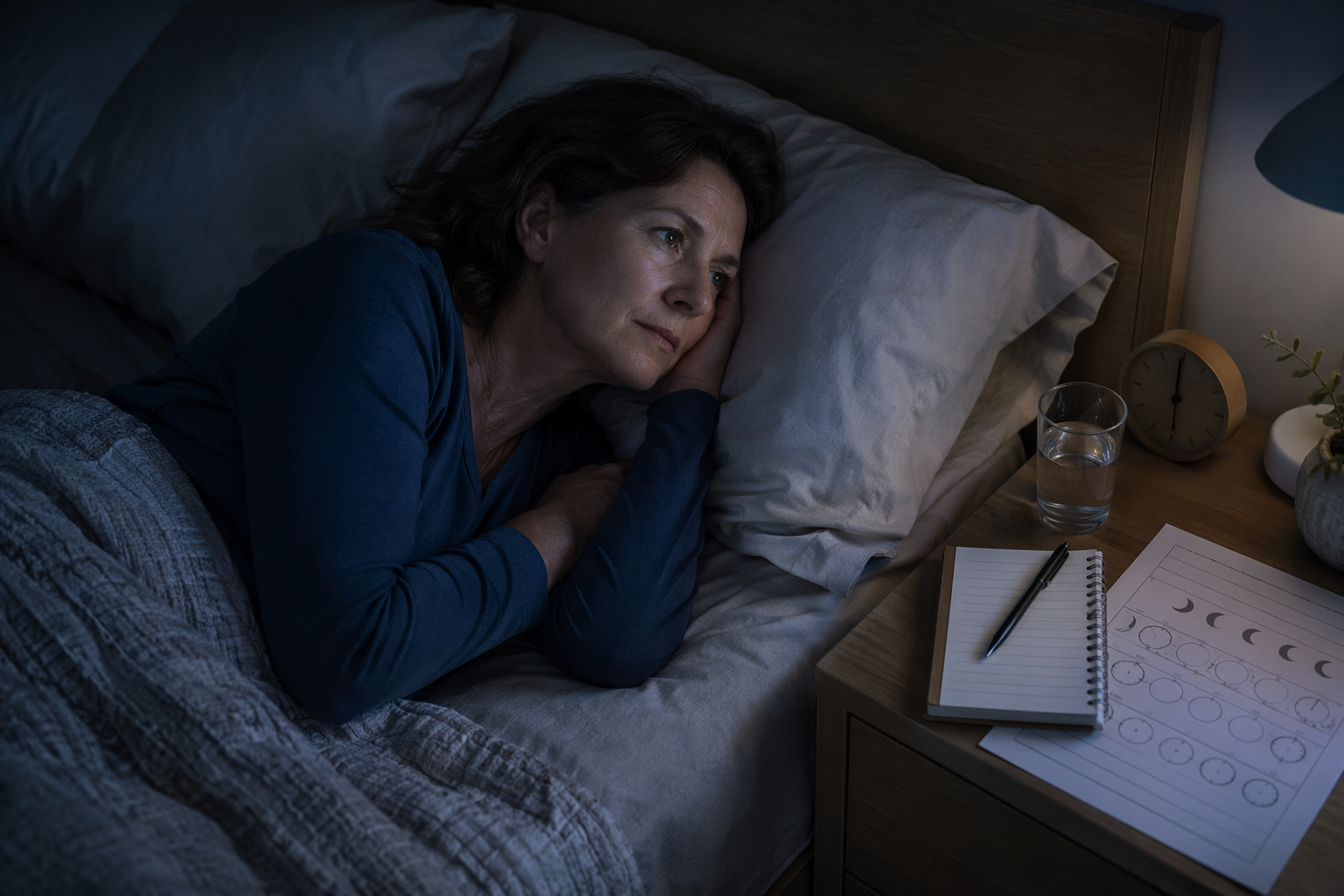
By the time a woman has cooled the bedroom, changed the sheets, quit late coffee, lowered the thermostat, and heard one more reminder to “avoid screens,” she is usually not looking for another bedtime tip. She is looking for treatment. This article belongs in sleep-conditions because the problem is not ordinary bad sleep; it is menopause-related chronic insomnia, and the treatment with the strongest first-line evidence is cognitive behavioral therapy for insomnia, or CBT-I. The scale is large enough that it should not still be treated as a niche complaint: a global meta-analysis found sleep disorders affect a substantial proportion of menopausal women, and review data report chronic insomnia in 56.6% of perimenopausal women compared with 36.5% before menopause [1][2]. SWAN’s longitudinal work also found that women in the menopausal transition were roughly twice as likely to report sleep problems [3]. Those numbers explain why so many women recognize the story. They do not explain why so many leave appointments with only sleep hygiene advice.
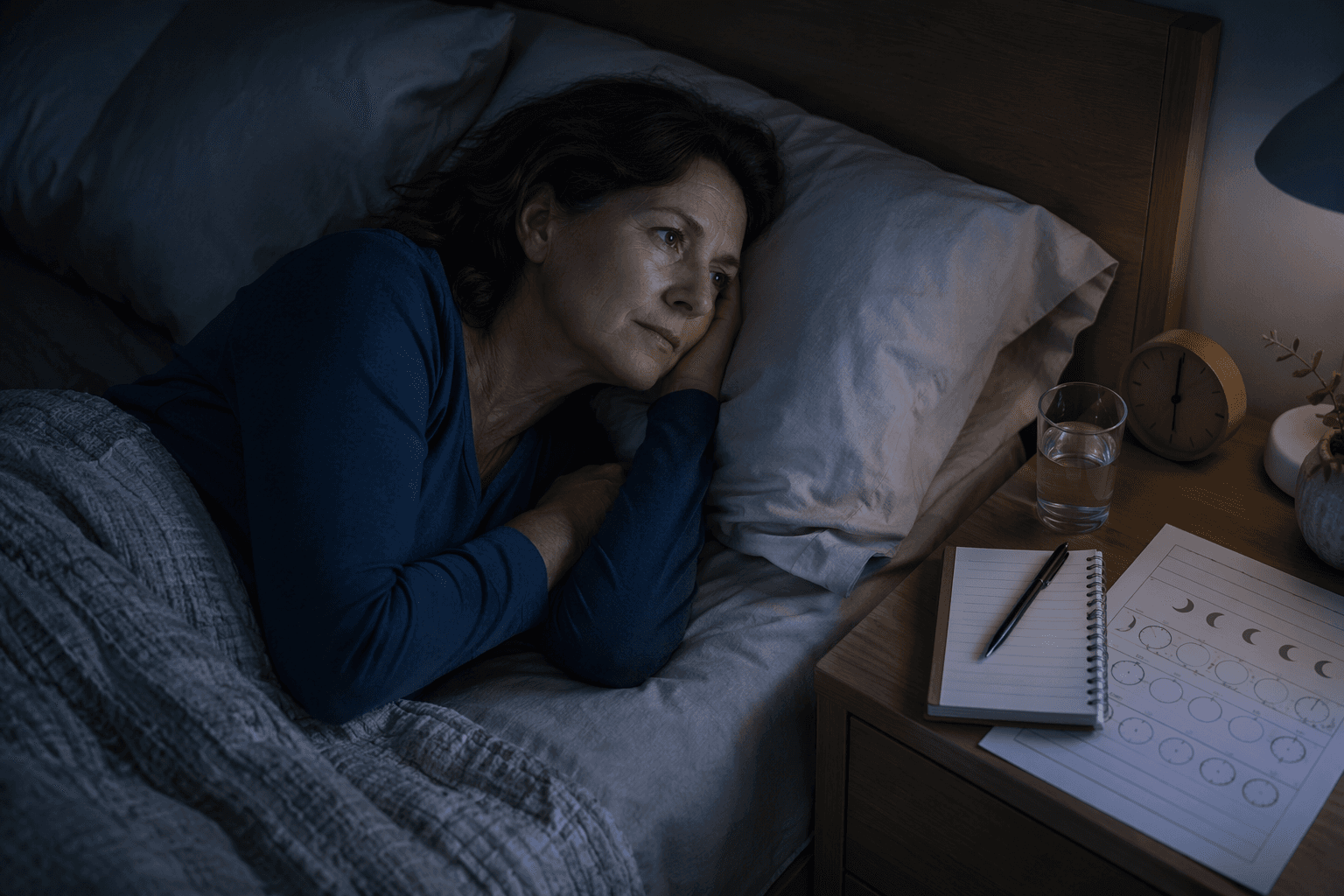
The distinction matters because menopause can disturb sleep in several ways, and not all of them are the same condition. Hot flashes, night sweats, mood changes, hormonal fluctuation, circadian shifts, pain, sleep apnea, restless legs syndrome, and medication effects can all break up the night. Chronic insomnia is more specific: the bed starts to become a place where wakefulness is rehearsed. A woman wakes hot at 2 a.m., stays in bed trying harder, watches the clock, naps the next afternoon, goes to bed early out of fear, and slowly trains her body to be alert exactly where it is supposed to stand down. For readers who need the broader map, perimenopause and sleep disruption is the larger context. But once the pattern has become chronic insomnia, room-cooling advice is working at the edges of the problem.
The clearest evidence comes from a 2018 randomized clinical trial of 150 postmenopausal women with chronic insomnia that compared CBT-I, sleep restriction therapy, and sleep hygiene education [4]. The result was not a polite difference between three reasonable pamphlets. CBT-I reduced Insomnia Severity Index scores by 7.70 points, while sleep hygiene education reduced them by only 1.12 points [4]. Remission rates with CBT-I ranged from 54% to 84%, depending on the remission definition used, compared with 4% to 33% for sleep hygiene alone [4]. At six-month follow-up, women who received CBT-I were sleeping 40 to 48 minutes more per night than women assigned to sleep hygiene or sleep restriction alone [4]. That last number is easy to underestimate unless you have lived on fractured sleep: 40 more minutes a night, sustained months later, is not the same as being told to keep the room dark.
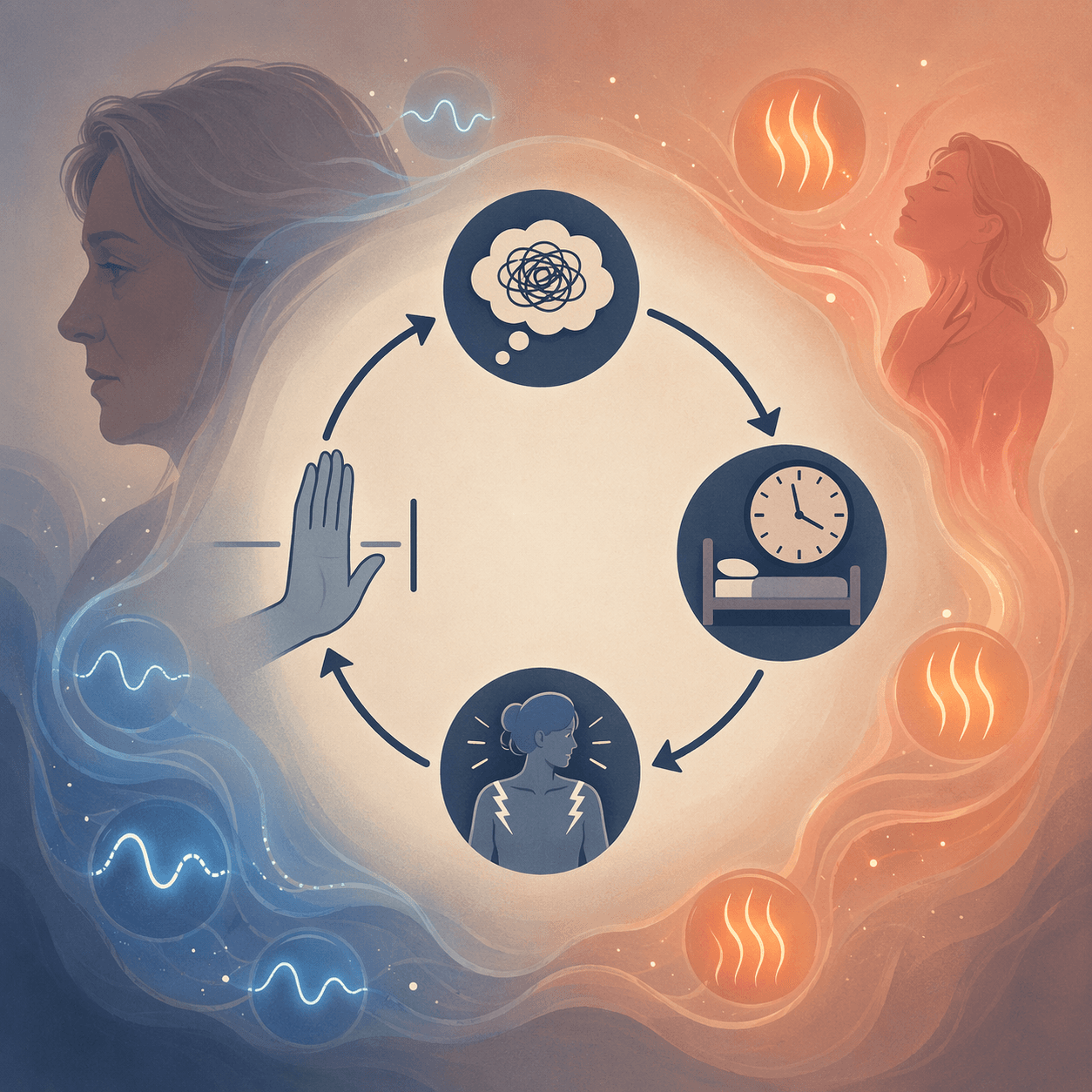
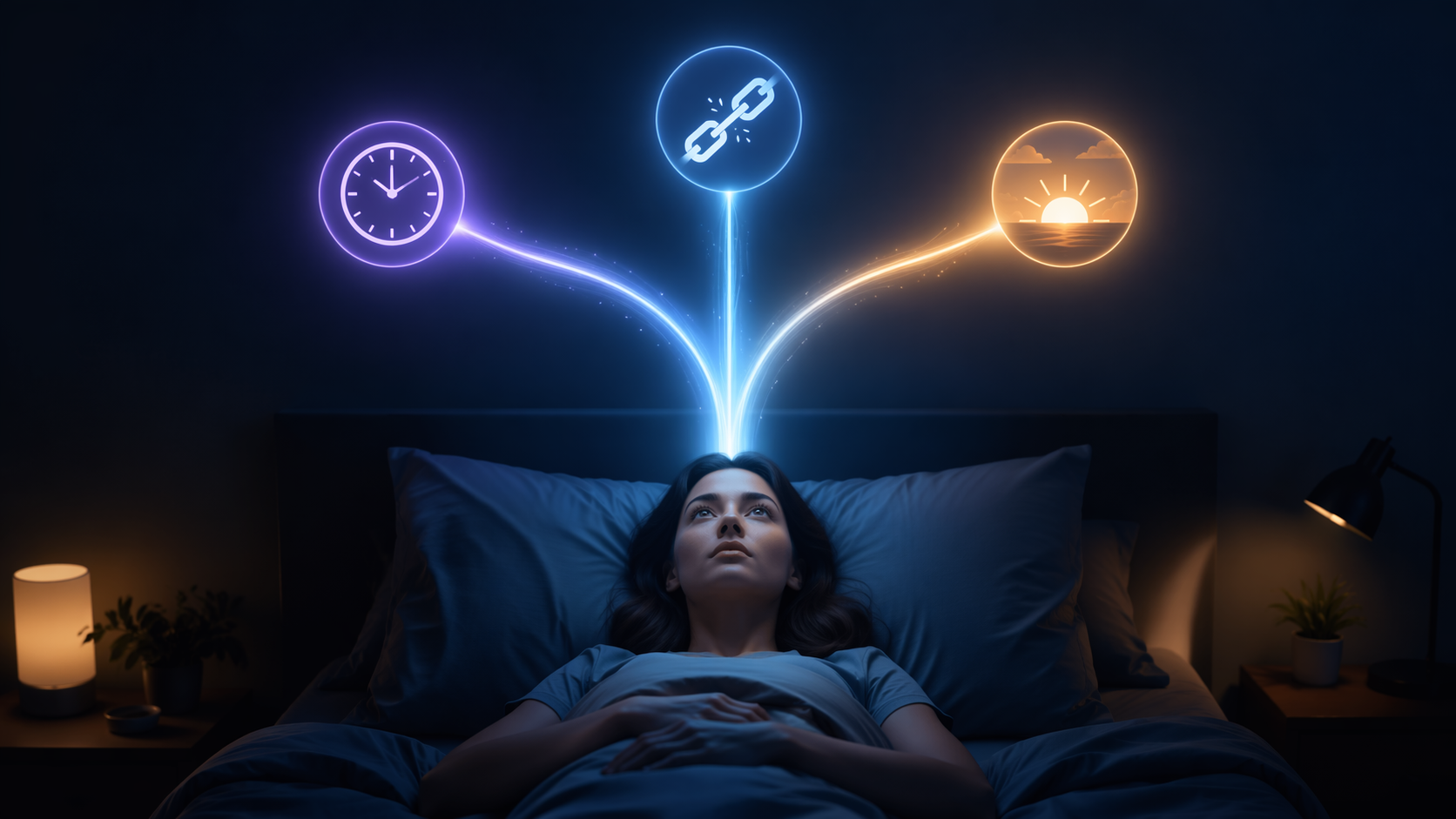
CBT-I works here because it targets the loop that keeps insomnia alive after the first trigger. It narrows the mismatch between time in bed and actual sleep time, reduces conditioned arousal, changes the anxious calculations that build around sleep, and re-establishes the bed as a cue for sleeping rather than monitoring. Sleep hygiene can still be sensible—dark room, less alcohol, consistent timing—but in the Drake trial it did not meaningfully move chronic insomnia severity on its own [4]. Sleep restriction therapy deserves a more respectful place than generic advice: in the same trial, a two-week SRT protocol produced acute effects comparable to six-week CBT-I, but CBT-I produced better long-term sleep maintenance outcomes [4]. That makes SRT a potentially useful shorter intervention, not a full substitute for the broader treatment when the goal is durable recovery.
None of this requires pretending that hormones, medications, or diet are irrelevant. Menopausal hormone therapy may reduce vasomotor symptoms for some women, which can remove one major source of awakenings, but it does not directly retrain the insomnia behaviors and alertness patterns that have become conditioned. Hypnotic medications such as zolpidem or eszopiclone, and agents such as ramelteon, may help some people in the short term, but they are not the same as a first-line behavioral treatment for chronic insomnia, especially when durability and safety are part of the question. The National Institute on Aging’s patient guidance appropriately names practical steps and medical conversations around menopause-related sleep problems, but the appointment still needs to move beyond a generic checklist when insomnia has become chronic [5]. A low-glycemic diet has been discussed as a possible complementary angle, but the evidence is not in the same category as the randomized CBT-I data [6].
The frustrating part is that the evidence is clearer than the access pathway. Many primary care and gynecology visits are too short, behavioral sleep medicine specialists are unevenly distributed, insurance coverage varies, and digital CBT-I programs are not always mentioned even when they may be the most realistic option. The next move is therefore specific: ask for CBT-I by name, not just “sleep advice.” Look for a behavioral sleep medicine provider when one is available, or a credible digital CBT-I program when in-person care is not. And if the symptoms do not fit straightforward insomnia—loud snoring, gasping, severe restless legs, major depression, unusual daytime sleepiness, or persistent awakenings that seem driven by something else—rule out other sleep and mood disorders alongside treatment. Menopause sleep problems beyond hot flashes is a useful place to start sorting those possibilities, and a general CBT-I for insomnia FAQ can help clarify what the therapy actually involves before the first session.
References
- Global prevalence of sleep disorders during menopause: a meta-analysis
- Sleep and sleep disorders in the menopausal transition
- Effects of Sleep Problems During Menopause — SWAN Study
- Treating chronic insomnia in postmenopausal women: a randomized clinical trial
- Sleep Problems and Menopause: What Can I Do? — NIA/NIH
- Menopause and insomnia: Could a low-GI diet help? — Harvard Health


Comments
Join the discussion with an anonymous comment.