
The night before landfall is often when sleep starts to change. The wind may still be ordinary. The power may still be on. But the forecast is open, the room feels damp, the air has that heavy stillness, and your body may already be acting as if the storm has arrived.
That is why the answer to “how does a tropical storm affect sleep” is rarely one answer. Tropical systems can disturb sleep through several routes at once: barometric pressure changes, pre-storm anxiety, noise and light disruption, and humidity-related breathing effort. One person may feel it first as a headache. Another may sleep lightly because every gust sounds like a warning. Someone else may be calm enough mentally but still wake unrefreshed because warm, damp air makes breathing feel more laborious.
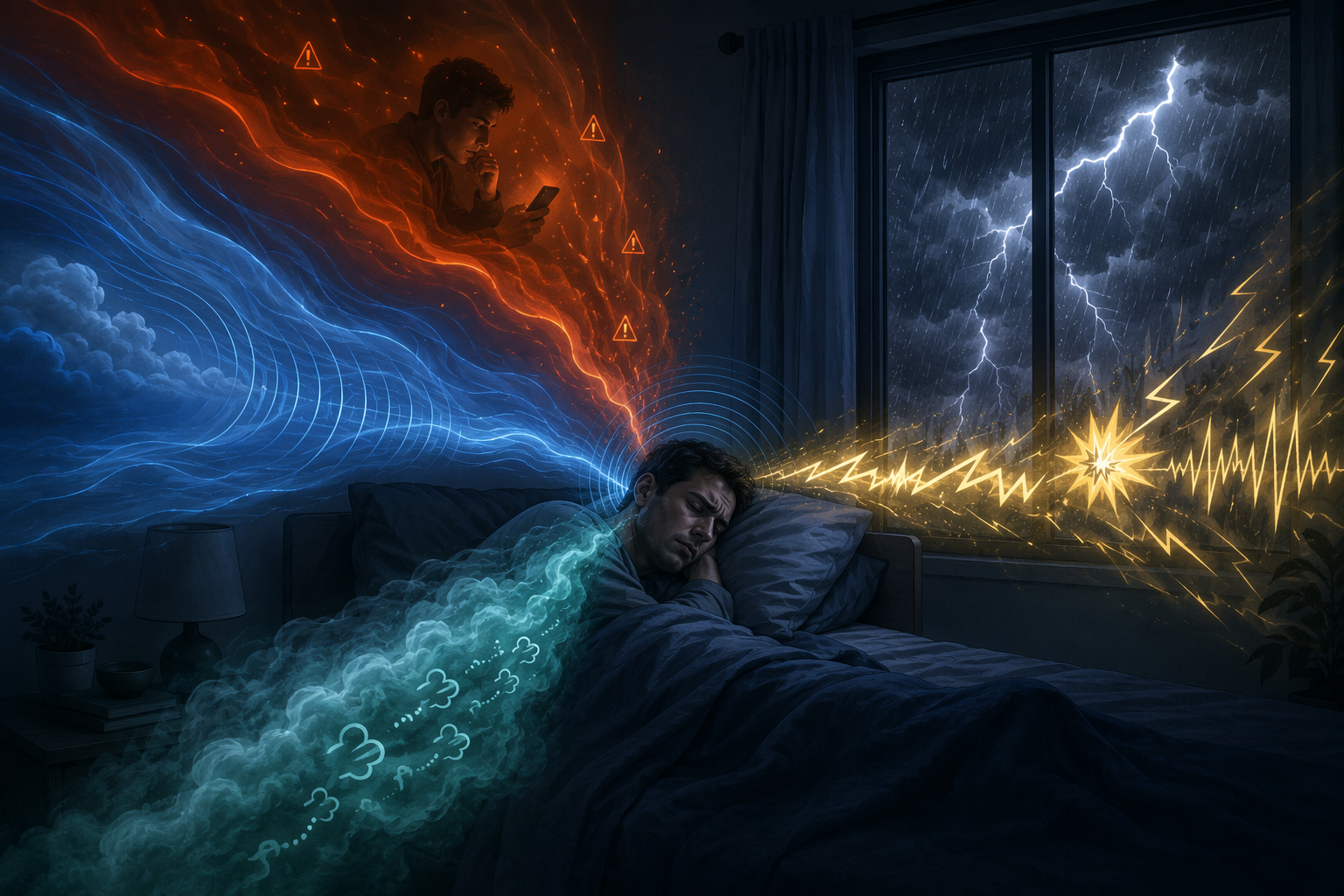
The useful question is not whether the storm “caused insomnia” in some broad way. It is which pathway became loudest for you, and whether that pathway needs a different response than a normal bedtime routine.
Pressure: When the Body Notices the Storm Early
Some people describe knowing weather is changing before they check an alert: a migraine starting, joints aching, sinus pressure building, or an old injury becoming harder to ignore. Those reports should not be treated as a universal storm detector, but they are not imaginary either. Low-pressure systems are associated with headache and pain complaints, and one proposed mechanism is that pressure drops allow body tissues to expand slightly, irritating nerves or adding discomfort that interferes with sleep onset. Amerisleep’s review of barometric pressure and sleep describes low pressure, joint pain, headaches, and evening symptom timing as part of this pathway. [1]
This pathway feels different from ordinary worry. The person may not be mentally spiraling; they may be uncomfortable. They turn over more, avoid one shoulder, rub their temples, or keep waking because pain has lowered the threshold for every other disturbance. Once the body is already irritated, the forecast feed and the first hard rain have an easier time finishing the job.
The evidence does not mean every pre-storm headache is caused by pressure, and it does not mean pressure sensitivity works the same way for everyone. It does suggest that people who repeatedly notice the same pattern should plan for it instead of arguing with it at midnight. That may mean taking prescribed migraine or pain medication according to the clinician’s instructions before symptoms peak, setting up a cooler and darker bedroom earlier than usual, and avoiding the extra strain of last-minute preparation after the discomfort has already started.
For readers who want the smaller-scale version of this mechanism, the same pressure-and-arousal idea appears in everyday thunderstorm sleep. The hurricane version is usually more complicated because the pressure shift arrives with days of forecasting, house preparation, heat, humidity, and possible power loss. See how thunderstorms affect sleep quality for that narrower storm pattern.
Forecast Anxiety Before the First Feeder Band
Pre-storm anxiety is not just a mood. Baylor College of Medicine describes anticipatory storm distress as producing concrete symptoms, including insomnia, irritability, appetite changes, and concentration problems. [2] That matters because the body can enter a monitoring state before conditions are dangerous where you are. You are not sleeping in the present room anymore; you are sleeping beside the next advisory, the next track update, the next decision about shutters, gas, family, pets, and evacuation timing.
This is the pathway that turns “I’ll just check once more” into an hour of light exposure, threat scanning, and unfinished decisions. Weather information is necessary during a tropical storm, but unlimited checking is not the same as preparedness. The National Weather Service’s storm anxiety guidance emphasizes practical preparation: knowing shelter locations, having multiple warning sources, and understanding watch and warning terminology. [3] Those steps reduce the amount of interpreting your brain has to do in bed.
| If this is the loudest pathway | It may feel like | The useful lever |
|---|---|---|
| Forecast anxiety | Checking, planning, replaying scenarios, sleeping lightly before conditions worsen | Finish decisions earlier, use trusted alert sources, set media boundaries |
| Pressure sensitivity | Headache, sinus pressure, joint pain, body discomfort before or during the storm | Treat known symptoms early and reduce other arousal around bedtime |
| Noise and light | Waking with gusts, rain bands, thunder, transformer flashes, hallway lights, phone alerts | Control sound, light, and alert settings without removing safety warnings |
| Humidity and breathing load | Hot, damp, shallow, or unrefreshing sleep; worse snoring or gasping | Prioritize cooling, airflow, and clinical follow-up if apnea-like symptoms appear |
The mistake is to treat all storm-night wakefulness as anxiety and then offer only calming advice. Anxiety may be one layer, but it often rides on top of physical discomfort, alert noise, humid air, and the knowledge that someone in the house may need help if conditions change.
Inside the House: Noise, Light, Alerts, and Fragmented Sleep
During active weather, the bedroom stops being a stable sleep environment. Rain hits in bands. Wind pushes against windows unevenly. Tree limbs scrape. Emergency alerts may sound. A generator next door may start. Light can flash through curtains, or the hallway may stay lit because someone is moving through the house.
The sleep problem here is fragmentation. You may still get hours in bed, but the night is chopped into short awakenings and lighter sleep. The brain is doing what it is supposed to do during possible danger: sampling the environment. A sudden gust matters more if you already have a headache. A phone alert feels sharper if you have been checking radar for three days. A humid room makes it harder to settle after each awakening.
The safety line matters. Do not silence the alerts that would tell you to move to shelter or evacuate. But many people can separate true warning channels from optional noise. That may mean keeping Wireless Emergency Alerts on, using a weather radio or one trusted local source, and turning off social media push notifications, group-chat speculation, and nonessential app badges before bed.
- Move sleep away from the most wind-exposed windows when practical, especially for children or anyone who wakes easily.
- Use steady masking sound only if it does not cover safety alerts; a fan, white-noise machine, or low continuous audio can reduce the contrast between silence and gusts.
- Control light early: curtains, eye masks, hallway dimmers, and charging devices outside direct sight can all reduce repeated arousal.
- Put the phone where you can hear emergency alerts but cannot easily turn every awakening into another radar check.
Those are not glamorous interventions, but they match the pathway. If the main problem is environmental arousal, a breathing exercise alone will not stop the window from flashing. The job is to make the room less interruptive while preserving the warnings that actually matter.
Humid Air and Lighter Sleep
Tropical storms bring air that can feel thick even before the rain gets serious. Amerisleep describes humidity combined with low pressure as forcing the respiratory system to work harder during sleep, with lighter and less restorative sleep as a possible result. [1] This pathway is easy to miss because it may not feel like classic insomnia. You may fall asleep, wake several times, and still feel as if the night never did its job.
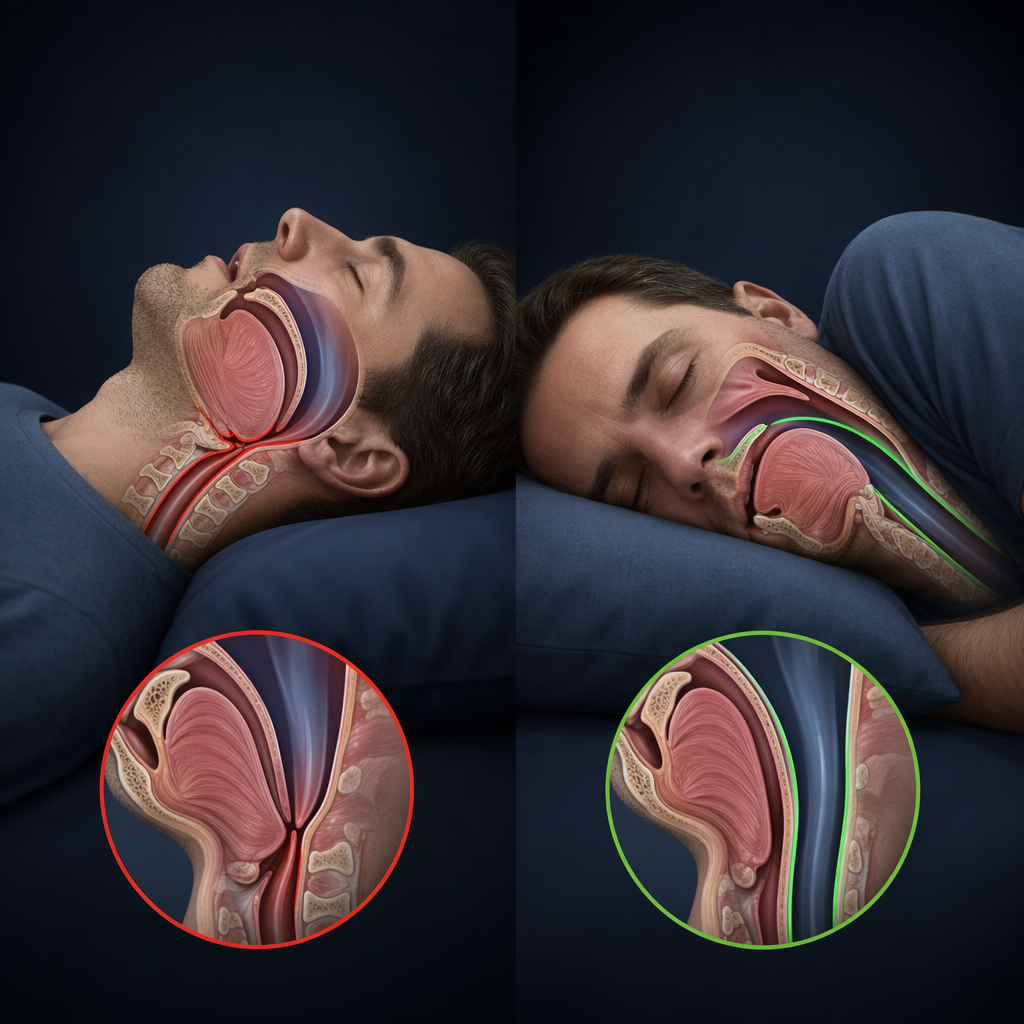
Humidity can matter more for people who already snore, breathe through the mouth, have nasal congestion, or suspect sleep apnea. A sticky room can also become a bigger problem if the power goes out and air conditioning stops. The clinical concern is not one bad storm night. It is the pattern of loud snoring, witnessed pauses, gasping, morning headaches, or daytime sleepiness that appears or worsens when the weather turns heavy.
For this pathway, the best preparation happens before the outage. Cool the sleeping area while power is available. Keep battery fans charged if they are safe for your situation. Clear nasal congestion with treatments you already tolerate and that are appropriate for you. If you use CPAP or another prescribed breathing device, follow your clinician’s guidance for humidification settings and backup power planning rather than improvising during a storm.
Over-the-counter sleep aids and supplements deserve restraint during storm conditions. Anything that leaves you groggy, worsens breathing, or makes it harder to respond to alerts can be the wrong tool even if it sometimes helps on an ordinary night. If you are considering nonprescription options, start with evidence and safety rather than the urgent feeling of the storm window; this home remedies for insomnia evidence guide is a better place to sort those choices than a late-night pharmacy run.
When Storm Sleep Problems Outlast the Weather
Most storm-related sleep disruption is acute: the forecast period, the active weather, the cleanup, the heat, the noise, the disrupted routine. But hurricane sleep research also shows that major storms can leave a longer imprint for some people.
After Hurricane Katrina, sleep centers reported more insomnia complaints even while overall evaluations decreased, and the share of male patients among new visits rose from 44% to 62%. The American Academy of Sleep Medicine report also noted the study’s small patient number and the need for broader review, so it is best read as a signal rather than a population-wide estimate. [4]
Other storm studies point in the same direction without making every bad storm night a disorder. Poor sleep quality in the month after Hurricane Ike was reported at 39.7%, and traumatic experiences during Hurricane Harvey were the most robust predictor of sleep disturbance months later, even after accounting for post-traumatic stress symptoms.
That distinction matters. A tense night during a tropical storm does not automatically become a sleep disorder. Persistent insomnia after a storm, especially when the bed itself starts to feel unsafe or the body stays on alert after conditions have cleared, deserves a different pathway. Cognitive behavioral therapy for insomnia is the treatment route to understand when sleep difficulty becomes chronic rather than situational; this guide to CBT-I for insomnia explains why it is not just generic relaxation advice.
Medical care is also appropriate when sleep disruption comes with worsening breathing symptoms, severe headaches, chest symptoms, panic that does not settle after the immediate threat, or functional impairment that continues well beyond the storm period.
Choosing the Right Lever for the Next Storm Night
Generic sleep hygiene still helps. A dark, cool, quiet room and a consistent wind-down routine give every pathway less room to take over. If your baseline bedroom setup is already shaky, start with sleep hygiene fundamentals. But tropical storm sleep usually needs a more specific question: what woke you, or what kept you from sleeping, this time?
- If pain, headache, sinus pressure, or joint discomfort showed up first, plan around pressure sensitivity: prepare the room and supplies earlier, treat known symptoms according to medical guidance, and reduce avoidable arousal before bedtime.
- If checking behavior took over, plan around anticipatory anxiety: finish storm decisions before bed, choose a small number of trusted warning sources, and separate emergency alerts from optional feeds.
- If gusts, rain bands, light flashes, or alerts kept breaking sleep, plan around environmental fragmentation: adjust the sleep location, manage light, use safe sound masking, and keep only essential alerts active.
- If the night felt hot, damp, shallow, or unrefreshing, plan around breathing load: cool the room while you can, prepare airflow options, support prescribed breathing equipment, and seek evaluation for snoring, gasping, or apnea-like symptoms.
Tropical storms affect sleep because the storm is not only outside the window. It is also in the pressure change your body may feel, the decisions your brain keeps carrying, the sounds your house transmits, and the air your lungs have to work through. The best next step is to name the pathway that was loudest for you this time.
References
- Barometric Pressure and Sleep, Amerisleep
- Navigating pre-storm anxiety, Baylor College of Medicine, 2025
- Storm Anxiety, National Weather Service
- Catastrophic Events Can Affect a Person’s Sleep, American Academy of Sleep Medicine
Comments
Join the discussion with an anonymous comment.