
The Oura Ring can replace a fitness tracker only if the thing you mostly want to track is sleep, recovery, and low-friction daily activity. If you want a device for structured runs, interval sessions, rowing, lifting, or real-time workout feedback, it should not be your only tracker. The more realistic answer is this: Oura is a better sleep tracker than most wrist fitness trackers, but it is not a better fitness tracker.
That distinction matters because the search for an oura ring fitness tracker is usually not about curiosity. It is a substitution question. If you spend $399–499 on the Ring 5 and then keep paying $69.99 per year for full data access, can you stop wearing a Garmin, Fitbit, Apple Watch, or chest strap? For some people, yes. For many people who train, no. For people who care deeply about both sleep accuracy and workout data, the cleanest setup is two devices with two jobs.
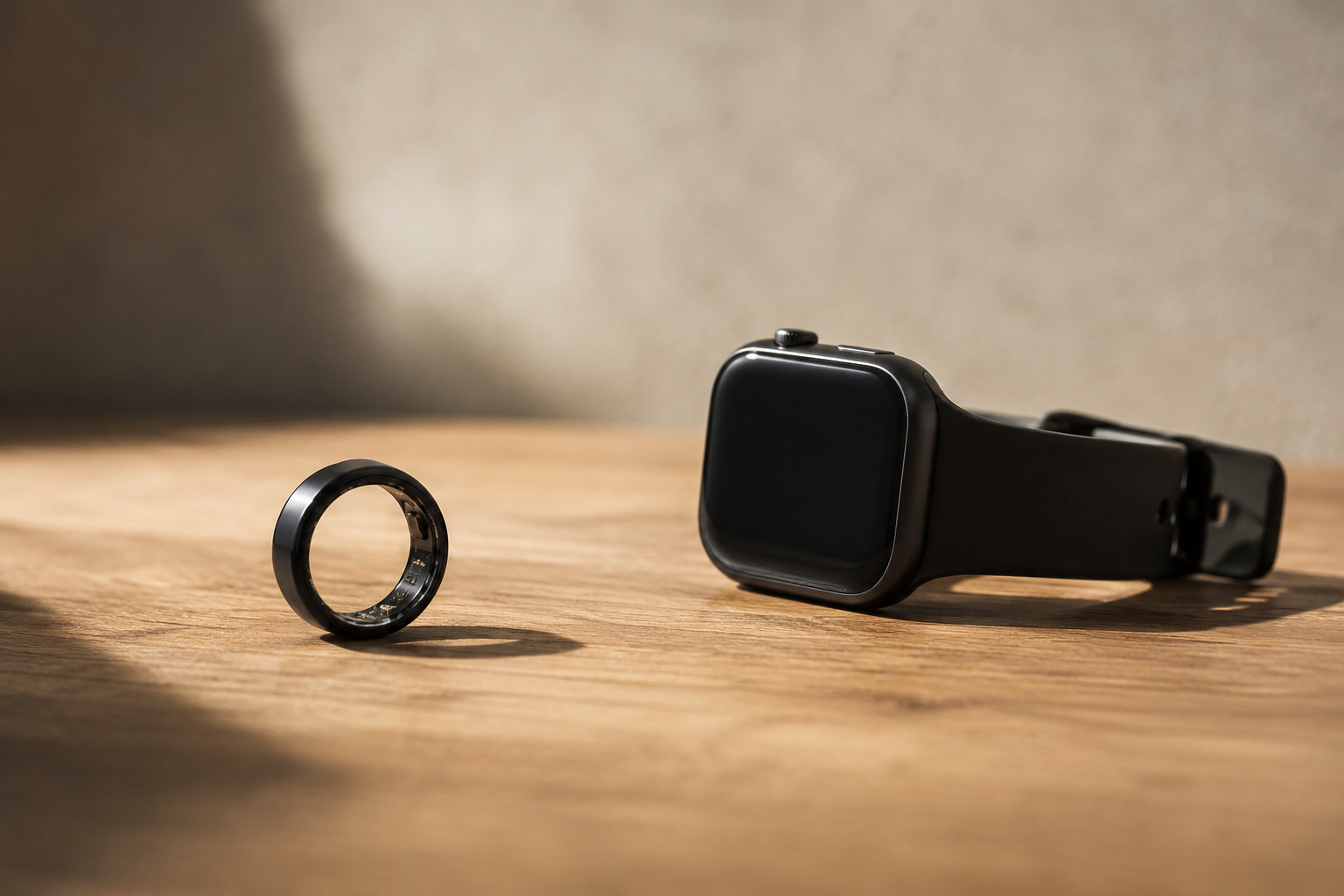
Start With the Job You Are Replacing
A wrist fitness tracker usually earns its place during movement: pace on a run, heart rate during intervals, GPS route capture, workout modes, lap data, recovery prompts, and a screen you can glance at while breathing hard. Oura earns its place when you are not trying to operate a device at all: asleep, winding down, waking up, or checking whether your body looks recovered enough to push.
So the replacement test is not “Which device has more health metrics?” It is “Which metric will you actually act on, and when do you need it?” A sleep-first user can live very happily with Oura as the main wearable. A runner who wants standalone GPS should not. A lifter who grips bars, dumbbells, row handles, or pull-up bars should be cautious before making a thick ring the only workout device. A general wellness user who mostly walks, sleeps, and checks readiness may find the ring more wearable than a watch.
| If this is your main use | Can Oura replace a fitness tracker? | Better setup |
|---|---|---|
| Sleep and recovery tracking | Yes, for many users | Oura alone |
| General wellness, walking, light cardio | Often, with caveats | Oura alone or Oura plus phone |
| Casual running where phone GPS is acceptable | Maybe | Oura plus phone, or a wrist tracker if pace matters |
| Strength training, rowing, pullups, gripping work | Usually no | Wrist tracker, chest strap, or workout watch |
| Serious endurance training | No | Fitness watch or chest strap; Oura can add sleep and recovery |
| Sleep accuracy plus serious workouts | Not as one device | Oura for sleep, fitness tracker for training |
Where Oura Has the Strongest Evidence
The best reason to buy an Oura Ring is not that it looks cleaner than a sports watch. It is that its sleep tracking has stronger validation than the usual smart-ring enthusiasm would suggest. In a 2024 peer-reviewed study comparing three consumer wearables against polysomnography, Oura reached 79% accuracy for four-stage sleep classification, compared with 70.9% for Fitbit and 75% for Apple Watch. At the group level, the study found no statistically significant difference between Oura and polysomnography for total sleep time, deep sleep, REM sleep, or sleep efficiency.[1]
That is not a small point. Sleep staging is one of the places where consumer wearables can sound more confident than they deserve to be. A device may be useful for trends while still being shaky about exactly when light sleep became deep sleep, or when REM started. Oura’s result does not turn the ring into a medical sleep study, and it does not mean any single night’s staging is perfectly right. It does mean Oura has a serious claim as a consumer sleep tracker, especially compared with wrist devices many people buy primarily for fitness.
The caveat belongs in the same breath. The Robbins et al. study was funded by Oura Ring Inc., and several authors disclosed consulting or advisory relationships with Oura.[1] That does not make the findings unusable; it does mean the study should be read as funded, peer-reviewed evidence rather than as detached public-interest testing. As of Q3 2026, manufacturer claims for newer Ring 5 accuracy should also be treated as product context, not as independently replicated proof.
Independent testing lines up with the broader sleep-first judgment, even if it does not replace lab validation. Sleep Foundation’s expert-tested review rated Oura 9.5 out of 10 specifically for sleep tracking, while also treating it differently from a conventional workout device.[2] Wirecutter similarly names Oura Ring 4 as its sleep-tracking pick while pointing fitness-first users toward Garmin or Fitbit instead.[3] That split is the whole story in miniature: Oura is not failing because it is not a sports watch. It is succeeding at a different job.
If sleep is the purchase driver, it is worth comparing devices by sleep evidence rather than by the number of tiles in an app. A broader framework for that kind of choice is covered in how to choose the best sleep-tracking device and in our guide to sleep tracker accuracy.
Where the Fitness-Tracker Replacement Starts to Break
The trouble starts when sleep evidence gets dragged into workout expectations. A ring can be excellent at estimating sleep stages overnight and still be the wrong shape, interface, and sensor setup for training. Better sleep staging does not imply better pace tracking, better interval feedback, better rep capture, or better heart-rate behavior under exercise conditions.
The first hard limitation is GPS. Oura Ring 5 can automatically detect more than 40 activities, but it relies on a connected phone for distance, pace, and route data. That is fine if your phone is already with you and you only want a basic record of a jog. It is not the same as a standalone running watch. If you want to leave your phone behind, see pace on your wrist, or use the device as the instrument panel for a workout, Oura is asking another device to do part of the job.
The second limitation is timing. Fitness trackers are useful during exercise because they give information while it can still change behavior: slow down, speed up, stay in a heart-rate zone, extend the warmup, stop chasing a pace that is not there today. Oura’s exercise heart-rate feedback is more delayed and less workout-facing. That makes it better for logging and reviewing than for steering a session in real time.
The third limitation is physical. A ring sits exactly where many workouts create pressure, friction, and grip conflict. Sleep Foundation’s tester reported that Oura became a hindrance during weightlifting, rowing, and pullups and stopped wearing it for workouts, which meant the ring missed meaningful activity data.[2] That is not a niche complaint if your training includes barbells, kettlebells, cable handles, oars, climbing holds, or pull-up bars. A device you remove for the work you care about is no longer your full fitness tracker.
Forbes Vetted reached a similar practical conclusion after six weeks of testing Oura Ring 4, describing activity tracking as the ring’s weakest feature and stating that it is not really designed to be a fitness tracker.[4] That judgment is more useful than a generic pros-and-cons grid because it names the mismatch: Oura can notice activity, but noticing activity is not the same as being built around training.
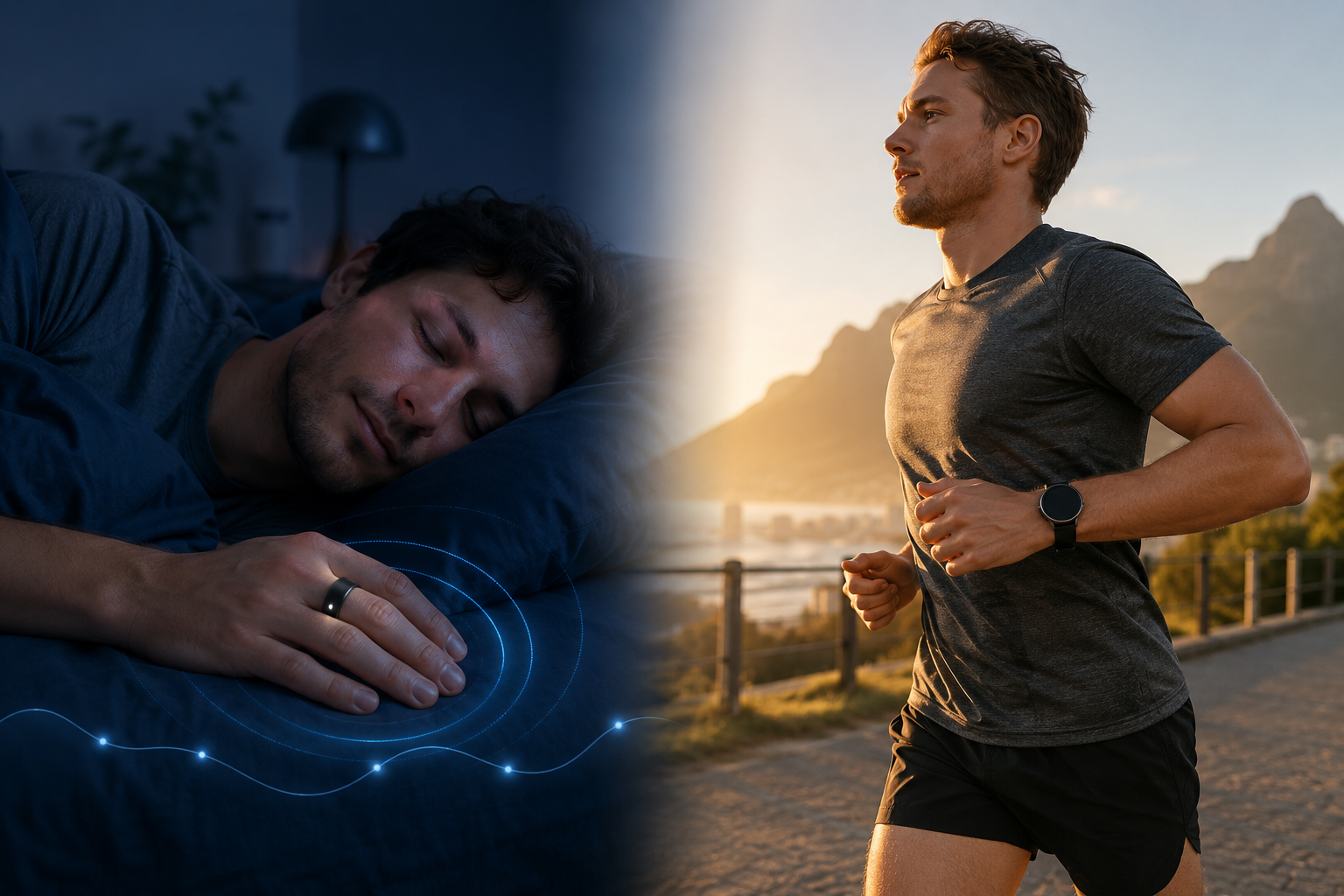
The Users Who Can Go Ring-Only
A sleep-first user is the cleanest fit. If your main frustration is waking up tired, trying to understand recovery, watching bedtime consistency, or seeing how illness, alcohol, stress, travel, or late meals affect your nights, Oura can be the primary wearable. The absence of a screen is not a weakness in that use case. It is one reason people tolerate wearing it through the night.
A general wellness user may also be fine with ring-only tracking. If your movement is mostly walking, light cardio, casual cycling, and everyday activity, Oura’s automatic detection and trend view can be enough. You may not need lap splits, power zones, on-device maps, or gym-friendly controls. In that case, replacing a wrist tracker with Oura is less about downgrading fitness data and more about admitting that sleep and consistency are what you actually check.
A casual cardio user sits in the middle. If you run with your phone anyway and only want a post-workout record, Oura may work. If you care about live pace, reliable heart-rate behavior during harder efforts, route independence, or training-plan execution, it will feel thin quickly. The difference is not whether Oura can log a workout. The difference is whether it can support the workout while it is happening.
The Users Who Should Keep a Fitness Tracker
Runners who want standalone GPS should keep a wrist device. A phone-dependent route record may be acceptable for occasional jogs, but it is a poor replacement for a watch if you care about pace, distance, structured intervals, or leaving the phone at home. The same applies to cyclists and endurance users who want workout screens and live data rather than an after-the-fact summary.
Strength athletes, rowers, and anyone doing grip-heavy training should be even more skeptical. The ring’s placement is the problem. You can loosen your expectations for software, but you cannot move the device off your finger and still have it be the same product. If you routinely remove it before lifting or rowing, your activity record will have gaps exactly where your hardest work happened.
Serious fitness users should also be honest about feedback. A training device is not just a passive diary. It needs to help during the session: heart rate, pace, zones, splits, intervals, and sometimes external sensor pairing. Oura’s value arrives mostly before and after training, when you are deciding how recovered you are and later reviewing the strain on your body. That is useful, but it is not a one-device replacement for workout instrumentation.
The Hybrid Setup Is Not a Failure
The most practical setup for people who care about both sleep and fitness is Oura for sleep and recovery, plus a wrist tracker or chest strap for workouts. That can sound wasteful until you look at the jobs separately. The ring is comfortable overnight, has strong sleep-tracking evidence, and captures recovery signals with little effort. The watch or strap handles the sweaty, high-motion, high-feedback part of the day.
This is also where cost becomes clearer. The Ring 5 costs $399–499, and the full data experience requires a $69.99 annual subscription. Over three years, that puts ownership at roughly $610–710 before considering any separate workout device. If you were hoping Oura would replace a watch entirely, that price has to be judged as a one-device purchase. If you already know you will keep a Garmin, Apple Watch, Fitbit, or chest strap, then Oura becomes a sleep-and-recovery layer rather than a substitute.
That two-device reality is not automatically excessive. It is excessive only if the ring duplicates a job you already solve well enough. It makes sense if you dislike sleeping in a watch, care about validated sleep data, and still want proper training capture during workouts. For a more detailed metric-by-metric way to separate those needs, see our guide to choosing the best sleep and fitness tracker.
What About Ring 5 Claims?
Ring 5 arrives with newer hardware and stronger manufacturer accuracy claims, including higher heart-rate and sleep-staging performance than earlier generations. Those claims are worth watching, but they should not be treated the same way as independent validation. Most of the stronger public accuracy evidence still comes from earlier Oura generations or studies that do not fully answer how the newest sensor configuration performs in every workout context.
That matters because “more accurate sensors” is too broad a phrase. Accuracy while still in bed is not the same as accuracy during rowing intervals. Sleep-stage classification is not route tracking. Resting overnight heart rate is not live heart rate under gripping, sweat, and motion. Until independent evidence narrows those claims by metric and use case, the safer judgment is to credit Oura’s sleep strengths without promoting it into a full training device.
The Buying Decision
Go ring-only if sleep and recovery are the real reason you are shopping, your workouts are light or phone-assisted, and you want something you will actually wear overnight. In that case, Oura is not a compromised fitness tracker so much as a sleep-first wearable with enough activity awareness for daily context.
Keep a fitness tracker if workouts are the main reason you wear a device. Runners, cyclists, lifters, rowers, interval-training users, and anyone who needs live metrics should not expect a ring to replace a watch or chest strap. Oura can still be useful, but it should not carry the training job by itself.
Pair Oura with a wrist tracker or chest strap if you want both: stronger sleep and recovery insight from a comfortable ring, plus proper workout capture from a device built for exercise. That is the least tidy answer and usually the most honest one. Oura is a superior sleep tracker with enough activity tracking to be useful; calling it a full fitness-tracker replacement asks the wrong device to do the wrong job.
References
- Accuracy of Three Commercial Wearable Devices for Sleep Tracking in Healthy Adults — Sensors, 2024.
- Oura Ring Review 2026 — Sleep Foundation.
- Oura Ring Review — Wirecutter.
- Oura Ring 4 Review 2026 — Forbes Vetted.


Comments
Join the discussion with an anonymous comment.