
The problem with the phrase “Oura Ring 5 sleep tracking accuracy” is that it sounds like one measurable thing. It is not. A ring can be good at noticing that you were probably asleep, weaker at deciding whether that sleep was light, deep, or REM, and much less reliable when your night is fragmented by insomnia, apnea, medication effects, pain, or another sleep disorder.
That distinction matters because Oura markets a 95% sleep-staging accuracy figure, but that number is manufacturer-provided and has not been independently replicated on Ring 5 hardware in peer-reviewed research as of Q3 2026.[1] The strongest independent comparison available does not test the Ring 5 at all. It tests Oura Ring Gen3 running Sleep Staging Algorithm 2.0 against polysomnography, the clinical sleep-lab reference method, and finds 79% four-stage agreement in healthy adults, with Cohen’s kappa of 0.65.[2]

Those two numbers can both sit in the same product story only if the word “accuracy” is kept deliberately slippery. For a buyer deciding whether to spend $399 on a Ring 5 and then $69.99 a year on membership, the useful question is narrower: accurate enough for what decision?
What the best independent validation actually shows
The Brigham & Women’s Hospital validation study, published in Sensors in 2024, is the most important evidence here because it puts Oura in a fair but demanding setting: healthy adults, overnight polysomnography, and direct comparison with other major consumer wearables. Oura’s Gen3 ring with Sleep Staging Algorithm 2.0 achieved 79% four-stage sleep agreement with PSG and outperformed Apple Watch Series 8, Fitbit Sense 2, and Garmin Venu 2 in that study.[2]
That is a good result for a consumer device. It is also not 95%. The gap is not a rounding issue; it is the difference between a clean checkout-page impression and what happens when a ring tries to classify sleep stages against a lab reference.
| Claim or finding | What it refers to | Why it matters |
|---|---|---|
| 95% sleep-staging accuracy | Manufacturer-provided Oura claim, not independently replicated on Ring 5 hardware | Easy to overread as proof that the new Ring 5 will classify your stages correctly 95% of the time.[1] |
| 79% four-stage agreement | Brigham & Women’s Hospital study of Oura Ring Gen3 with Sleep Staging Algorithm 2.0 in healthy adults | The strongest independent benchmark, and a better guide to realistic stage confidence than the marketing number.[2] |
| 94–95% sleep/wake sensitivity | Brigham & Women’s sleep detection performance | Supports using Oura for broad sleep timing and trend tracking in healthier sleepers.[2] |
| 53.18% four-stage accuracy | Charité Berlin clinical sleep-lab population | Shows why accuracy expectations should change sharply when sleep is clinically disrupted.[3] |
The study’s funding also deserves plain handling. Oura funded the Brigham & Women’s work, but the study was independently designed and conducted by the hospital team.[2] That does not make the findings useless. It does mean the cleanest way to read them is to take the independent PSG comparison seriously while still refusing to let it become a blanket claim about every Oura model, every sleeper, and every use case.
A separate University of Tokyo validation also supports the broad pattern: Oura performed well at detecting sleep, with 94.4% sensitivity for sleep detection and per-stage accuracy ranging from 75.5% to 90.6%. That study was partly funded by Oura, with no role in analysis or writing reported.[4] Again, useful evidence; not a Ring 5-specific independent proof of a 95% stage-accuracy claim.
For healthy adults, the Ring is more convincing as a trend tracker
If your main question is whether you slept roughly seven hours or five, whether your bedtime has drifted later, or whether late alcohol and travel tend to show up as worse recovery, Oura’s evidence is much more reassuring. In the Brigham & Women’s study, sleep/wake sensitivity reached 94–95%, and total sleep time was within roughly 10 minutes of PSG on average.[2]
Average error is not the same as personal certainty on any single night. A device can be close on average across a group while still being wrong for one person, one night, or one unusual stretch of sleep. But for longitudinal tracking, the bar is different. You are usually looking for repeated patterns: shorter nights during deadline weeks, delayed sleep on weekends, recovery dips after hard training, or the effect of a more regular wake time.
That is where a ring format helps. A watch can be excellent, but many people dislike sleeping with one. A chest strap is a nonstarter for most consumers. A ring that people actually keep wearing can collect more consistent long-term data, and consistent data is often what makes a sleep tracker useful in ordinary life.
Sleep stages are the softer ground. When Oura says you spent a certain amount of time in REM or deep sleep, it is making an estimate from signals such as movement, heart rate, heart-rate variability, temperature, and related patterns. That estimate may be directionally useful, especially when viewed over weeks, but it should not be treated like a scored PSG hypnogram. If you want the broader device context, the study comparisons in which sleep tracker is best for accuracy show the same basic pattern: the best consumer wearables have improved, but sleep staging remains the hardest claim.
Clinical sleep is a different problem
The evidence changes more sharply when the sleeper is not a healthy volunteer. In a 2025 Nature Scientific Reports study from Charité Berlin, researchers tested Oura in a clinical sleep-lab population of 45 people. Four-stage accuracy dropped to 53.18%.[3]
Wake detection is the number that should make symptomatic readers pause. In that clinical population, Oura’s wake sensitivity was only 46%.[3] That means the ring was much less dependable at identifying wakefulness in the very kind of fragmented night where wakefulness may be the point of concern.
Total sleep time looked more comfortable at first glance: Oura overestimated it by 11.74 minutes on average. But the individual error range ran from −54 minutes to +97.5 minutes, and the study found proportional bias.[3] For a person trying to understand why they are exhausted despite “enough” sleep, that range is not a minor technicality.
There is a fair caveat. The Charité study used Gen3 rings, not Ring 5, and the rings were worn on the first study night without a calibration period, which may have penalized performance.[3] But that caveat does not turn 53.18% into 95%, and it does not make a consumer ring diagnostic. It simply means the exact number should not be overgeneralized beyond the study conditions.
For suspected insomnia, sleep apnea, periodic limb movements, unexplained daytime sleepiness, or repeatedly unrefreshing sleep, the safer interpretation is straightforward: Oura can be a record of patterns to bring into a conversation, not the test that settles the question. The difference between a tracker and a diagnostic sleep evaluation is laid out more fully in why your sleep tracker is not a sleep study.
Does Ring 5 hardware make the old studies obsolete?
Possibly, but not automatically. Oura describes the Ring 5 as thinner than Ring 4, with a body 40% smaller, 6.09 mm wide, and 2.28 mm thick. The company also says it uses 12 signal pathways instead of 18, has LEDs that are four times more powerful, and brings back low-profile sensor domes on the inner surface.[5] PCMag’s first look reports the same design direction: thinner hardware, stronger sensing components, and a return to internal domes.[6]
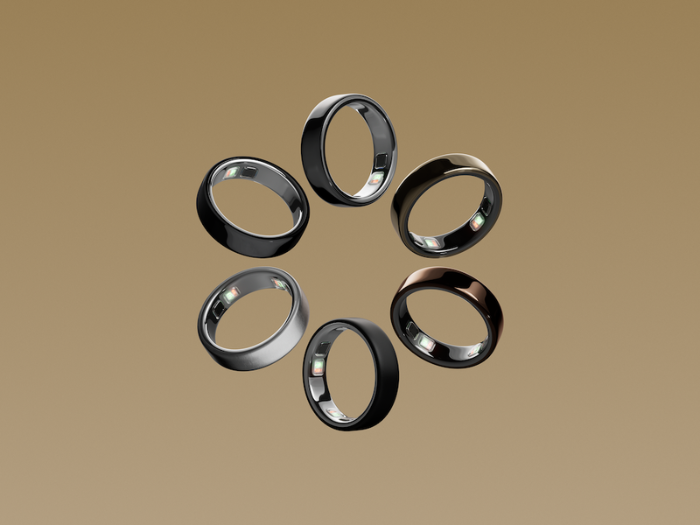
Those changes could plausibly improve signal quality, comfort, or consistency. They could also change performance in ways that need retesting. A redesigned sensor layout is not a peer-reviewed validation result. Until Ring 5 is tested directly against PSG, the best evidence still comes from prior Oura hardware running the current sleep-staging algorithm.
This is where product naming can quietly outrun evidence. A shopper sees the newest ring, the newest industrial design, and a confident accuracy number. The peer-reviewed record available today is more specific: Gen3 in healthy adults performed well for a consumer device, clinical performance was much weaker, and Ring 5-specific sleep-staging validation has not yet closed the loop.
The price makes the evidence question harder to ignore
Ring 5 starts at $399, compared with $349 for Ring 4, and both require a $69.99 annual membership. PCMag UK also reports that nearly all new software features come to Ring 4 through firmware updates.[7] That does not make Ring 5 a bad product. It does make the accuracy claim more consequential.
If you are buying mainly for a smaller, more comfortable ring that you will wear every night, the hardware may matter more than a lab percentage. If you are buying because you believe the Ring 5 has independently proven 95% sleep-stage accuracy, the evidence does not support that belief.
The more useful buying frame is this:
- Use Oura Ring 5 for bedtime, wake time, sleep duration, regularity, and recovery trends if you are generally healthy and want a low-friction tracker.
- Treat REM, deep, and light sleep numbers as estimates, especially on individual nights.
- Do not use Oura sleep stages to confirm or rule out a sleep disorder.
- If symptoms persist despite reassuring app data, give the symptoms more weight than the score.
Readers comparing devices may also want the more direct Apple Watch vs. Oura Ring sleep tracking breakdown, because the right choice may come down less to a single accuracy figure and more to what you will actually wear overnight.
The practical verdict on Oura Ring 5 sleep tracking accuracy
Oura Ring 5 is reasonable for healthy adults who want longitudinal sleep and recovery trends and understand that sleep stages are estimates. The independent evidence around Oura’s current sleep algorithm supports strong sleep detection and useful total-sleep-time tracking in healthier populations, while placing four-stage classification well below the impression created by a 95% claim.
The marketed 95% figure should not be treated as independent proof of Ring 5 sleep-staging accuracy. It is too broad for the evidence available: not Ring 5-specific, not independently replicated on the new hardware, and not consistent with clinical-population results.
For routine self-tracking, that may be enough. For symptoms, sleep disorders, or decisions that carry medical consequences, it is not.
References
- Oura’s New Sleep Staging Algorithm, Oura
- A Validation Study of the Oura Ring Sleep Staging Algorithm 2.0, Sensors, 2024
- Performance of seven consumer sleep-tracking devices compared with polysomnography in a sleep laboratory setting, Nature Scientific Reports, 2025
- Oura Ring Accuracy Validation Study: University of Tokyo, Oura
- Introducing Oura Ring 5, Oura
- First Look: New Oura Ring 5 Is Thinner, Smarter, and Somehow Lasts Longer, PCMag
- Oura Ring 5 vs. Oura Ring 4: Premium Upgrade or Overpriced Refresh?, PCMag UK

Comments
Join the discussion with an anonymous comment.