
Why Sleep Position Matters for Your Health
Sleeping on a completely flat surface is a relatively modern convention, and for a significant portion of the population, it is not physiologically optimal. When you lie flat, gravity works against you in several ways: it can narrow your airway, encourage stomach acid to migrate upward, and maintain pressure on the lumbar spine. These mechanical effects are the reason why roughly 20% of sleepers regularly snore and more than two-thirds occasionally snore, according to Sleep Foundation data.
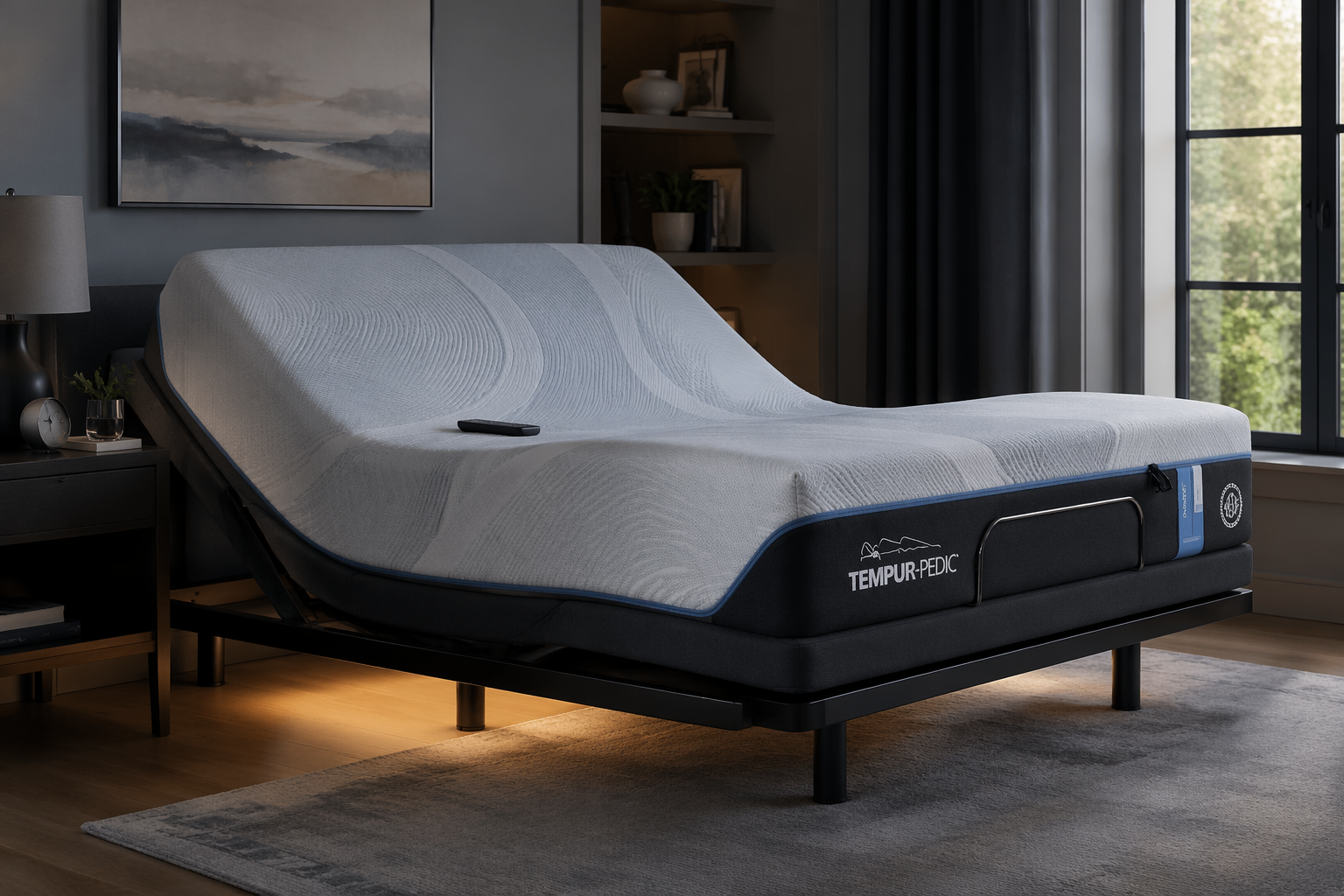
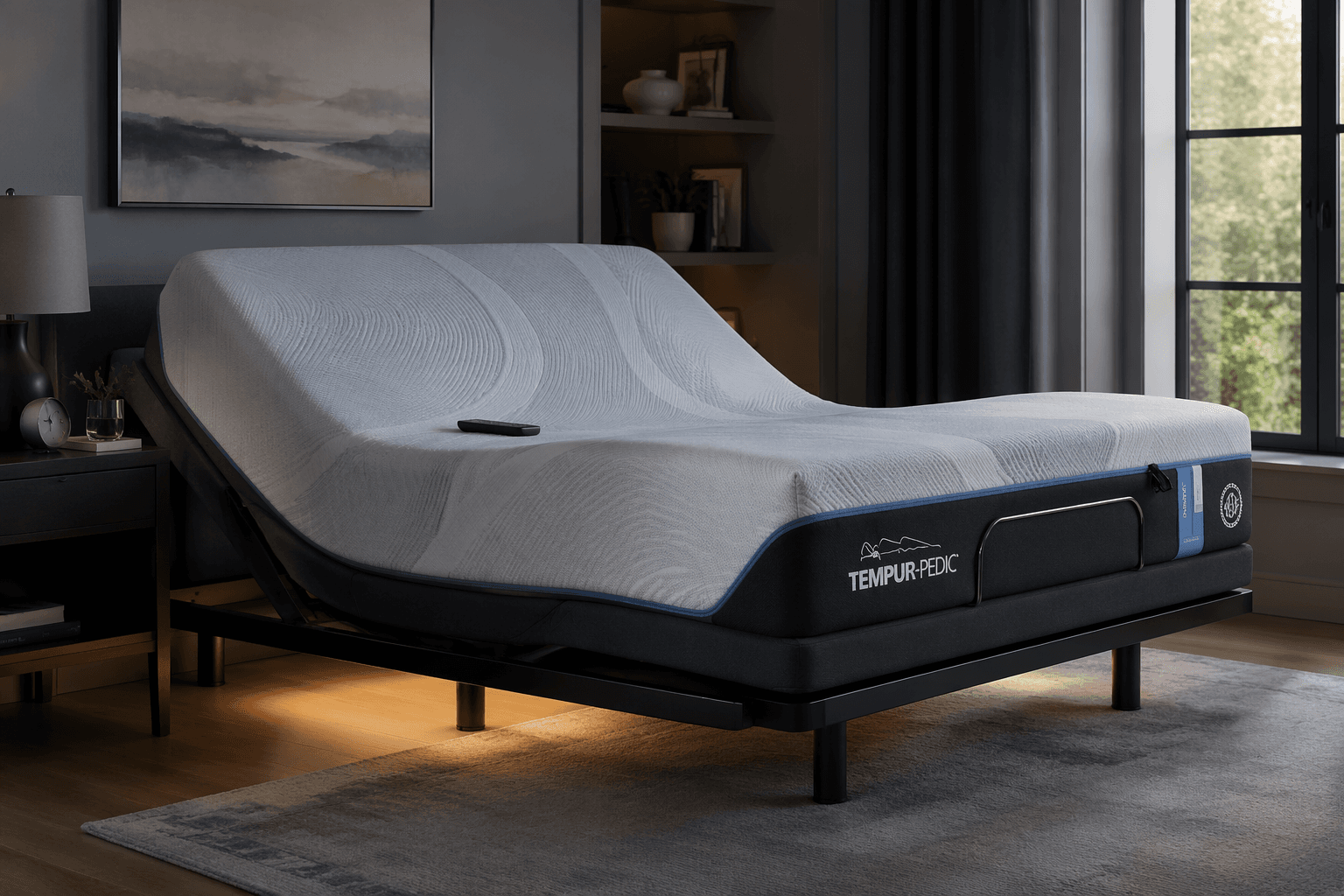
An adjustable base changes the geometry of sleep. By raising the head, torso, or legs, it alters the gravitational forces acting on the body. This is not a luxury feature — it is a mechanical intervention that can reduce airway resistance, redistribute spinal load, and prevent the backflow of gastric contents. For adults aged 40–70 who are managing chronic back pain, snoring, or acid reflux, the question is not whether an adjustable position can help, but how precisely a specific system like the Tempur-Pedic Ergo line delivers those benefits.
For a deeper look at the general mechanisms linking sleep angle to health outcomes, see our guide on how sleep position affects sleep quality and health.
How Tempur-Pedic Adjustable Bases Address Specific Health Conditions
Tempur-Pedic offers several adjustable base models, but the core health-related features are concentrated in the Ergo line: the Ergo Power Base, the Ergo Smart, and the Ergo Pro Smart. Each model shares a common set of therapeutic capabilities, with the higher tiers adding automation and precision. Below is a condition-by-condition breakdown of how these features work physiologically.
Chronic Back Pain and the Zero-Gravity Position
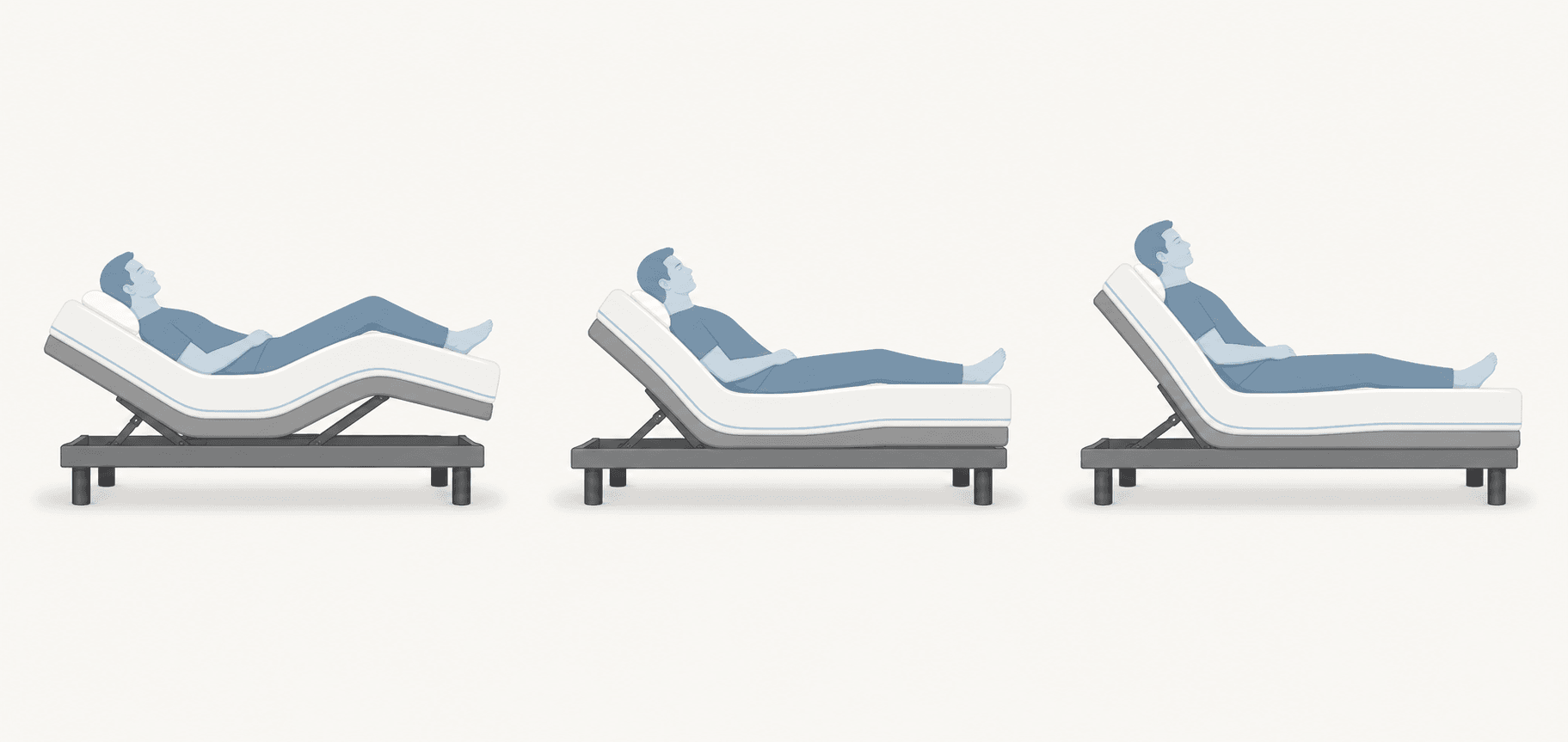
The zero-gravity setting on Tempur-Pedic bases elevates the head to roughly 30 degrees and the feet to about 45 degrees, creating a position that closely simulates weightlessness. The physiological rationale is straightforward: by distributing body weight more evenly across the mattress surface, the position reduces concentrated pressure on the lower back. Tempur-Pedic's own materials state that this setting helps alleviate the pressure on your lower back.
For back pain sufferers, the adjustable lumbar support bar — available on all Ergo models and capable of being raised up to six inches — provides targeted reinforcement under the lumbar curve. This is a meaningful distinction from a standard pillow or wedge, which cannot offer dynamic, position-specific support. A person with degenerative disc disease or chronic lower back strain can fine-tune the lumbar height to find a neutral spinal alignment that a flat mattress cannot provide.
Snoring and Mild Sleep Apnea: The 12-Degree Head Elevation
Snoring occurs when the soft tissues of the upper airway collapse during sleep, partially obstructing airflow. Elevating the head by approximately 12 degrees — the angle used by Tempur-Pedic's anti-snore preset — uses gravity to pull the tongue and soft palate forward, opening the airway. The Ergo Smart and Ergo Pro Smart models take this a step further with Snore Response, a feature that automatically detects snoring sounds and raises the head by that same 12-degree increment without waking the sleeper.
Forbes Vetted, after six months of testing the Tempur-Ergo Power Base, reported that sleeping with heads slightly elevated has proven to be noticeably helpful in minimizing my husband's snoring. This first-hand account aligns with the general medical consensus that head elevation reduces snoring frequency and intensity.
Acid Reflux and GERD: Upper Body Incline
Gastroesophageal reflux disease (GERD) and occasional acid reflux are heavily influenced by sleep position. When you lie flat, the lower esophageal sphincter is at the same level as the stomach, making it easier for acid to flow backward into the esophagus. Elevating the upper body by 6 to 8 inches — easily achieved with an adjustable base — uses gravity to keep stomach contents where they belong.
The US Mattress guide on adjustable base benefits notes that lifting the upper body can aid digestion and reduce acid reflux. This is consistent with standard clinical advice for GERD management, which often includes sleeping on a wedge or elevating the head of the bed. An adjustable base offers a more precise and comfortable way to achieve this incline than stacking pillows, which can create an unnatural bend at the waist and actually increase abdominal pressure.
Circulation and Leg Swelling
Elevating the legs above heart level promotes venous return — the flow of blood back to the heart — and reduces pooling in the lower extremities. For individuals who experience peripheral edema, varicose veins, or general leg fatigue, the ability to raise the foot section of the bed provides a passive mechanical assist to the circulatory system. The zero-gravity position inherently includes leg elevation, making it a dual-purpose setting for both back pain and circulation support.
| Condition | Recommended Base Feature | Physiological Mechanism | Best Base Model |
|---|---|---|---|
| Chronic back pain | Zero-gravity + adjustable lumbar (up to 6 inches) | Redistributes spinal load; supports lumbar curve | Ergo Pro Smart (best lumbar adjustability) |
| Snoring / mild airway obstruction | Snore Response (auto 12° head elevation) | Opens airway by pulling soft tissues forward | Ergo Smart or Pro Smart |
| Acid reflux / GERD | Upper body incline (6–8 inches) | Uses gravity to prevent acid migration | Any Ergo model with head elevation |
| Poor circulation / leg swelling | Leg elevation (foot section raised) | Promotes venous return; reduces pooling | Any Ergo model with independent foot adjustment |
What Medical Sources Say About Adjustable Beds
It is important to distinguish between claims made by a manufacturer and the broader medical consensus. Tempur-Pedic's own content cites the Cleveland Clinic as a source on the relationship between head elevation and snoring reduction. This is a credible reference: the Cleveland Clinic has published patient education materials stating that elevating the head of the bed can help reduce snoring by keeping the airway open.
Beyond snoring, WebMD — as cited by Retirement Living in its Tempur-Pedic review — notes that medical professionals recommend adjustable beds to help with relief from sleep apnea, acid reflux or hip and back pain. This is a general recommendation for the category of adjustable beds, not a specific endorsement of Tempur-Pedic, but it confirms that the therapeutic rationale is accepted in clinical practice.
The Sleep Foundation's 2026 guide on the best adjustable beds rates the Tempur-Pedic TEMPUR-Ergo Extend Smart Base 9.2 out of 10, noting its automatic snore response and exceptional pressure relief. While this is a product rating rather than a clinical endorsement, it reflects the consensus among sleep-focused reviewers that the Ergo line's feature set is well-aligned with the positional therapy needs of common sleep disruptors.
Which Tempur-Pedic Base Model Is Right for Your Condition?
Tempur-Pedic's adjustable base lineup spans four main models, but the health-relevant features cluster in the Ergo series. The entry-level Ease 2.0 (starting at $699) offers basic head and foot elevation but lacks the lumbar support bar, zero-gravity preset, and snore detection that make the higher models therapeutic. For health-focused buyers, the Ergo line is the relevant starting point.
| Model | Starting Price (Queen) | Key Health Features | Best For |
|---|---|---|---|
| Ease 2.0 | $699 | Basic head/foot elevation | Occasional comfort adjustment; limited health use |
| Ergo Power Base | $1,199 | Zero-gravity preset, anti-snore preset, lumbar bar (up to 6 inches), two-speed massage | Back pain and snoring with manual adjustment |
| Ergo Smart | $1,599 (est.) | All Power Base features + Snore Response (auto 12° elevation), two-zone massage, sleep tracking | Snorers who want automatic correction; data tracking |
| Ergo Pro Smart | $2,398 | All Smart features + four subwoofer massage, enhanced lumbar adjustability | Maximum therapeutic customization; severe back pain |
For a reader whose primary concern is snoring, the Ergo Smart's Snore Response feature is the most relevant differentiator. It removes the need to manually adjust the bed during the night — the base detects the snoring and responds automatically. For someone with chronic lower back pain, the Ergo Pro Smart's enhanced lumbar adjustability and zero-gravity preset provide the most precise spinal support. The Ergo Power Base covers both needs at a lower price point, but requires manual activation of the anti-snore preset.
If sleep tracking is also a priority, the Ergo Smart and Pro Smart include the Sleeptracker-AI system. For a detailed evaluation of how that system compares to wrist-worn trackers, see our separate review: Tempur-Pedic Sleeptracker-AI: How Accurate Is Bed-Based Sleep Tracking Compared to Wearables?.
Important Caveats: What an Adjustable Base Cannot Do
An adjustable base is a piece of furniture with electromechanical components. It is not a medical device, and it has not been evaluated by the FDA for the treatment of any medical condition. The health benefits described in this article are based on the general principles of positional therapy, not on clinical trials of Tempur-Pedic bases specifically.
There are also practical limitations to consider. Tempur-Pedic adjustable bases are final sale, meaning you cannot return them after delivery. They carry a 25-year limited warranty, with only the first three years covering full parts and labor. The bases are manufactured by Reverie to Tempur-Pedic's specifications, which means replacement parts and service may differ from what you would get with a direct-to-consumer brand. ConsumerAffairs rates Tempur-Pedic adjustable beds 2.2 out of 5 based on 38 reviews, though Amazon customers give 4.3 out of 5 — a wide gap that reflects the small sample size of the former.
For readers who are considering whether technology-driven sleep optimization is the right approach, our article on why 2026's smartest sleep strategy might be doing less offers a counterpoint worth reading. An adjustable base is a tool, not a cure-all, and it works best when integrated into a broader sleep hygiene strategy.
The Bottom Line: A Health Tool, Not a Medical Device
Tempur-Pedic adjustable bases — particularly the Ergo Smart and Ergo Pro Smart — offer a set of positional therapy features that align well with the needs of adults managing back pain, snoring, acid reflux, and circulation issues. The zero-gravity setting, adjustable lumbar support, and automated snore response are not marketing gimmicks; they are mechanical interventions with a sound physiological rationale supported by general medical consensus.
However, the distinction between a health tool and a medical device matters. An adjustable base can reduce symptoms, but it does not diagnose, treat, or cure underlying conditions. The right way to think about a Tempur-Pedic adjustable base is as an environmental modification — similar to blackout curtains or a white noise machine — that creates more favorable conditions for restorative sleep.
- For back pain: the zero-gravity preset and adjustable lumbar bar (up to 6 inches) provide targeted spinal support that a flat mattress cannot match.
- For snoring: the 12-degree head elevation, especially when automated via Snore Response, can reduce airway collapse without waking you.
- For acid reflux: upper body incline uses gravity to prevent stomach acid migration, consistent with standard GERD management advice.
- For circulation: leg elevation promotes venous return and reduces lower extremity swelling.
- The Ergo Smart is the best value for most health-focused buyers, as it adds automatic snore detection to the core therapeutic features.
- Always consult a physician for sleep apnea diagnosis, chronic pain management, or persistent GERD before relying on an adjustable base as a primary intervention.
For a deeper understanding of the general mechanisms behind sleep position and health, read our guide on how sleep position affects sleep quality and health. And if you are weighing the value of the built-in sleep tracking, our Sleeptracker-AI accuracy review provides the data you need to decide.


Comments
Join the discussion with an anonymous comment.