

Why Generic Melatonin Dosing Advice Fails
Pick up almost any melatonin bottle and you will find the same instruction: take 1–3 mg about 30 minutes before bed. That advice is not wrong exactly — it just applies a single protocol to four meaningfully different sleep problems, each of which responds to melatonin in a distinct way and at a distinct time.
The four problems are: difficulty falling asleep at a normal bedtime, jet lag from crossing time zones, delayed sleep phase disorder (DSPD) where your biological clock is shifted hours later than you want, and shift work disorder where you need to sleep at hours that conflict with your circadian rhythm. Same supplement, four different mechanisms of action, four different optimal doses, four different timing windows.
This guide maps the available clinical evidence onto each use case. It also covers a practical prerequisite that most dosing guides skip: supplement labeling inaccuracy is severe enough that knowing your target dose is only useful if you can trust that the product actually contains what it claims.
What Melatonin Actually Does (and Why Timing Matters More Than Dose)
Melatonin is not a sedative. It does not put you to sleep the way a sleeping pill does. It is a circadian timing signal produced by the pineal gland in response to darkness, and its primary job is to tell your body clock what time of day it is. This distinction is why the same dose taken at different times of day produces completely different effects — and why timing is often more important than dose magnitude.
When you take exogenous melatonin, you are essentially sending a "it is getting dark" signal to your circadian system. Taken at the right moment in your body's cycle, that signal can either reinforce your current sleep timing (for sleep onset difficulty) or shift it earlier or later (for jet lag and DSPD). Taken at the wrong moment, it can have minimal effect or even work against your goal.
For a deeper explanation of the receptor biology and circadian mechanism, see Melatonin for Sleep: Evidence, Dosage, and Safety by Population. For context on the complementary homeostatic system that drives sleep pressure independently of circadian timing, see Adenosine and Sleep Pressure: The Molecular Science of Why You Get Tired.
Which Sleep Problem Are You Solving? A Quick-Reference Decision Framework

The table below maps each use case to its protocol and the strength of evidence behind it. Use it to locate your scenario, then read the detailed section for that use case.
| Use Case | Dose Range | Timing Window | Formulation | Evidence Quality |
|---|---|---|---|---|
| Sleep onset difficulty | 0.5–4 mg | 1–3 hours before target bedtime | Immediate-release | Moderate — RCT meta-analysis (2024) |
| Jet lag (eastward) | 0.5–3 mg | At destination bedtime | Immediate-release | Medium — multiple RCTs |
| Jet lag (westward) | 0.5–3 mg | At destination bedtime | Immediate-release | Low-medium — fewer, smaller trials |
| Delayed sleep phase disorder (DSPD) | 0.5 mg | 4–6 hours before desired sleep time | Immediate-release | Low-moderate — AASM weak recommendation |
| Shift work disorder | ~3 mg | 30 minutes before intended sleep | Immediate-release | Low — inconclusive reviews |
Sleep Onset Difficulty: Dose, Timing, and the 2024 Evidence
If your problem is lying awake for an extended period before sleep begins — at a bedtime that is not unusually late — this is the use case with the clearest dose-response evidence.
A 2024 systematic review and dose-response meta-analysis of 26 double-blind RCTs involving 1,689 participants found that melatonin gradually reduces sleep onset latency and increases total sleep time, with effects peaking at approximately 4 mg per day. Importantly, the meta-regression identified that the time between taking melatonin and going to bed was a significant predictor of sleep onset outcomes — and that advancing the timing window to around 3 hours before desired bedtime significantly improved results compared to the common practice of taking it 30 minutes before bed. The full citation is available via PubMed (PMID 38888087).
Practically, this means starting at 0.5–1 mg and increasing incrementally if needed, with a ceiling of 4 mg for this use case. Taking it earlier than you probably do now — closer to the 2- to 3-hour mark before your target sleep time — is likely more important than adjusting the dose upward.
- Starting dose: 0.5–1 mg immediate-release
- Effective range: up to 4 mg/day based on dose-response evidence
- Timing: 1–3 hours before target bedtime (earlier timing appears more effective than the standard 30-minute instruction)
- Formulation: immediate-release (fast absorption matches the timing-signal mechanism)
Jet Lag: Direction-Dependent Timing and What the Evidence Actually Shows
Jet lag is one of the better-supported melatonin use cases, but the evidence is not uniform across flight directions. Reviews from 2010 and 2014 summarized by the National Center for Complementary and Integrative Health found that four studies involving 142 participants demonstrated benefit after eastward flights, while only two smaller studies involving 90 participants showed benefit after westward flights. NCCIH rates the overall evidence for jet lag as medium quality.
The reason eastward travel has stronger evidence is mechanistic: flying east requires phase advancing your clock (shifting it earlier), which is harder for the body to do naturally and more responsive to melatonin's phase-shifting effect. Flying west requires phase delaying (shifting later), which the body handles more readily on its own.
- Dose: 0.5–3 mg; most evidence uses doses in this range, with 3 mg sufficient for most people
- Timing: take at destination bedtime — not at your home bedtime, not on the plane
- Eastward flights: start melatonin on the night of arrival; continue for 2–5 nights as the body adjusts
- Westward flights: benefit is less consistent; melatonin may still help some people sleep at the new local bedtime, but the evidence base is smaller
- Pre-travel preparation for eastward travel: some protocols suggest taking a low dose 2–3 days before departure at the time corresponding to your destination's bedtime, to begin shifting the clock before you leave
| Flight Direction | Evidence Strength | Recommended Timing | Dose |
|---|---|---|---|
| Eastward (e.g., US → Europe) | Medium — 4 studies, n=142 | At destination bedtime on arrival night | 0.5–3 mg |
| Westward (e.g., Europe → US) | Low-medium — 2 studies, n=90 | At destination bedtime on arrival night | 0.5–3 mg |
Delayed Sleep Phase Disorder (DSPD): The Phase-Advance Protocol
DSPD is a circadian rhythm disorder in which a person's internal clock is set significantly later than conventional sleep times — typically falling asleep between 2 a.m. and 6 a.m. and waking in the late morning or afternoon. Melatonin's role here is not to induce sleep but to shift the clock earlier, which requires a fundamentally different protocol than the sleep onset use case.
The phase-advance protocol uses a low dose — typically 0.5 mg — taken 4–6 hours before the desired sleep time. If your goal is to fall asleep at 11 p.m. but your body currently wants to sleep at 3 a.m., you would take melatonin around 5–7 p.m. — hours before any attempt at sleep.
A 2018 randomized controlled trial of 307 participants found that melatonin taken 1 hour before the desired bedtime, combined with a fixed wake time, led to falling asleep approximately 34 minutes earlier and improved daytime functioning. The AASM 2015 guideline supports strategically timed melatonin for DSPD with a weak recommendation, reflecting moderate certainty in the benefit.
- Dose: 0.5 mg — low dose is intentional, not a starting point to increase from
- Timing: 4–6 hours before desired sleep time (not at bedtime)
- Formulation: immediate-release
- Combine with a fixed wake time: the phase advance is reinforced by waking at the same time every day, including on weekends
- Advance gradually: shift the dosing time earlier by 15–30 minutes every few days rather than jumping to the target time immediately
Shift Work: Limited Evidence and What That Means for Dosing
Shift work disorder is the use case where the evidence is weakest and the practical challenges are greatest. Two systematic reviews published in 2014 reached different conclusions: one found that melatonin produced approximately 24 minutes more daytime sleep compared to placebo, but rated the evidence as low quality; the other found results generally inconclusive and made no recommendation. NCCIH's current position reflects this uncertainty.
The practical challenge compounds the evidence problem. Shift schedules vary — rotating shifts, permanent nights, early mornings — and the "correct" timing for melatonin depends on when you are trying to sleep relative to your current circadian phase. Getting that timing wrong can make sleep worse, not better. Some sleep specialists warn against melatonin for shift workers precisely because of how difficult it is to time correctly without clinical guidance.
Common practice is to take approximately 3 mg around 30 minutes before the intended sleep period. This is a low-confidence protocol based on the logic of reinforcing sleep timing rather than on strong trial evidence. If you are a shift worker trying melatonin, treat it as an experiment with uncertain outcome rather than an established intervention.
Choosing the Right Formulation: Immediate-Release, Extended-Release, and Gummies
Formulation matters because melatonin's pharmacokinetics need to match the problem you are solving. Immediate-release melatonin is absorbed quickly, peaks in plasma within 30–60 minutes, and is largely eliminated within 4–8 hours. That profile suits sleep onset difficulty, jet lag, and DSPD — all of which benefit from a fast, timed circadian signal rather than sustained overnight levels.
Extended-release formulations sustain plasma melatonin levels over several hours, which better matches sleep maintenance problems — difficulty staying asleep through the night rather than difficulty falling asleep. If your primary complaint is waking in the early morning hours, extended-release may be pharmacokinetically better suited than immediate-release.
| Formulation | Absorption Profile | Best Suited For | Label Accuracy Risk |
|---|---|---|---|
| Immediate-release tablet or capsule | Fast peak (30–60 min), eliminated in 4–8 hours | Sleep onset, jet lag, DSPD phase shifting | Lower — plain tablets show least variability |
| Extended-release tablet | Slower, sustained release over several hours | Sleep maintenance (early morning waking) | Moderate |
| Gummy | Variable — depends on formulation and chewing | Any use case, but carries highest inaccuracy risk | High — most tested products inaccurately labeled |
Gummies deserve specific attention. They are the fastest-growing melatonin format and carry the highest labeling inaccuracy risk of any formulation — a problem covered in detail in the next section. If you use gummies, the label accuracy caveat applies with particular force.
The Supplement Label Accuracy Problem: Why Your Dose May Not Be What You Think
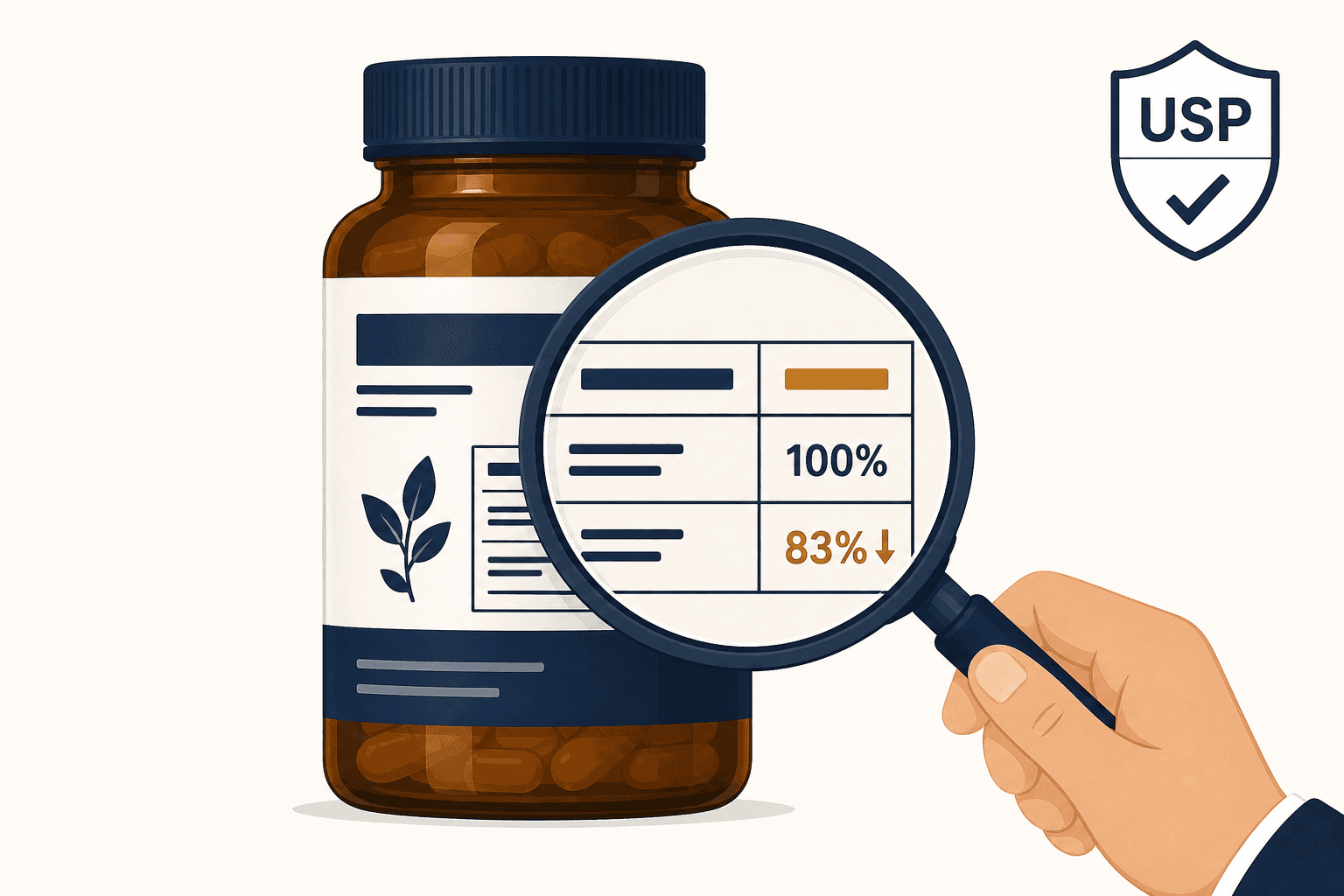
Before any dosing protocol can be reliably followed, there is a prerequisite that most melatonin guides do not address: the product you are holding may not contain what the label says.
A 2017 study published in the Journal of Clinical Sleep Medicine by Erland and Saxena analyzed 31 melatonin supplements and found that actual melatonin content ranged from 83% less to 478% more than the labeled amount. More than 71% of products failed a basic 10% margin test — meaning they did not contain melatonin within 10% of what the label claimed. Lot-to-lot variability within the same product reached as high as 465%, meaning a bottle you buy this month may contain a substantially different dose than the same product you bought last month. The full study is available via PubMed Central.
The gummy formulation problem is more recent and more severe. A 2023 study found that 22 of 25 melatonin gummy products were inaccurately labeled, with actual melatonin content ranging from 74% to 347% of the labeled quantity. The majority of inaccurately labeled products contained more melatonin than stated — meaning someone following the label's dosing instructions could be consuming three times the intended dose without knowing it.
The Erland and Saxena study also found serotonin — a controlled substance — in 26% of the 31 supplements tested, at concentrations of 1–75 micrograms per sample. Serotonin was found predominantly in products containing herbal co-extracts such as passionflower, valerian, and hops, but also appeared in at least one product without such extracts. For anyone taking SSRIs, SNRIs, or tramadol, unlabeled serotonin in a supplement creates a real risk of serotonin syndrome.
- Look for the USP Verified mark before selecting a melatonin product — this is the only widely accessible signal that the label is accurate.
- Plain tablets and sublingual tablets showed the least lot-to-lot variability in the Erland and Saxena study; capsules with herbal co-extracts showed the greatest.
- If you take SSRIs, SNRIs, or tramadol, avoid melatonin products that contain herbal co-extracts (passionflower, valerian, hops) due to the serotonin contamination finding.
- If you use gummies, assume the label is likely inaccurate and prioritize USP verification even more strongly than you would for tablets.
Safety Ceiling, Side Effects, and Key Drug Interactions
For adults, the commonly cited upper limit is 10 mg per day, though most evidence for sleep benefits involves doses well below this. Common side effects at higher doses include nausea, dizziness, headache, and morning grogginess. These effects are dose-dependent and generally resolve by reducing the dose or timing it earlier to allow more clearance before waking.
At supra-physiological concentrations — doses that push plasma melatonin far above natural nighttime levels — there is a theoretical concern about melatonin receptor desensitization over time. This is part of the rationale for using the lowest effective dose, particularly for the DSPD phase-advance protocol where 0.5 mg is the evidence-supported dose rather than a starting point.
Two drug interactions are clinically significant enough to warrant explicit attention:
- CYP1A2 inhibitors (most notably fluvoxamine, an antidepressant): Melatonin is primarily metabolized by the CYP1A2 enzyme. Fluvoxamine inhibits this enzyme and can markedly increase melatonin bioavailability — meaning a standard dose produces much higher plasma levels than expected. If you take fluvoxamine, melatonin should only be used under medical supervision.
- CNS depressants (benzodiazepines, zolpidem, eszopiclone): Combining melatonin with these medications can produce additive sedation beyond what either substance produces alone. This is not a theoretical interaction — it is noted in clinical pharmacology references for melatonin.
Impaired glucose tolerance has been reported with melatonin use. People with diabetes or prediabetes should discuss melatonin use with a clinician before starting, particularly at higher doses.
Population-Specific Caveats at a Glance
The following is a brief summary of the highest-priority population flags. For full population safety detail, including hepatic and renal impairment considerations, see Melatonin for Sleep: Evidence, Dosage, and Safety by Population.
- Older adults (65+): Use the lowest effective dose. Hepatic clearance declines with age, meaning melatonin remains active in the body longer. The European Food Safety Authority recommends 0.3–1 mg for sleep onset benefit. Doses above 6 mg have not shown additional benefit in older adult studies and increase the risk of next-day grogginess and falls.
- Children: Medical supervision is required. Melatonin is not approved for pediatric use in the US, and accidental ingestion has risen sharply — the CDC reported a 530% increase in pediatric melatonin exposures reported to poison control between 2012 and 2021, with melatonin becoming the most frequently ingested substance among children reported to poison control in 2020. Gummy formulations are a particular hazard.
- Pregnant and breastfeeding women: Avoid. Melatonin crosses the placenta and is present in breast milk. Safety data in human pregnancy is insufficient to support use.
- Hepatic or renal impairment: Use with caution and under medical supervision. Reduced clearance can substantially increase effective plasma levels even at standard doses.
When Melatonin Is Not the Answer
Melatonin is a circadian timing tool. It is not a treatment for chronic insomnia.
Both the American Academy of Sleep Medicine (2017) and the American College of Physicians (2016) have reviewed the evidence and concluded that it is insufficient to recommend melatonin for chronic insomnia — defined as difficulty sleeping at least three nights per week for at least three months with associated daytime impairment. The ACP strongly recommends cognitive behavioral therapy for insomnia (CBT-I) as the first-line treatment. This is not a conservative position waiting for better evidence; it reflects a consistent finding across multiple systematic reviews.
If your sleep difficulty is chronic, using melatonin may provide short-term relief for some people, but it does not address the behavioral and cognitive patterns that sustain chronic insomnia. For a thorough comparison of treatment options, see CBT-I, Sleep Medication, or Both? What the 2026 AASM Guideline Says About Treating Chronic Insomnia.
If your difficulty falling asleep is driven primarily by anxiety — racing thoughts, hyperarousal, worry about sleep itself — melatonin is also unlikely to resolve the underlying problem. The article on Sleep Anxiety and Insomnia: The Bidirectional Link, Causes, and Evidence-Based Treatment covers that pathway in more detail.


Comments
Join the discussion with an anonymous comment.