


How Common Is Insomnia During Pregnancy?
Insomnia during pregnancy is not a rare complaint — it is one of the most consistently reported sleep problems across all three trimesters. A meta-analysis of studies on pregnancy sleep found that approximately 25% of pregnant people experience insomnia symptoms in the first trimester, rising to around 27% in the second, and reaching 42.4% by the third trimester based on an updated analysis of ten studies. Some clinical sources cite figures as high as 80% by late pregnancy, reflecting broader symptomatic self-reporting rather than formal diagnostic criteria.
That range — 42% to 80% — reflects a real methodological difference: stricter diagnostic criteria capture one population, while self-reported sleep difficulty captures a larger one. Both figures are meaningful. What they agree on is that insomnia worsens significantly as pregnancy progresses, with the risk of meeting insomnia criteria being more than twice as high in the third trimester compared to the first two combined.
This matters clinically. Pregnancy insomnia is not simply an inconvenience that resolves at delivery. It is associated with measurable consequences for gestational health and mental health — consequences that are meaningfully reduced when sleep is treated rather than endured.
Why Pregnancy Disrupts Sleep: Three Mechanism Categories
Before breaking down causes by trimester, it helps to understand the three broad categories through which pregnancy disrupts sleep. These categories are not mutually exclusive — most people experience overlap — but they produce different types of insomnia and respond to different interventions.
- Hormonal changes. Rising progesterone and estrogen influence both breathing regulation and the phasing of the sleep cycle. Progesterone has a mild sedating effect early in pregnancy but also relaxes upper airway muscles, contributing to snoring and airway vulnerability. Estrogen fluctuations affect sleep architecture, including REM sleep distribution and sleep continuity.
- Physical changes. The structural and physiological changes of a growing pregnancy create direct sleep barriers: increased urinary frequency (nocturia), heartburn from gastric reflux, fetal movement, positional constraints, and musculoskeletal discomfort. These tend to escalate across trimesters and peak in the third.
- Psychological arousal. Nocturnal cognitive arousal — the tendency to ruminate about labor, parenting readiness, health concerns, and life changes while lying awake — is a primary driver of sleep-onset insomnia during pregnancy. This is not simply anxiety in the colloquial sense; it is a specific cognitive process that activates the arousal system at bedtime and in the middle of the night, making it difficult to fall or stay asleep even when physical discomfort is not the primary barrier.
The reason this framework matters: cognitive behavioral therapy for insomnia (CBT-I) directly targets the psychological arousal category and also addresses the behavioral patterns that develop in response to physical disruptions. Understanding which category is most active for you at a given stage helps clarify why CBT-I works — and why it works even when the physical causes of disruption cannot be eliminated.
Trimester-by-Trimester Breakdown of Insomnia Causes
The mechanism profile of pregnancy insomnia shifts substantially across trimesters. Treating all three stages as interchangeable — as many general sleep resources do — misses the clinical picture. Here is what is actually happening at each stage.
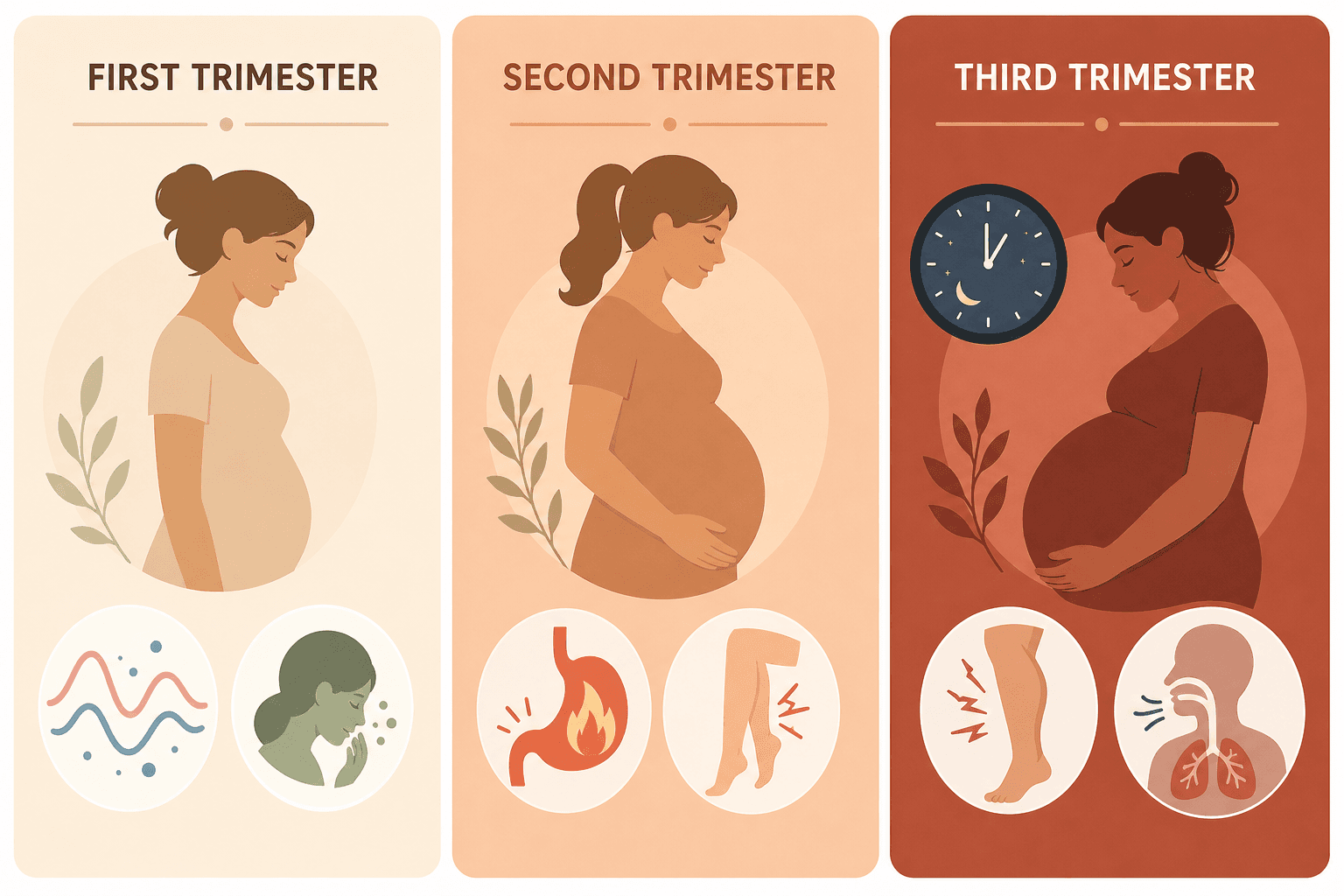
First Trimester: Hormonal Onset and Psychological Activation
The first trimester is dominated by rapid hormonal shifts. Progesterone rises sharply and alters both sleep architecture and breathing regulation. Estrogen fluctuations contribute to sleep fragmentation. Many people experience increased sleepiness during the day — a paradox that coexists with nighttime waking.
Nausea (morning sickness, which frequently extends into the night) disrupts sleep continuity, particularly in the early weeks. Nocturia begins in the first trimester as blood volume increases and kidney filtration rises, creating a need for nighttime urination that will intensify across the pregnancy.
Psychologically, the first trimester is when anxiety about the pregnancy itself — miscarriage risk, prenatal test results, health of the fetus, life changes — tends to be most acute. This activates the nocturnal rumination cycle that drives sleep-onset insomnia. Restless legs syndrome (RLS) can begin in the first trimester, though it is more commonly reported starting in the second.
Second Trimester: Physical Growth and Escalating Symptoms
The second trimester is often described as the "easiest" trimester for sleep — nausea typically subsides, energy improves, and the most severe first-trimester anxiety often stabilizes. But the physical causes of insomnia are building.
Gastroesophageal reflux (heartburn) escalates as the growing uterus exerts pressure on the stomach. Sleeping flat becomes uncomfortable, and lying on the back begins to feel problematic. RLS symptoms most commonly begin in the second trimester, with the urge-to-move sensations appearing primarily in the evenings and at night. Early signs of pregnancy-onset snoring may emerge as progesterone-related airway relaxation combines with weight changes.
Third Trimester: Multi-Layered and Cumulative
The third trimester is where insomnia reaches its peak severity. Every physical mechanism is at its most intense, and they compound each other. The risk of meeting formal insomnia criteria is more than twice as high in the third trimester compared to the first two.
Fetal movement — particularly in the evenings and at night, when the fetus is often most active — directly interrupts sleep onset and maintenance. Positional constraint is significant: sleeping on the back becomes inadvisable due to vena cava compression, limiting comfortable positions to lateral lying. Nocturia is at its peak. Heartburn is often severe. RLS symptoms peak in the third trimester.
Sleep architecture also changes measurably: REM sleep is shortest between weeks 35 and 38, the period of maximum physical burden. Obstructive sleep apnea risk is highest in the third trimester, with objective studies finding it present in 25–37% of third-trimester pregnancies.
| Trimester | Primary Hormonal Causes | Primary Physical Causes | Primary Psychological Causes | Comorbid Risk |
|---|---|---|---|---|
| First | Progesterone/estrogen shifts affecting sleep architecture and breathing; increased daytime sedation | Nausea (including nighttime), early nocturia onset | Anxiety about pregnancy, miscarriage risk, test results; nocturnal rumination begins | RLS possible onset; anxiety disorders |
| Second | Progesterone continues to relax upper airway muscles | Growing uterus → heartburn escalation; nocturia increases; positional discomfort begins | Anxiety often stabilizes, but concerns about fetal health and labor preparation emerge | RLS onset peaks; early OSA risk increases |
| Third | Estrogen-related sleep fragmentation; shortest REM at weeks 35–38 | Fetal movement; positional constraint; peak nocturia; peak heartburn; OSA risk highest | Labor anxiety, postpartum readiness concerns; nocturnal rumination intensifies | Peak RLS prevalence (~22.9%); OSA in 25–37%; highest insomnia risk (2.03x vs. T1/T2) |
Comorbid Sleep Conditions That Amplify Pregnancy Insomnia
Two sleep conditions frequently coexist with pregnancy insomnia and significantly worsen it: restless legs syndrome (RLS) and obstructive sleep apnea (OSA). Identifying either changes the treatment path. Both are often underrecognized because their symptoms can be attributed to generic pregnancy discomfort.
Restless Legs Syndrome in Pregnancy
RLS is described as an irresistible urge to move the legs, typically accompanied by uncomfortable sensations, that is worse at rest, partially or fully relieved by movement, and worst in the evening or night. A useful clinical mnemonic is URGE: Urge to move, worse at Rest, relieved by Getting up, worse in the Evening.
RLS affects approximately 20–21% of pregnant people across all trimesters combined, based on pooled meta-analysis data. Symptoms typically begin in the second trimester and peak in the third. For many, symptoms are moderate to severe in intensity during pregnancy and resolve within weeks of delivery — approximately 70% of cases resolve by delivery and 90% of new-onset cases within one month postpartum.
The key mechanistic drivers are iron deficiency and low ferritin, low folate levels, and disruption of dopaminergic pathways — all of which are influenced by the nutritional demands of pregnancy. This is important because low ferritin is a treatable risk factor: iron supplementation is recommended when ferritin falls below 75 µg/L in people with significant RLS symptoms.
Obstructive Sleep Apnea in Pregnancy
Obstructive sleep apnea — repeated partial or complete upper airway collapse during sleep — worsens progressively across pregnancy due to weight changes, upper airway edema, and progesterone-related airway muscle relaxation. By the third trimester, objective sleep studies find OSA present in 25–37% of pregnant people in general population samples.
OSA in pregnancy is not simply a sleep quality issue. It is strongly associated with gestational diabetes, preeclampsia, and gestational hypertension. When OSA is present, CPAP therapy is the indicated treatment. Behavioral sleep interventions alone are insufficient for OSA — provider evaluation and, where indicated, sleep study referral are necessary.
- Symptoms that warrant OSA evaluation: habitual snoring, witnessed breathing pauses during sleep, waking with gasping or choking, and excessive daytime sleepiness disproportionate to nighttime waking.
- OSA risk increases with advancing gestational age, pre-pregnancy BMI, and multiple pregnancy.
- CPAP is safe and effective during pregnancy; untreated OSA carries greater risk to both mother and fetus than CPAP use.
Why Untreated Pregnancy Insomnia Matters
Sleep disturbances during pregnancy are not clinically neutral. A large-scale analysis drawing on data from tens of millions of pregnancies found that sleep disruption is associated with elevated rates of preeclampsia, gestational hypertension, gestational diabetes, preterm birth, cesarean delivery, and stillbirth. These associations do not establish that insomnia directly causes each outcome — confounding factors are present — but the pattern is consistent enough across studies to treat sleep as a clinically relevant variable in prenatal care.
The mental health connection is particularly well-characterized. Insomnia during pregnancy is associated with perinatal depressive symptoms across multiple studies, and the relationship is bidirectional: insomnia worsens depression, and depression worsens insomnia. The mediating mechanism is nocturnal cognitive arousal — the same rumination cycle that drives sleep-onset insomnia also drives the negative thought patterns associated with depression.
Importantly, this relationship is modifiable. Improving sleep during late pregnancy appears to reduce the risk of postpartum depression — which means treating insomnia during pregnancy is not only about the pregnancy itself, but about the postpartum period as well.
Evidence-Based Treatment: CBT-I as the First-Line Approach
Cognitive behavioral therapy for insomnia (CBT-I) is the clinically validated first-line treatment for insomnia during pregnancy — not one option among many, and not a fallback after other approaches have failed. This is not a precautionary preference; it is supported by randomized controlled trial evidence specific to pregnant populations.
In a landmark RCT by Manber and colleagues, pregnant people assigned to CBT-I saw their Insomnia Severity Index (ISI) scores drop from 15.4 to 8.0, compared to a drop from 15.9 to 11.2 in the control group. Remission of insomnia was achieved by 64% of the CBT-I group versus 52% of controls, and the median time to remission was 31 days in the CBT-I group versus 48 days in controls. The CBT-I group also showed significantly greater reductions in depressive symptoms — consistent with the insomnia–depression bidirectional relationship described above.
A separate RCT by Felder and colleagues tested digital CBT-I delivery — six weekly sessions of approximately 20 minutes each — and found 44% remission in the digital CBT-I group versus 22.3% in standard care. Benefits were maintained approximately two months after treatment completion. This finding is practically important: digital and remote delivery is viable for pregnant people who face barriers to in-person appointments — transportation, work schedules, physical discomfort, or limited local provider availability.
What CBT-I for Pregnancy Involves
CBT-I is a structured multi-component treatment. In a pregnancy context, the components are adapted to the population but follow the same core framework:
- Cognitive restructuring. Identifying and modifying the nocturnal thought patterns and beliefs about sleep that perpetuate arousal — for example, catastrophizing about the consequences of a poor night, or holding rigid expectations about how much sleep is needed.
- Sleep restriction. Temporarily consolidating sleep into a shorter, more efficient window to rebuild sleep drive and reduce time spent lying awake in bed. This component is typically adapted for pregnancy to avoid excessive sleep deprivation.
- Stimulus control. Re-associating the bed with sleep rather than wakefulness — for example, getting out of bed when unable to sleep rather than lying awake for extended periods.
- Sleep hygiene. Behavioral practices that support sleep, adapted to pregnancy-specific constraints (positional needs, nocturia, heartburn).
- Relaxation training. Techniques such as progressive muscle relaxation, diaphragmatic breathing, or guided imagery to reduce physiological arousal at bedtime.
| Study | Format | Remission Rate (CBT-I) | Remission Rate (Control) | Additional Finding |
|---|---|---|---|---|
| Manber RCT | In-person CBT-I | 64% | 52% | Median remission 31 vs. 48 days; reduced depressive symptoms in CBT-I group |
| Felder RCT | Digital CBT-I (6 sessions, ~20 min each) | 44% | 22.3% | Benefits maintained ~2 months post-treatment; digital delivery viable |
Pregnancy-Specific Sleep Strategies and Symptom Management
Behavioral and positional adaptations can meaningfully reduce specific symptoms when they are connected to the mechanism driving the disruption. The following strategies are organized by the symptom they target — not as a generic tip list, but as a set of evidence-grounded responses to identifiable causes.
Positional Strategies for Physical Comfort
- Left-side sleeping. Lying on the left side reduces pressure on the inferior vena cava, supporting fetal circulation and reducing the discomfort of uterine pressure on abdominal organs. It is the generally recommended sleep position from the second trimester onward.
- Pregnancy pillow. A full-length or U-shaped pregnancy pillow placed between the knees and supporting the abdomen reduces musculoskeletal strain in the side-lying position, addresses hip and lower back discomfort, and provides a physical cue that reinforces the sleeping position through the night.
- Wedge pillow for heartburn. Elevating the head and upper torso reduces gastric reflux during sleep by using gravity to keep stomach contents from rising. A wedge pillow under the mattress or upper body achieves this without requiring an adjustable bed.
Managing Nocturia
Nocturia in pregnancy is driven by increased kidney filtration and, in the third trimester, by the fetal head descending into the pelvis and compressing the bladder. It cannot be eliminated, but its impact on sleep can be reduced. Limiting fluid intake in the two to three hours before bed — while maintaining adequate hydration earlier in the day — reduces the volume of urine produced during sleep without causing dehydration.
Managing Heartburn
- Eat smaller, more frequent meals rather than large meals, particularly in the evening.
- Avoid eating within two to three hours of bedtime to reduce the volume of gastric contents available for reflux during sleep.
- Avoid foods that relax the lower esophageal sphincter or increase acid production: fatty foods, chocolate, citrus, tomato-based foods, caffeine, and carbonated beverages.
- Use a wedge pillow or elevate the head of the bed to reduce nighttime reflux.
Managing Restless Legs Syndrome
- Moderate-intensity exercise during the day has been shown to reduce RLS symptom severity. Avoid vigorous exercise close to bedtime.
- If ferritin levels are below 75 µg/L, iron supplementation under provider guidance is the primary evidence-based intervention for RLS in pregnancy. Discuss ferritin testing with your provider if you have RLS symptoms.
- Avoid caffeine, which can worsen RLS symptoms.
- Leg massage, warm baths, and stretching before bed may provide temporary symptom relief for mild RLS.
Circadian Anchoring
Maintaining a consistent sleep and wake time — even when sleep quality is poor — preserves circadian rhythm regularity and prevents the sleep schedule from drifting in ways that worsen insomnia. This is a core principle of CBT-I and applies directly to pregnancy. Irregular sleep timing weakens the homeostatic sleep drive and makes it harder to fall asleep at the intended time.
Medication Safety Overview: What to Know Before Considering Sleep Aids
Because CBT-I is the evidence-based first-line treatment, pharmacological options should be considered within a clinical hierarchy — not as a starting point. The following overview is intended to support informed conversations with your provider, not to guide self-treatment. Population-specific safety data for sleep medications in pregnancy is limited and varies by trimester.
Doxylamine (Unisom SleepTabs)
Doxylamine is a sedating antihistamine and the most studied OTC sleep-related medication in pregnancy. It is widely used in combination with vitamin B6 (pyridoxine) as a first-line treatment for pregnancy nausea. It is considered usable across all stages of pregnancy without a known increased risk to the fetus. However, the clinical evidence for doxylamine as an insomnia treatment specifically — as opposed to nausea management — is limited. It may help with sleep onset, but it is not a validated insomnia treatment in the way that CBT-I is.
Melatonin: Not Recommended During Pregnancy
Melatonin is a dietary supplement — not an FDA-regulated drug — and is not recommended for use during pregnancy. Endogenous melatonin levels are naturally elevated during pregnancy, particularly in the third trimester. Melatonin crosses the placenta, and supplementation may deliver excess melatonin to the fetus, potentially interfering with the development of the fetal sleep-wake cycle.
This is a precautionary position based on limited research rather than documented harm — the evidence base on melatonin in pregnancy is simply insufficient to establish safety. Both the Sleep Foundation and Pregnancy Birth and Baby advise against melatonin use during pregnancy. The absence of proven harm is not the same as established safety, and melatonin should not be treated as a neutral supplement option for pregnant people.
Benzodiazepines
Benzodiazepines (such as diazepam or lorazepam) are generally not recommended during pregnancy. The primary concern in the first trimester is potential teratogenicity, though this risk is debated. In the third trimester, the more significant concern is neonatal withdrawal syndrome — the baby may experience sedation, respiratory depression, or withdrawal symptoms after birth if benzodiazepines were used in late pregnancy. Any consideration of benzodiazepine use requires provider involvement and a careful risk-benefit assessment.
Z-Drugs (Zolpidem, Eszopiclone)
Z-drugs are commonly prescribed sedative-hypnotics in the general adult population, but their use is generally avoided during pregnancy due to limited reproductive safety data and concerns about neonatal sedation and respiratory depression. Suvorexant is similarly not recommended. These are not self-managed OTC options — they require a prescription and, in a pregnancy context, require explicit provider evaluation and monitoring.
Prescription Options in Clinical Context
In cases where insomnia is severe, refractory to behavioral treatment, or accompanied by significant depression or anxiety, providers may consider sedating tricyclic antidepressants such as low-dose amitriptyline, which have not been associated with increased risk of congenital malformation and may address both sleep and mood symptoms. These decisions require individual clinical assessment and are outside the scope of self-management.
| Option | Regulatory Category | Pregnancy Safety Status | Evidence for Insomnia | Key Caveat |
|---|---|---|---|---|
| CBT-I | Non-pharmacological treatment | Safe; RCT-supported in pregnant populations | Strong (multiple RCTs) | First-line treatment; digital delivery available |
| Doxylamine | FDA-regulated OTC drug (antihistamine) | Generally considered safe across all trimesters | Limited for insomnia specifically; stronger evidence for nausea | Not a validated insomnia treatment; provider guidance recommended |
| Melatonin | Dietary supplement (not FDA-regulated as drug) | Not recommended; precautionary position | Not established in pregnancy | Crosses the placenta; may affect fetal circadian development |
| Benzodiazepines | Prescription drug | Generally not recommended; T3 neonatal withdrawal risk | Sedating effect present but not recommended for insomnia in pregnancy | Requires provider involvement; trimester-specific risk profile |
| Z-drugs (zolpidem, eszopiclone) | Prescription drug | Generally avoided; limited safety data | Used in general population but avoided in pregnancy | Not an OTC option; requires provider evaluation |
| Sedating TCAs (e.g., amitriptyline) | Prescription drug | No known congenital malformation risk at low doses | Used clinically for comorbid insomnia and depression | Provider-managed only; not appropriate for self-treatment |
When to Talk to Your Provider
Self-managed behavioral approaches — including CBT-I delivered digitally — are appropriate for most cases of pregnancy insomnia. But there are specific situations where professional evaluation is warranted, and waiting is not the right approach.
- Suspected RLS. If you experience the URGE pattern (irresistible urge to move, worse at rest, relieved by movement, worse in the evening), request ferritin testing. Low ferritin is a correctable driver of RLS in pregnancy and is easily identified with a blood test.
- Suspected OSA. If you snore habitually, have been told you stop breathing during sleep, or experience excessive daytime sleepiness beyond what nighttime waking would explain, discuss OSA evaluation with your provider. Untreated OSA in pregnancy carries significant gestational risks.
- Insomnia accompanied by depressive symptoms or suicidal ideation. Perinatal depression is common and treatable. If insomnia coexists with persistent low mood, loss of interest, hopelessness, or any thoughts of self-harm, seek evaluation promptly — not just for sleep, but for the full clinical picture.
- Insomnia not responding to CBT-I after several weeks. If a structured CBT-I program — whether in-person or digital — has not produced meaningful improvement after four to six weeks, a referral to a sleep specialist or behavioral sleep medicine provider is appropriate.
- Any consideration of pharmacological options. No sleep medication should be started during pregnancy without provider involvement. This includes OTC options — even doxylamine, which is generally considered safe, warrants a conversation with your obstetric provider before use.





Comments
Join the discussion with an anonymous comment.